Name/Title
Hair WreathEntry/Object ID
79.90.1Description
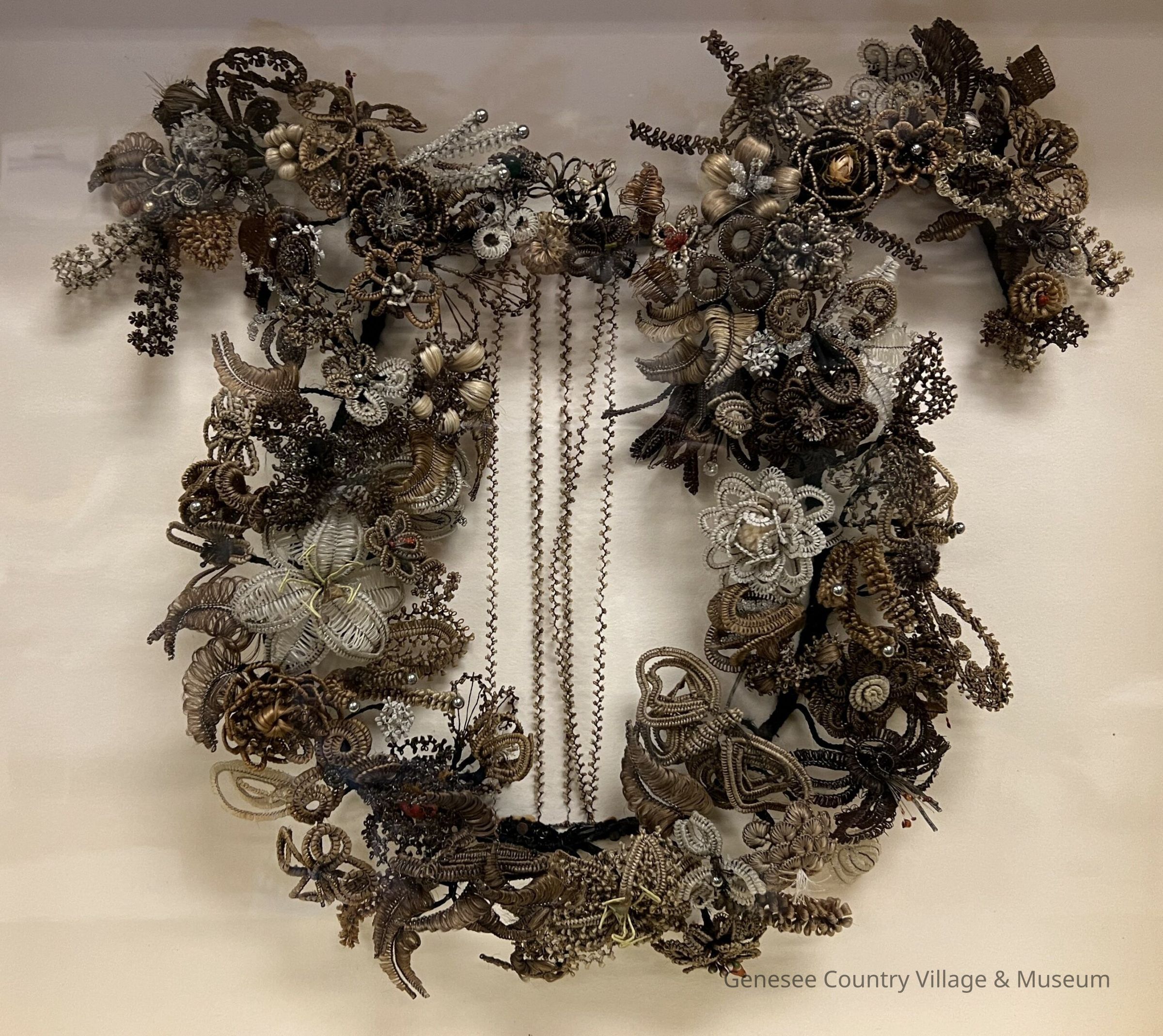
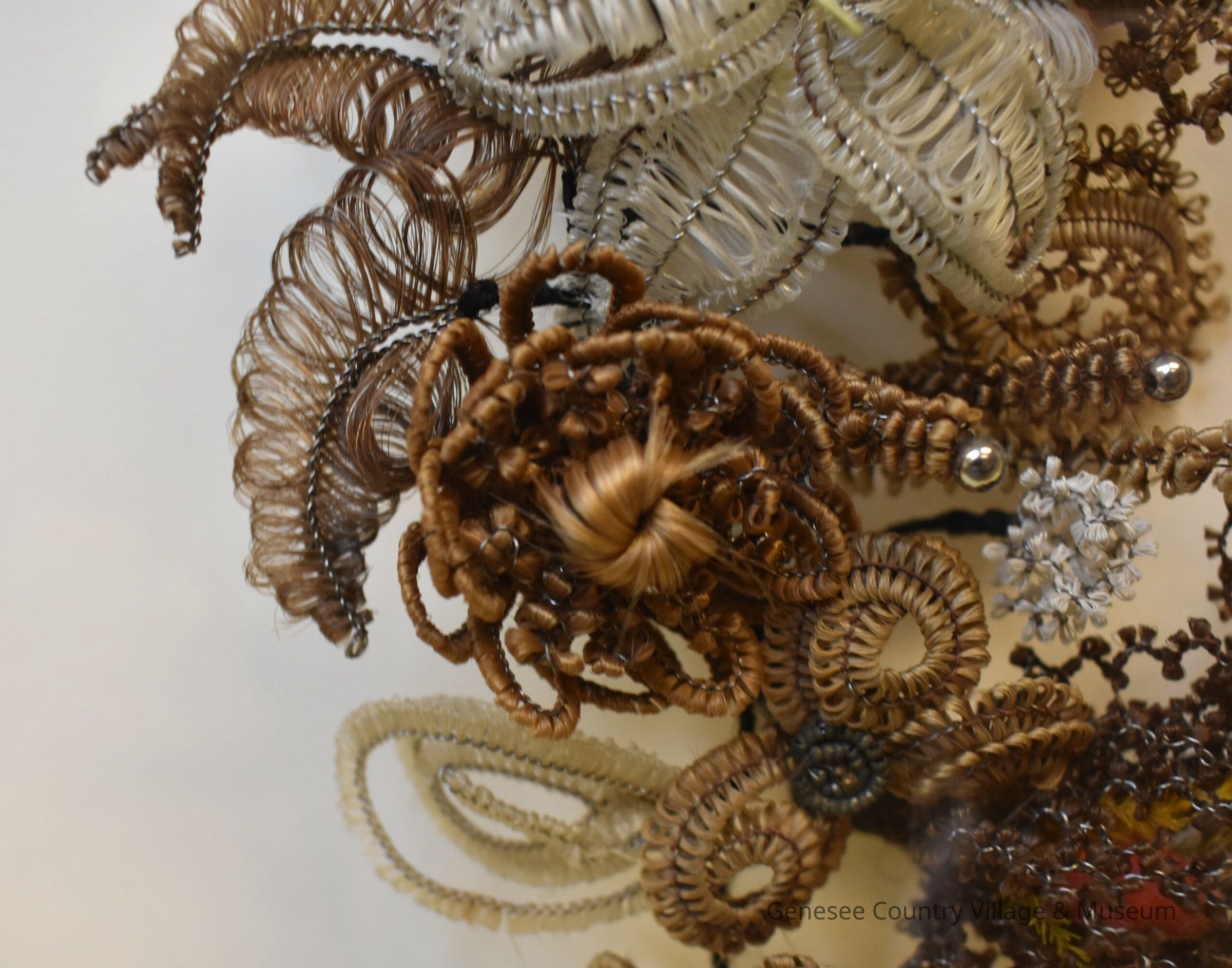
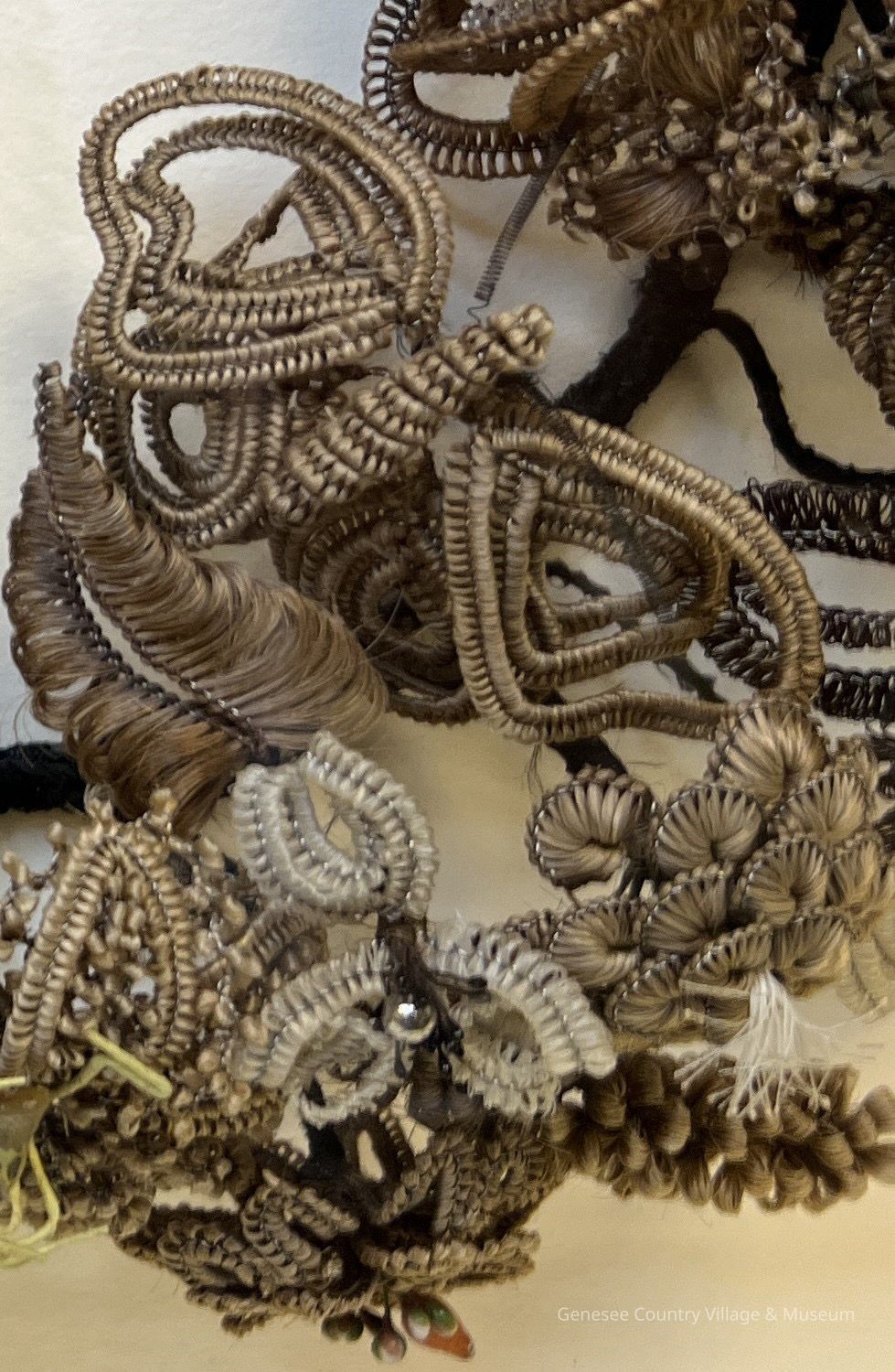
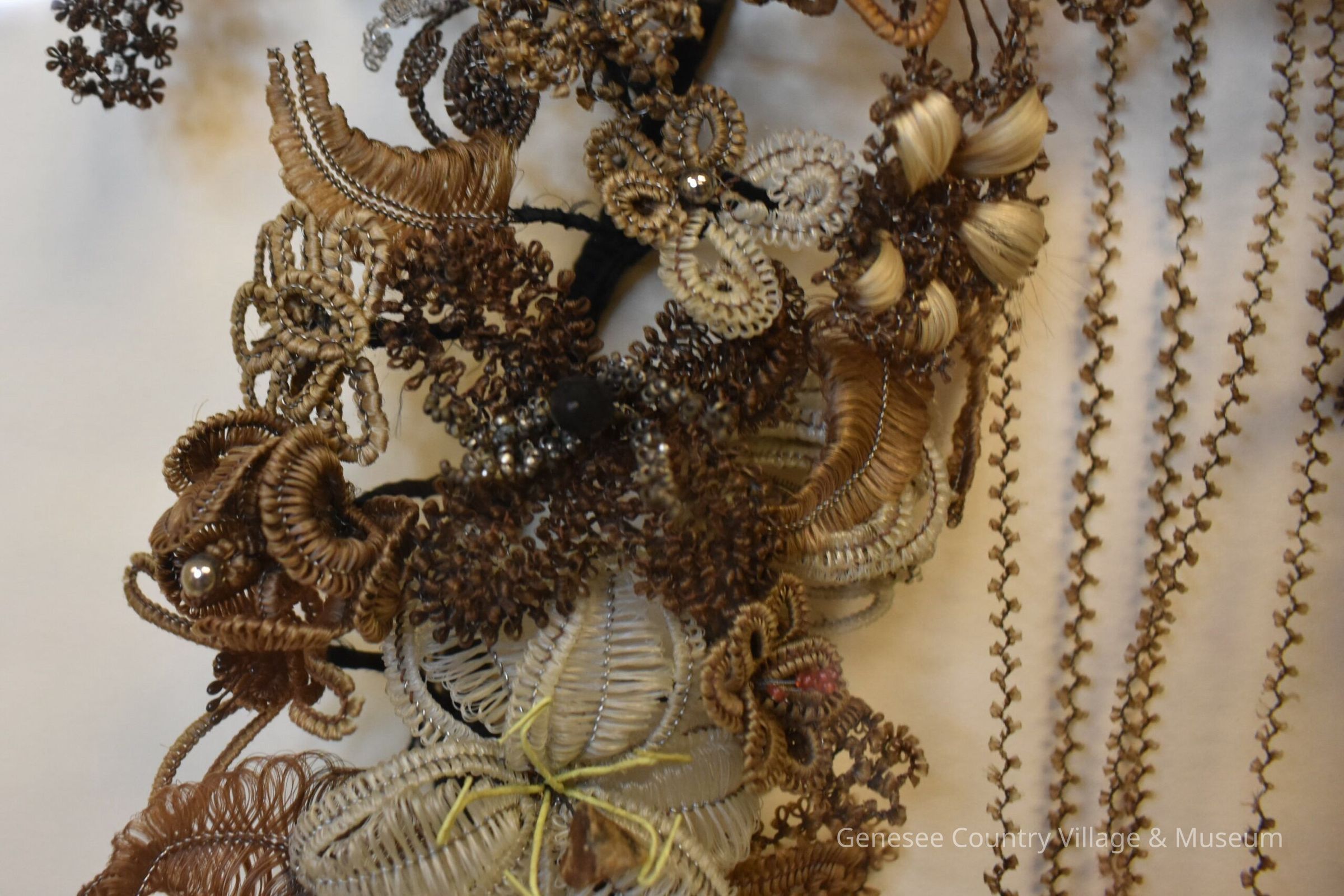
A lyre-shaped "wreath" of flowers and foliage made of hair, wire and beads. The wreath is encased by a shadow box frame; the frame is natural wood with an interior beveled edge of gold.Context
Frances Brown was born in 1842 in Mendon, New York, to Elisha Brown and Mary Durfee. She grew up in a farming family and married late in life at the age of forty-eight. She married Justus Warner Gurney, also a farmer and son of Rush Gurney and Cordelia Joy, in 1890 in Palmyra, New York. She would continue to live in Palmyra for the rest of her life.
The museum estimates this hair wreath to have been created around 1870. Frances collected the hair to make the wreath from her friends and family. There are many different shades of hair from several people, and it would have held a place of pride in her house and served as a remembrance of her loved ones.
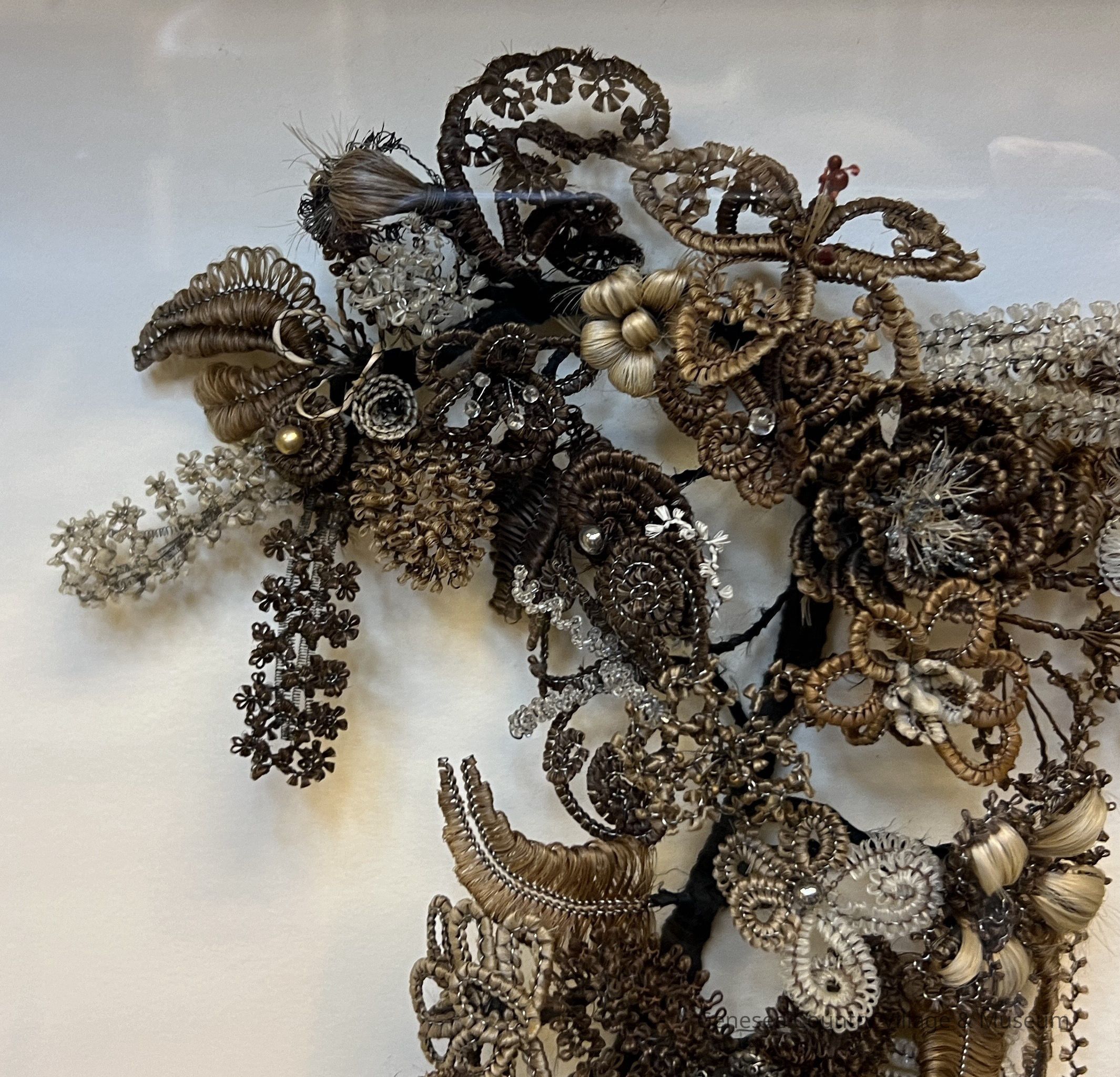
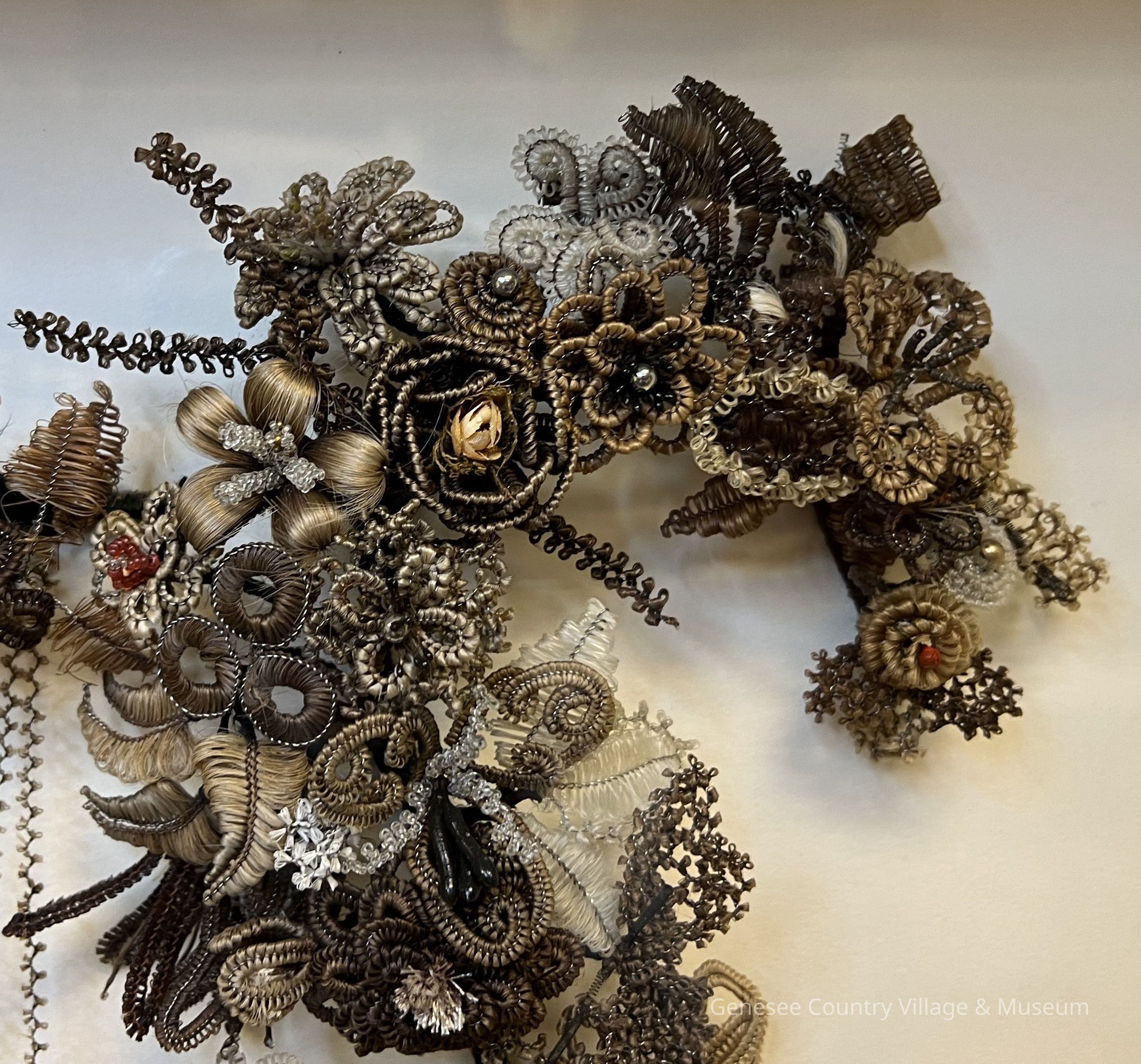
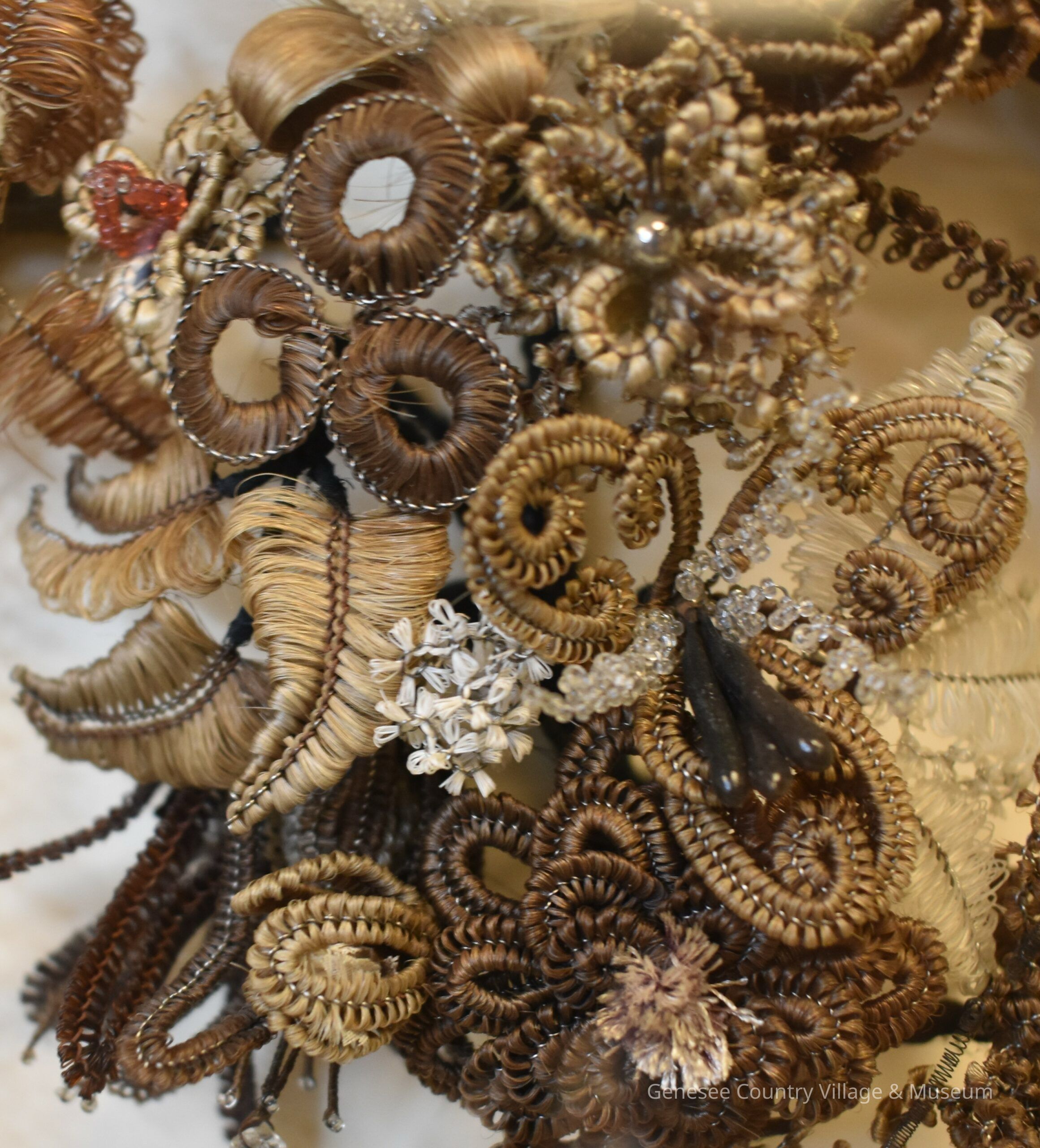
At first glance a hair wreath, to some, can look like a messy, drab, nest of some sort. However, upon closer inspection one finds a miniature world of flower arrangements, butterflies, and even birds all carefully constructed with human hair. They are absolutely stunning in their intricacy. With wire to give it form a multitude of designs could be made.
Although the Gurney wreath is purportedly made with the hair of (presumably) living friends and family this is not always the case. In a time where mortality rates, especially in infants and children, were so high, and before photography was readily available, a lock of hair was a way to keep someone close to you, a symbol of love and grief. Victorians were notoriously sentimental and had elaborate mourning customs. Wreaths were sometimes made with a recently passed loved one’s hair and it was placed in the center of the shadow box. As another person passed this was moved aside and the new one was placed in the center, and this went on until the wreath was complete.
Hair art went out of fashion in the late 19th and early 20th century. Most likely as photography was much more readily available and served as a more visual remembrance of the details and features of a person. However, some artists continue to use hair as part of their art today. And much like our ancestors many people save a lock of their child’s hair when they get their first haircut. Perhaps we are not so different after allCollection
Genesee Country Village and MuseumMade/Created
Date made
circa 1870Place
Town
PalmyraState/Province
New YorkCountry
United States of AmericaContinent
North AmericaMaterial
hair, Wire, Glass, Walnut, Gilt