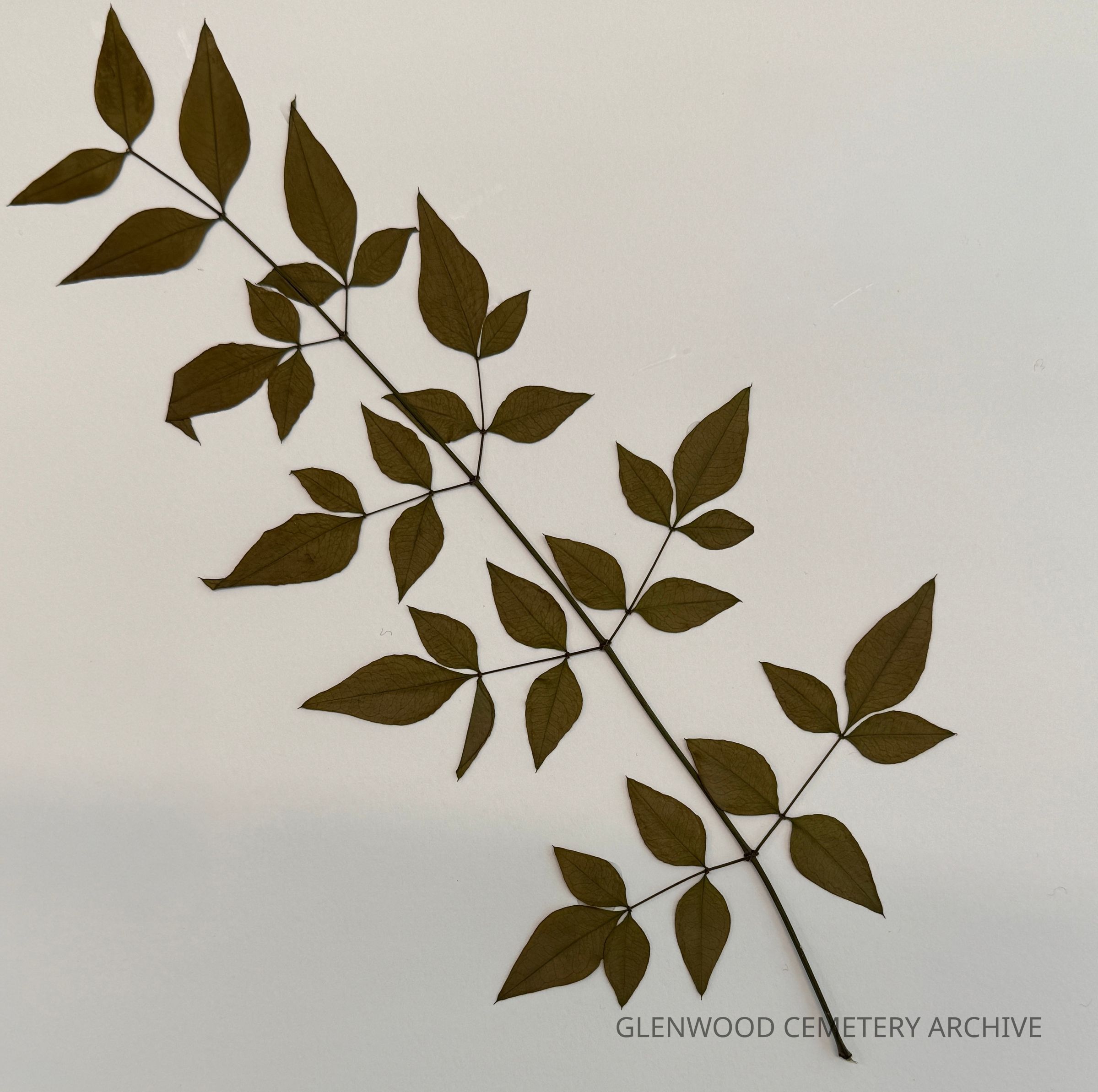
Name/Title
Sacred Bamboo LeafEntry/Object ID
GCA23_HORT_0020Description
This pressed leaf from the Sacred Bamboo plant features beautiful, lacy patterns with smooth, pointed leaf shapes. When pressed, the leaf flattened and took on a rich bronze-brown color. The branch has been carefully attached to special paper with safe glue and kept protected in a sealed holder.Plant Type
ShrubBotanical Name
Family
Berberidaceae (Barberry Family)Genus
NandinaSpecies
Nandina domesticaCommon Name
Nandina; Heavenly BambooOther Name
Sacred Bamboo, Sacred House-BambooGrowing Conditions
Water Needs
Low to Moderate; very drought-tolerant once established.Growth Rate
Medium to SlowLight/Sun Exposure
Full Sun to Part Shade (best foliage color in full sun)Soil Type
Well-drained, fertile, moist soils.Soil pH
Acidic to Neutral (5.5–6.5)Climate Zone
USDA Zones 6–9Leaf/Foliage
Leaf/Foliage Color
Bronze-green emerging, bright green in summer, turning fiery red/purple in winter.Notes
Alternating, 2–3 pinnately compound; individual leaflets are lanceolate with smooth (entire) margins.Bloom
Bloom Colors
White to Creamy-WhiteFlowering Season
Late Spring to Early SummerNotes
Large terminal panicles of small star-like flowers followed by bright red persistent berries.Maintenance
Pruning
Thin out up to 1/3 of the oldest canes down to ground level in late winter to encourage fresh base growth.Deadheading
Optional; leave spent flowers intact to allow red berry clusters to form for winter interest.Shearing
Do not shear; flat topping destroys the natural bamboo-like cane structure.Notes
Berries contain cyanide and can be toxic to birds (especially Cedar Waxwings) if consumed in large quantities; listed as invasive in some areas.Pests/Diseases
Pest/Disease Notes
Virtually pest-free; occasionally develops chlorosis in high-pH alkaline soils.Treatment Notes
Apply chelated iron or soil sulfur if leaves show interveinal yellowing (chlorosis).Propagation
Propagation Type
Semi-hardwood Cuttings, Division, or SeedNotes
Root basal suckers/divisions in spring, or take semi-hardwood cuttings in summer using rooting hormone.Acquisition
Acquisition Method
BequestDate
Dec 18, 2025Aquired From
M KhanPlace
* Untyped Place
Glenwood CemeteryNotes
2026.001Create Date
August 20, 2026Update Date
October 14, 2026