Label Type
Technique or ProcessLabel
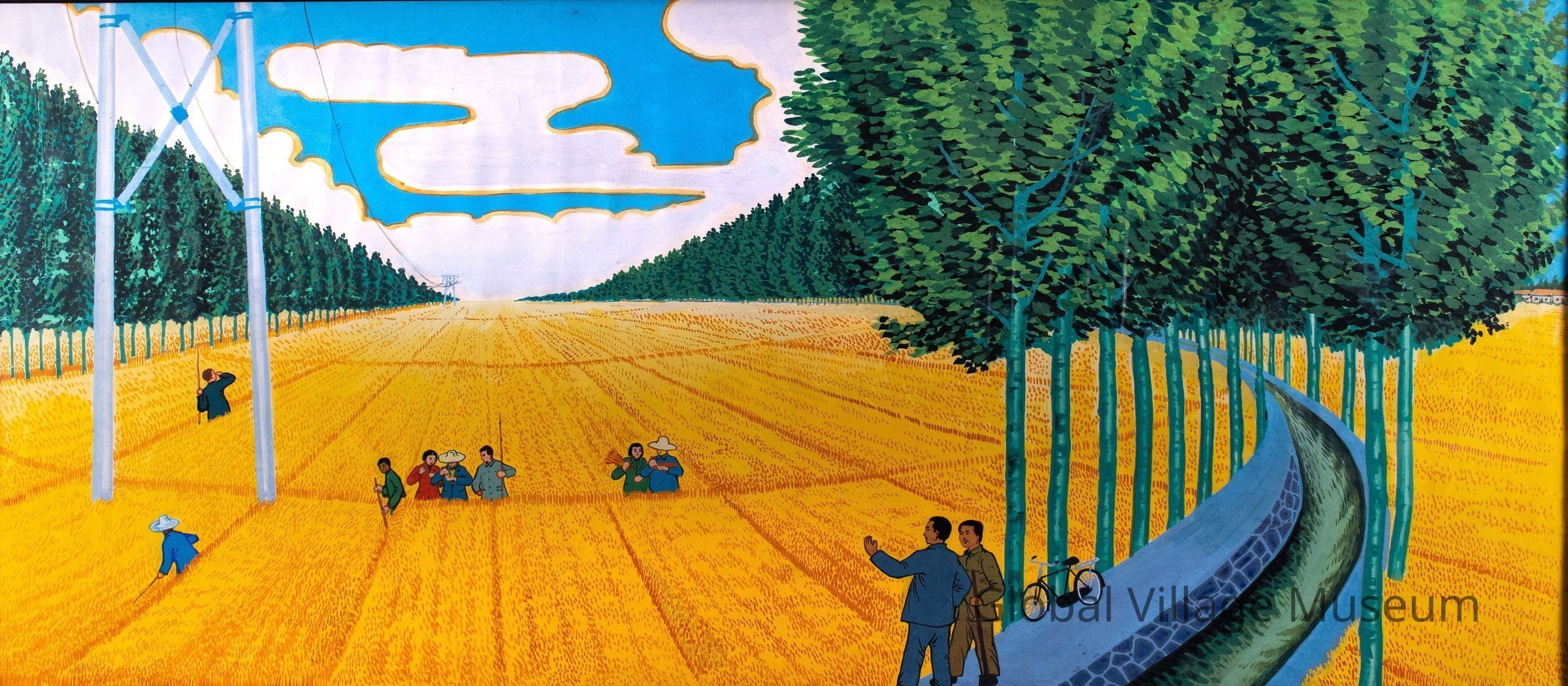
Flourishing Woods Bumper Harvest
Zhou Wende (Chinese, b. 1943)
1993
Paint on rice paper
Gift of Andrea and Irv Green, 2019.1.1Label Type
Cultural/Historical ContextLabel
This scene shows people in the fields picking grain samples to help determine the annual output. The township administrators along the road next to an irrigation canal are calculating productivity per mu (a traditional measurement unit of area). These figures were important for assessing agricultural progress and demonstrating improvements in output.
Because of the painter’s previous art instruction, this image reflects a combination of professional and Socialist Realism techniques. Zhou began painting in 1960 at age 17 and studied art as well as read extensively about the subject. Zhou incorporated classical Chinese elements – like the decorative clouds and canal stonework – with professional techniques, such as converging lines for perspective and scaled figures to create depth.
The painting is a classic example of Socialist Realism, a style that celebrates the collective labor of peasants and farmers in an idealized, heroic light. Zhou painted over 100 works during his career, and 20 were published. There were originally three copies of this painting: one is here at GVM, one is housed at the National Art Museum in Beijing, and the third was lost in a flood.
In 1976, the painting was selected as one of six Huxian farmer artworks to be featured in a commemorative stamp series titled Commemorative Stamps of Huxian Peasant Paintings. As a stamp, the image further served the goals of state propaganda by promoting agricultural development and loyalty to Party programs. Highlighting both agriculture and forestry, the painting aligns with the Cultural Revolution’s ideological messaging (glorifying the peasantry and elevating rural labor) and shows how science, ideology, and state policy can work hand-in-hand.