Label Type
Tombstone LabelLabel
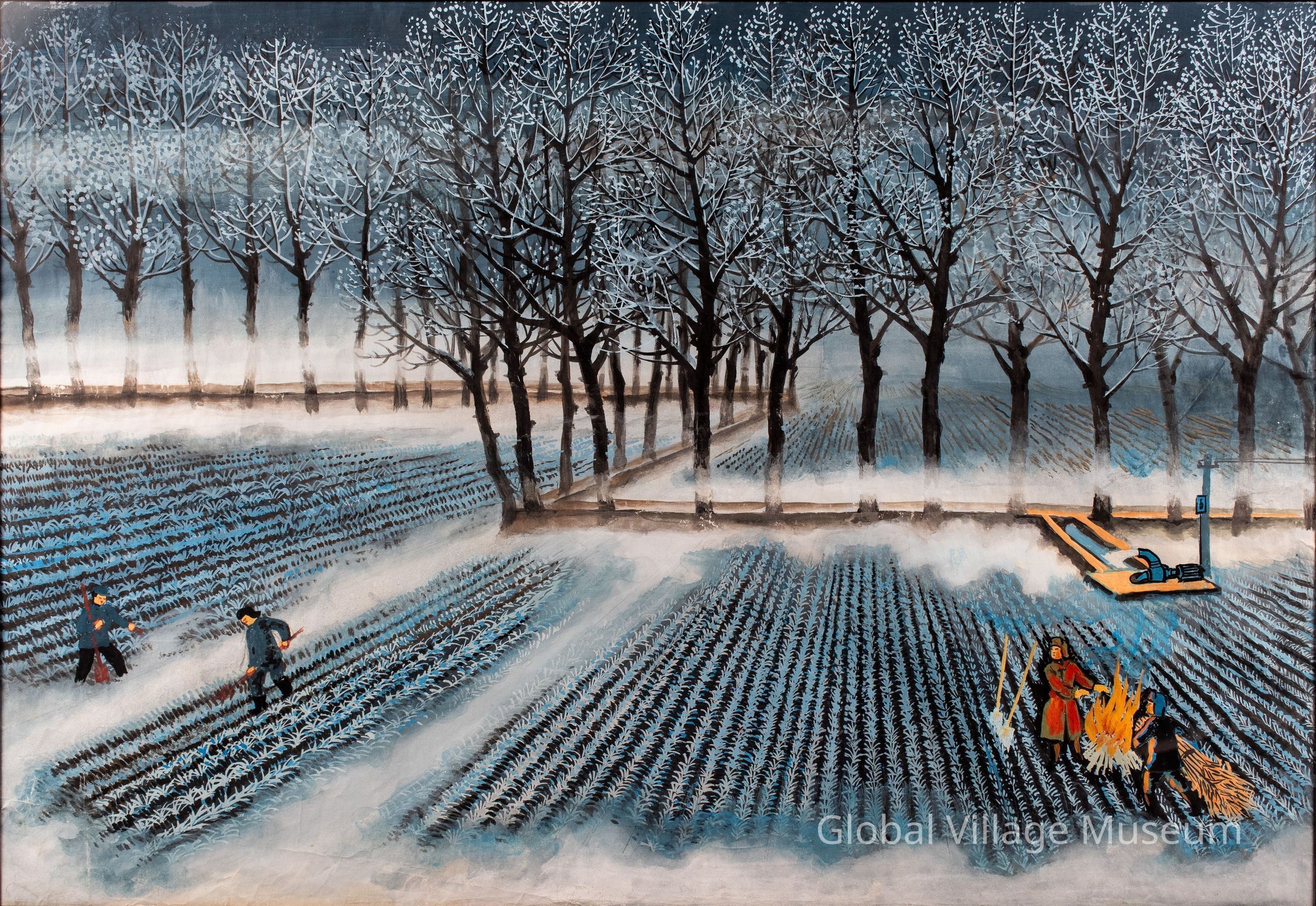
Winter Irrigation
Zhou Wende (Chinese, b. 1943)
1979
Paint on rice paper
Gift of Andrea and Irv Green, 2019.1.2Label Type
Cultural/Historical ContextLabel
This painting depicts winter wheat being irrigated on a cold, dry morning. Warm water from the lake hits the frigid air, creating steam that rises from the field. In the foreground, people huddle by a fire for warmth as they wait their turn to irrigate from the communal water source – a necessity during winter so the roots can receive enough moisture to survive. Note the delicate use of watercolor in the fog and steam; the thinner layer of paint allows the texture of the paper and the artist’s underlying sketches to come through.
The image of families taking turns at a shared water source reflects the collective labor ideals promoted during the Great Leap Forward and then reinforced during the Cultural Revolution. Though the scene is peaceful – even serene – it also conveys an underlying sense of rural hardship: early morning chill, long waits, and the constant demands of farm life. These were the types of images encouraged under Mao: not towering monuments, but ordinary people working together for the collective good.
There is also a quiet shift in tone. The soft watercolor and atmospheric steam signal a move away from the bold, heroic imagery of earlier revolutionary art. While still grounded in socialist ideals, Winter Irrigation feels more contemplative than declarative. It suggests a transitional moment – when the rural ideals of Maoism were still present but beginning to soften into something more personal and human.
Zhou began painting in 1960 at the age of 17. Over his career, he created around 100 works, 20 of which were published. Winter Irrigation is one of only three versions created.