Label Type
Tombstone LabelLabel
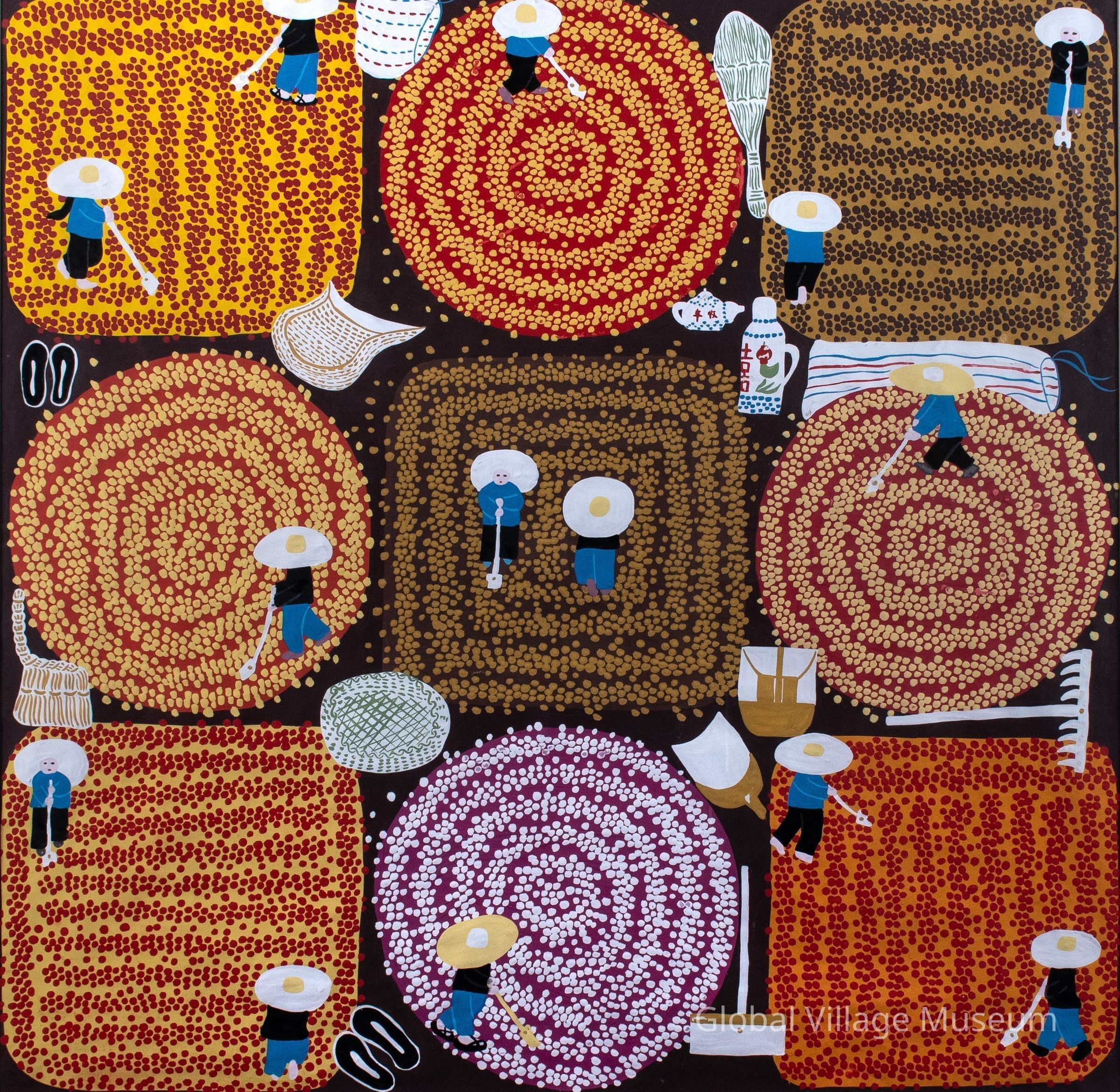
Southern Sugar Cane Planted in the North
Zhao Shengtao (Chinese, b. 1952)
ca. 1970
Paint on rice paper
Gift of Andrea and Irv Green, 2019.1.92Label Type
Cultural/Historical ContextLabel
This painting captures more than an agricultural experiment – it reflects a larger ideological mission. The effort to grow sugarcane, a southern crop, in northern China was not merely a farming initiative; it was a symbolic demonstration of how human determination and socialist planning under Maoist ideology could overcome natural limitations. Scientific progress guided by political vision was expected to yield miraculous results as part of the broader goal of building a unified, self-reliant socialist nation.
The scene likely represents a model village or experimental farm – the kind used to pilot new techniques and promote collective labor. Cooperative farming, government oversight, and new planting strategies were recurring themes in the agricultural propaganda of the era. On the surface, the painting conveys optimism and innovation, but underneath, it hints at the consequences of state-led experimentation that often disregarded local ecological knowledge. The push for symbolic victories – like sugarcane in the north – foreshadowed the broader environmental and agricultural damage that resulted from such top-down policies.
Zhao began painting in 1973 at the age of 21 after attending an art seminar at his county’s cultural center. Having grown up during a time when schools were largely closed, Zhao turned to art as a way to learn and express himself. He produced more than 150 works, with 100 exhibited and 15 published, earning recognition in Who’s Who in Chinese Artists in 1993. Southern Sugarcane Planted in the North stands as a vivid example of both the aspirations and complexities of Mao-era agricultural policy and artistic expression.