Description
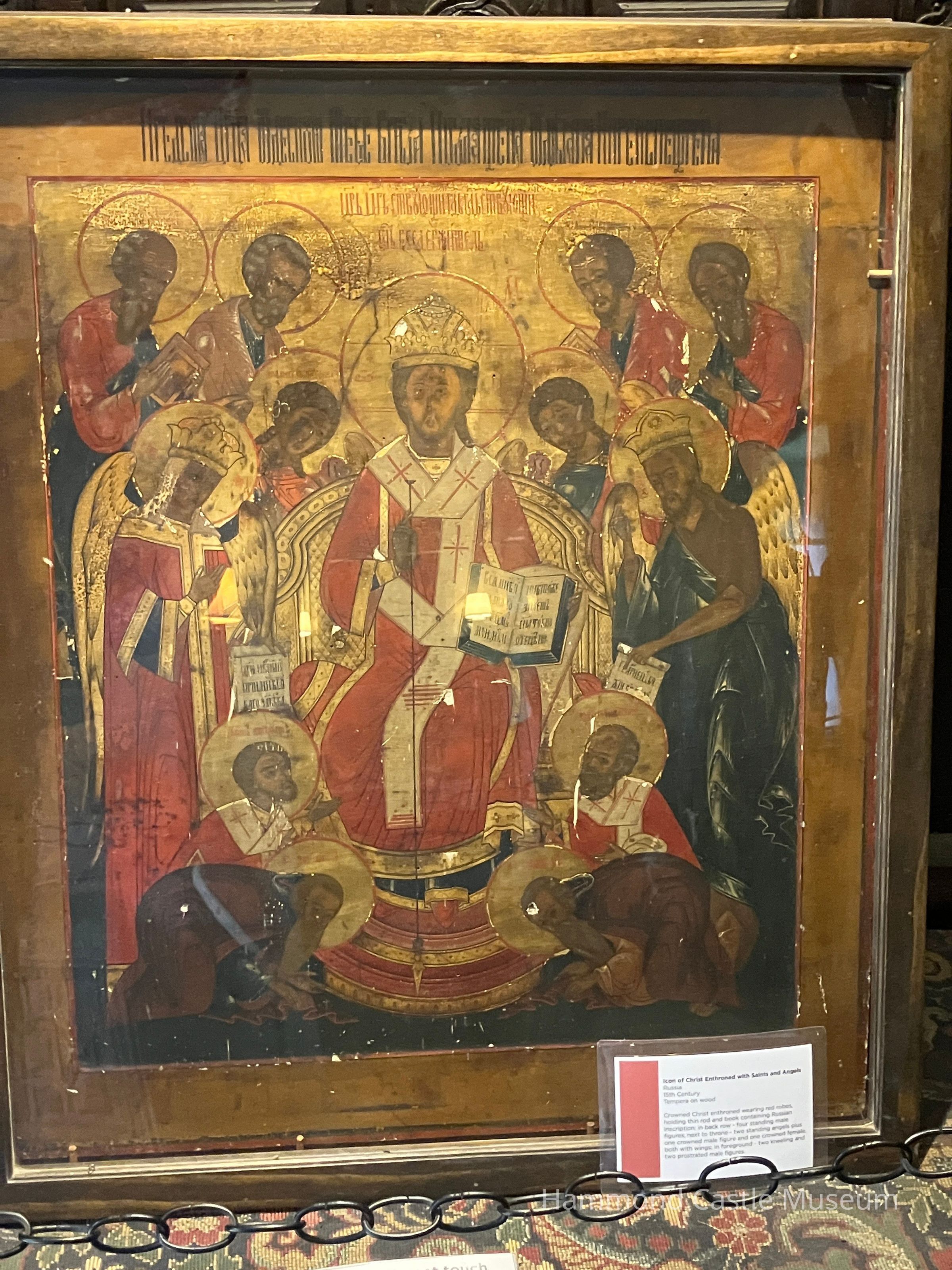
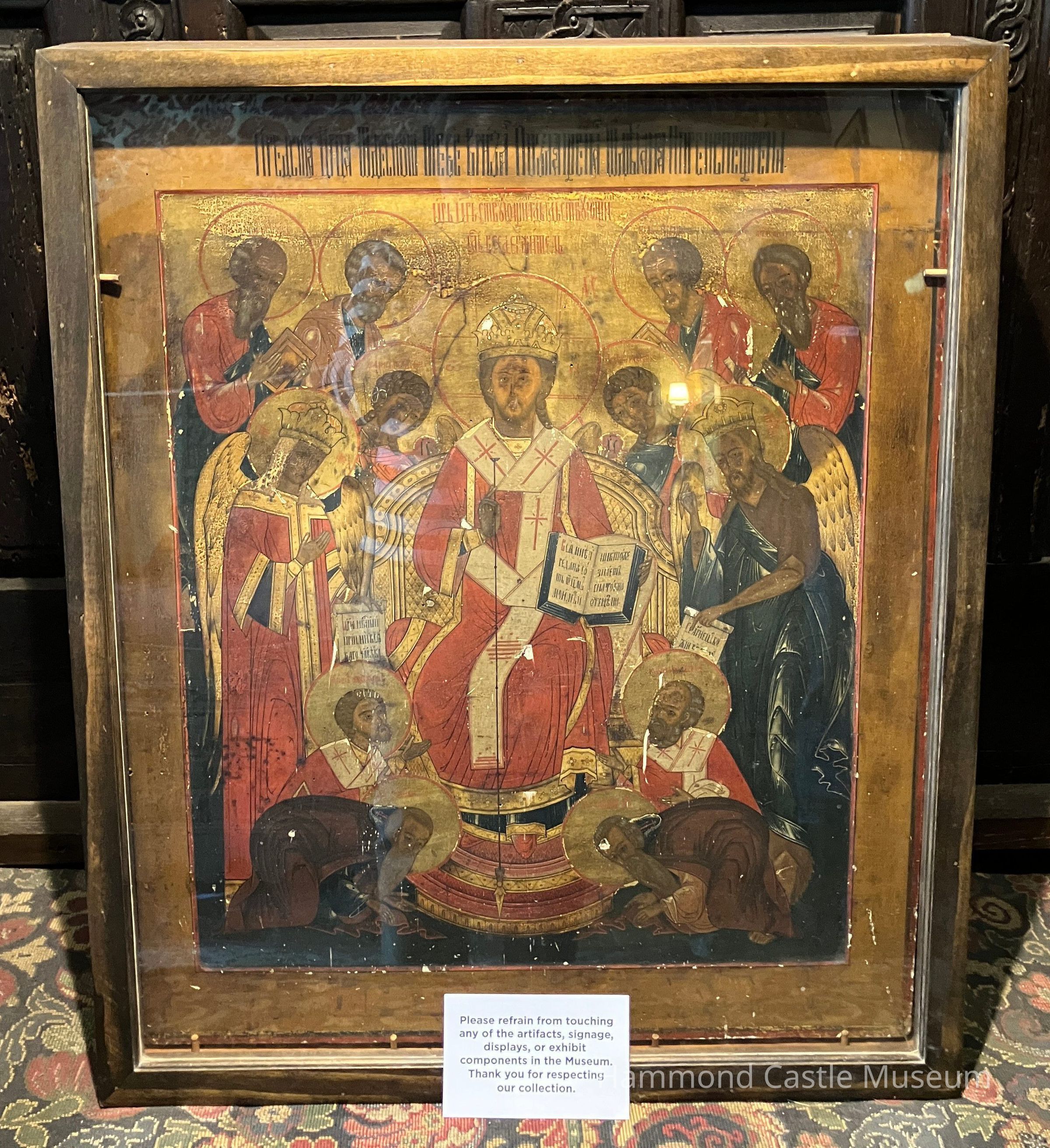
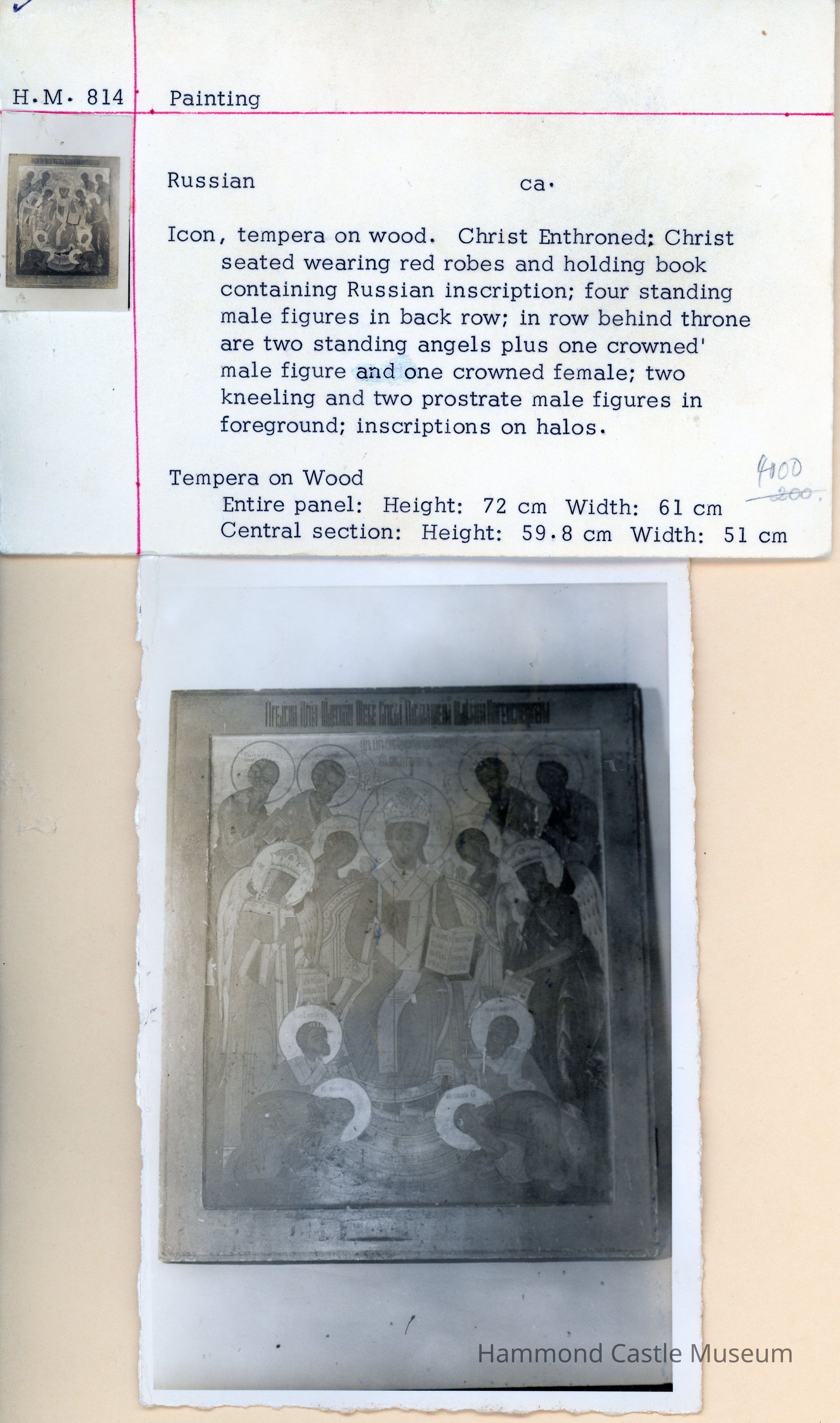
16th c Russian Icon of Christ Enthroned with Saints and Angels
Tempera on wood.
Crowned Christ enthroned wearing red robes, holding thin rod and book containing Russian inscription;
Back row - four standing male figures;
Next to throne - two standing angels plus one crowned male figure and one crowned female both with wings;
Foreground - two kneeling and two prostrated male figures. The bottom two saints were Russian orthodox monks who founded the Solovetsky Monastery on Solovki Island in the 14th-15th centuries - perhaps this icon originated from there.
Inscriptions on halos are hard to read but name the saints and angels-
Christ is at the center
Top left: Apostles Peter and John the Evangelist
Top right: Apostles Paul and Andrew
Back left: Archangel Michael
Back right: Archangel Gabriel
Left with crown: Virgin Mary
Right with crown: John the Baptist
Below left: St. John Chrysostom
Below right: St. Nicholas
Bottom left: St. Zosimas of Solovki
Bottom right: St. Sabbatius of Solovki
[2025 Elizaveta Tresina]
What kind of icon is it?
This type of icon is what’s known as an expanded Deësis of Christ Enthroned with Saints. A Deësis is the standard art-historical term for exactly this configuration, in which Christ is at the center, flanked by the Virgin Mary and John the Baptist interceding on behalf of humanity. It can also be classified as an “expanded Deësis” because of the saints depicted in the icon. The icon can also be identified as a Deësis because it is strikingly similar to the Harvard Art Museums’ own Deësis, which also depicts the Virgin Mary and John the Baptist with Christ in the center.
The Question of Dating
It is reasonable to assume that this icon dates to sometime after 1547, the year Zosima and Sabbatius were canonized at the Council of Moscow under Metropolitan Makarii. However, icons depicting Zosima and Sabbatius with halos predate 1547 and are held in the Kremlin museums in Moscow. Regardless, a 15th-century dating is appropriate for this icon, and a more specific date can be treated as provisional until further evidence is acquired.
Regional/Workshop attribution
The most plausible link to the origin of this particular icon is the Solovetsky Monastery. It was common for this monastery to produce icons for visiting pilgrims or to hand them out as gifts. What makes this origin most likely is the appearance of Zosima and Sabbatius themselves; however, their appearance alone wouldn’t be enough, since they were revered throughout Russia. The Solovetsky Monastery was known for producing icons that included them in mass, since both were among the monastery’s original founders. However, there are holes in this theory that can’t be ruled out, such as the absence of inscriptions, acquisition records, or even dealer-note ties, so all the information is inferred purely from the content within the icon. Also, no stylistic or technical analysis has been done to confirm a Solovetsky origin, let alone any other origin such as Novgorod or Moscow. Therefore, any other origin for the icon remains a real possibility, but from a numbers perspective, it is less likely.
How could it have reached Hammond?
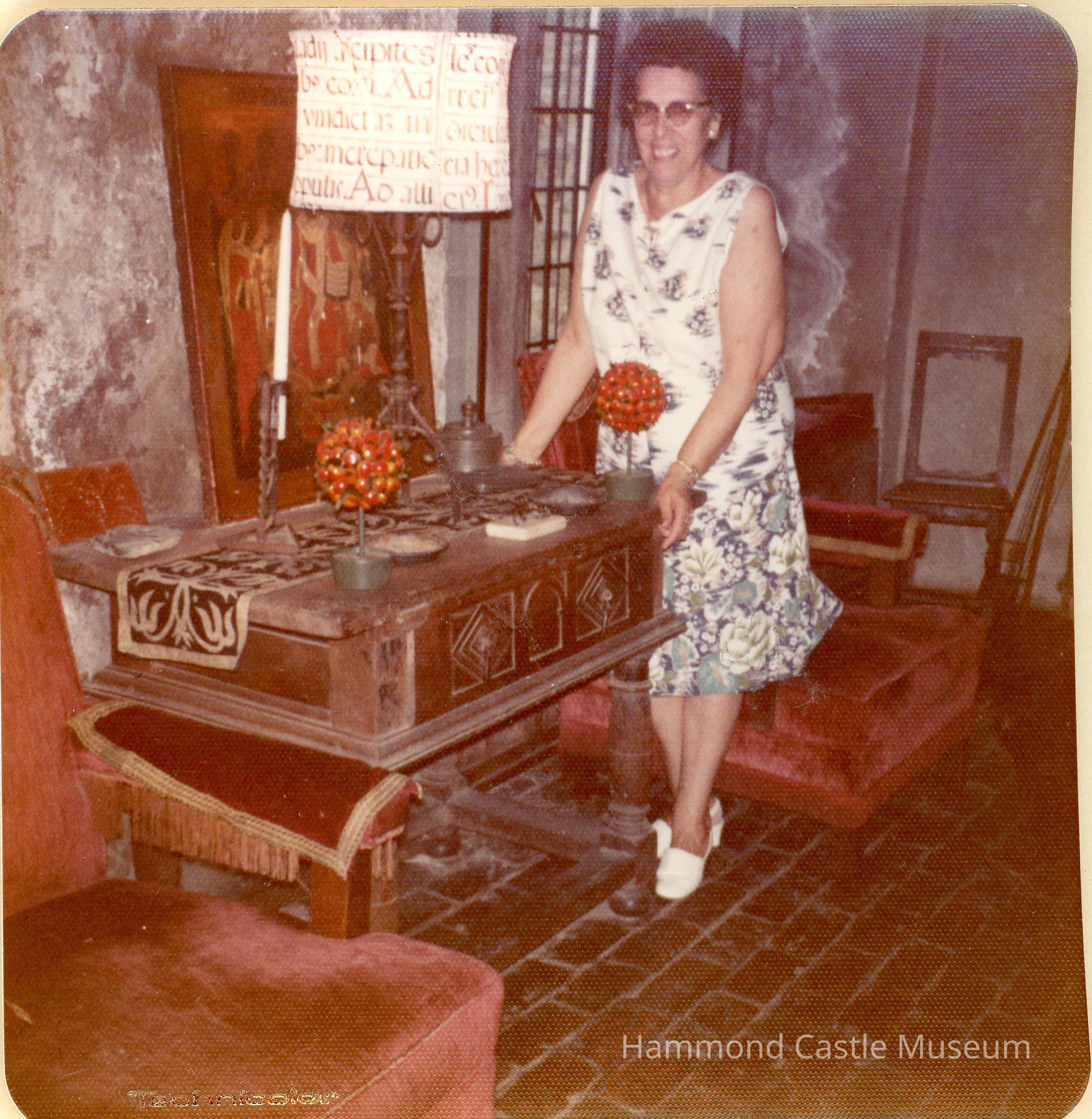
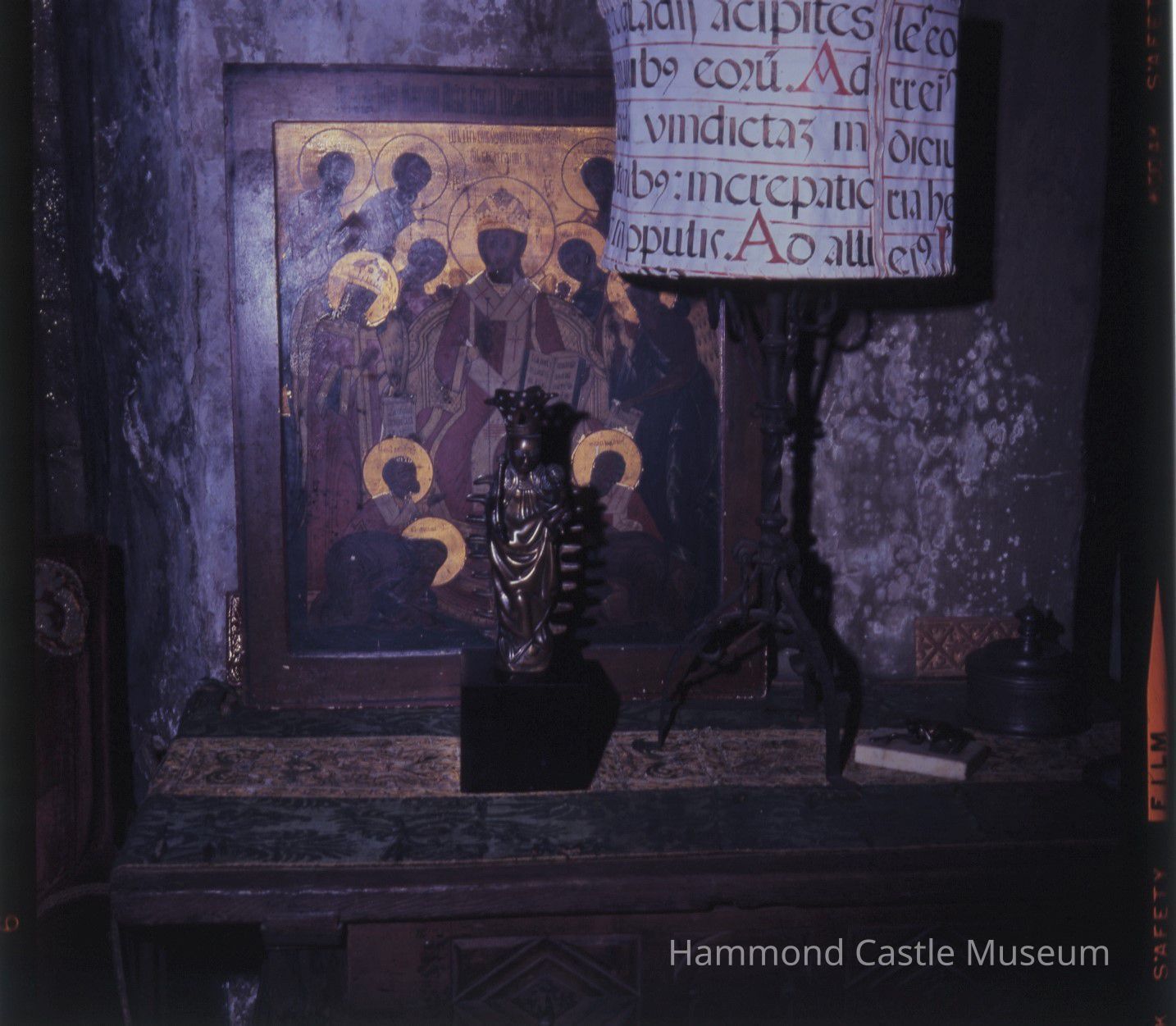
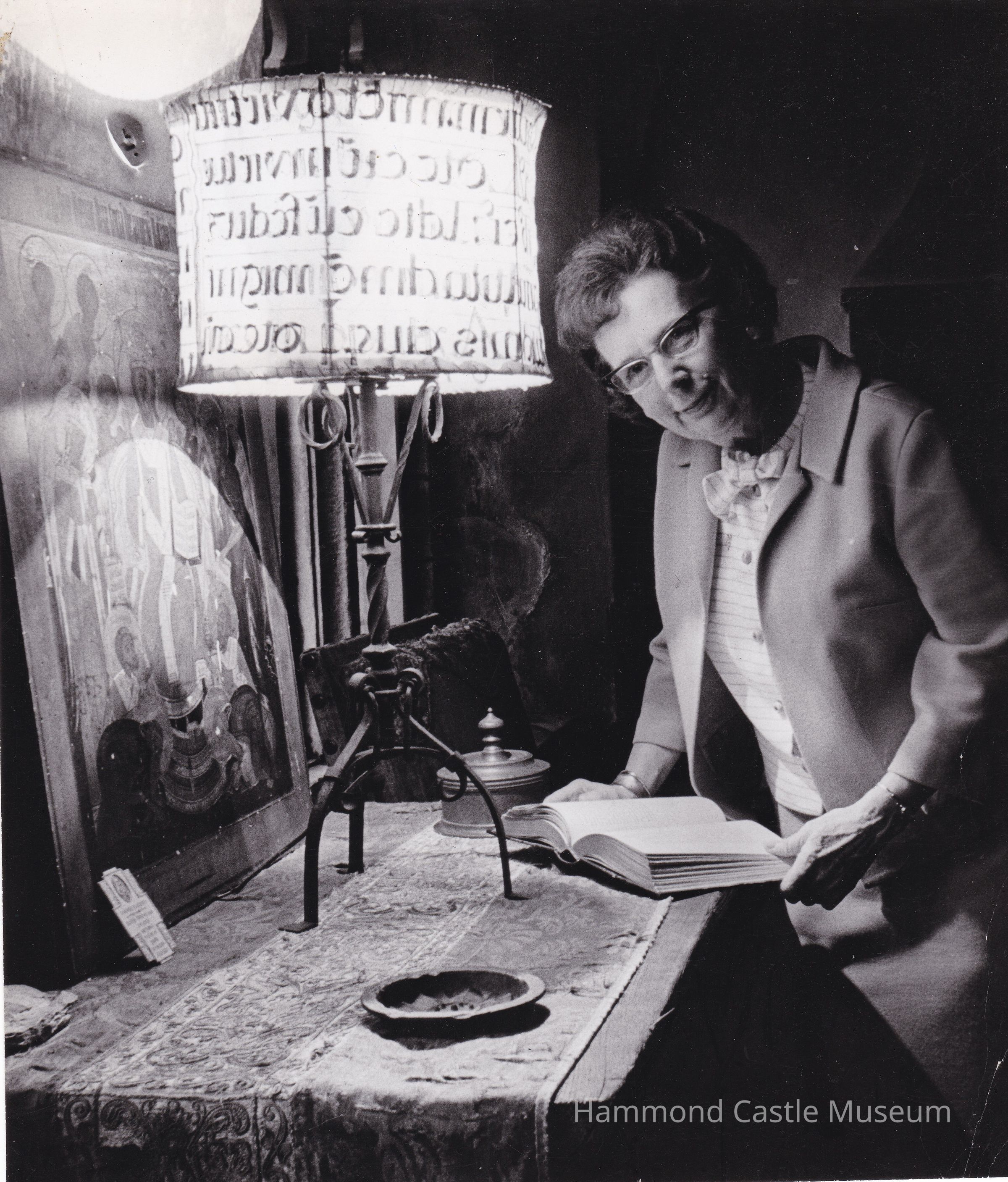
One possible way the Icon could have entered the museum’s collection is through Natalie Hays Hammond, who may have acquired it from Armand Hammer/Hammer Galleries in New York in 1937. It may have reportedly come from the “Winter Palace Collection, Russia,” where we know Natalie bought at least one Russian icon. According to the 2011 provenance listing from Shapiro Auctions, Natalie is listed as the buyer of Lot 11, titled Russian Icon of Saints Zosima and Savaty of Solovki. Since the same saints appear on the icon Natalie bought and on HM-814, it is possible they were sold together.
[2026 Denoyer]Collection
Painting