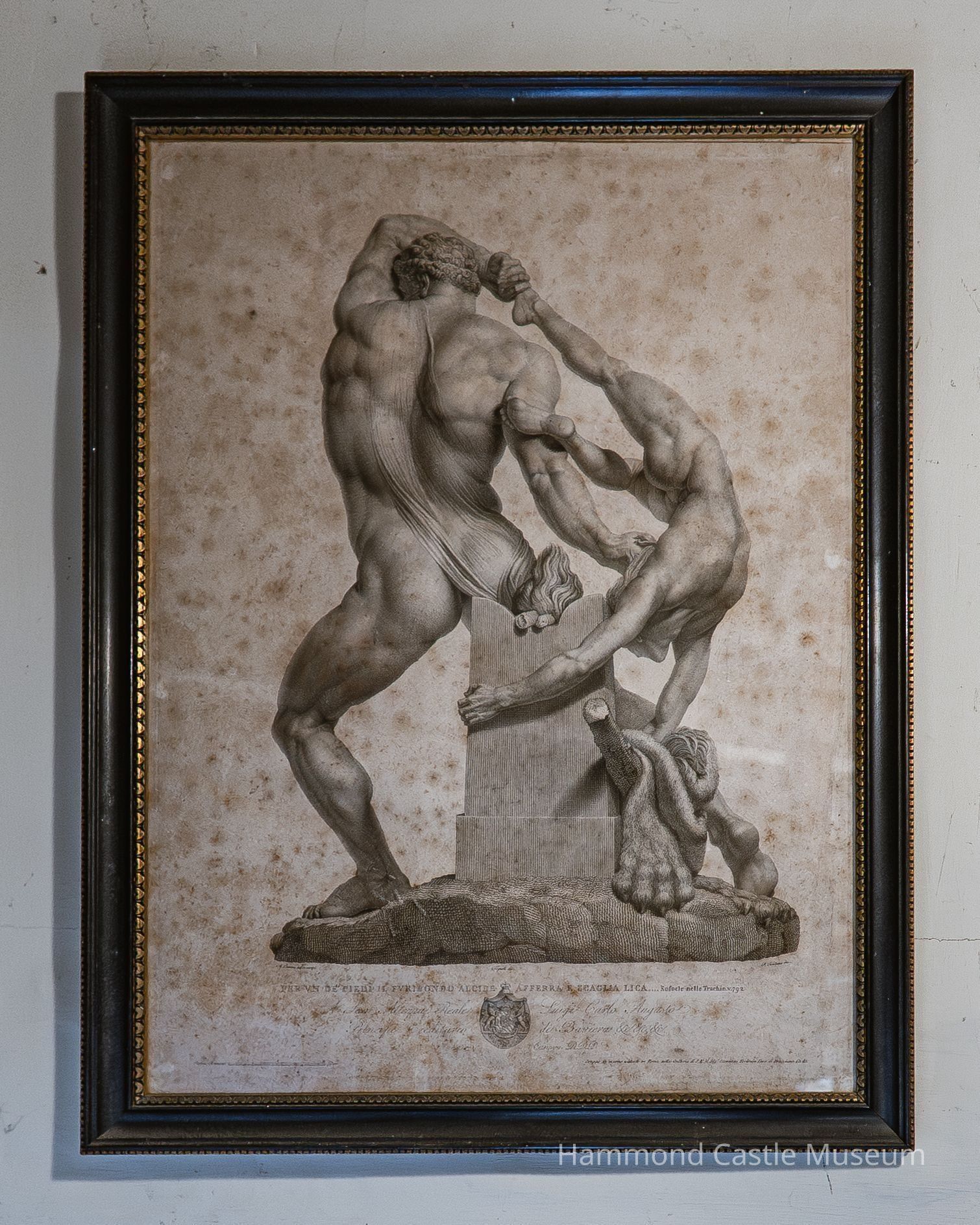
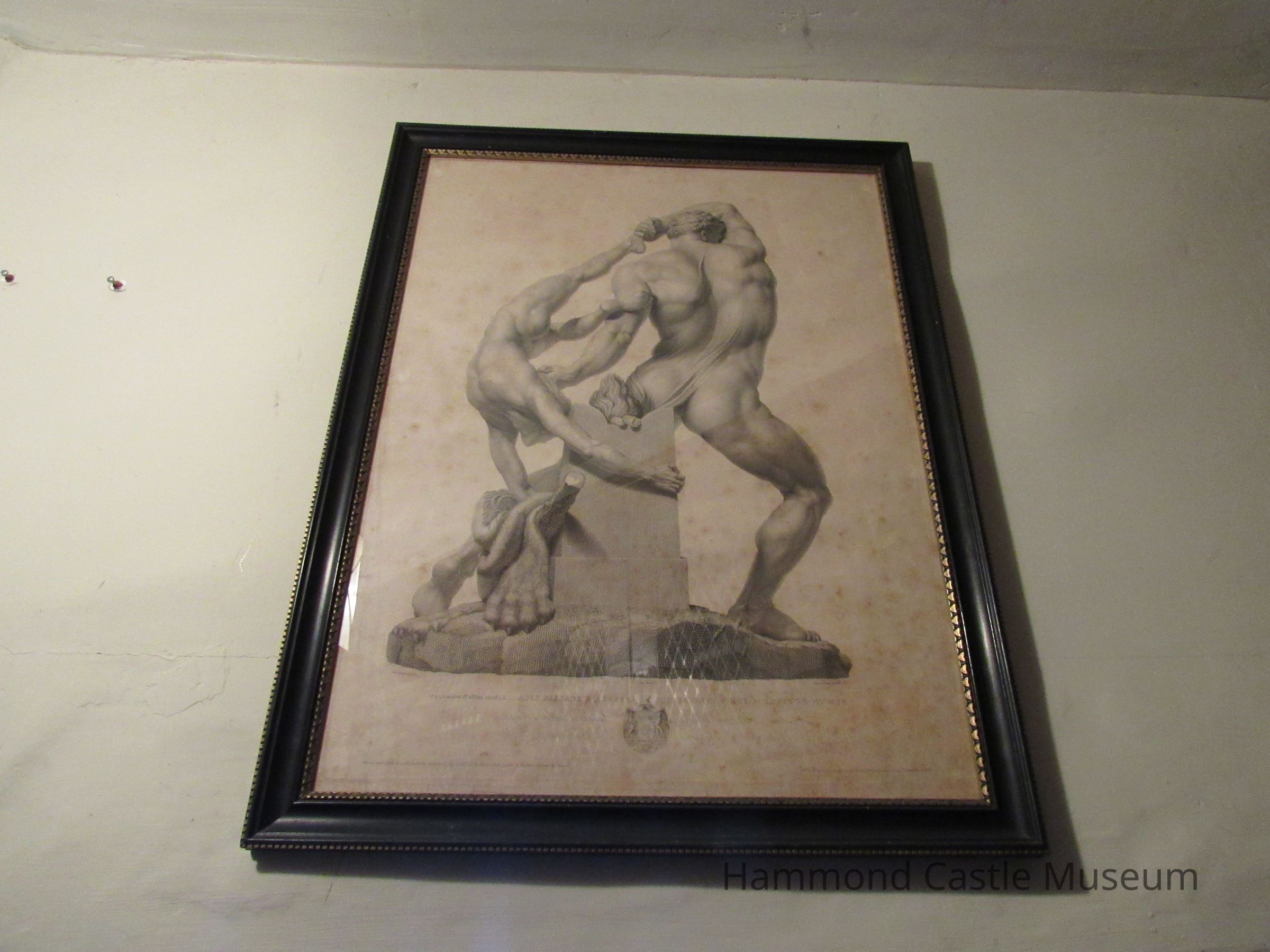
Set of 2 engravings.
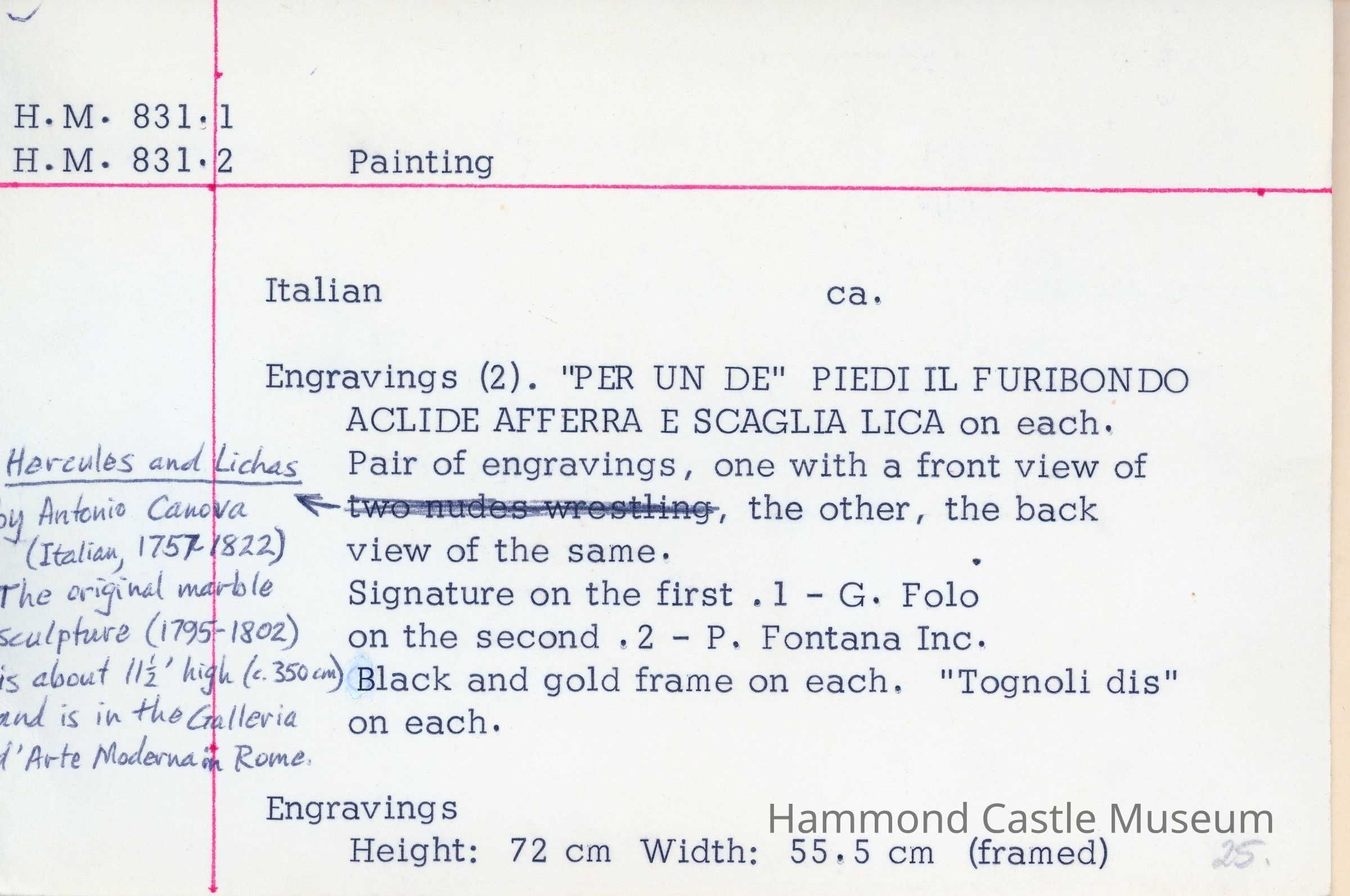
Hercules and Lichas --print of marble sculpture by Antonio Canova (Italian, 1757-1802); the original marble sculpture (1795-1802) is about 11 1/2 high (c. 350 cm) and is in the Galleria d'Arte Moderna in Rome.
Depicted here is Hercules and Lichas, inspired by Antonio Canova’s monumental sculpture, shown from two different angles. Together, these views give us a fuller sense of the motion, force, and emotion captured in the work- making the myth feel less like a distant story and more like a moment unfolding in front of us.
The artwork captures a dramatic scene from Greek mythology: Hercules, driven to madness by a poisoned garment unknowingly sent by his wife Deianira, seizes the messenger Lichas and prepares to hurl him into the sea. Canova’s composition is celebrated for its powerful expression of strength, movement, and emotion- hallmarks of his neoclassical style.
Because the original sculpture was designed to be viewed from all sides, engravings like these helped showcase multiple perspectives of the scene, offering viewers a deeper understanding of the sculpture’s dynamic form.
Inscription: "PER UN DE" PIEDI IL FURIBONDO ACLIDE AFFERRA E SCAGLIA LICA on each. Trans - "By one foot, the raging Alcides grabs and hurls Lichas,"
.1 - Front view, Signature -- G. Folo
.2 - Back View, Signature -- P. Fontana Inc.
Black and gold frame on each. "Tognoli dis" on each.