Name/Title
ModelEntry/Object ID
2007.14.01Description
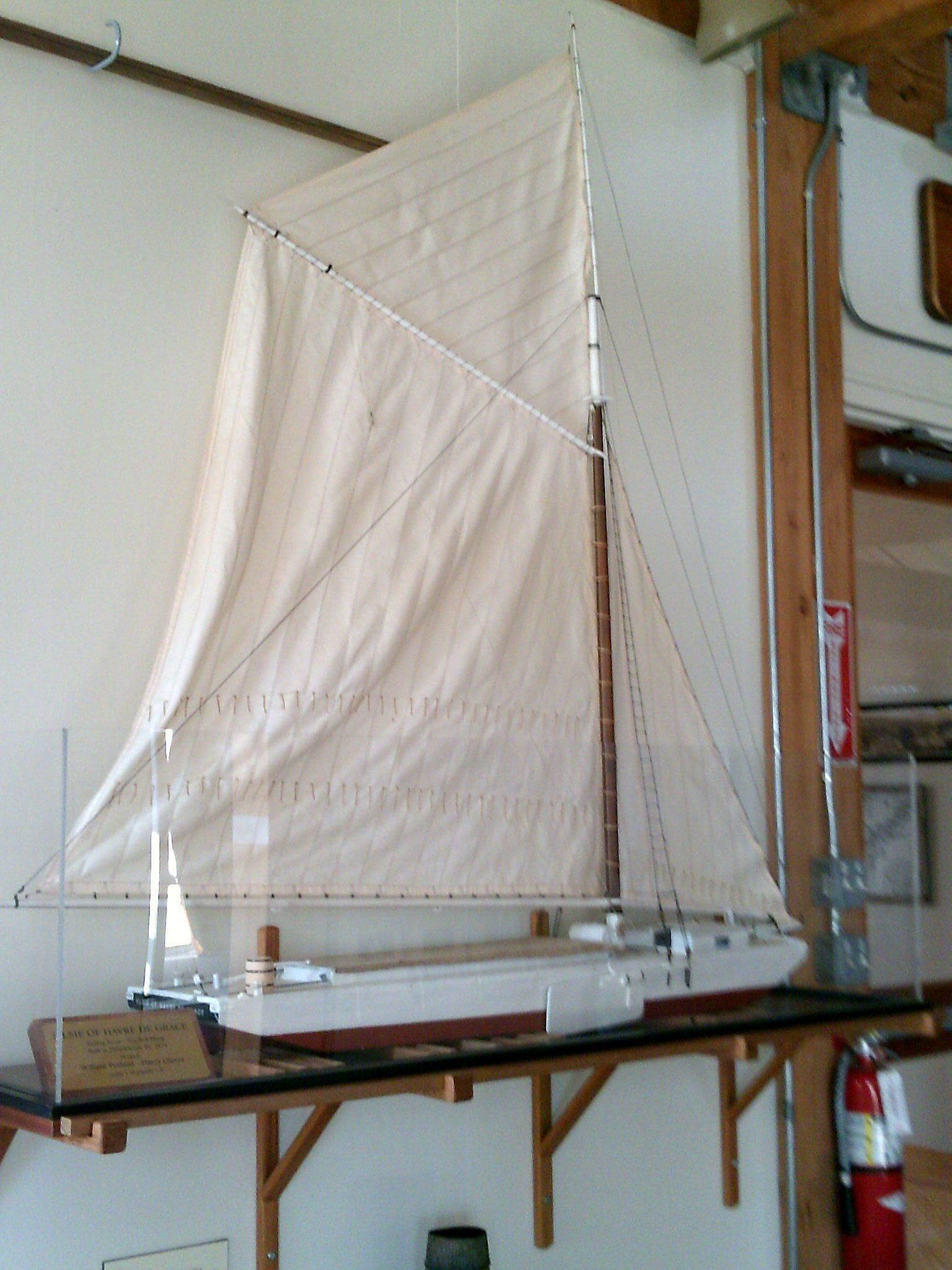
One model of the Elsie.
Information written around model:
Scows, with their square-ended hulls and nearly flat bottoms, were developed in colonial times to carry bulk cargo and could be propelled either by oar, push pole, or sail. Easily built, scows' shoal draft made them suitable for shallow harbors and waterways along the Atlantic Coast. The mid-nineteenth Century, the sailing scow could be found throughout North American from Maine to NJ, and from the Gulf Coast and Great Lakes to San Francisco bay. In fact the scow has been considered the covered wagon of American waterways.
Scows were particularly suited to the protected waters of the upper bay and its tributaries. Scow "flats" carried tobacco down river in colonial times, and were later used as ferries. The most familiar nineteenth century Chesapeake watercraft was the scow sloop, which carried bulk cargo like grain, hay, bricks, cordwood, and coal to warehouses and larger ocean going vessels in Baltimore and the Atlantic waterways. At least thirty sailing scows were built on the Chesapeake, most crafted here in HdG.
The Elsie of HdG:
The Elsie of HdG was a topsail scow sloop built in 1874 in Philadelphia. She was 60 ft. 3 in. long, had a 1ft. 3in, draft, and 1,860 feet of sail. Elsie was originally built for the purpose of sport gunning. Used as a "cabin boat", the scow carried gunning parties and was equipped to act as a base for hunting migrating birds on the Susquehanna Flats. She would have been accompanied by a sneak box and hundreds of decoys.
In 1888 Elsie was cold to Capt. Charles Palmer of HdG. Along with hosting duck hunting parties, the Elsie began transporting cargo to other ports along the Bay. Capt. Palmer and his family continued to own Elsie until 1945, when developing marine technology drove the sailing scow out of use. By 1957 the Elsie had been abandoned. This ship was the last sailing scow on the Chesapeake.Collection
Glover/ Putland CollectionCondition
Overall Condition
GoodDate Examined
Sep 28, 2008Examined By
Keira Gruber