Name/Title
Lahaina Deed Transfer 1869Description
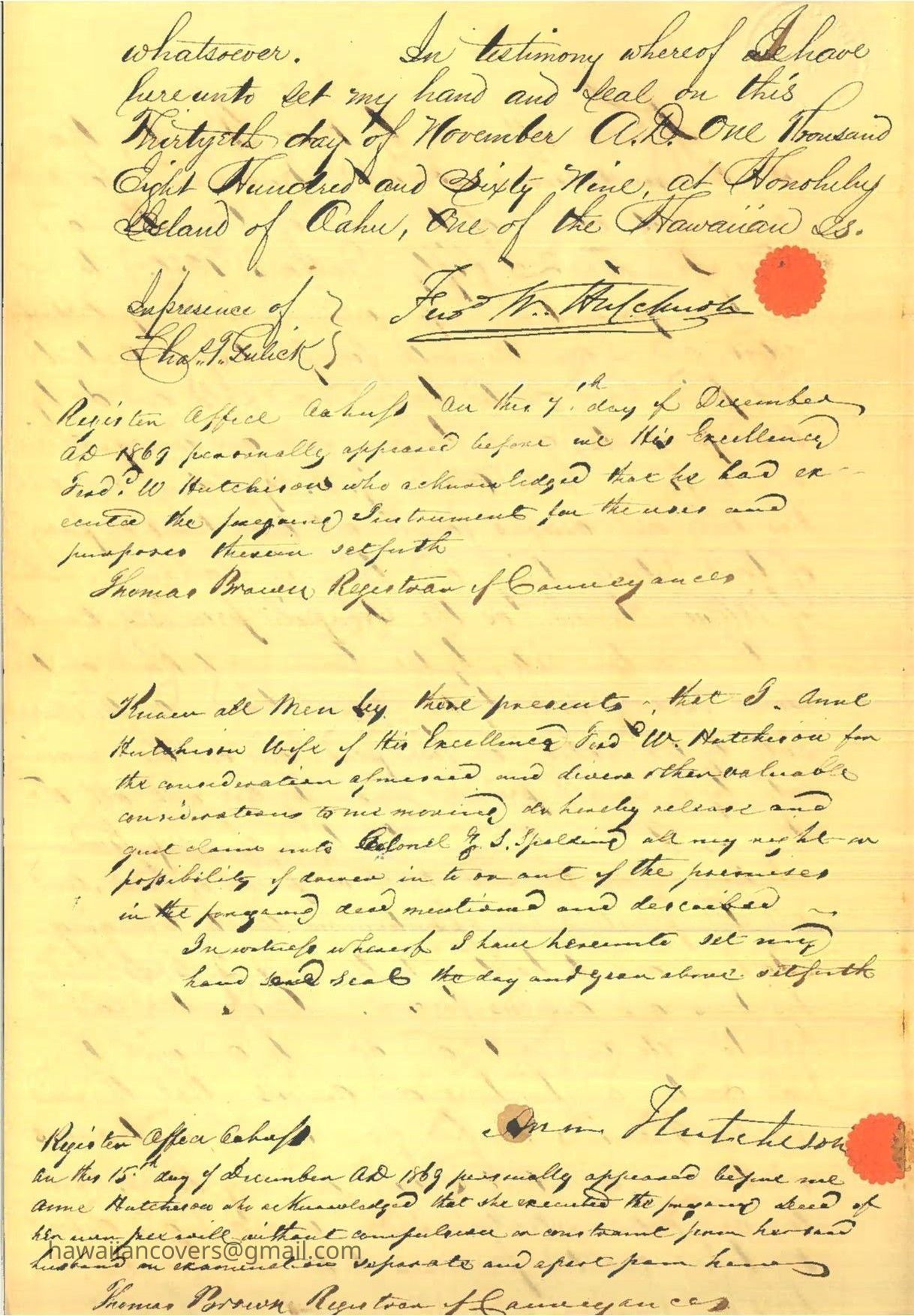
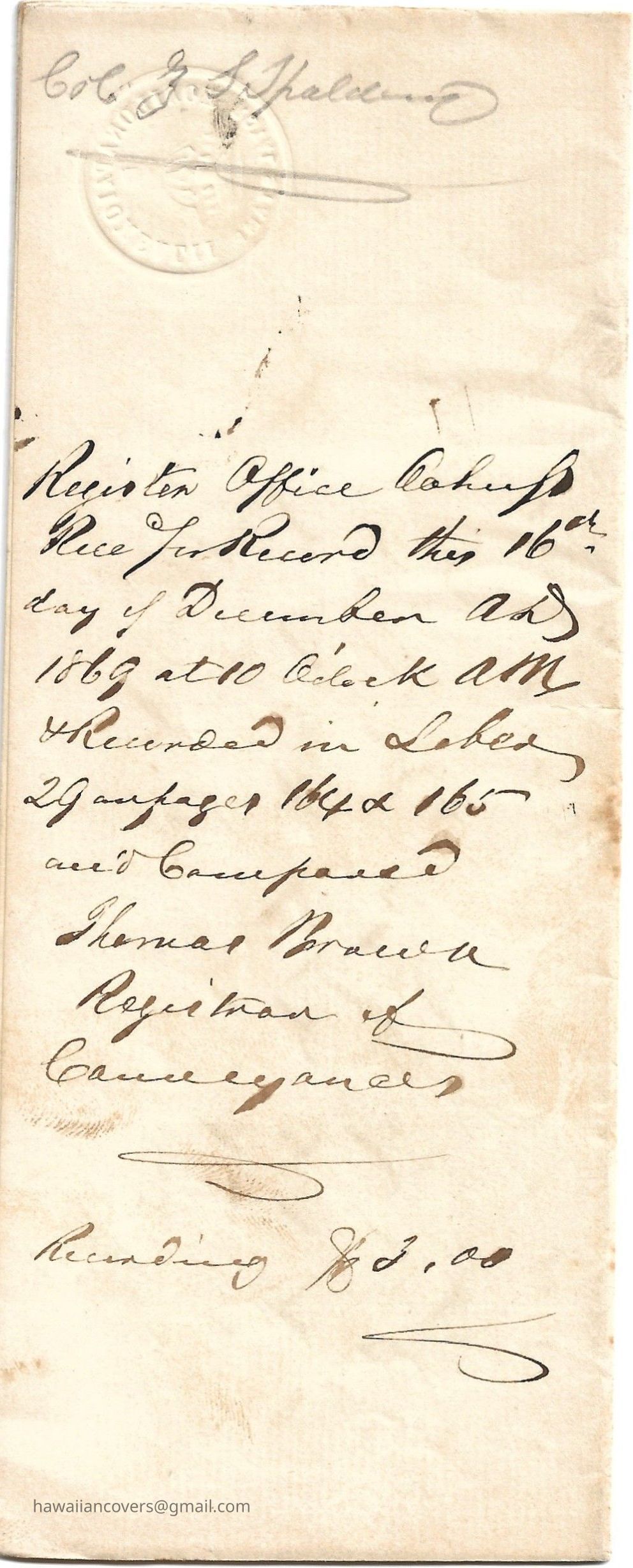
A Deed Transfer from "Ford" F. W. Hutchison to Colonel Z. S. Spalding for sum of $1250.00, signed on the 30th Day of November, 1869. Many prominent signatures are on this deed: "Ford" Ferdinand W Hutchison, Colonel Z. S. Spalding, Charles T. Gulick, Thomas Brown.
F. W. Hutchison
Ferdinand William Hutchison (c. 1819 – May 20, 1893) was a British physician and politician in the Kingdom of Hawaii who became a cabinet minister to King Kamehameha V. He was president of the Board of Health from 1868 to 1873 and was instrumental in the early development and management of the leper settlement of Kalaupapa.
Colonel Z. S. Spalding
Zephaniah Swift Spalding (September 2, 1837– June 19, 1927) was a veteran of the American Civil War, who was first sent to Hawaii on a clandestine mission for US Secretary of State William H. Seward. He later moved to Hawaii and made a fortune in the sugar plantation business. He began investing in the sugar industry, as owner of the Kealia Plantation on Kauai. Spalding was named the United States Consul to Hawaii for twelve months during 1868–1869.[
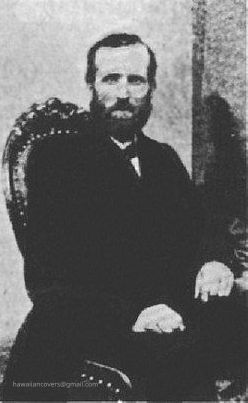
Charles T. Gulick
Charles Thomas Gulick (July 25, 1841 – November 7, 1897) was a Kingdom of Hawaiʻi politician and one of the few members of the various missionary families of the time to side with the monarchy in the 1893 overthrow of the Kingdom of Hawaiʻi.
He ran a business as notary public and issued government documents such as marriage licenses. He became the commander of the original Honolulu Rifles, with rank of Captain; this unit unlike its namesake remained loyal to the monarchy until disbanded in 1874.
He was appointed to the cabinet of King Kalākaua as Minister of the Interior on August 6, 1883, and served until June 30, 1886. He also served as acting Minister of Finance during the absence of John Mākini Kapena.[8] It is widely thought that sugar magnate Claus Spreckels had suggested both changes.[9]: 268 Both before and after Gulick, Walter M. Gibson acted as Minister of the Interior, while also acting as Minister of Foreign Affairs and even Attorney general. He went back into business, and became a real estate broker.[10]
Gulick was appointed again to the post of Minister of the Interior of Queen Liliʻuokalani on September 12, 1892, and served until November 1, 1892.
Wikipedia Reference Nos.
Thomas Brown
Thomas Brown (1804–1886) was a British-born resident who arrived in Hawaii in 1846 and served as the Registrar of Conveyances during the Hawaiian monarchy. He was a prominent figure in19th-century Honolulu, also working as a British Consul.Create Date
February 6, 2026Update Date
February 6, 2026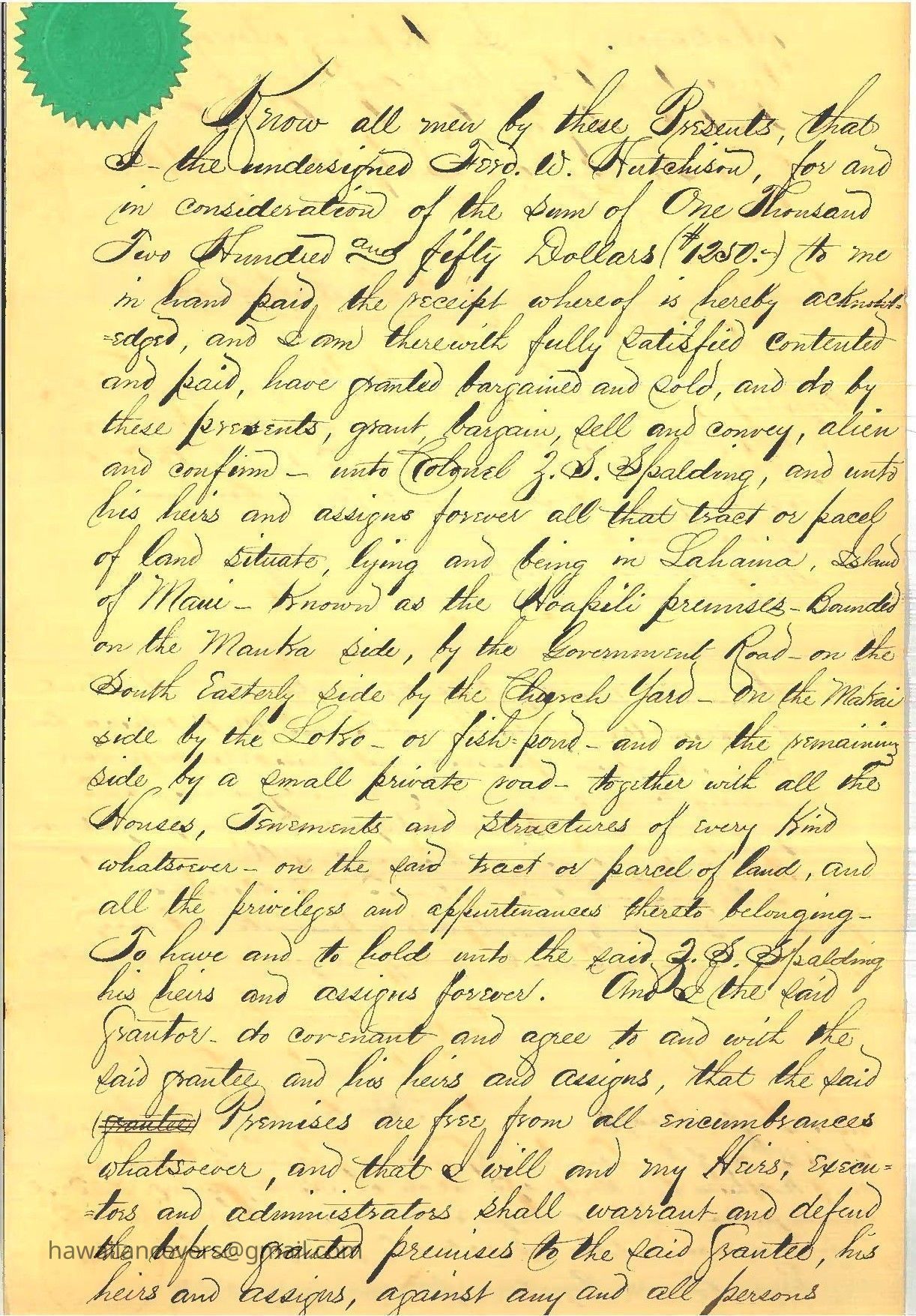
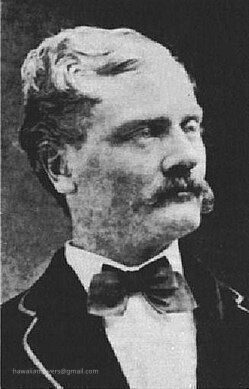
![For reference only: Charles Thomas Gulick
He met with Liliʻuokalani and other leaders loyal to her on January 15, 1893, just before the overthrow of the Kingdom of Hawaiʻi.[5] In the 1895 Wilcox rebellion, he was tentatively selected to be Minister of Finance in the cabinet, and drafted the new constitution to be used if the plot had succeeded. He and the other leaders were arrested, and put on trial for treason starting January 21, 1895. The defense was led by former attorney general Paul Neumann.[11]: 209–210 Although Gulick denied involvement in plans for military strikes, witnesses testified the group met at his house. He was convicted and first sentenced to death, which on February 23, was reduced to 35 years in prison and a fine.[11]: 214
Gulick was part of the last batch of prisoners to be released when the remaining eight prisoners including him and Wilcox were pardoned and released on January 1, 1896.[12][13] He died November 7, 1897.
Wikipedia Reference Nos.](https://d8e7jbdw4fu0e.cloudfront.net/10756/87a12630-02fe-11f1-88b0-3feaff72e0ce-vd2PEuj.lg-nt@2x.jpg)