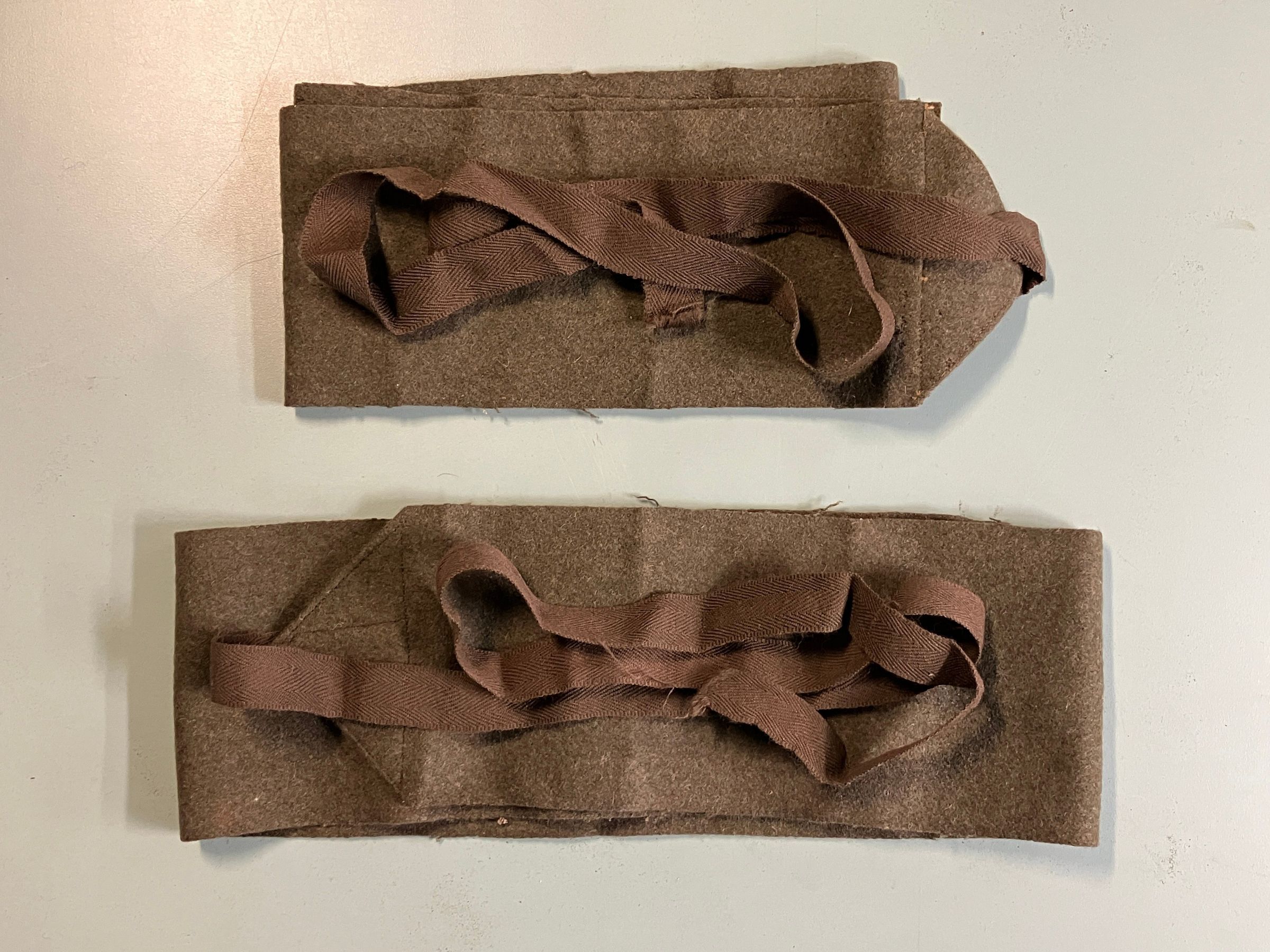
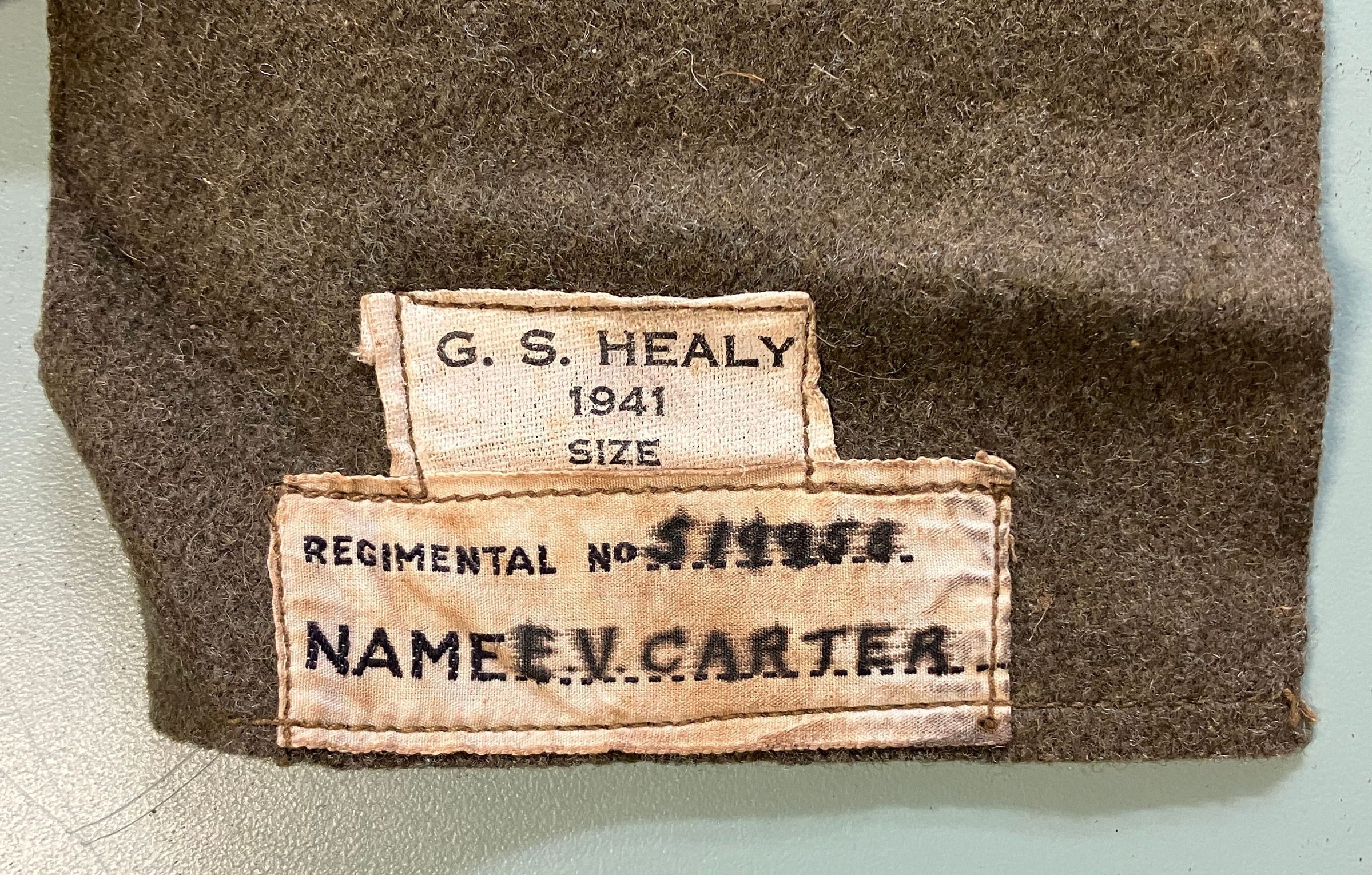
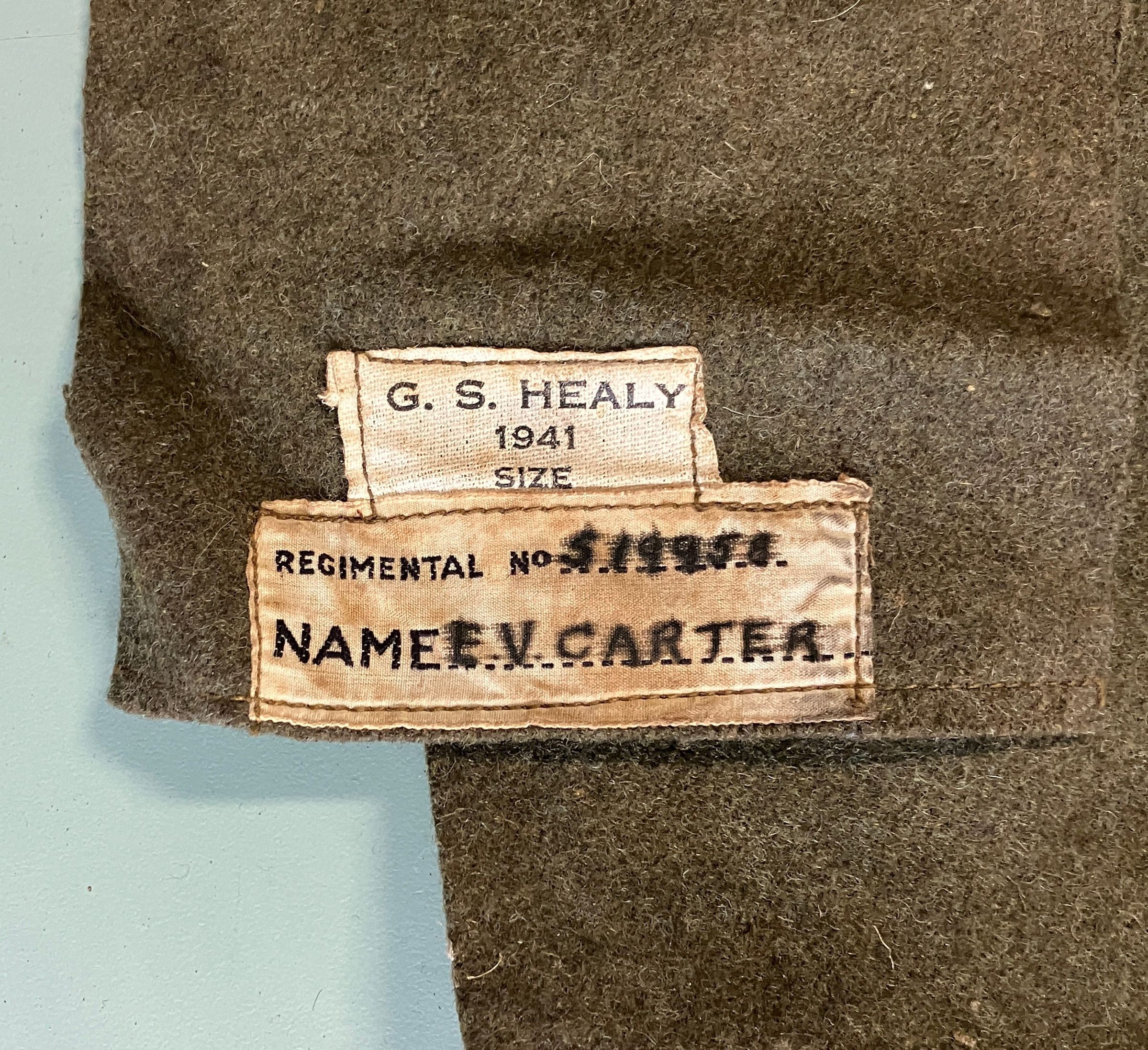
Ankle puttees pair dated 1941
2023.1.10
Pair of woollen puttees.
Name/Title
Ankle puttees pair dated 1941Entry/Object ID
2023.1.10Description
A puttee is a cloth band that was wound round a soldier’s leg from their ankle to their knee. They were designed to provide support when walking and protect against harsh weather conditions. This pair were made in 1941, from woollen cloth with cotton ties to keep in place.Manufactured in South Australia by the company G.S. Healy, who was one of many Adelaide producers awarded contracts by the Commonwealth Supply and Tender Board.Use
Due to their cumbersome nature, in the late 1930s the puttees of WWI were replaced by canvas anklets. While these were viewed as a sign of modernity and efficiency, it became clear as WWII progressed, that they did not suit all areas of warfare. The jungle was very different from the desert and parasites could enter the trousers and attack the legs, due to the less than exact fit of the newer canvas gaiters. Additionally, the cloth puttees were far cheaper to produce, more comfortable and offered greater ankle support to the wearer. The older, longer, knee-high version of WWI was shortened for use during WWII, reduced in length to be ankle high instead. Widely used by Australian forces, their use spread to the British Army in the post war period, including the Malayan Emergency from 1948-1960.Category
Military Uniform, Equipment