WWII No36M MKI Mills Grenade (Inert)
2023.260
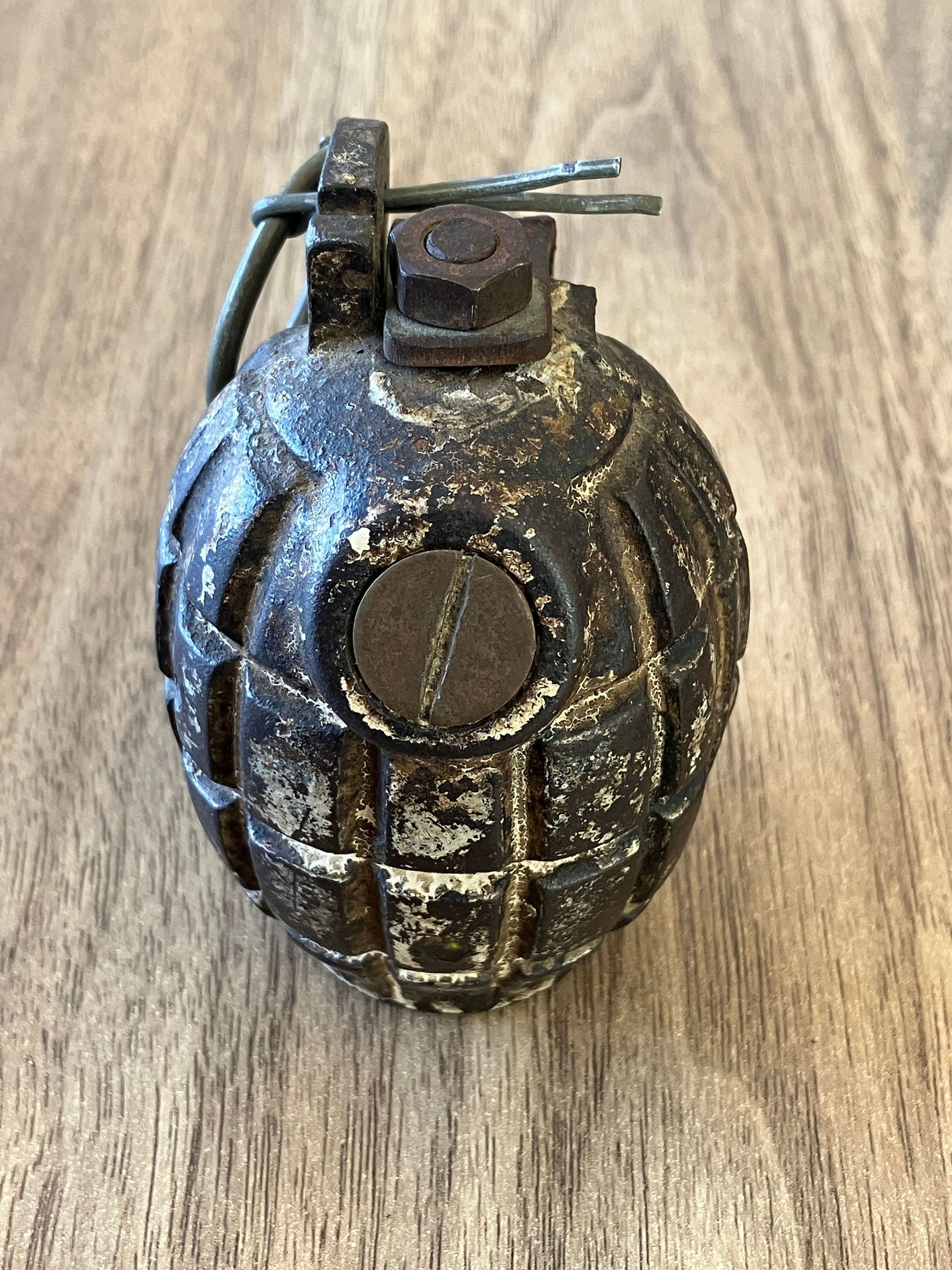
Grenade showing (replacement) filler cap
Name/Title
WWII No36M MKI Mills Grenade (Inert)Entry/Object ID
2023.176Description
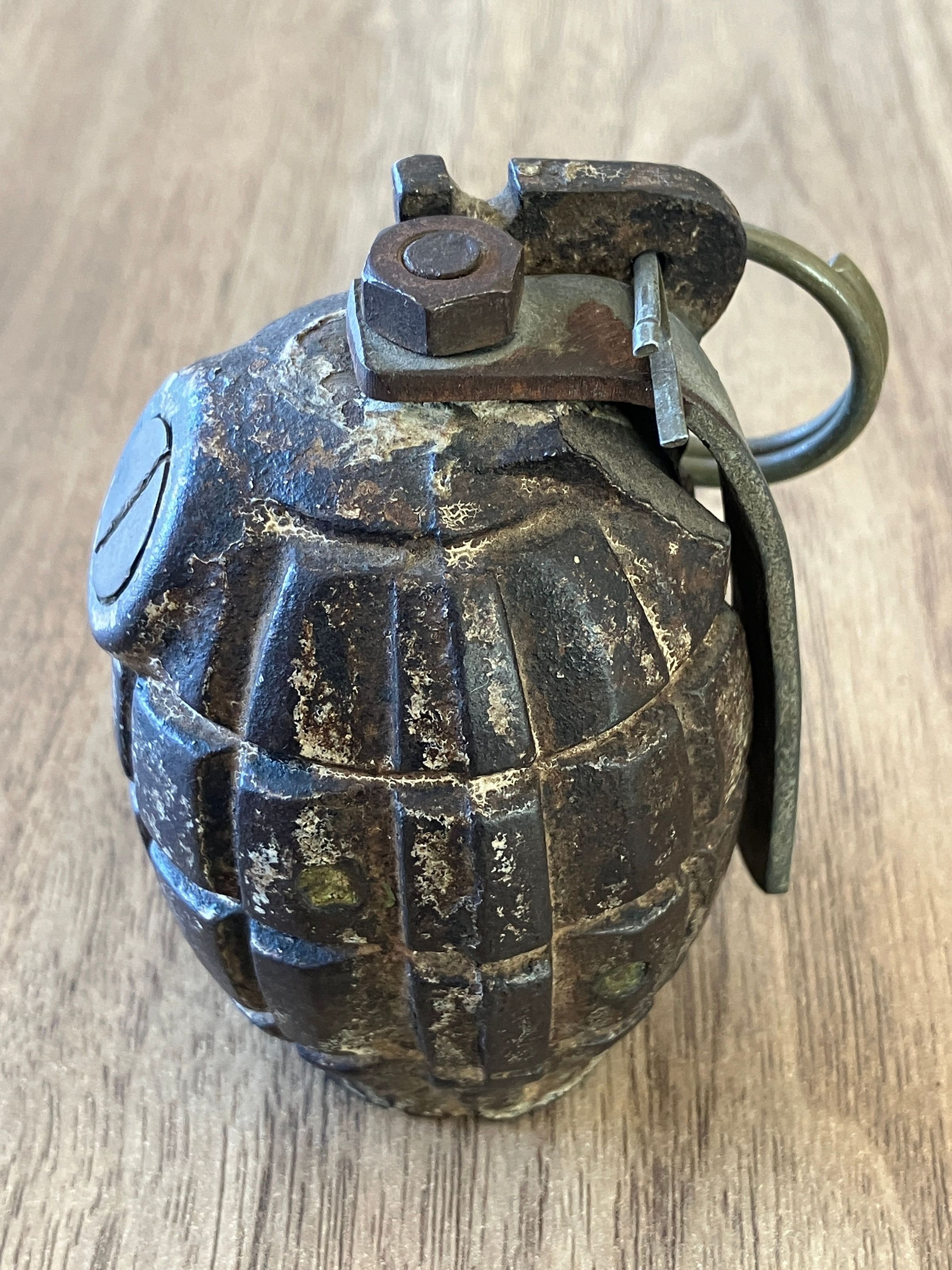
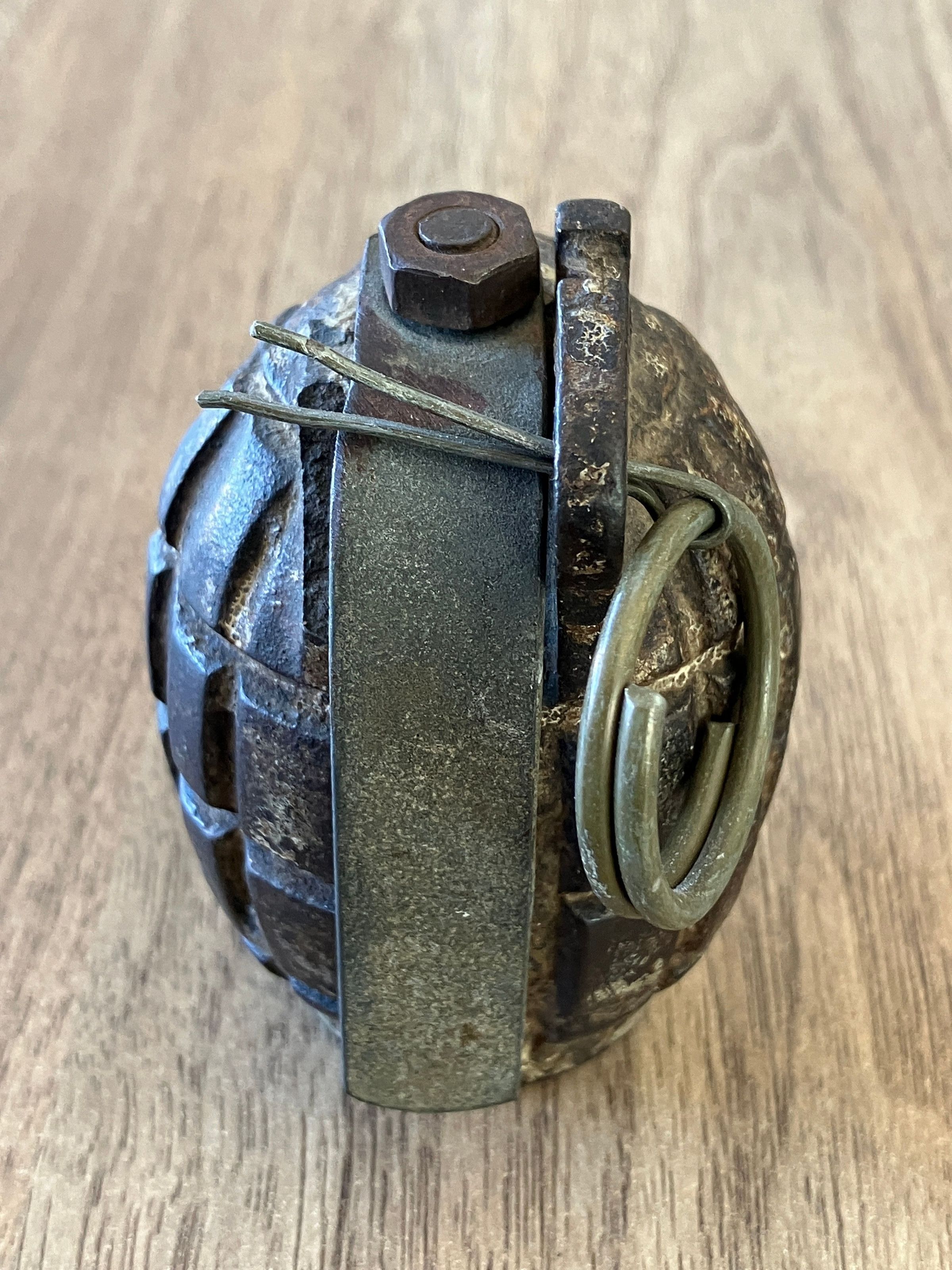
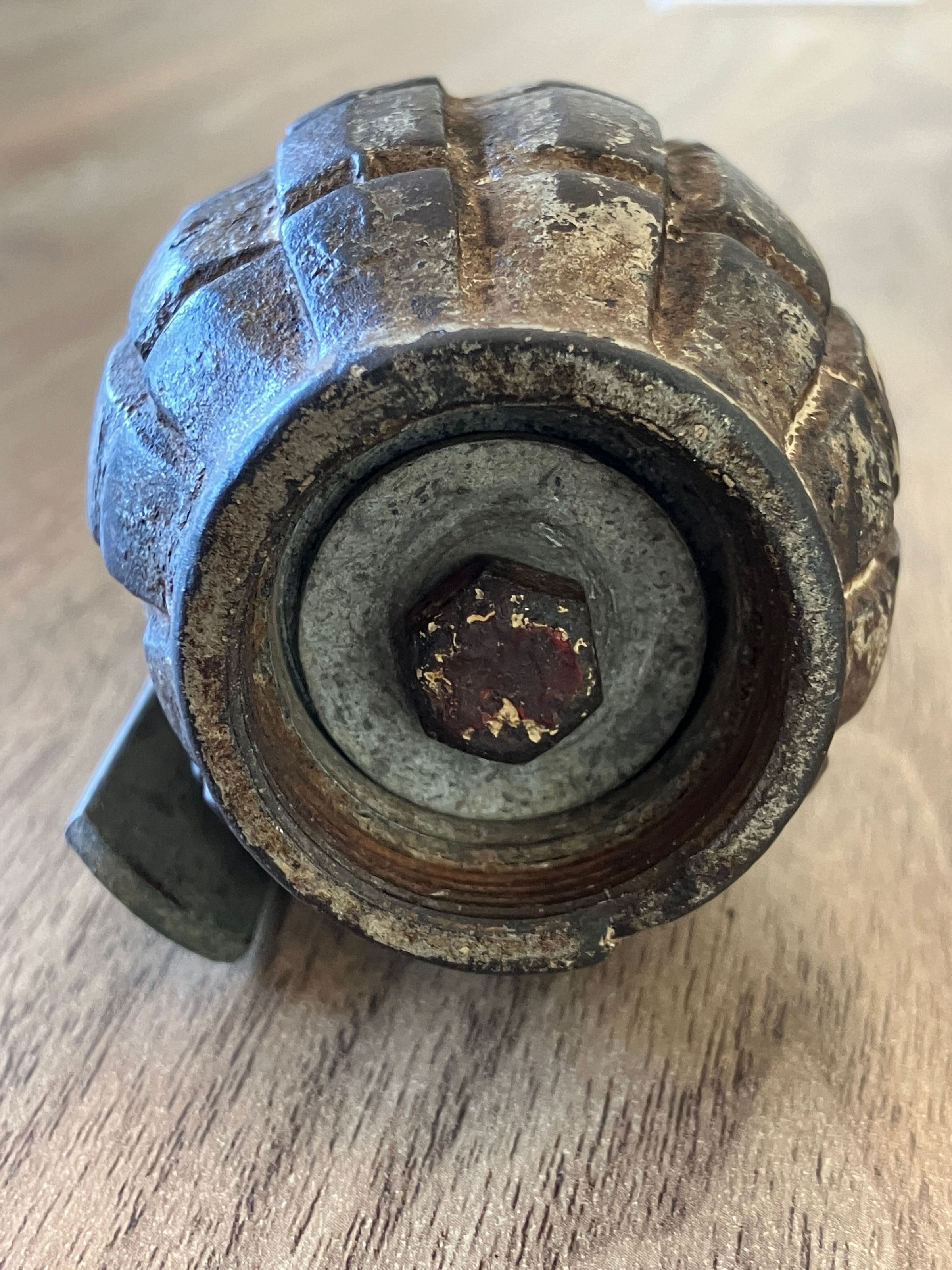
An inert (deactivated), incomplete WWII No 36M MKI Mills Grenade, date unknown. Grenade shows remains of black shellac. Original pin is present. Lever, base and filler screw have been removed and replaced. One pin arm is missing.Use
Invented by William Mills in April 1915, WW1 versions were the No.23 and No.36, whilst the first version was the No.5. The later version included a threaded hole in the base to convert the hand grenade to a rifle grenade. The No.36 (and latterly the No.36M, ‘M’ standing for ‘Mesopotamia’, indicating that the grenade has been waterproofed), continued to be used in the Second World war and right up to 1972, when it was replaced by the L2 grenade. The original base would have the following information stamped into it: The type of grenade The material used The foundry maker The manufacturer of the assembled grenade The year of manufacture There would have also been a threaded hole in the base of the base plug used to attach a metal disk known as a ‘Gas Check’. This allowed the grenade to be fired from a Lee Enfield rifle. The original filler screw, on the upper side of the grenade, would have also had a manufacturer stamp. These grenades were assembled empty, before being sent to a ‘filling factory’, where it would be filled with the chosen explosive via the hole. These screws only act as a plug to cap the hole.Category
Equipment, Grenade, Weapon, War Memorabilia