Scope and Content
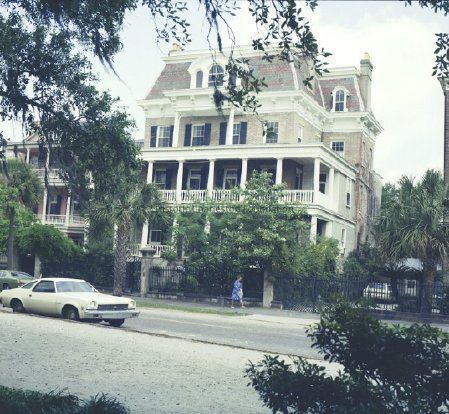
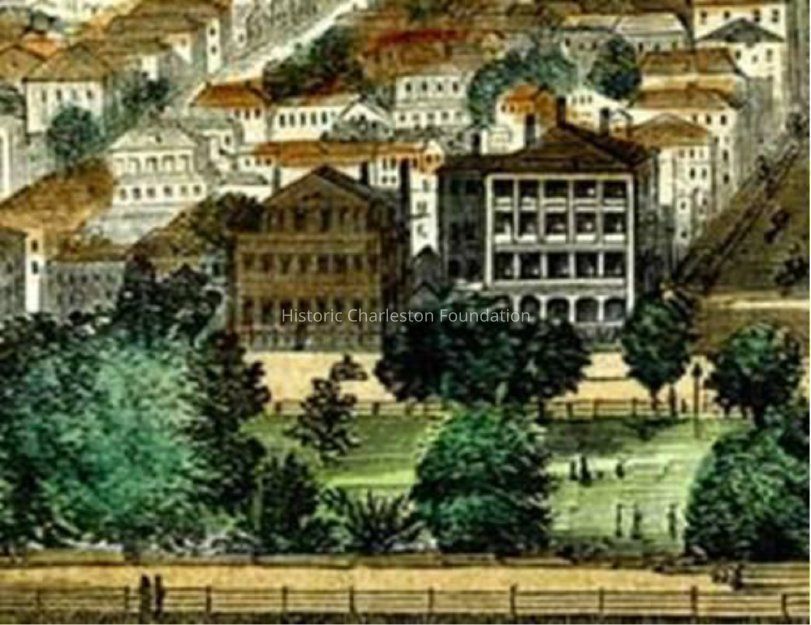
Constructed ca. 1843; altered 1870; partially restored 1970s, 1990s. J. Henry Devereaux, architect for alterations. Samuel N. Stevens, a factor in partnership with John and William Ravenel, purchased this property in 1843. Stevens's house stood three stories with a T-shaped floor plan and piazzas on the front elevation facing South Battery; the original front door stood in an ell toward the western rear of the first elevation of this porch. Colonel Lathers, a native of Georgetown, S.C., went to New York in 1847 and made a fortune in banking insurance, railroads, and other pursuits. By tradition, Col. Lathers decided to assist in the reconstruction of his native state after the war, so he moved to Charleston. The Charleston Courier stated on March 31, 1870, that Col. Lathers's residence on South Battery was "in [the] charge of Mr. J.H. Devereaux." Devereaux's enlargements for Lathers included a large frieze and cornice with supporting brackets and a fish-scaled slate mansard roof with an arched tripartite dormer projection. The top floor of the dwelling housed an exceptional library described by a visitor as "filled with books and engravings." Receptions were held in the house for important Union leaders, including Gov. Horatio Seymour of New York and William Cullen Bryant. After attempting for nearly four years to restore goodwill between men of the North and the South, Lathers sold the house and returned to New York. Since the 1970s the main house and dependency have been utilized as a private residence and as an inn. (Poston, Buildings of Charleston.)
File contains FOHG house histories (1993, 2002); other narrative histories including one by owner J. Drayton Hastie, Jr. (undated); newspaper articles (including 1969, 1975, 1981 DYKYC); house history from Information for Guides of Historic Charleston (1984); 1886 Earthquake damage assessment; Hurricane Hugo damage survey; brochure for The Battery Carriage House.Collection
Historic Charleston Foundation Property Records