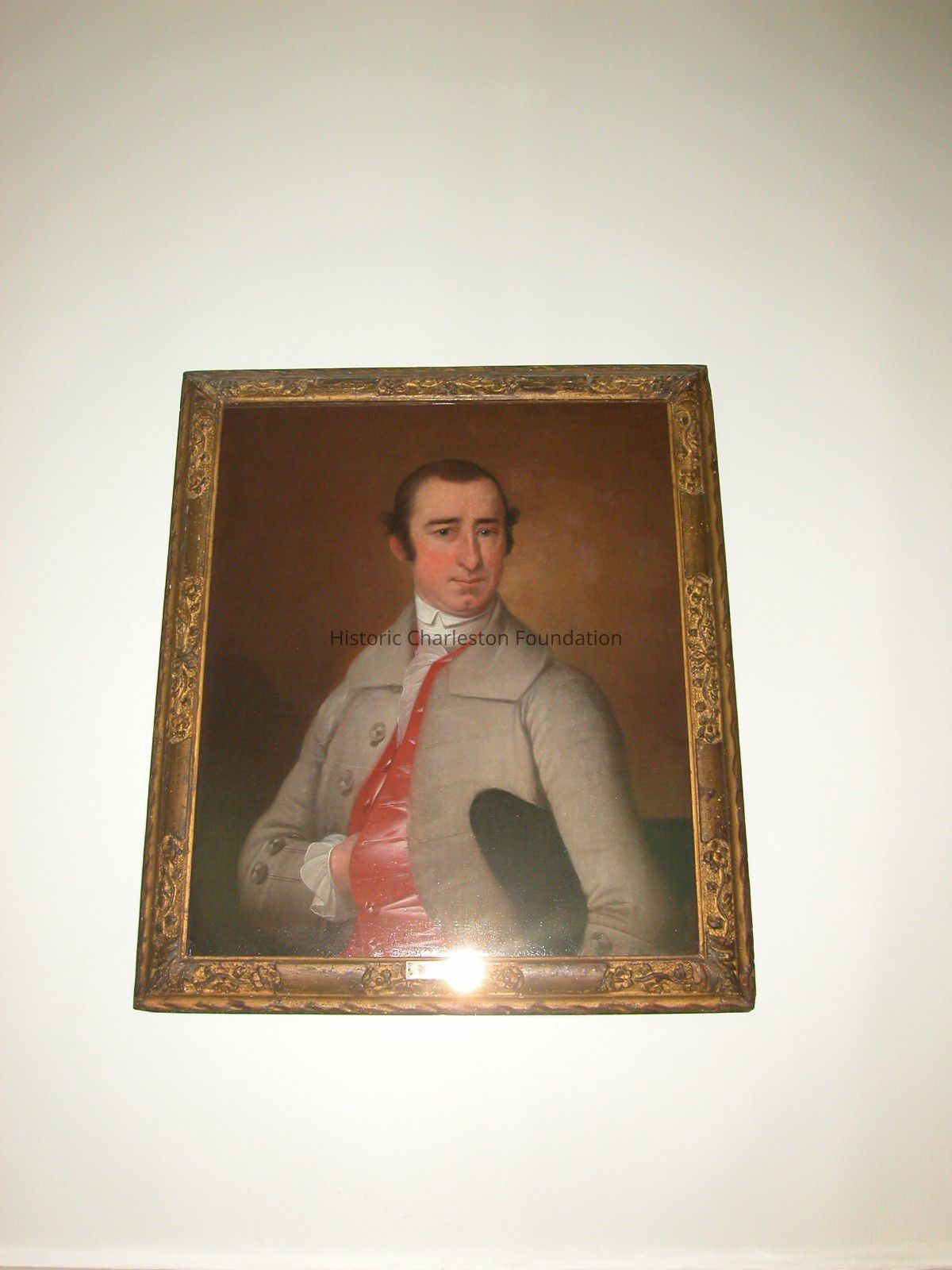
Portrait of Daniel Ravenel (1734-1774) of Chelsea Plantation
Entry/Object ID
79.7.1
Description
Jeremiah Theus (1716-1774)
Daniel Ravenel (1734-1774) of Chelsea Plantation
Charleston, SC
ca. 1755/1774
Oil on canvas
Portrait of Daniel Ravenel of Chelsea (1734-1774) By Jeremiah Theus, Half Length Portrait with Brown Background. Subject Sits with Left Shoulder To Foreground, Head Turned To Left. Right Hand Placed in Waistcoat. Black Tricorn Hat Under Left Arm. Wearing Grey Great Coat, with Grey Bottons, Red Waistcoat, White Stock and Ruffle. White Ruffle At Cuff of Right Hand. in Carved Gessoed and Gilded Rococo Frame, Probably of Charleston Manufacture.
Collection
Historic Charleston Foundation Collection
Acquisition
Accession
79.7.1
Made/Created
Artist
Theus, Jeremiah, 1719 (ca.)-1774
Date made
1755 - 1774
Lexicon
Nomenclature 4.0
Nomenclature Primary Object Term
Painting
Nomenclature Class
Art
Nomenclature Category
Category 08: Communication Objects
Other Name
Portrait
Dimensions
Height
29-1/2 in
Width
24 in
Dimension Notes
framed--:29" x 34"
Location
Location
Room
204
Building
Nathaniel Russell House
Category
Permanent
Date
February 7, 2023
Location
Room
104
Building
Nathaniel Russell House
Category
Permanent
Moved By
SJ
Date
July 28, 2004
Location
Building
NR BACK PARLOR
Moved By
June Hawkins
Date
June 25, 2002
Notes
Until: / /
Provenance
Notes
From (book):
Museum of Early Southern Decorative Arts. "The regional arts of the early South: a sampling from the collection of the Museum of Early Southern Decorative Arts"/John Bivins and Forsyth Alexader. Copyright 1991 by Old Salem.
Jermiah Theus was colonial South Carolina's most popular painter; over 170 works have been attributed to him. Born in Switzerland, Theus emigrated with his family to South Carolina about 1735, first to Orangeburgh Township and then to Charleston, where he was advertisinas early as 1740. He married twice and died in 1774. Lime many of his colonial collegues, Theus based the clothing and poses of many of his sitters on English engravings, but the formality and rigidity of his subjects and their costume were derived from the German Baroque.