Research Type
ScholarPerson
Bivens and RauschenbergDate
Mar 9, 2005Notes
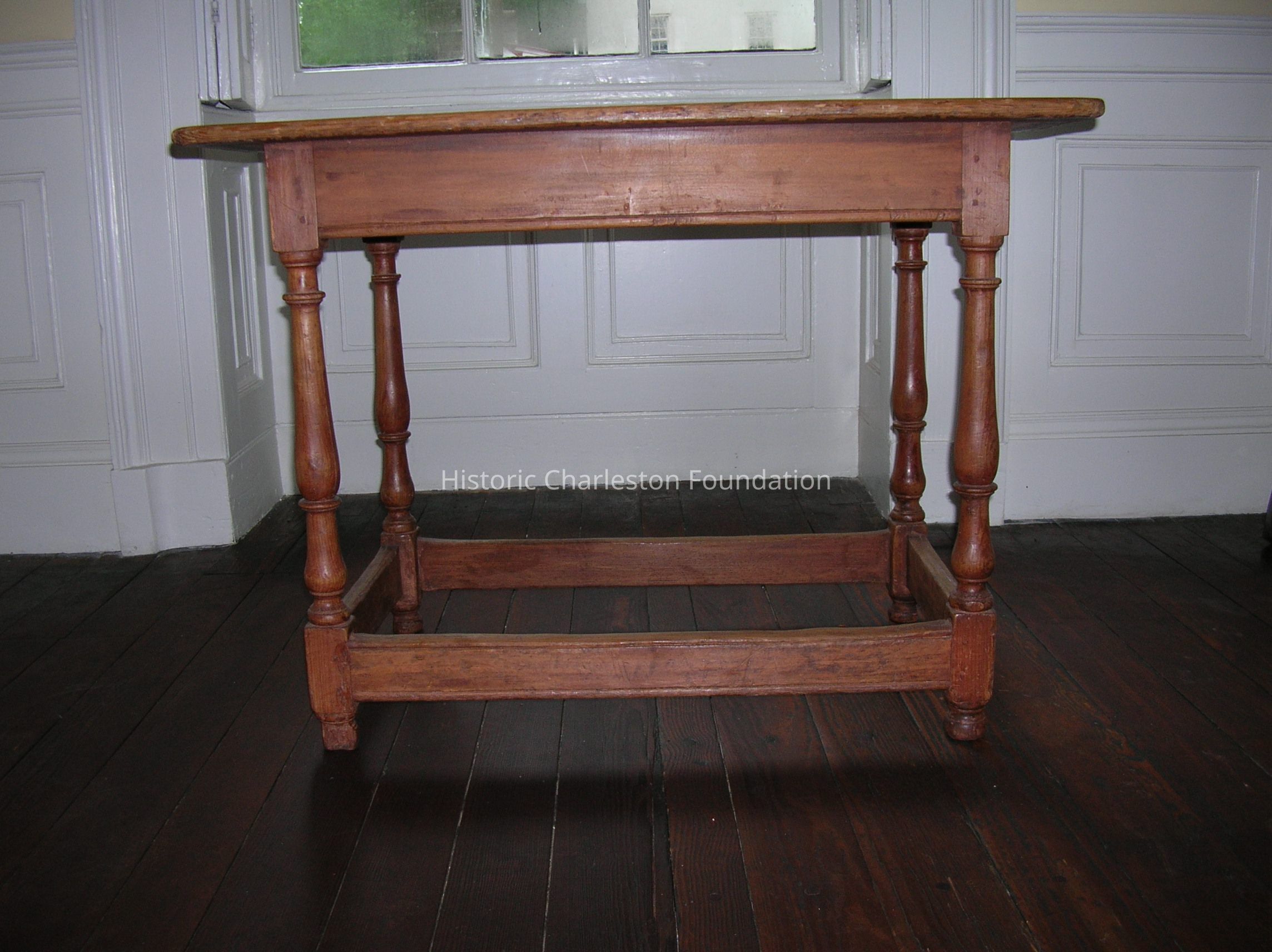
Vol. I, p. 31: Rectangular double-board top resting on turned double baluster legs, supported by heavy flush beaded frame and stretchers. The frame and stretchers are both joined by double pegged mortise and tenon joints. There are no glue blocks or battens suggesting a French technical influence which is supported stylistically by the double baluster-turned legs. While tables of this form were not new to the period, certain refinements place it later than its more basic counterparts. These characteristics include the heavy flush bead on the frame and stretchers, less overhang on the top, and the stretchers being taller than they are wide.