Name/Title
The WissahickonEntry/Object ID
2013.34.1.112a-cDescription
The Edwin C. Jellett Series of Scrapbooks, Volume 1, Part 2- The Wissahickon
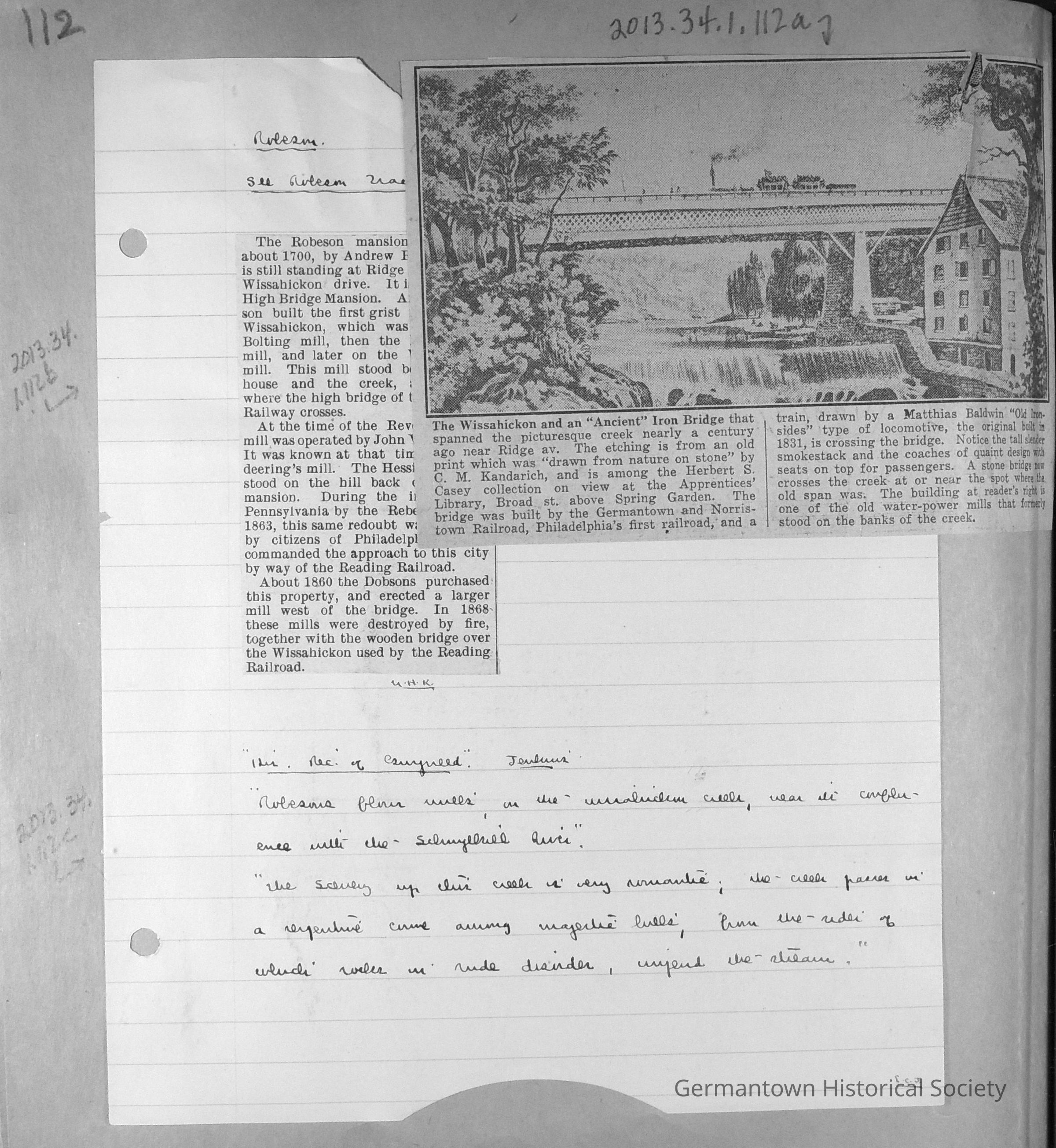
Page 112 contains (a, top overlay) a newspaper article with an artist rendition; (b) a short newspaper clipping; and (c) Jellett's handwritten notes.
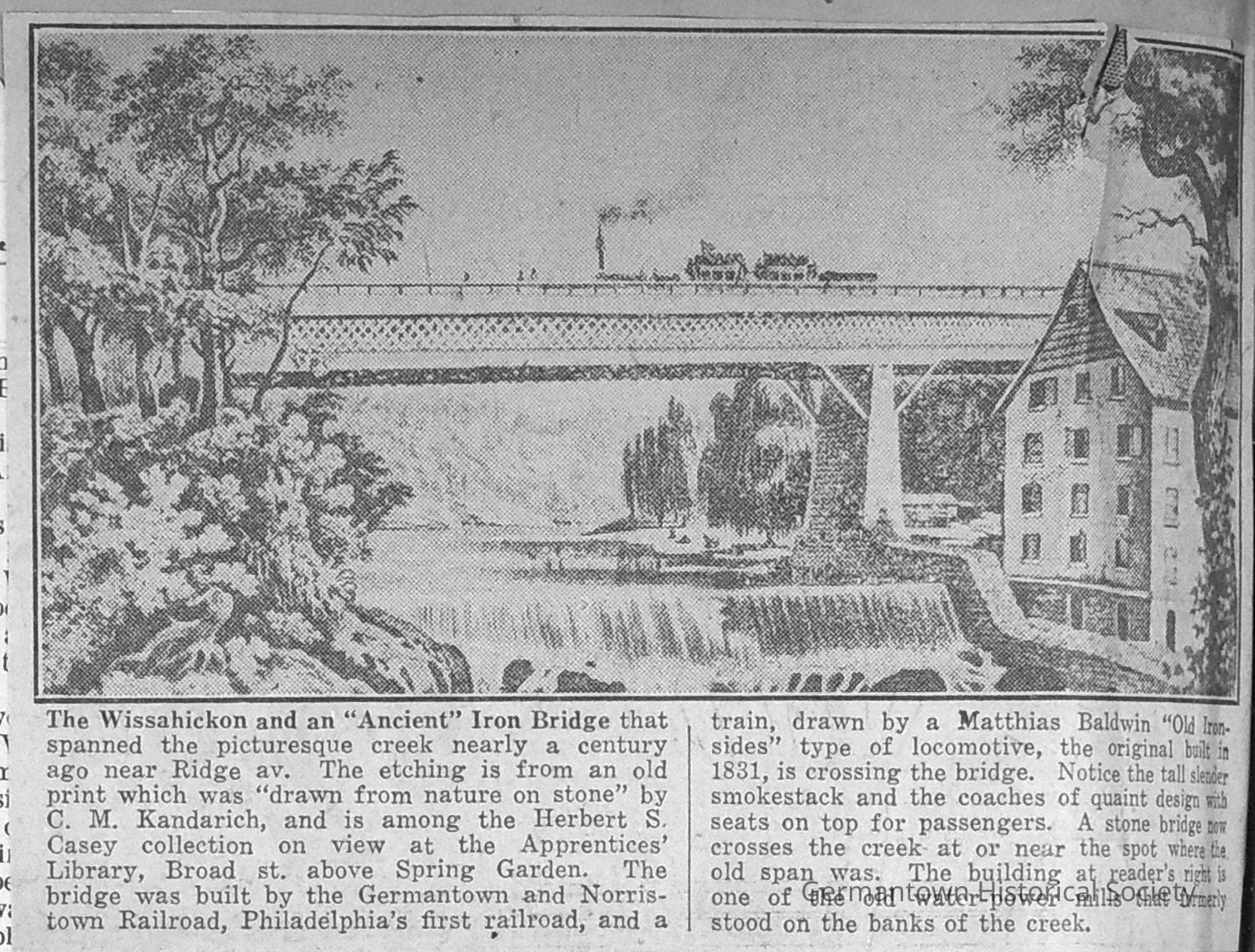
(a, top overlay) is a newspaper article noting that initially an iron bridge spanned the Wissahickon near Ridge Avenue. The reproduction shown above the article was originally an etching by C. M. Kandarick. The article indicates that the bridge was built by the Germantown and Norristown Railroad, Philadelphia's first railroad. The etching depicts a Mathias Baldwin "Old Ironsides" locomotive with a slender smokestack and coaches with seats on top for passengers. The building depicted at the right is an old water-power mill that formerly stood on the banks of the creek.
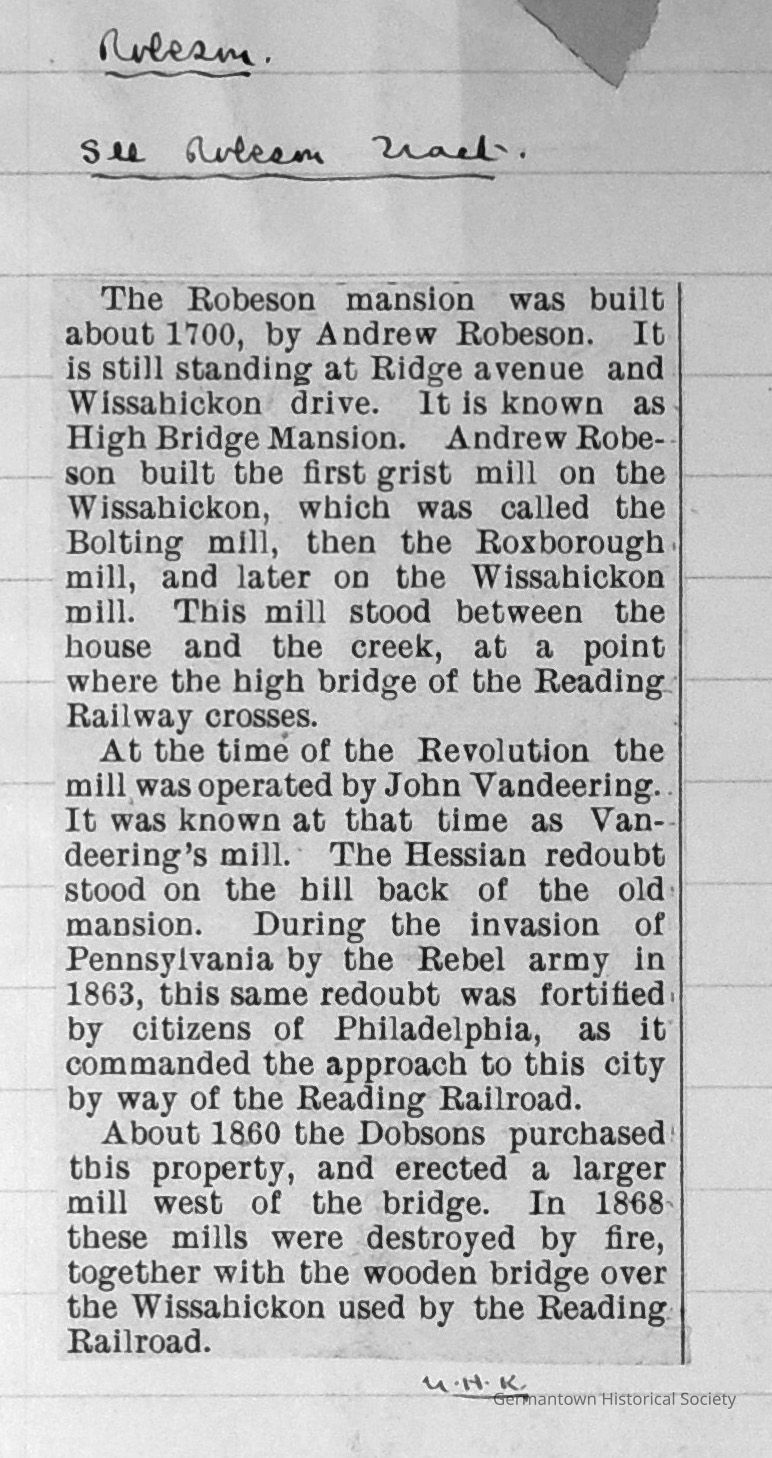
(b) This small newspaper clipping is hand-titled "Robeson, See Robeson Tract." The article describes the Robeson mansion built about 1700 by Andrew Robeson at Ridge Avenue and Wissahickon DrIve. It was aslo known as "High Bridge Mansion." Andrew Robeson built the first grist mill on the Wissahickon, originally known as the "Bolting Mill', then known as the "Roxborough Mill", and later on as the "Wissahickon Mill." At the time of the Revolution, the mill was operated by John Vandeering and known as "Vandeering's Mill." About 1860, the Dobsons purchased the property and built a larger mill west of the bridge. In 1868, these mills, along with the wooden Reading Railroad brige over the Wissahickon, were destroyed by fire. This article is attributed to N. H. K. (Naaman H. Keyser?)
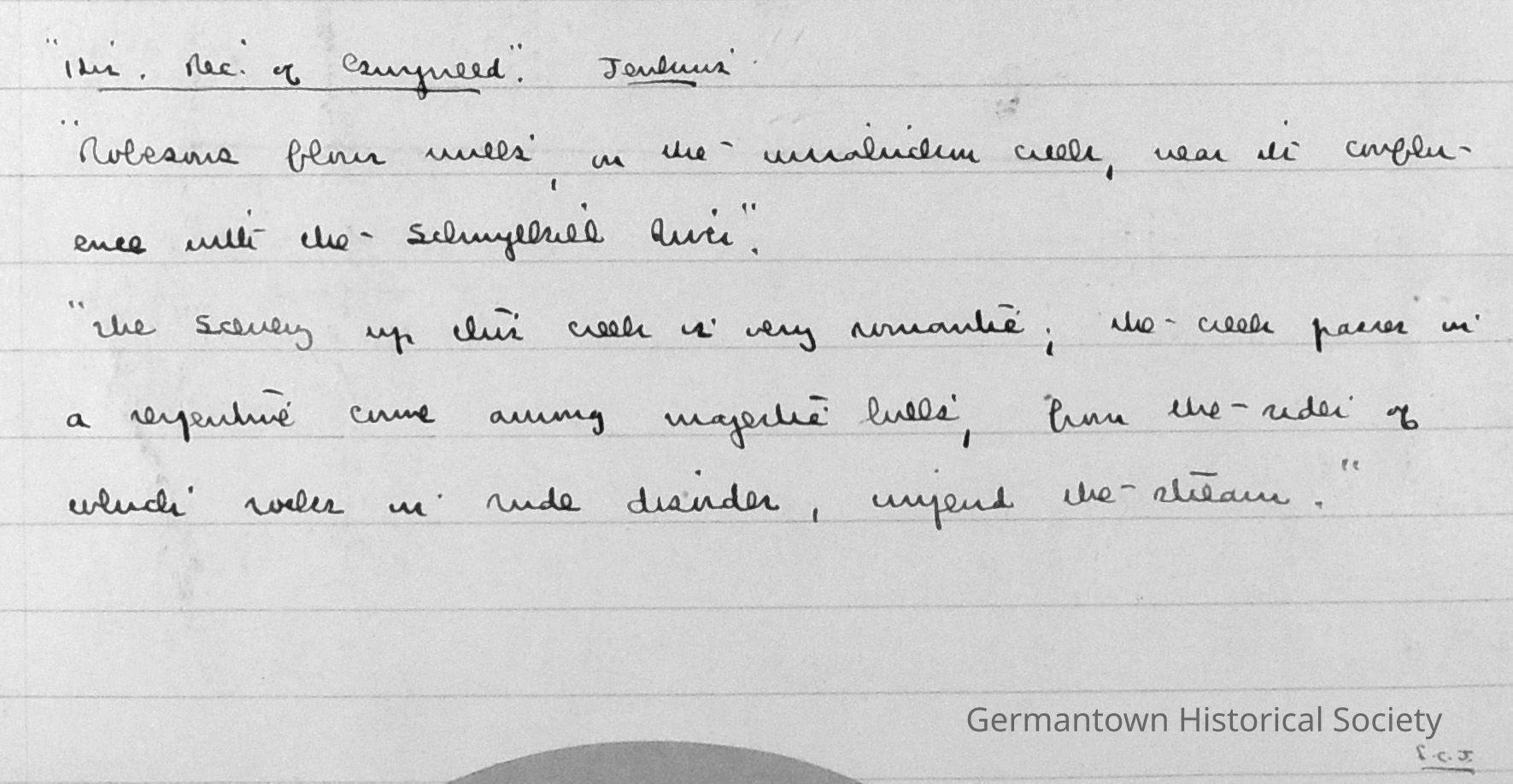
(c) These handwritten notes are entitled "From 'Historical Record of Gwynedd'" by Jenkins. These notes briefly describe Robeson's flour mills on the Wissahickon near the confluence with the Schuylkill River and the romantic scenery as the creek winds in a serpentine fashion among the hills, from which rocks impend the stream.Collection
GHS Scrapbook Collection