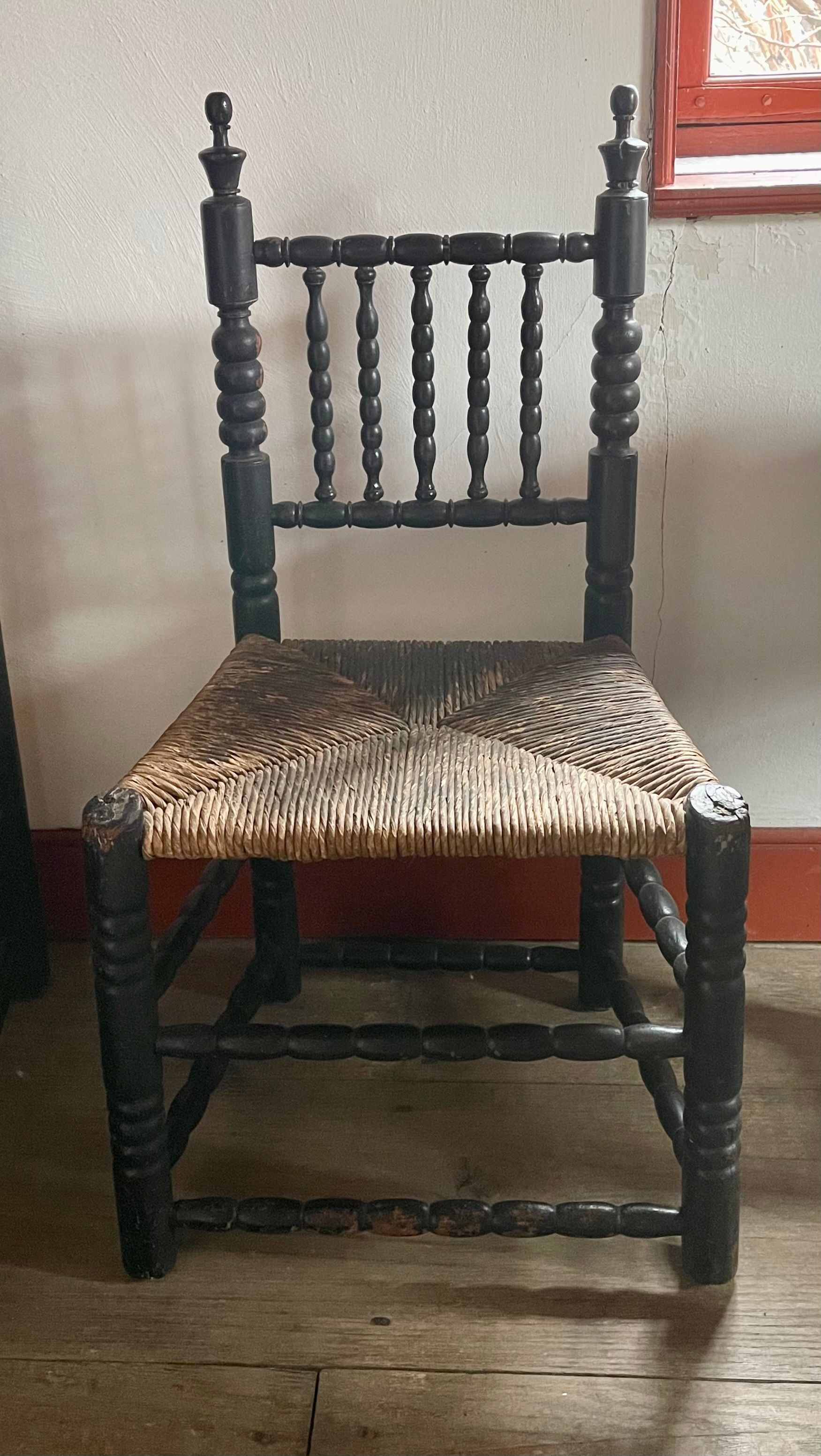
Chair, side

Name/Title

Chair, side

Entry/Object ID

PM.65.912

Description

Low spindle back side chair stamped conjoined HH or HI: ovoid, spool, and pot finials, atop stiles turned in round and flattened ball forms, terminating in turned feet of smaller diameter; sausage and ring alternating turnings, top and cross rails, between which are 5 vase and sausage turned spindles; stamped on rear stile; rush seat; round and flattened ball turned front legs, terminating in turned feet of smaller diameter; sausage-turned stretchers, two at each side, two at front, one at rear, set low; old black paint.

Made/Created

Artist Information

Artist

Unknown

Attribution

Maker

Date made

1660 - 1720

Notes

Dates:

Inscription/Signature/Marks

Type

Inscription

Transcription

See description

Other Names and Numbers

Other Numbers

PCR 1113
# 265

Dimensions

Dimension Description

Overall

Height

34-1/8 in

Width

18-3/4 in

Depth

15-1/4 in

Dimension Notes

Display Dimensions: 34 1/8 x 18 3/4 x 15 1/4 in. (86.7 x 47.6 x 38.7 cm)

Material

Maple, ash, rush

Condition

Notes

Remarks: Worn rush seat; bottom front stretcher especially worn on center area of sausage-shaped turnings; small chips on top front stretcher; old large v-shaped chip missing on front of proper left pot finial; large areas of finish missing on proper right side of flattened ball turnings; second from proper left side back spindle is loose; tops of front legs worn.

Notes

Remarks: Fairly new rush seat; tops of front legs worn. 5/78 - Spindle (2nd from left) broken off.

Relationships

Related Person or Organization

Person or Organization

Unknown

Related Entries

Notes

PM.65.891 - Chair, side - Part of set

General Notes

Note Type

Curatorial Remarks

Note

Similar chair in the Met's collection (1997.68): "This chair, ornamented with turnings of repeated barrel, flattened ball, and baluster shapes, is of a distinctive type associated with areas of Dutch cultural influence in New York and northern New Jersey. Its overall design and turned motifs, including the urn-and-flame finials, are based on a form of chair that was popular in the Netherlands during the second half of the seventeenth century. This type of turned chair derived its basic format from that of fashionable seventeenth-century upholstered chairs."

Note Type

General Note

Note

With .891

Note Type

StorageNote

Note

Home Location: Historic Hudson Valley, Philipsburg Manor, Upper Kitchen

Note Type

Department

Note

Curatorial