Note Type
Curatorial RemarksNote
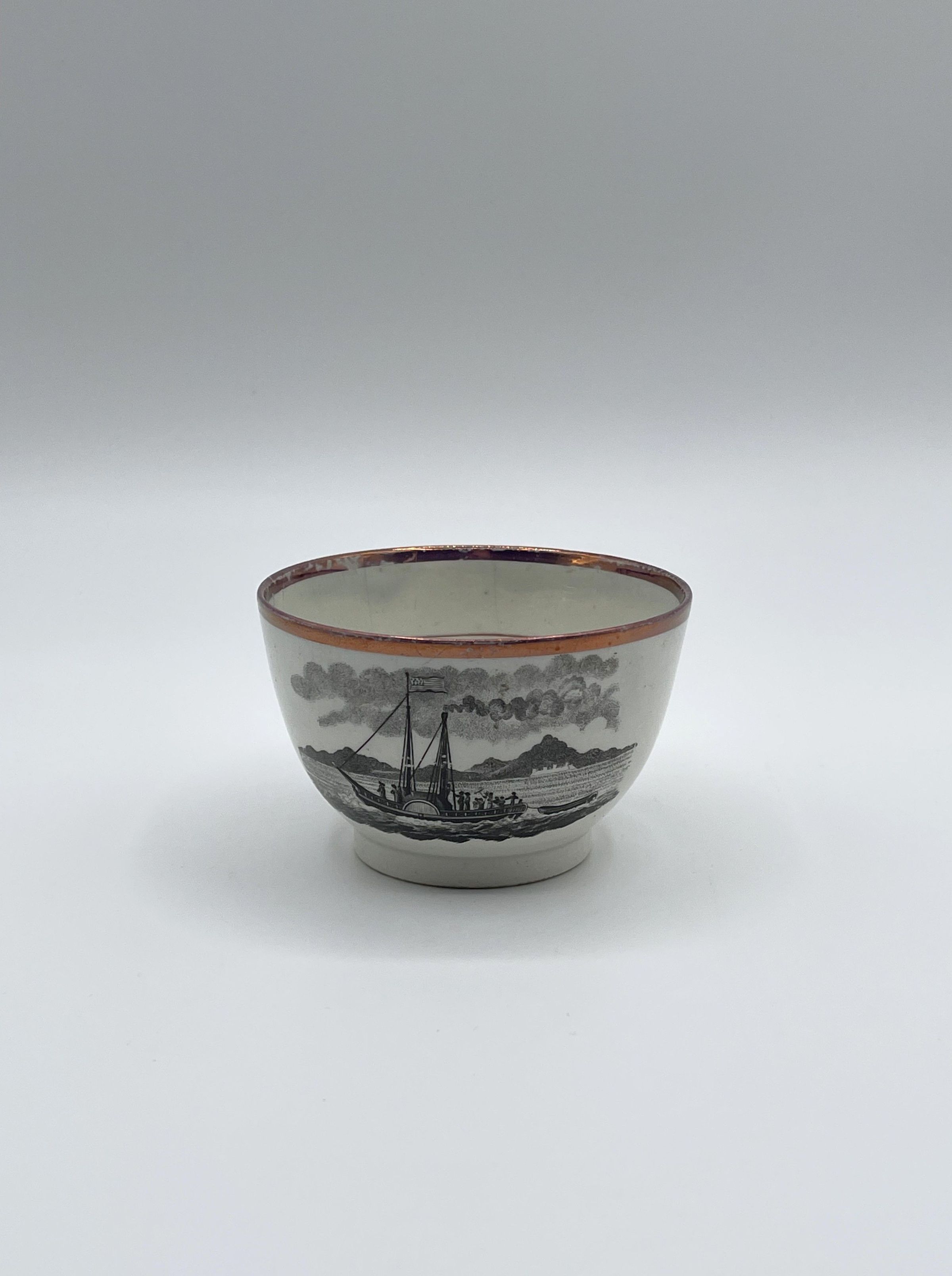
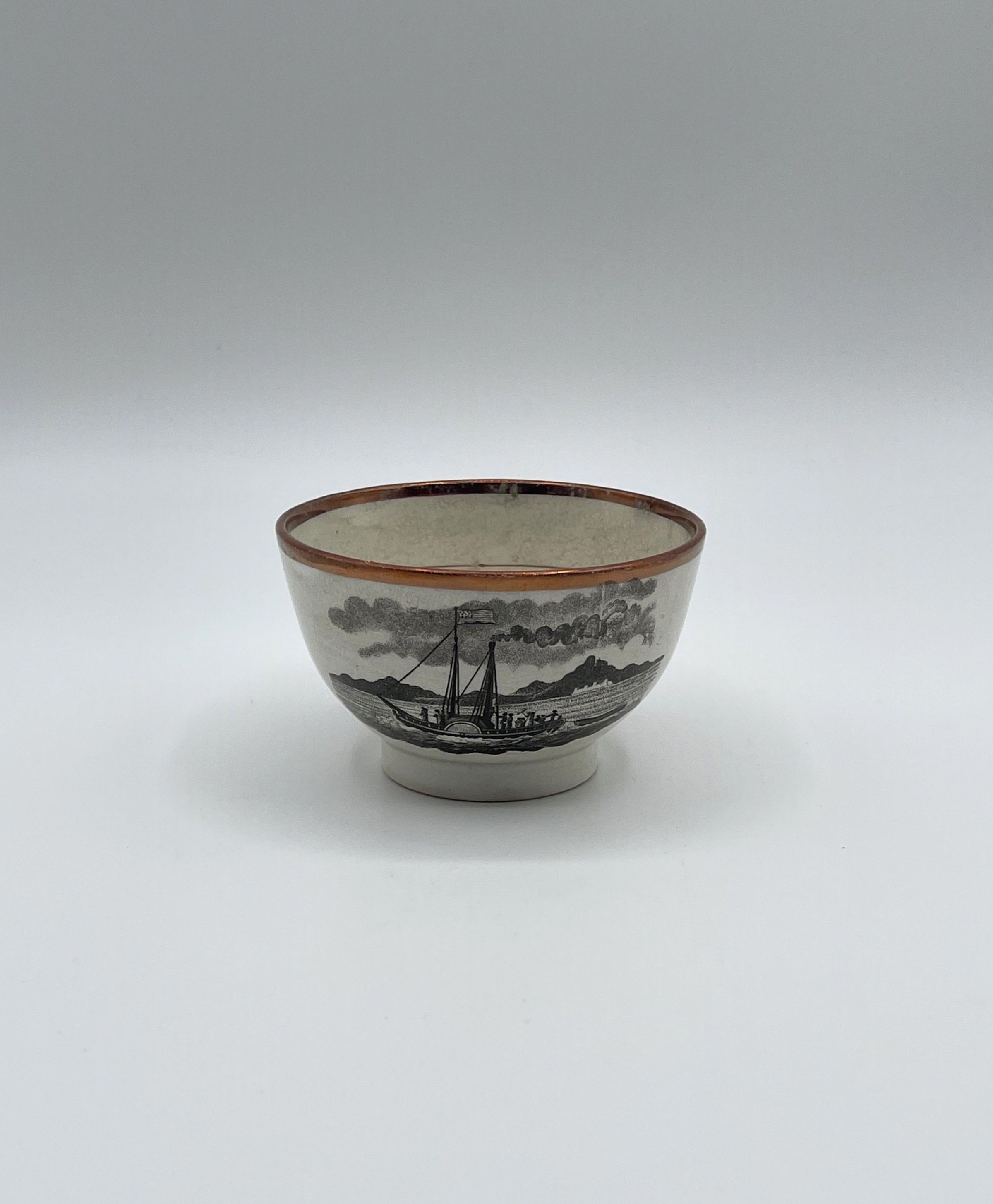
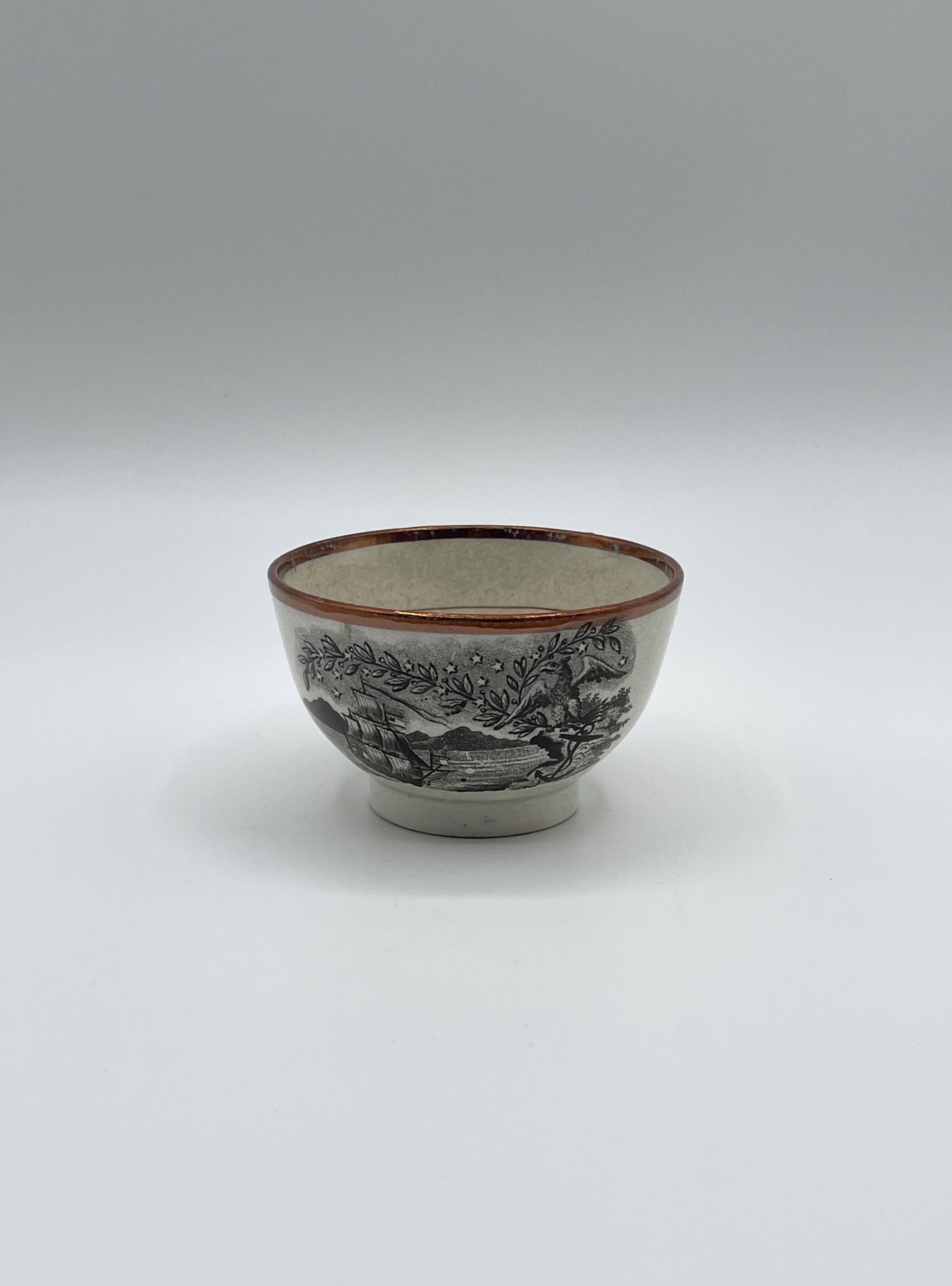
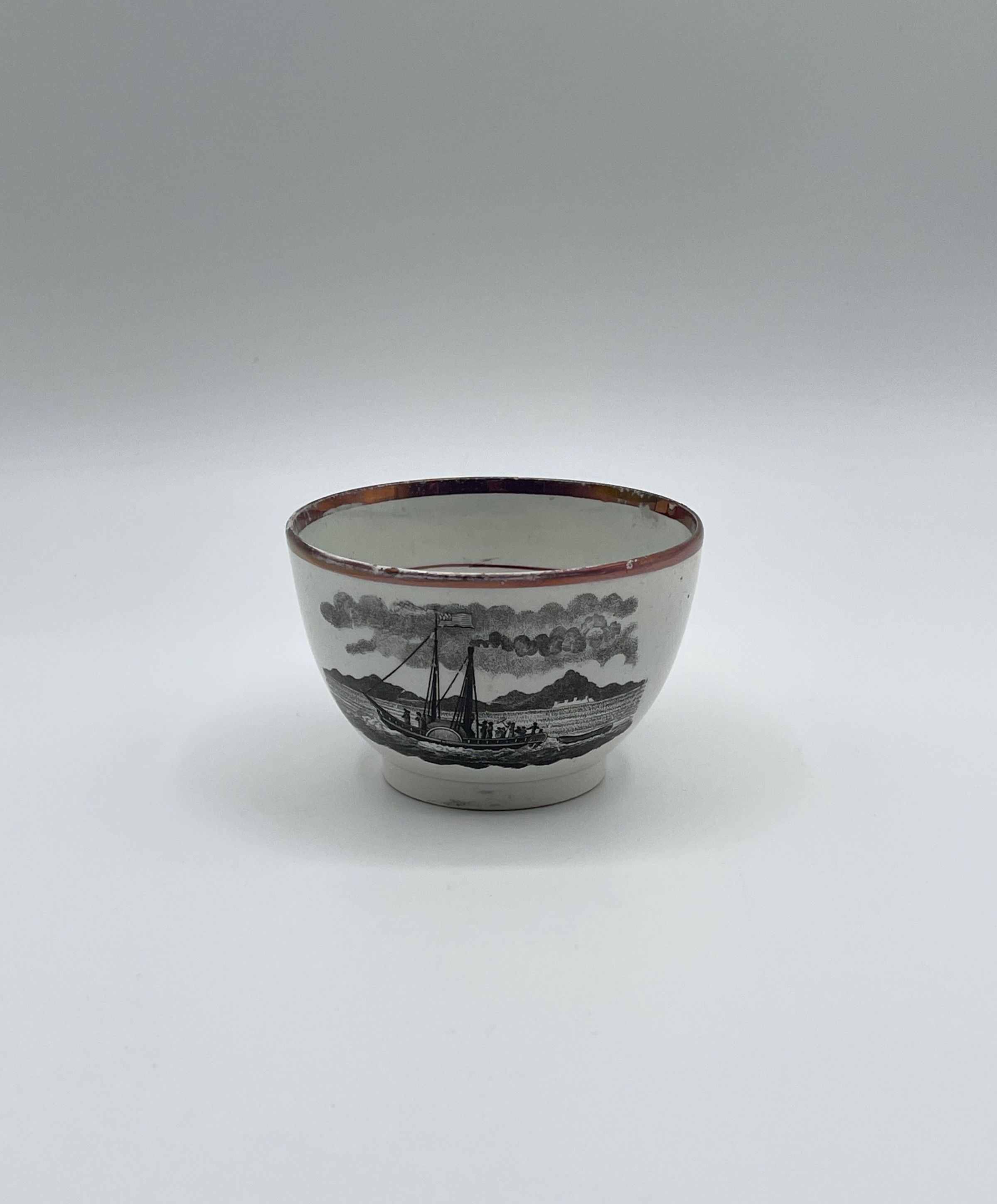
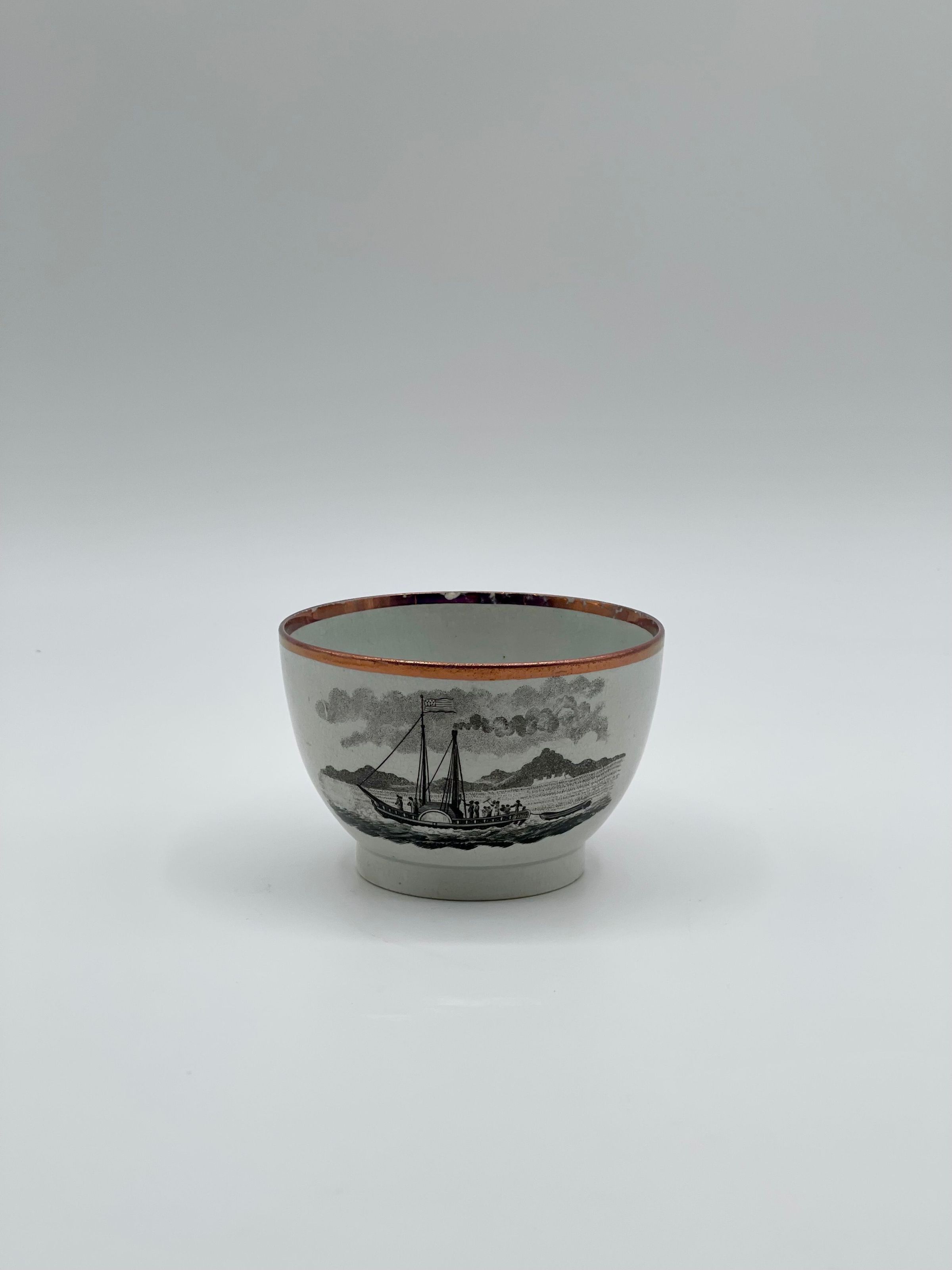
History: View of steamboat, sometimes designated in the literature, the "Clermont", sometimes the "Robert Fulton", a later vessel also designed by Fulton, is so inexact that positive identification seems impossible. The scene, by an unknown English ceramic print designer who had possibly never seen a steamboat, seems to confuse stack with a tall after-mast, and might as easily be either of the above ships.
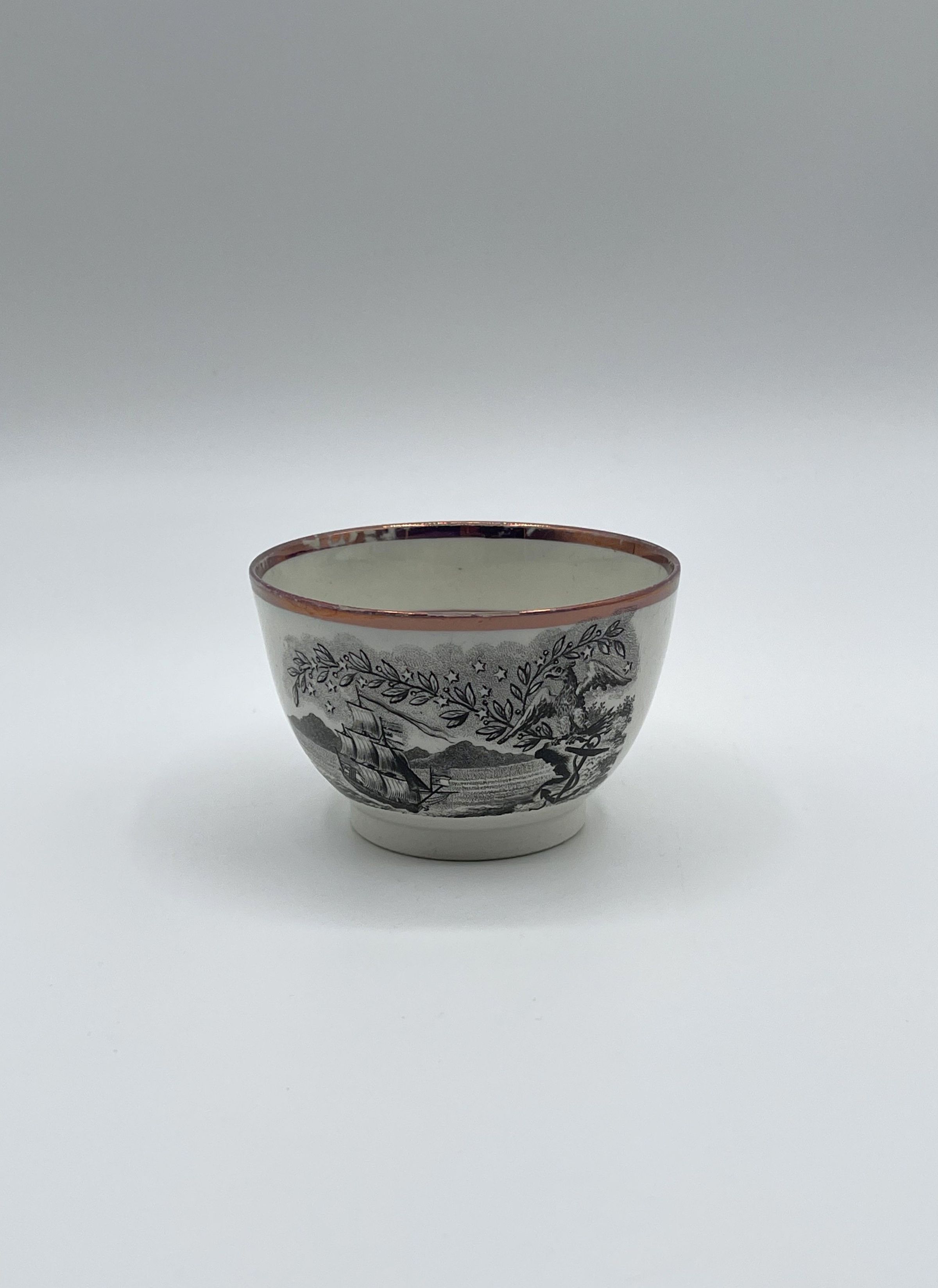
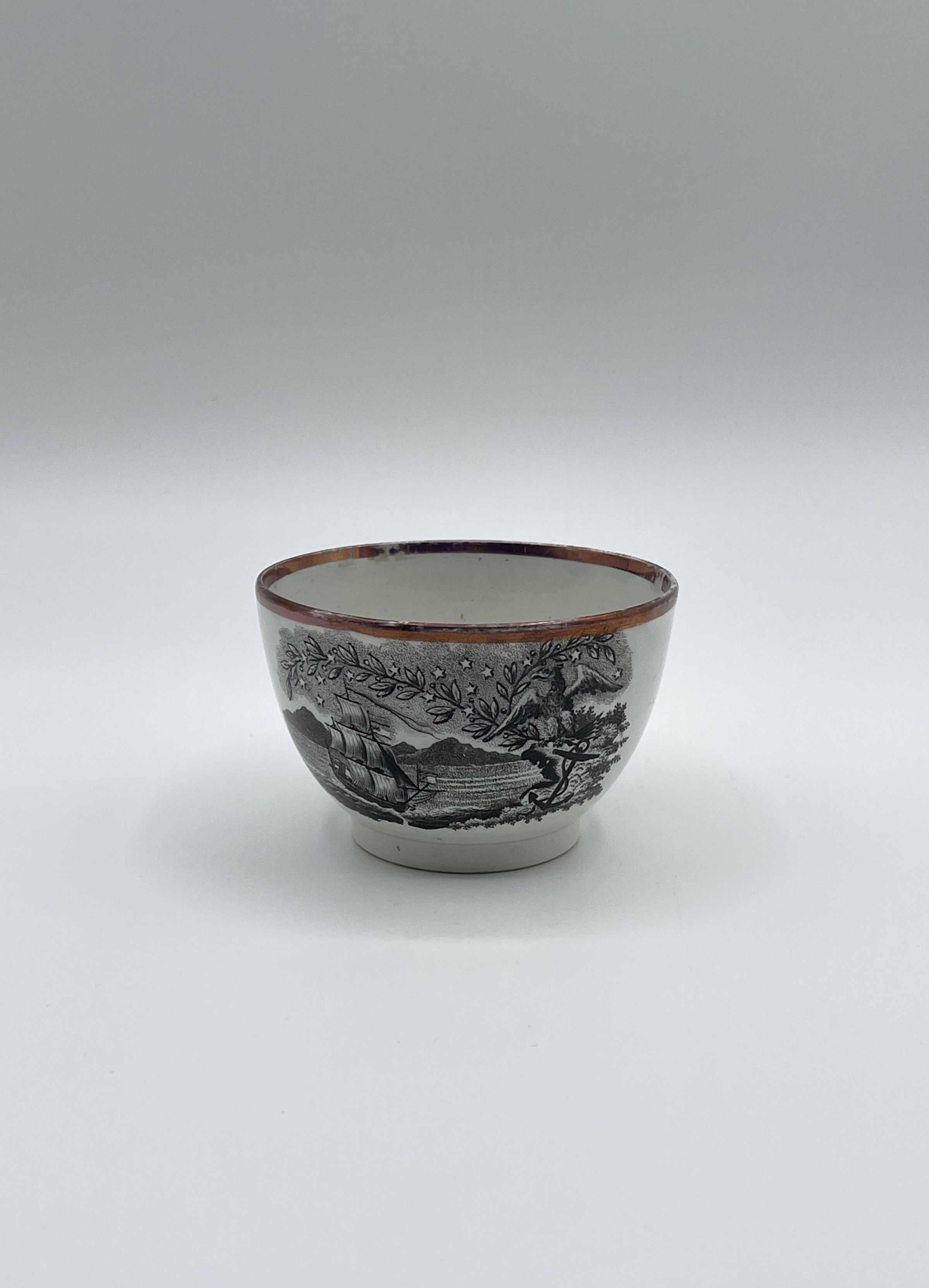
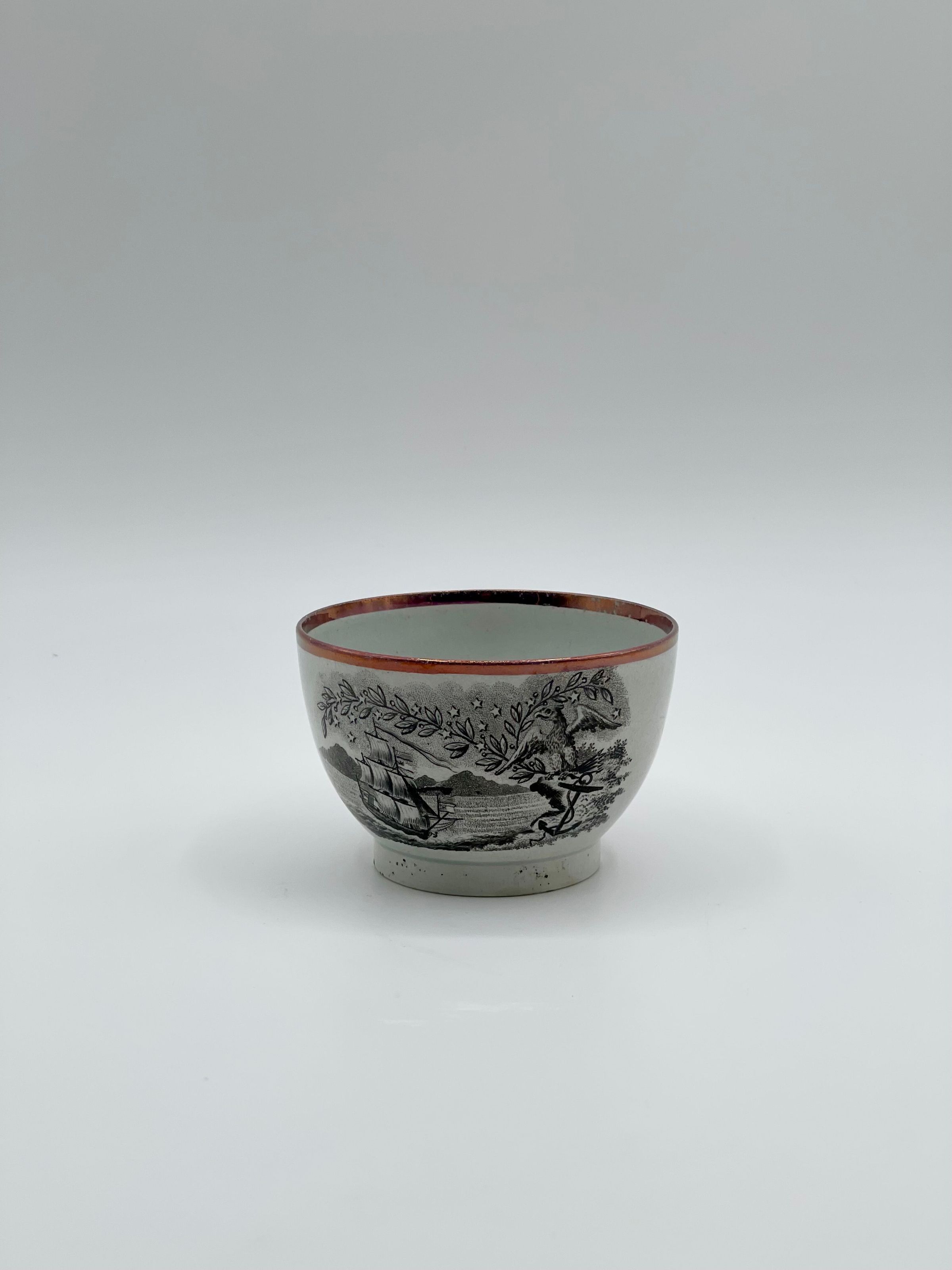
The sailing ship, a three-masted square-rigged vessel of late 18th century type, has occasionally (mistakenly) been referred to as the "Half-Moon", Hudson's famous ship, or as the "Cadmus", the vessel (a packet) which brought Lafayette to America in 1824. Actually, the ship appears to be a naval frigate, with gun ports; the pennant indicates American registry; and the arrangement of the American ensign above the British naval jack points toward it being a captured British man-of-war. This ship, surrounded by emblems of American patriotism (stars, eagle) and nautical references (anchor, etc.), seems a nationalistic reference to American naval superiority over the British in the War of 1812, and may well represent the victory of the "Constitution" over the "Guerrier" or the "Java".
The steamboat, of course, would be symbolic of another American nautical "first"--the first practical use of steam as a means of ship propulsion. The burgeoning of steam vessels in the early 19th century had, as does today's developments of atomic energy, tremendous impact upon all phases of life. The New York Mirror, in 1807 (as quoted in Davidson) rhapsodised: "'steam, the tiny thread that sings from the spout of a tea-kettle, that rises from our cup of shaving water, suddenly steps forth...and annihilates time and space.'" The same newspaper viewed this awesome harnessing of steam as a force which would reduce space so that all peoples would become " 'one single people, one nation, one mind, one heart,' " continuing, " 'steam is union,' " for " 'til now man has been bound to a single spot, like an oyster or a tree.' " Steam was " 'going to alter, in a degree far more remarkable than any previous change, the condition of mankind.' " And so, of course, it did, though perhaps not in such a completely rosy manner as predicted.
The setting of the steamboat, against a mountainous river view, with a fortification atop a hill, suggests West Point and the Hudson. Indeed, the scene may have been based rather loosely upon the Saint-Memin drawing of the "Clermont" passing West Point, c.1810. Certainly many examples of the use of this print for ceramic decoration, often far more literal copies, exist.
As for the tea-set itself, although sometimes designated as Leeds in origin, it almost certainly was produced by one of the fifty or so Staffordshire potteries producing pottery with a combination of transfer-printed designs and lustre decoration on cream-colored earthenware.
Advertisement: Antiques(mag.), V.39, April, 1941, Arthur Sussel, Philadelphia, p.167.
Illustration, center - teapot with identical steamboat design.
Advertisement: Antiques(mag.), v.70, July, 1956, p.6. Philip Suval, Inc., 49 East 57th. St., NYC.
Illustration - tea set described as: "A Newhall porcelain tea service, transfer printed with a river scene, depicting Robert Fulton's 'Clermont' and a sailing ship. English, c.1810." Consists of : teapot & cover; creamer; "waste bowl"; 2 cake plates; 8 tea cups; 9 saucers.Note Type
General NoteNote
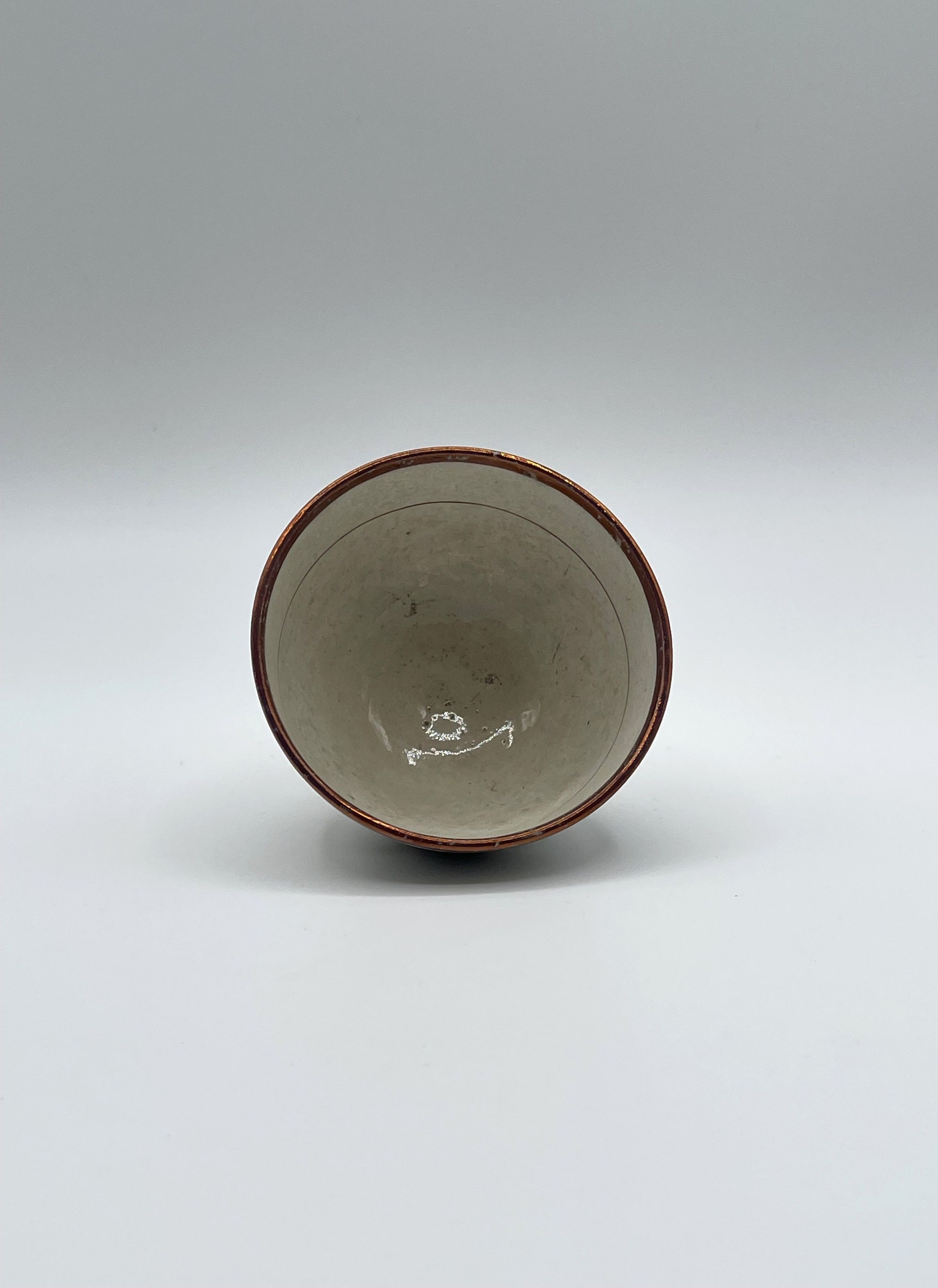
Part of a tea set, SS.61.85 a-k (teapot with lid, wastebowl, four teacups, four saucers)Note Type
StorageNoteNote
Home Location: Historic Hudson Valley, Sunnyside, Servant's Room #1, 1C
Home Location: Historic Hudson Valley, Administrative Office, Reading Room, Shelf O5