Note Type
Curatorial RemarksNote
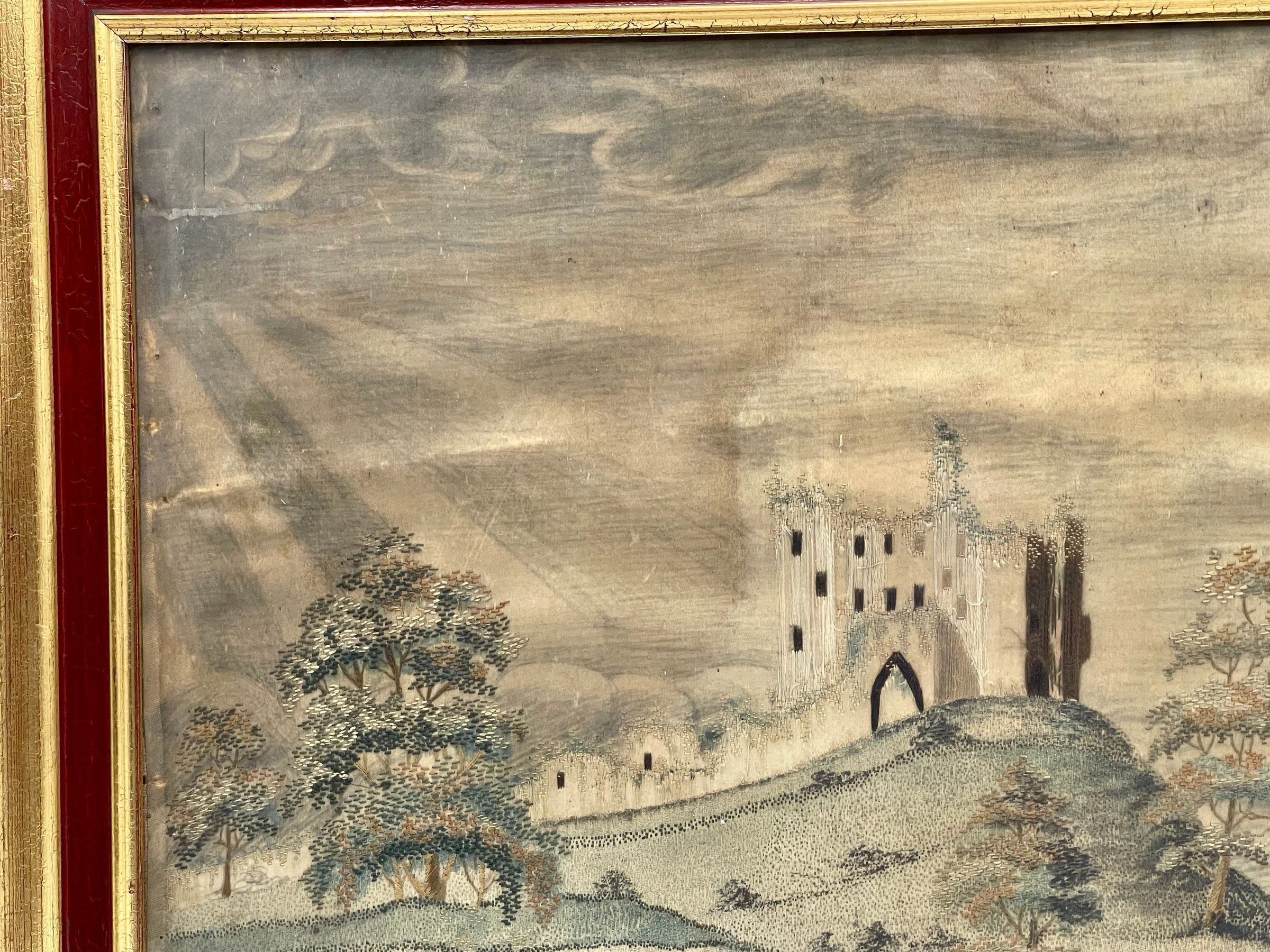
The print source for this image has been discovered: After R. Paddy. Dudley Castle/La Chateau Dudley. Wolverhampton & London: R. Paddy and F. Jukes, 10 September 1793. Aquatint, printed in colours and finished by hand, by Francis Jukes, with engraved title and explanatory text beneath image in English and French on wove paper [Jessa J. Krick, July 22, 2020].
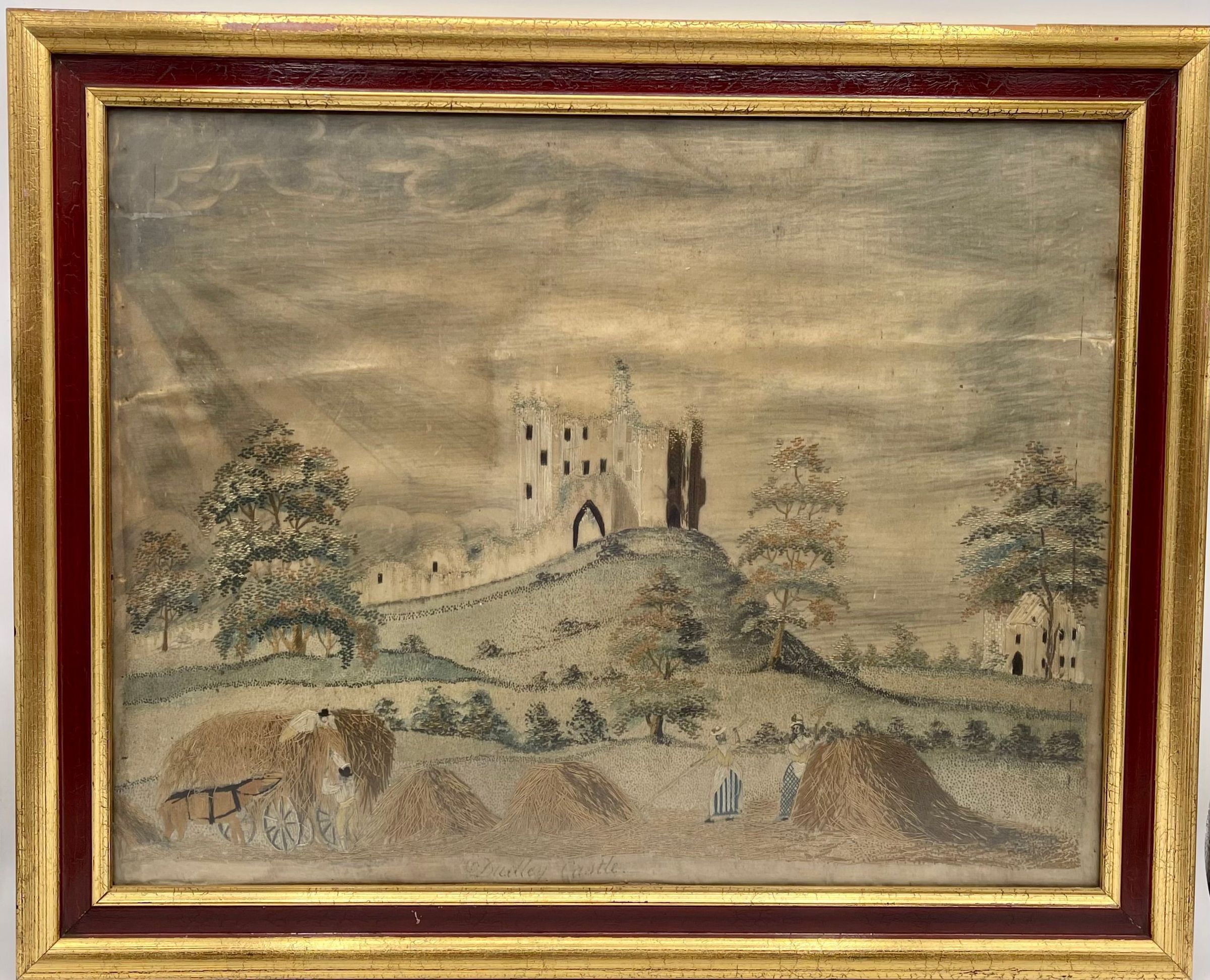
For the 2011 season, a new object has been installed in Catherine’s bedroom, a representation of Dudley Castle worked in a combination of ink and silk floss embroidery on a silk ground. The piece dates from the period 1780-1810. Although it is not known who made the piece, the technique, style and subject matter make it intriguing and worthy of a prominent placement in the manor house for the upcoming season. Please encourage visitors to take a close look at this object as part of their experience in this room.
A woman’s needle in the New Nation period was her constant companion. Fine stitchery was part of a young girl’s education from the time she was a five or six years old. Young girls stitched alphabets, numbers and simple verses (often Biblical) into samplers and as a result of this work, learned aspects of a virtuous life -- literacy, piety and patience -- as well as different embroidery stitches. The sampler showing Adam and Eve also on view in Catherine’s bedroom represents this type of needlework.
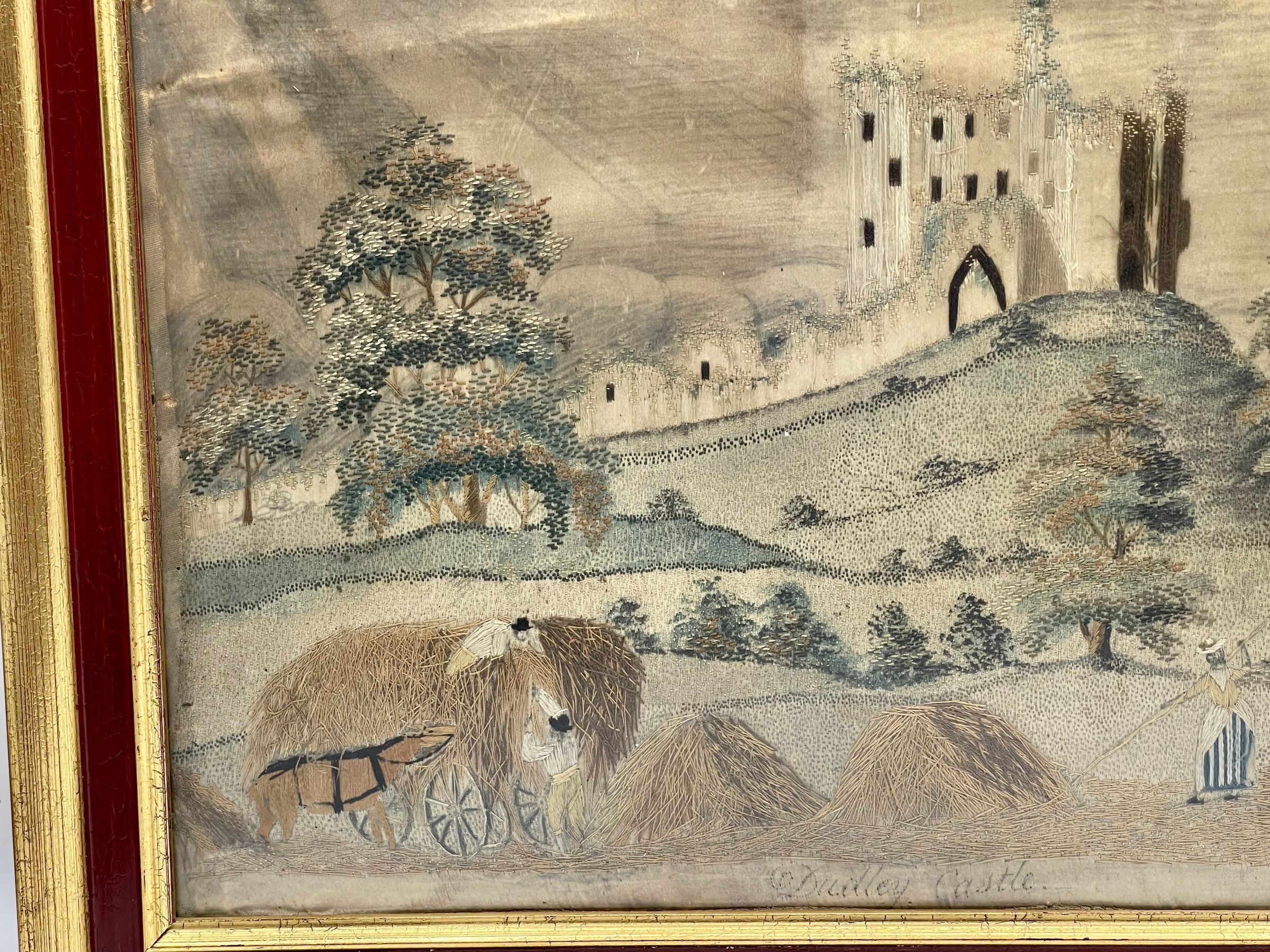
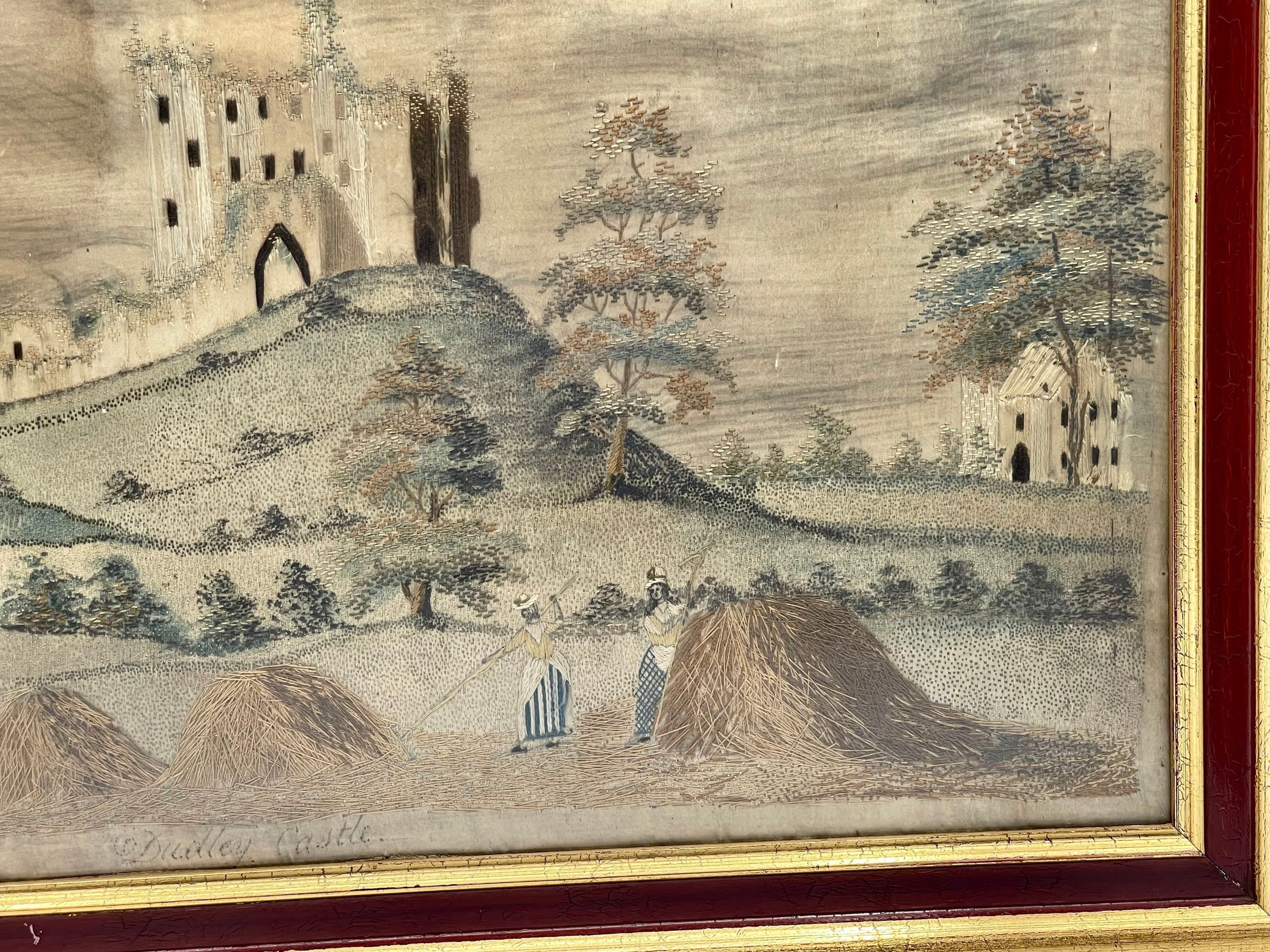
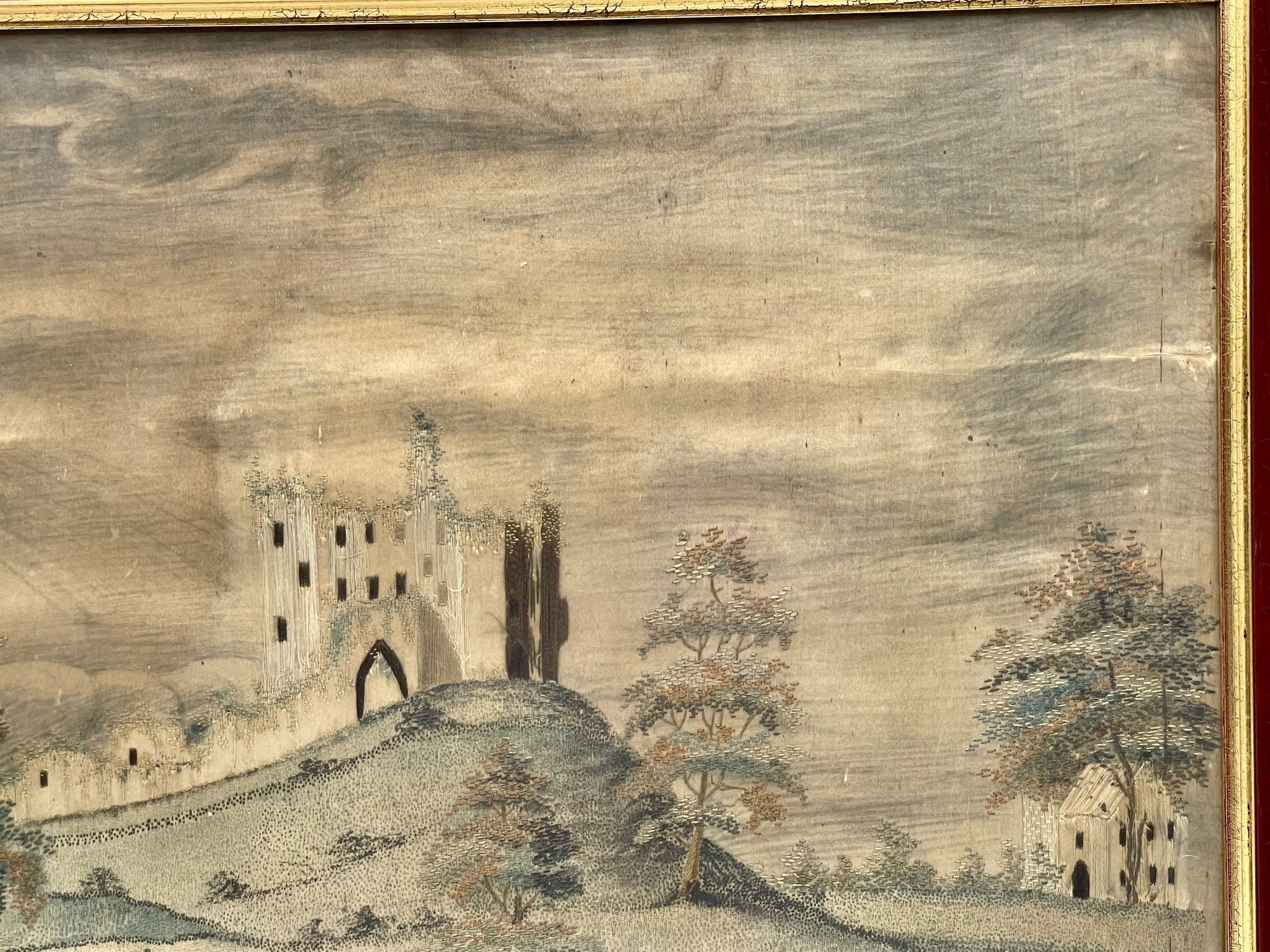
An embroidered picture like Dudley Castle however, shows a different approach to the art of needlework. The hand that made this piece was a bit more refined and experienced. The use of ink as well as stitching indicates that the entire composition was worked out before the maker even threaded her needle. You can see how ink has been used to create shading and details like the wheels of the cart. The variety of stitches shows a high level of skill and the subject matter suggests an educated person created the object.
This piece is more like the pieces girls attending female academies produced in the late 18th and early 19th centuries. The young female students at these academies strove to learn the “elegant arts” of drawing, painting and refined needlework. They painstakingly translated still lifes, botanicals, pastorals and memorial scenes into masterpieces of stitchery. The Dudley Castle picture likely was made by a young lady who attended or was familiar with one of these academies. Not only does it show a skillful combination of drawing and stitchery, the scale and composition are reminiscent of engraved prints of the period.
Although the piece is faded, close observation reveals the skillful use of color and different stitches to create shadows and depth of field. In particular, the long stitches that form the haystacks are cleverly done and give a feeling of texture and dimensionality.
Dudley Castle is an actual site in Dudley, West Midlands, England. The castle was built in the 11th century and was destroyed by fire in 1750, leaving a romantic ruin that has fueled the imagination of artists since the eighteenth century. It is not difficult to image a young lady discovering an engraving of this historic ruin and returning to the image as an inspiration for the drawing and needlework that resulted in this object.
Jean Mason Browne, the woman who gave this needlework picture to Historic Hudson Valley, is the last of the Van Cortlandts to have lived in the manor house prior to its sale in 1945. She gave a large group of objects and documents, many with Van Cortlandt family provenance, to Historic Hudson Valley in 2003. [Jessa Krick, Collections Manager, Memo for interpreter training, March 2011]
The print source for this image has been discovered: After R. Paddy. Dudley Castle/La Chateau Dudley. Wolverhampton & London: R. Paddy and F. Jukes, 10 September 1793. Aquatint, printed in colours and finished by hand, by Francis Jukes, with engraved title and explanatory text beneath image in English and French on wove paper [Jessa J. Krick, July 22, 2020].Note Type
StorageNoteNote
Home Location: Historic Hudson Valley, Van Cortlandt Manor, Northeast Chamber/Catherine'sNote Type
DepartmentNote
Curatorial