Figurine

Name/Title

Figurine

Entry/Object ID

VC.79.4

Description

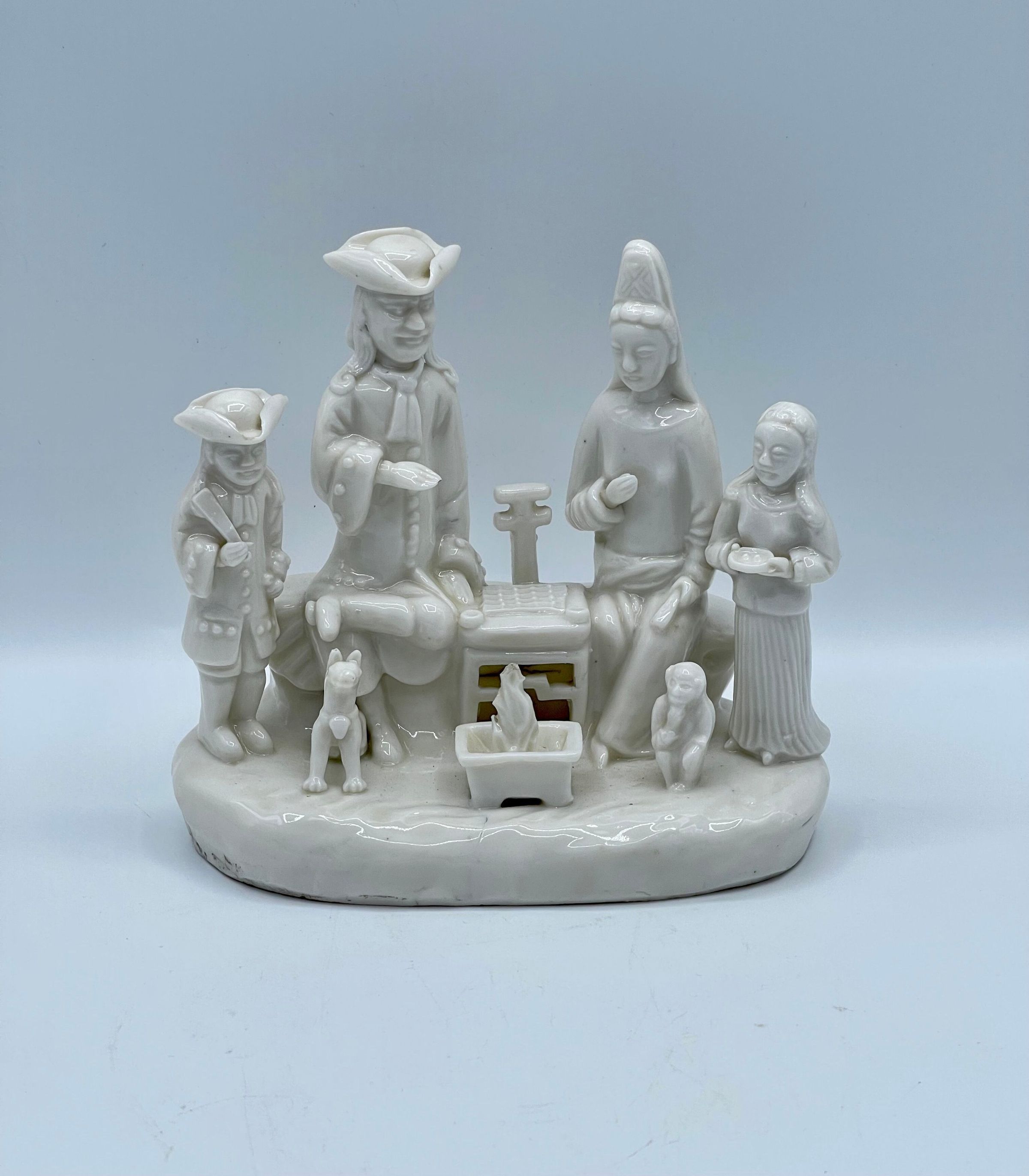
Bright white blanc de chine group of six figures apparently taking tea around a low table with a cross-shaped backpiece, holding a game board; from left to right, small standing man in European costume of tricorn hat, long buttoned coat, shirt with tied stock, breeches and boots; seated dog; large man in similar dress, seated with legs crossed; plant in pot in front of table; large seated woman in Oriental dress with high headdress; seated monkey; small woman in similar dress; oval base; smooth glaze; white with faint cream tone.

Artwork Details

Medium

Porcelain (hard-paste)

Subject Person or Organization

Gov. Diederik Duivven

Made/Created

Artist Information

Artist

Unknown

Attribution

Maker

Date made

1700 - 1725

Other Names and Numbers

Other Number

PCR 3090

Dimensions

Dimension Description

Overall

Height

5-3/4 in

Width

6 in

Depth

3-1/4 in

Dimension Notes

Display Dimensions: 5 3/4 x 6 x 3 1/4 in. (14.6 x 15.2 x 8.3 cm)

Relationships

Related Person or Organization

Person or Organization

Gov. Diederik Duivven

Notes

Subject

Related Entries

Notes

VC.59.19 - Figurine - Similar item

General Notes

Note Type

Curatorial Remarks

Note

The significance of this scene is not known. Groups like this one were formerly said to portray Diederik Duivven, a governor of the Dutch East India Company from 1729 to 1731, known among the Chinese a Governor Duf or Durf. The presence of three similar examples in the inventory of Augustus the Strong's collection taken in 1721 disproves the theory, however. These blanc de chine scenes were highly conventionalized; the men are always on the left and teamed with a dog, the women are on the right, with a monkey. According to contemporary Chinese convention, the smaller figures are not children, but servants. The kilns of Te-hua were famed for their production of blanc de chine, and especially fine, translucent porcelain with a rich, thick, translucent glaze varying in color from snow white to ivory. Figurines were produced in blanc de chine, often depicting Buddhist deities or Taoist genii. Some groups contained as many as eight figures, crowded together like the European figures in later groups.

Note Type

StorageNote

Note

Home Location: Historic Hudson Valley, Van Cortlandt Manor, Parlour