Note Type
Curatorial RemarksNote
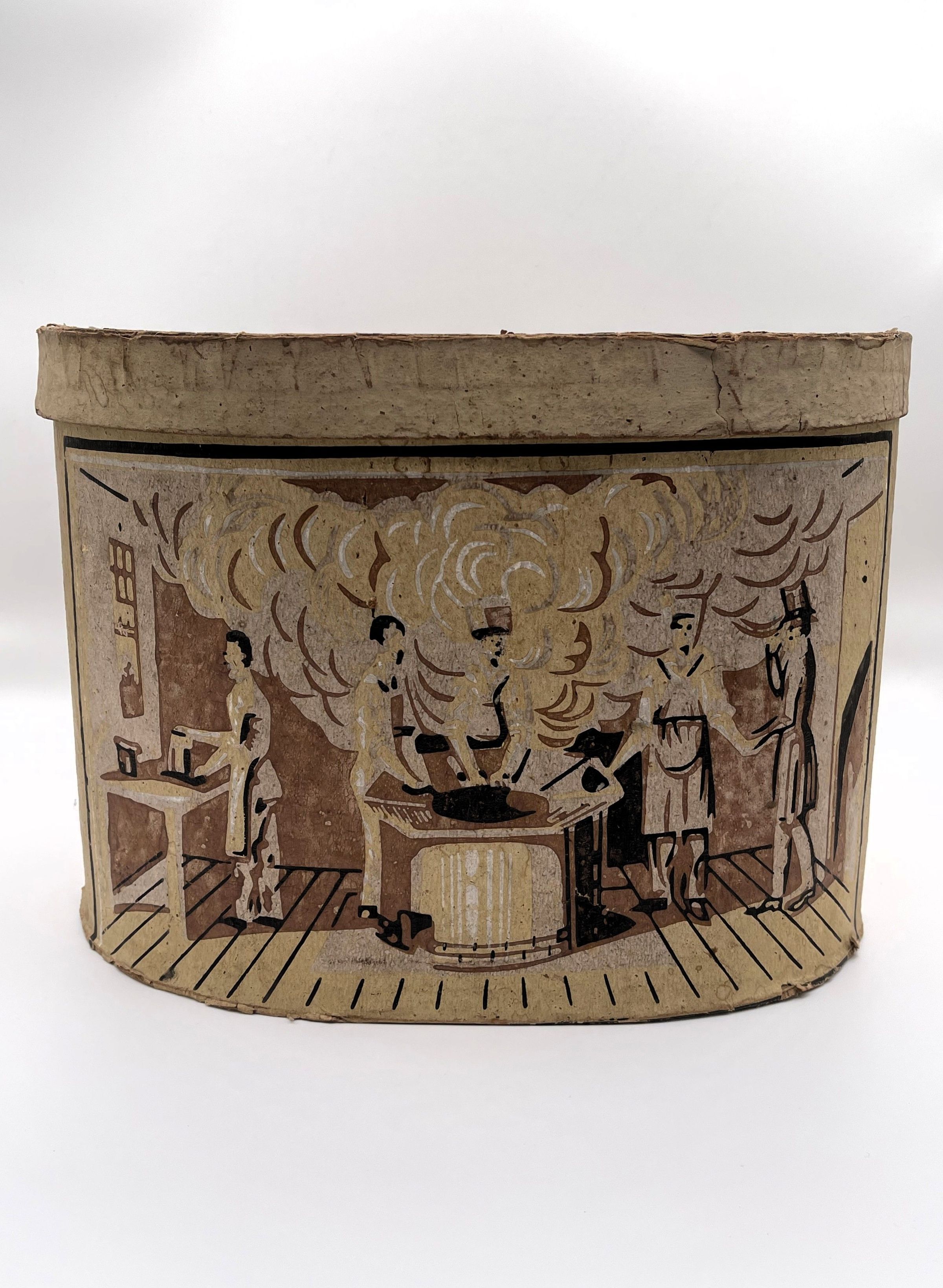
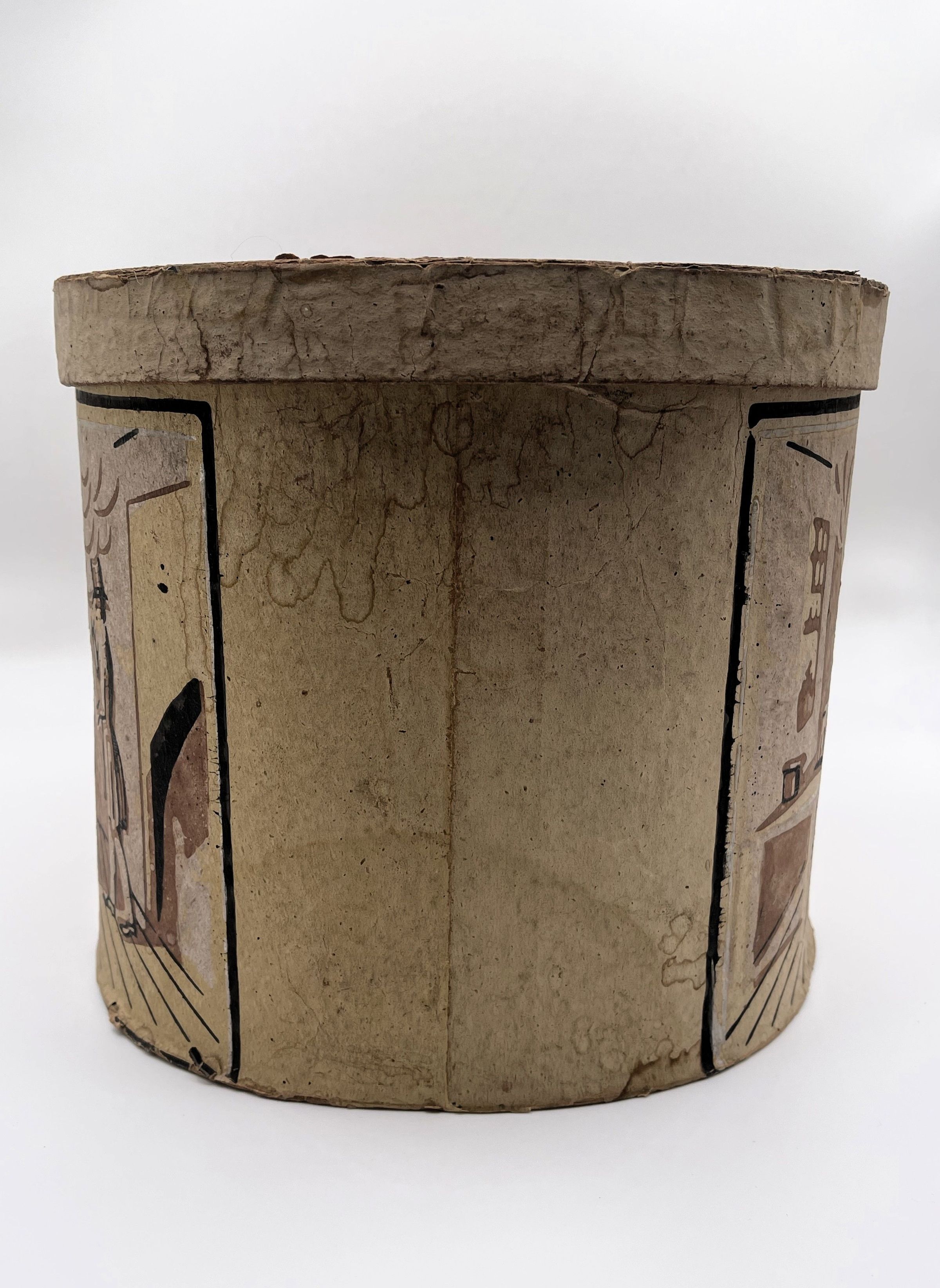
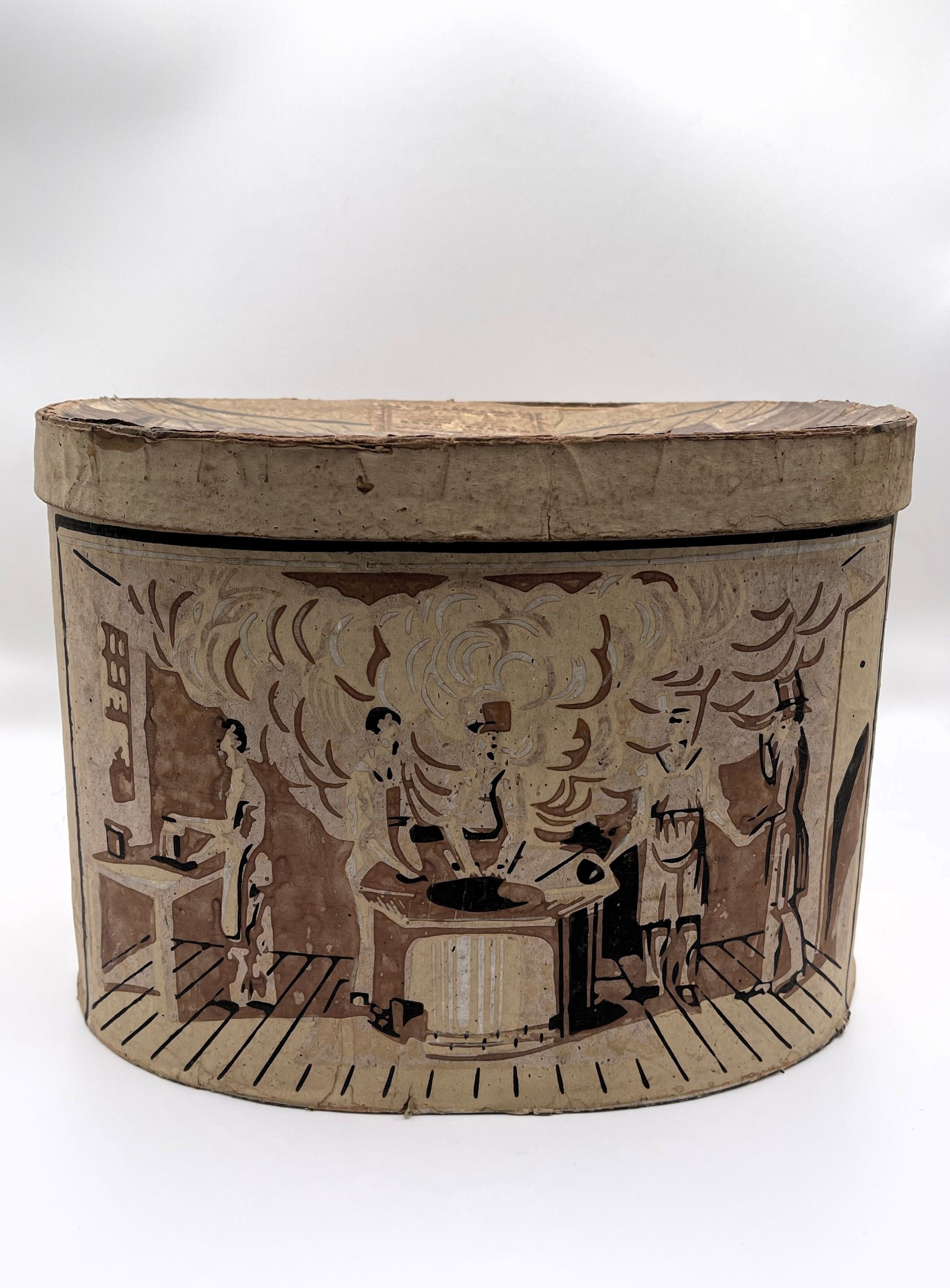
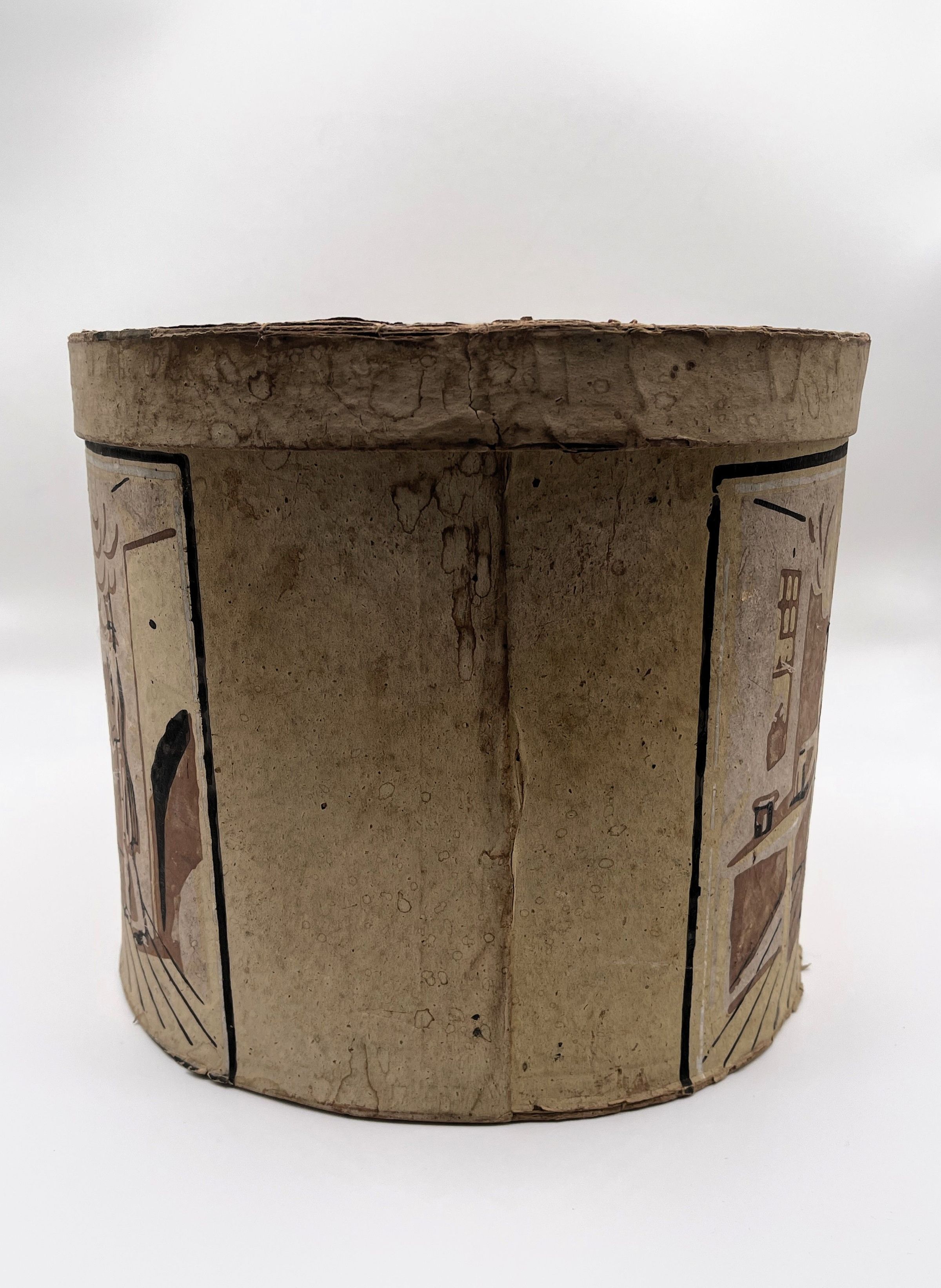
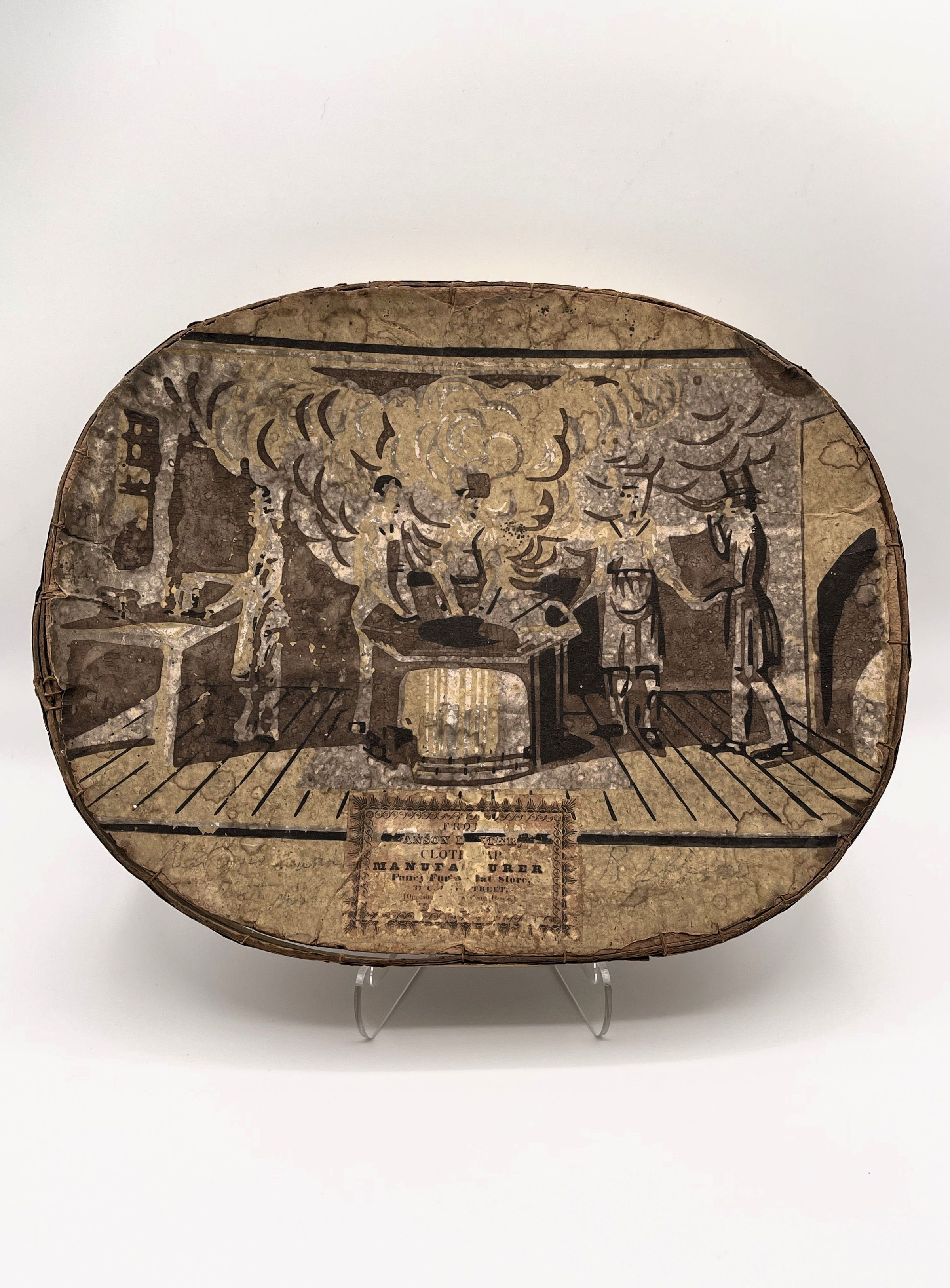
The process illustrated on this box is "planking," part of the felting process, which grew to be much more mechanized in the 19th century. First step: remove longer guard hairs from pelts (depending on the grade and processing of the pelts, there may be more or less guard hairs to remove). Second: Tear or shave "beaver wool" from pelt, after which it is known as "beaver fluff." Third: Apply soultion of nitric acid and mercury to the pelts to dissolve keraine, making fur fibers more able to interlock. This process is known as "carroting," as it turns fibers oranage and affects the quality overall. Fourth: Sort and weigh fluff. Fifth: Card fluff. Sixth: Bow fluff, which is to say lay fluff out on a table with holes in the table. A hatter's bow (looks like a violin bow) is passed over the table with journeyman plucking string to agitate fibers and cause them to align. The resulting products is a called a "batt" in English. Multiple batts are needed with fibers laid in opposing directions to create the interlocked felt. Seventh: Cover batts with damp cloth or leather and place them on top of each other over a small heat source, in a process called "basoning." Heat and moisture encourage further bonding, condensing and shrinking of the batt. Elementary shaping of batts into a cone is usually done at this stage. Eighth: "Planking," place shrunken batts into a metal basin filled with wine waste, sediment and hot water. For this step, conducted by "fouleurs," the felts are agitated by stirring and by hand in order to cause shrinking. Planking gives the batt its size, consistancy and shape. Ninth: Dry and block, stretching wet felts over molds to be shaped. The finishing stages included trimming and dyeing, with the hat bodies again heated over a fire and rubbed with pumic stone to texture the outside, trimmed (cutting) and dyed. After dyeing, a stiffening agent is applied with stem to help seal and create the final shape. Then the last trimming (decorating) is completed, involving the last finishing lining and detailing of the hat.Note Type
StorageNoteNote
Home Location: Historic Hudson Valley, Sunnyside, Ebenezer Irving's Bedroom