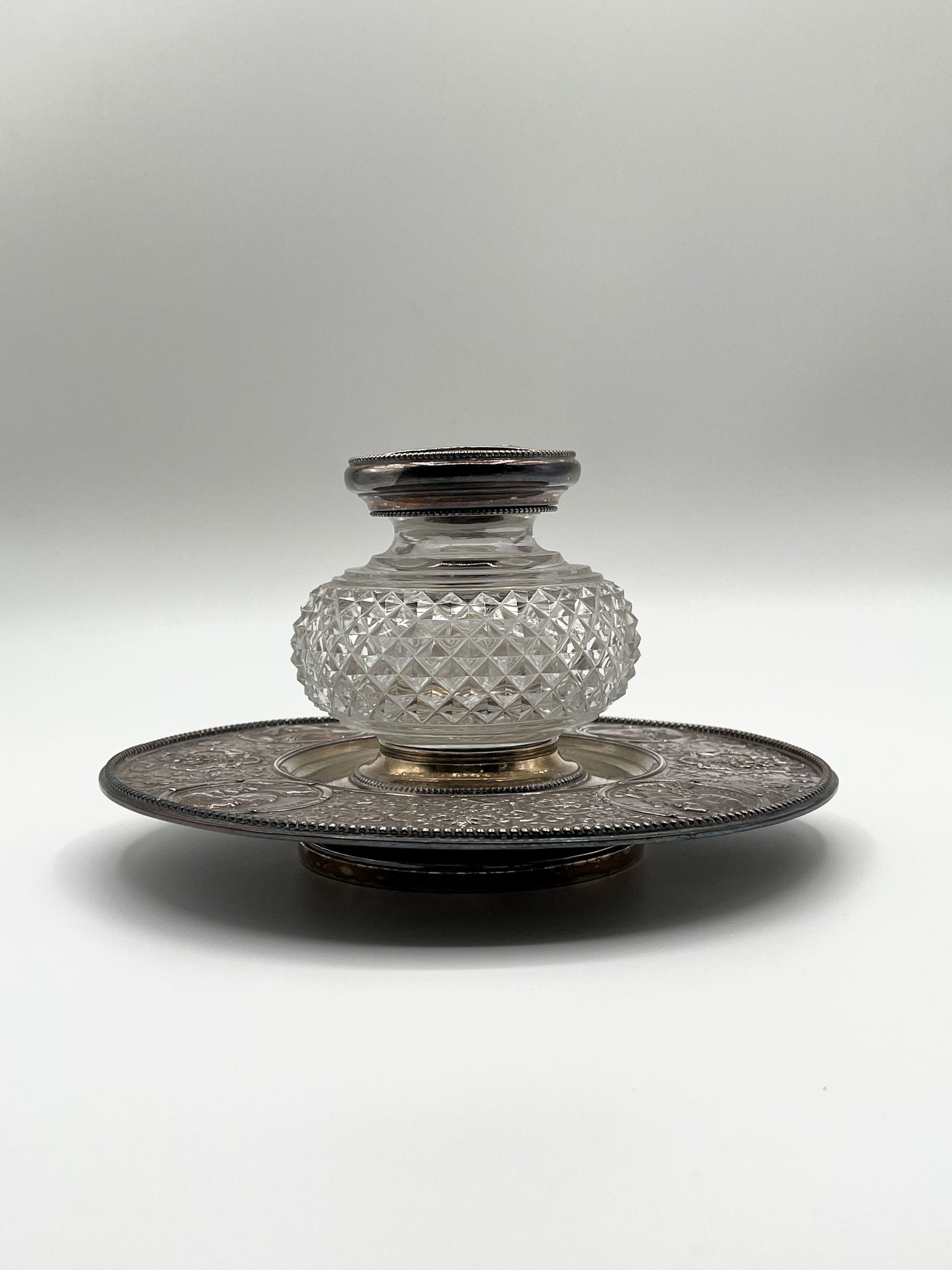
Inkstand

Object/Artifact

-

Historic Hudson Valley

Name/Title

Inkstand

Entry/Object ID

SS.92.3 a-b

Description

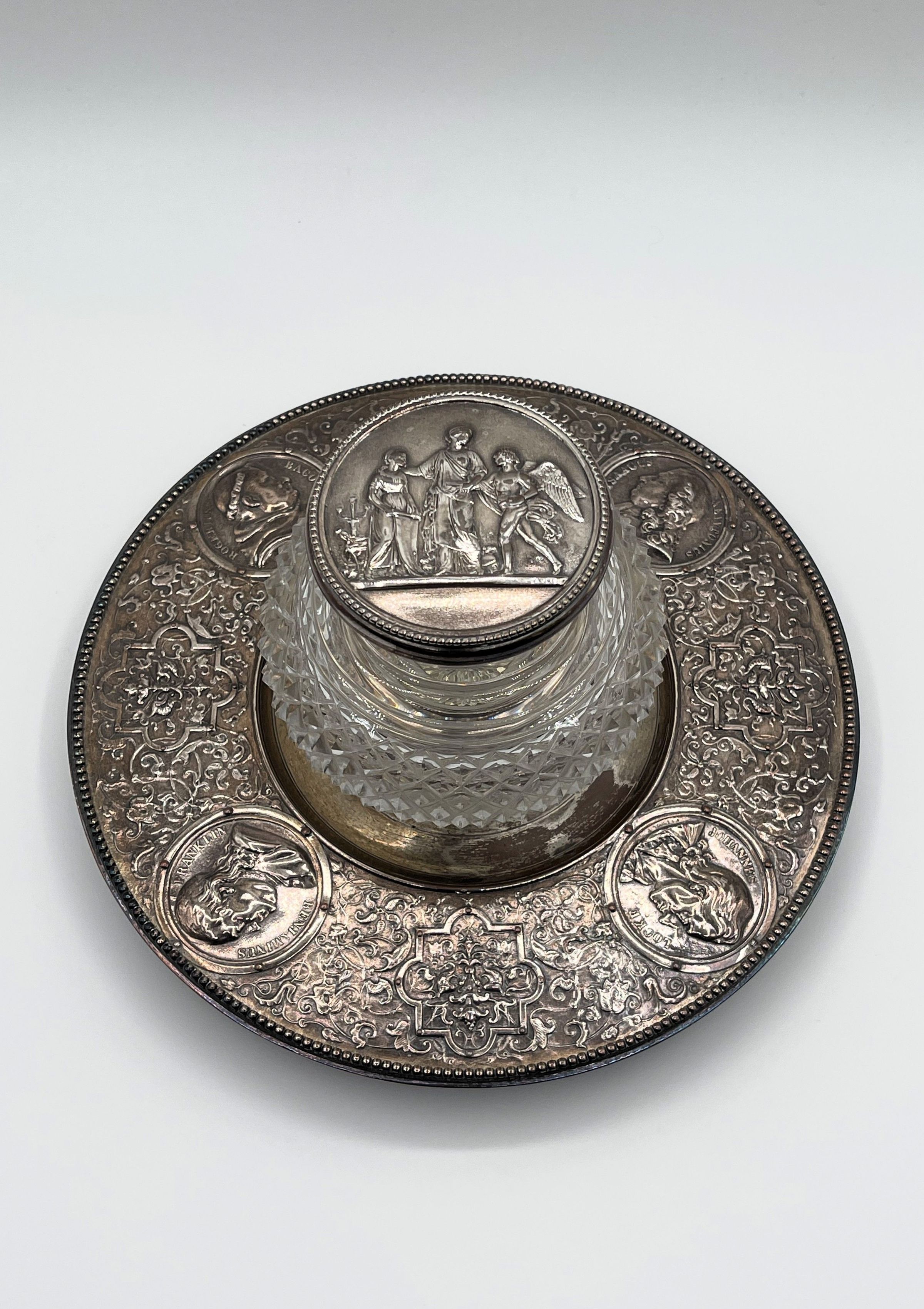
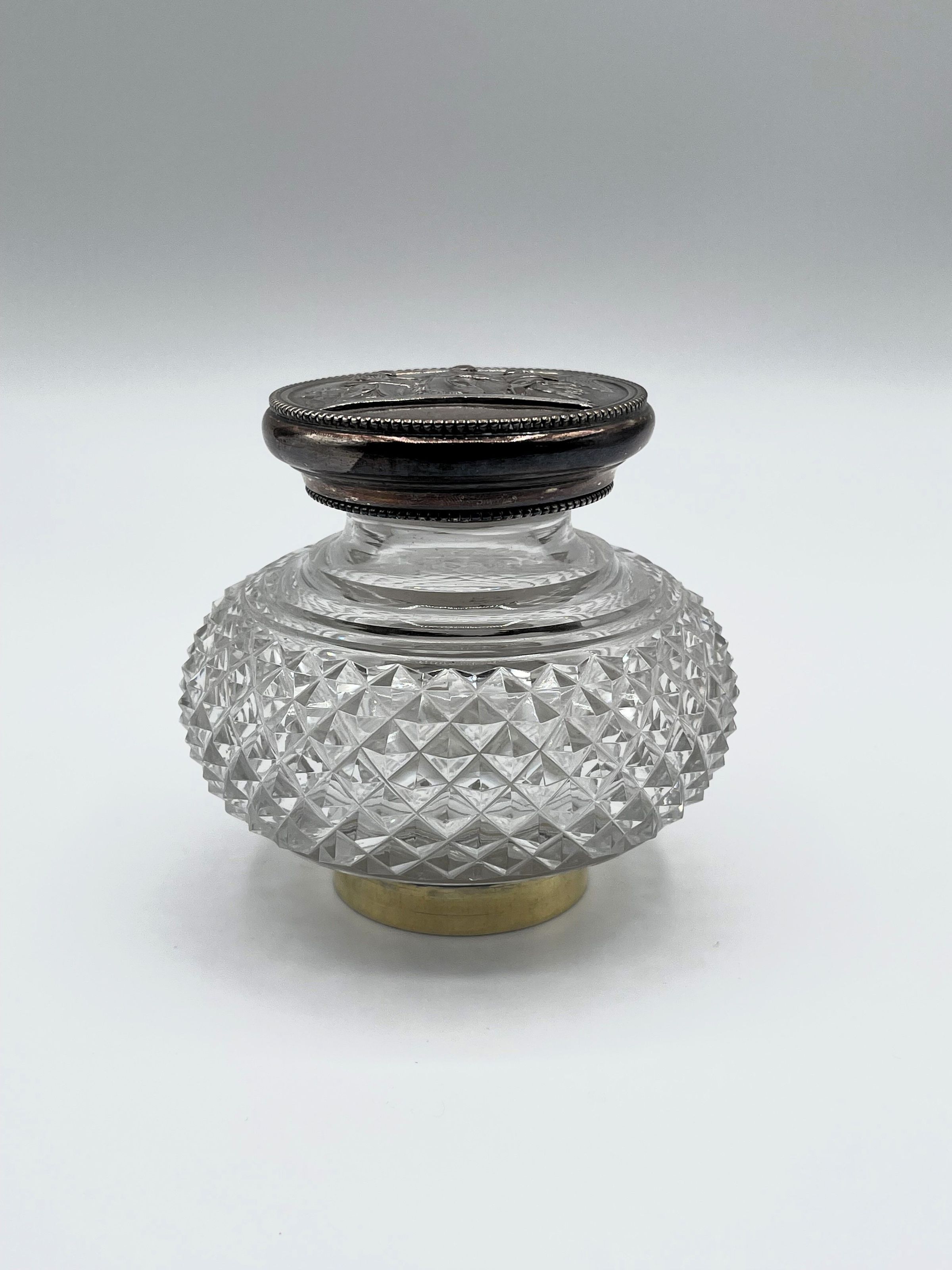
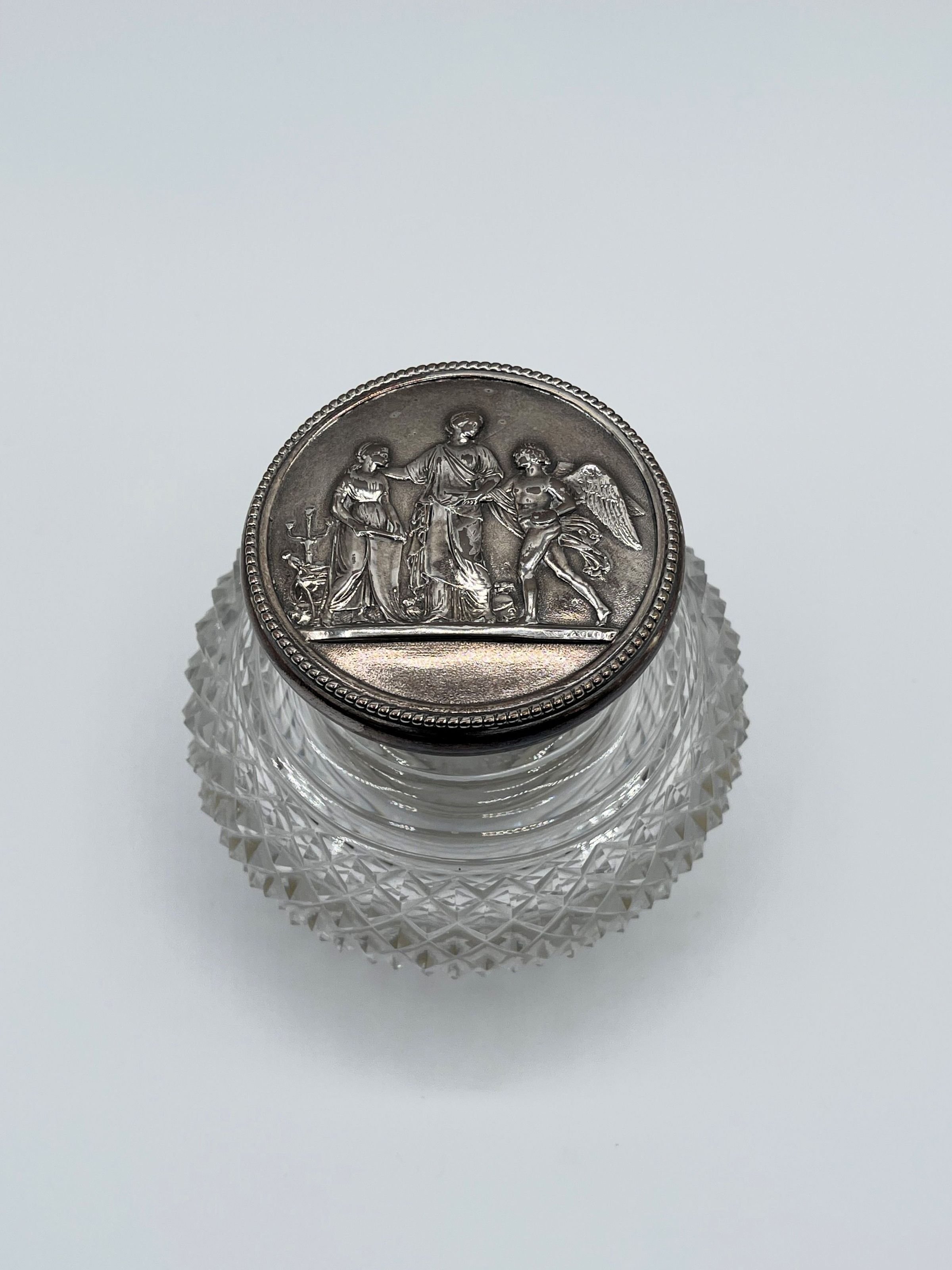
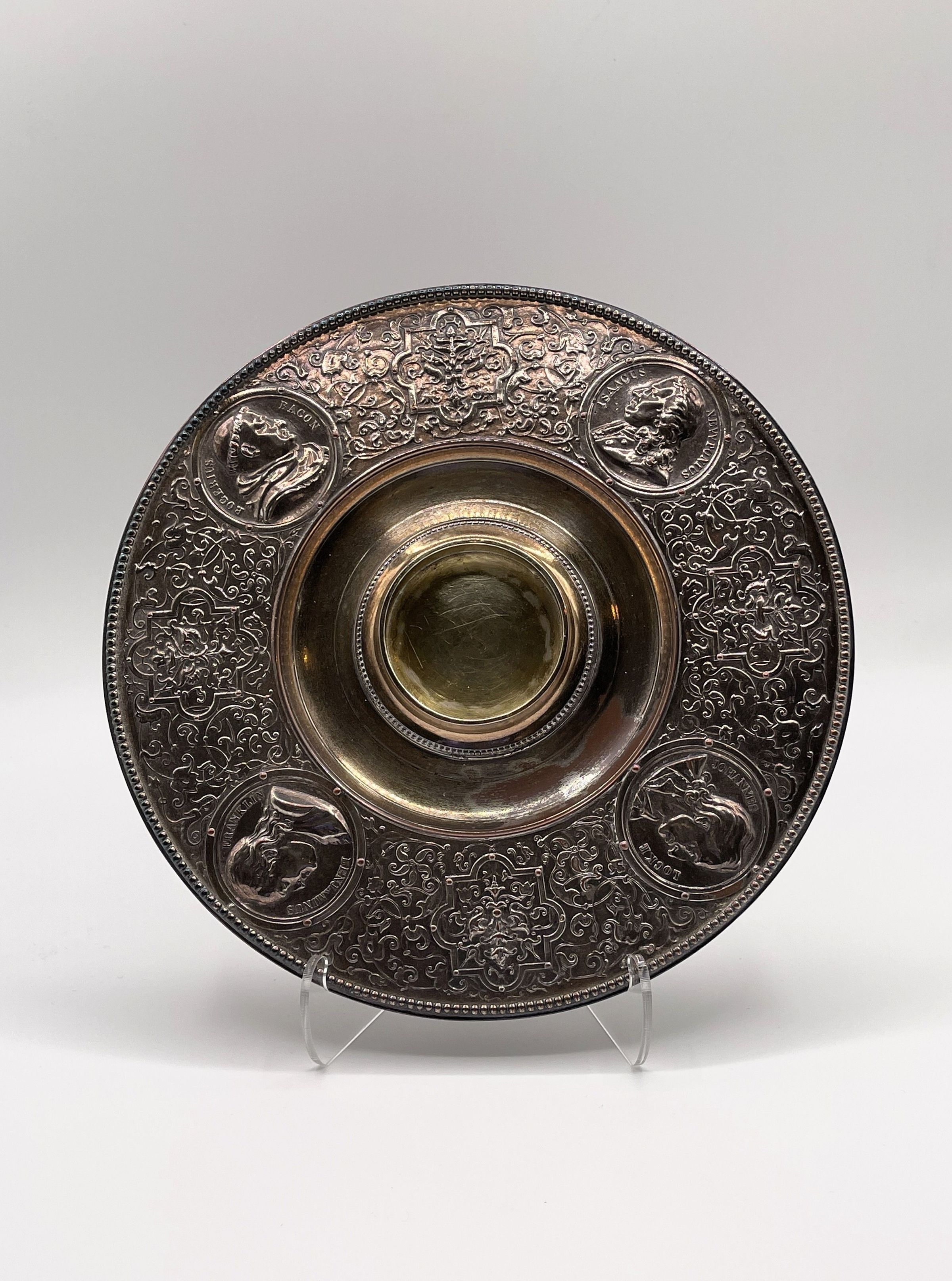
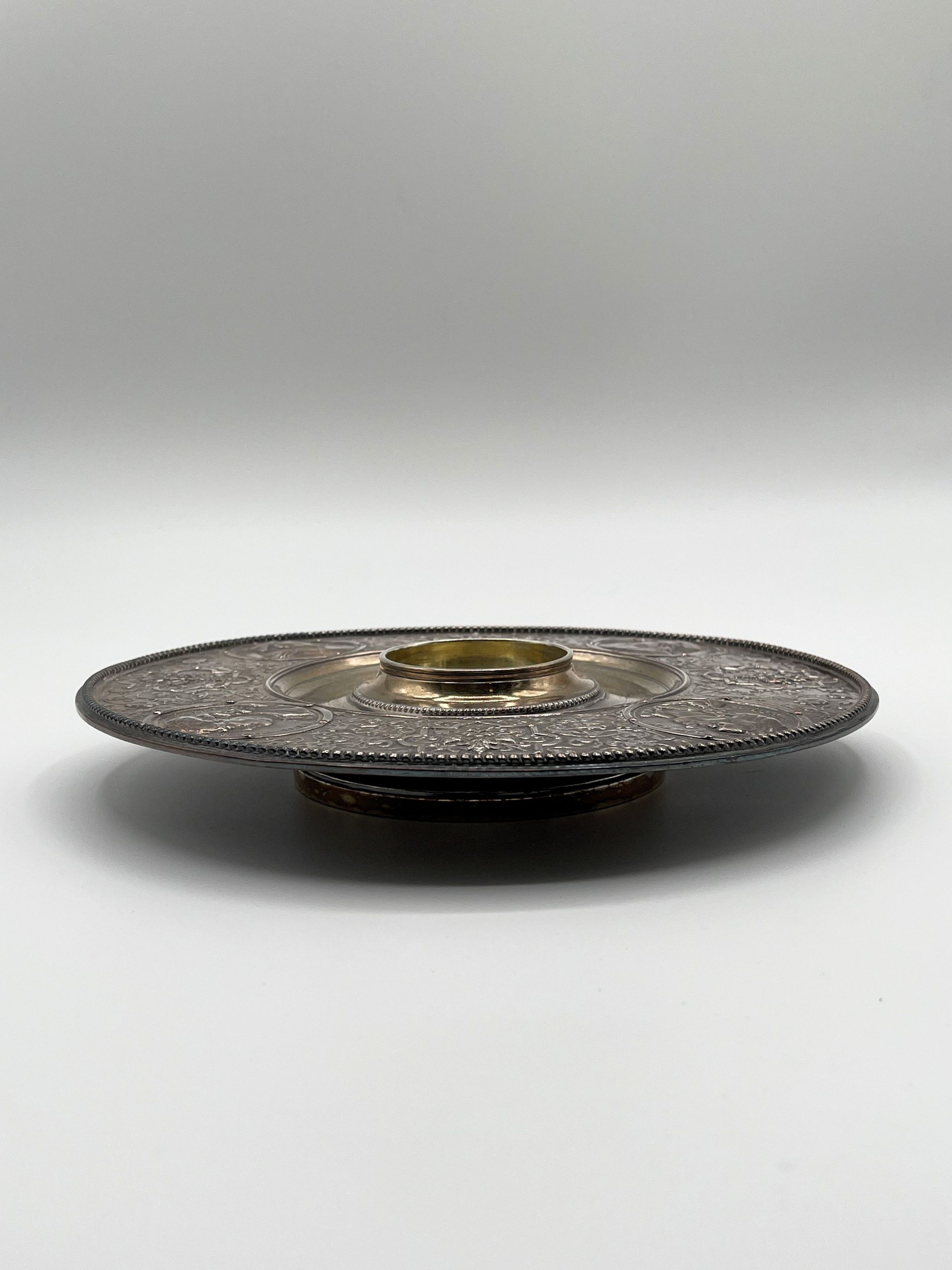
Inkwell and stand electroplated copper and glass: on the underside, a raised oval medallion reads "PUBLISHED BY/ ELKINGTON & C8" surrounding "940"; it is centered in the reverse of a geometric medallion; bottom is plated; a stepped foot ring supports a round cast plate; plate has a beaded lip surrounding a two-inch wide rim; inside the rim, a shallow cavetto surrounds a 2 1/8" diameter round cuff into which the inkwell fits; cuff has concave sides; decoration is continued to the rim; four roundels at each of the cardinal directions contain profile busts, oriented so that they face up from the center of the plate; the frames of each of the figures are in raised print, with the first frame on the left and the last on the right of the bust; they are "ROGERIUS BACON" draped in a robe with a tonsured haircut; "ISAACUS NEWTONIUS" with long curls and a buttoned jacket; "JOHANNES LOCKE" with hair brushed away from his face; and "BENJAMINUS FRANKLIN" with thinner curls; the rims each have six buttons equidistantly placed around them; they are set within a field of ornamental scrolling foliate interlaced with pointy leaves. Between each of the medallions is a symmetrical floral motif. The inkwell is glass: it has a straight foot, cuffed in silver-plated copper; a bulbous body with a stepped bottom and prism-cut face, which recedes to a stepped shoulder and convex neck; a gilt copper lid is affixed to the lip; it has a flat bottom with a beaded rim; the cap is attached with a single hinge; the cap curves outward and upward to a convex bulge, terminating in a beaded rim; the top appears to be cast separately from its rim. It has a classical scene with an adult in the center, resting her arm on a child on the proper right; both figures look left at a winged angel; they are in a domestic interior, and stand on a floor indicated by a raised line; in that line is "MAVLINE!" (somewhat obscured).

Made/Created

Artist Information

Artist

Elkington & Company, Ltd.

Attribution

Maker

Date made

1842 - 1861

Inscription/Signature/Marks

Type

Inscription

Transcription

See description

Other Names and Numbers

Other Numbers

SS.92.3 A-B
SS.92.3a-b

Dimensions

Dimension Description

base

Diameter

8-1/2 in

Dimension Notes

Display Dimensions: 8 1/2 in. (21.6 cm)

Dimension Description

inkwell

Height

3-3/4 in

Width

4 in

Dimension Notes

Display Dimensions: 3 3/4 x 4 in. (9.5 x 10.2 cm)

Dimension Description

Overall dimensions

Height

4-3/4 in

Depth

1-1/2 in

Diameter

8-1/2 in

Dimension Notes

Display Dimensions: 4 3/4 x 1 1/2 x 8 1/2 in. (12.1 x 3.8 x 21.6 cm)

Material

Copper (Silver-fused), Gilt, Glass

Relationships

Related Person or Organization

Person or Organization

John Locke

Notes

Subject

Person or Organization

Sir Isaac Newton

Notes

Subject

Person or Organization

Roger Bacon

Notes

Subject

Person or Organization

Benjamin Franklin

Notes

Subject

Person or Organization

Washington Irving (1783-1859)

Notes

User

General Notes

Note Type

Curatorial Remarks

Note

This inkwell bears a close relationship to sideboard plates, used for display or for serving fruit, that were also produced by Messers. Elkington and Sons about the same time. Both have richly decorated rims, undecorated cavettos and a central medallion with a single scene. The sideboard plates were based on a finely chased Roman example received by Mr. Elkington from Emile Braun, author of an article on Elkington's reproductions in the "Art Journal" (1850). Braun wrote of Elkington's plate that he "has multiplied it by the above (electro-typing) process, and thus offers to the public the opportunity of becoming possessors of this beautiful specimine of medieval workmanship." (Braun, 113) The plates were available at Elkington's showroom. The inkwell is related to these plates not only in organization and process, but also in subject matter. The plates depict moral iconography, some are biblical and allegorical, while the inkwell's theme is philosophical. The plates were produced in a number of styles including Italian Classical, Raphaelesque, "Alhambra style." The inkwell seems to be an imaginitive adaptation of the plate's basic format and iconography. (See Clum, John. Nineteenth-Century Silver. London, Country Life Books, 1987 p. 176 for illustration of a plate. Xerox in files.) Elkington's sideboard plates and this inkwell seem related. Braun, Emil. "Sideboard Plates with Plastic Ornaments." The Art Journal. April 1850. pages 113-114.

Note Type

StorageNote

Note

Home Location: Historic Hudson Valley, Sunnyside, Study