Note Type
Curatorial RemarksNote
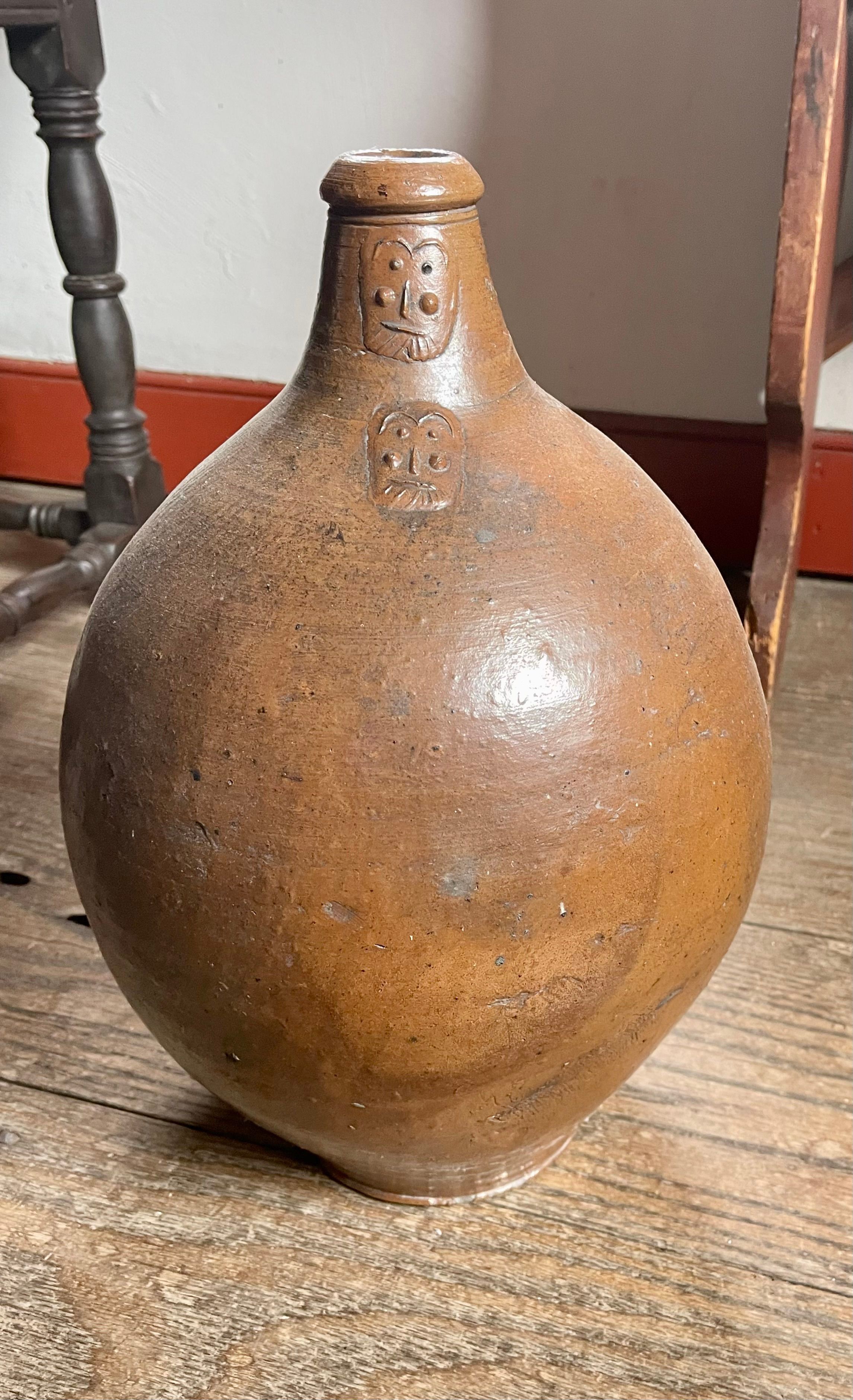
Regarding Bellarmines or Bellarmine jugs, like those at PM: They are a distinctive type of stoneware. We have reproduction versions in one of the warehouse rooms, and period pieces in the upper kitchen.The jugs have a molded face of a bearded man at the lower neck and were made beginning in Germany in the 15th century. The face motif was probably a "wild man," the mythical creature of the woods in Northern European folklore, and frequently adorned jugs, pitchers and bottles (molded ornaments would be attached to a plain vessel in the pottery before firing). The word for "beard" in German is "Bart" so they were simply called "Bartmann" jugs, to describe the motif that appears on them.
In the 17th century, they began to have the nickname of "Bellarmines" or "Bellarmine jugs" after Cardinal Roberto Bellarmino, who was hated in Protestant countries because he was a zealous Counter-Reformer (he was the Cardinal who demanded Galileo abandon Copernican theory, for example). Bellarmino (now canonized as a saint) is often shown with a beard, so these traditional "bearded man jugs" became topical in the early 1600s, a reference to current events of the day. (It's no stretch to imagine that the Protestant Germans near Cologne where so much stoneware was made might have thought this reference to the unpopular Bellarmino for jugs that might have been used for wine or spirits was humorous!). In England, this style of jug is sometimes called a "greybeard" as well.
They are utilitarian jugs, used for decanting or transporting wine or other liquids. There are surviving examples in other collections with coats of arms of the city of Amsterdam, for example. Jugs like this were used to transport alcohol and liquids so it makes sense to have some at Philipsburg Manor. They are another sign of the global trade network represented by the site's furnishings [Jessa J. Krick, Associate Director of Collections, 4/2019].
The name 'greybeard' or BELLARMINE comes from the bearded mask on the shoulder of many of these jugs. See: Honey, W.B., European Ceramic Art, v. 1, 'Illustrated Historical Survey', New York, D. Van Nostrand, 1949, p. 30.Note Type
StorageNoteNote
Home Location: Historic Hudson Valley, Philipsburg Manor, Upper Kitchen