Laundry stove

Object/Artifact

-

Historic Hudson Valley

Name/Title

Laundry stove

Entry/Object ID

SS.62.423 a-e

Description

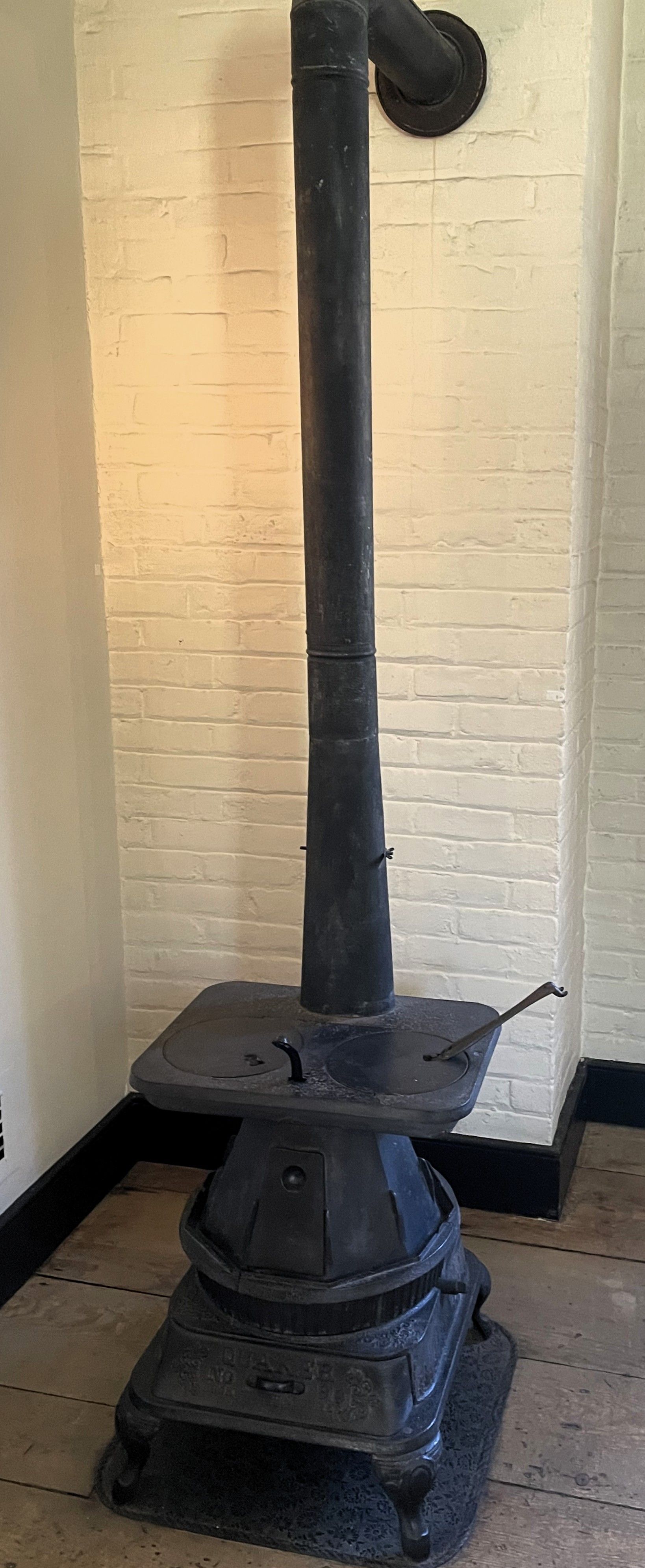
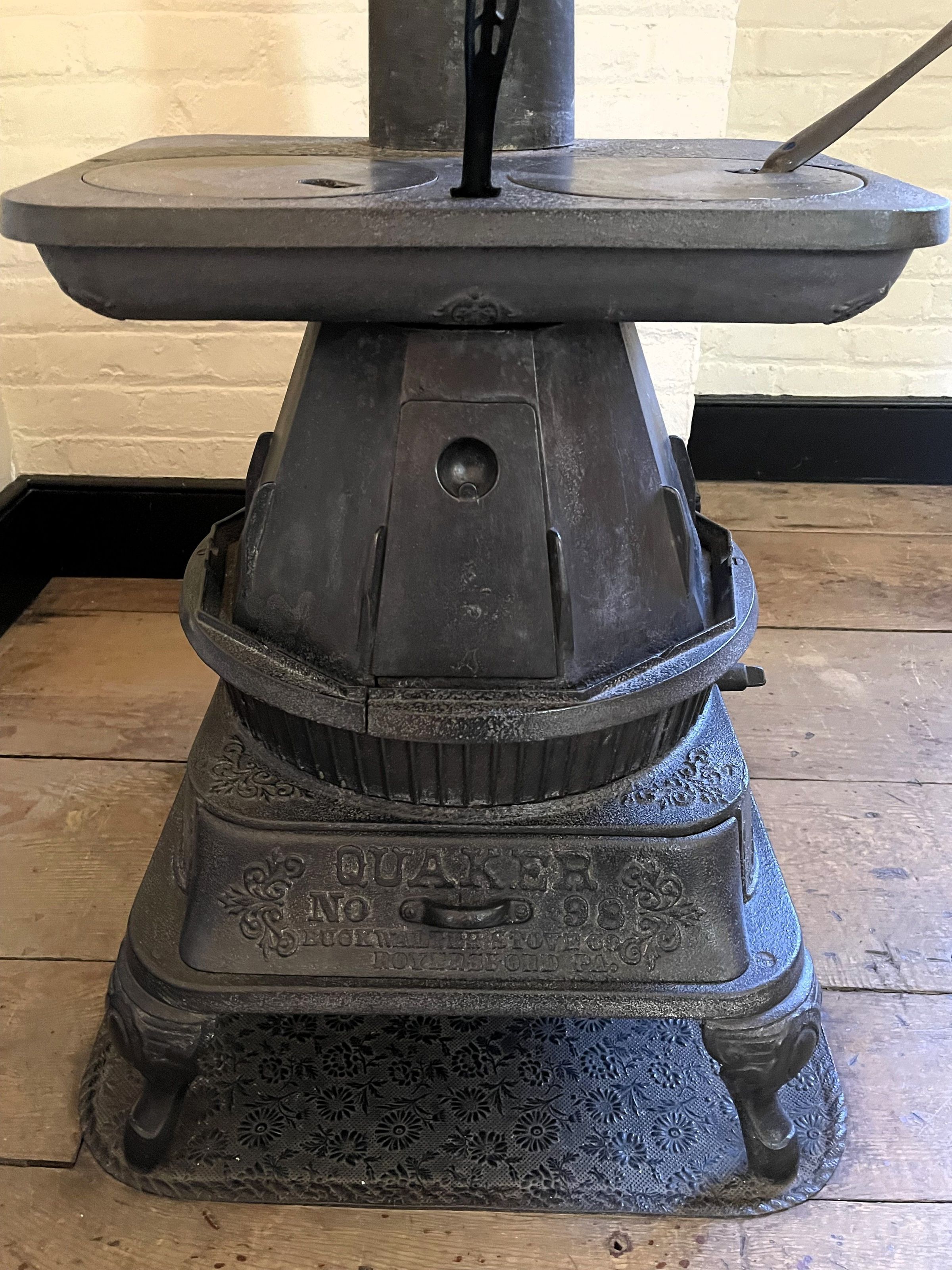
Laundry stove: coal (anthracite)-burning; rectangular top, with two round lidded holes in rectangular removable plate, ovoid smoke hole; nonagonal (9-sided) body, tapering toward top, which projects beyond body; one of the truncated-triangular faces of body is fire-door, hinged at bottom; body, below faceted area, is cylindrical and fluted, with a rectangular base nearing rather simple cast decoration of floral and flame-like motifs; 4 small feet; at right, handle for shaking; in interior, fire-box lined at bottom with fire-brick; grate is round, with bars set close together; separate shaking handle; front: "QUAKER/No.98/BUCKWALTER STOVE CO./ROYERSFORD PA." Interior: "6 ORIENTAL"; "9 ORIENTAL"; "Q8"; "H"; "No.8 CANOPY".

Made/Created

Manufacturer

Buckwalter Stove Company

Date made

circa 1840 - 1850

Inscription/Signature/Marks

Type

Inscription

Transcription

See description

Other Names and Numbers

Other Numbers

SS.62.423 A-E
SS.62.423a-e

Dimensions

Dimension Description

Overall

Height

24-3/4 in

Width

20 in

Depth

15-1/4 in

Dimension Notes

Display Dimensions: 24 3/4 x 20 x 15 1/4 in. (62.9 x 50.8 x 38.7 cm)

Material

Cast iron, Fire-brick

General Notes

Note Type

Curatorial Remarks

Note

Miscellaneous: The development in America of the coal-burning stove represents the efforts of men in two states in particular -- Pennsylvania, where the anthracite was mined, and New York, where many of the early stoves were designed and subsequently built. A quantity of anthracite was sent, c.1819, to the Rev. Dr. Eliphalet Nott, president then of Union College, Schenectady, New York, and an expert on heating and combustion. He was granted, throughout the 1820's and early 1830's, a series of patents, which, however, he did not use until at least 1832, for base-burning stoves which were fueled with coal. In 1833, another New Yorker, Jordan L. Mott, an iron-works owner of NYC (after whom the Mott Haven section of the Bronx is named) was issued a stove patent. This was for a means of getting, in a coal-burning stove, more heat from less fuel. As "small coal" cost $3.50 a gross ton about that time, this was considered important. Mott designed, patented, and built coal-burning stoves until the 1870's. At the same time, of course, many patents were being taken out by various firms and individuals in the Pennsylvania area, as well, although a record of the Buckwalter Stove Co. cannot, at this time, be found. Royersford, PA, incidentally, is on the Schuykill River, between Philadelphia and Reading. Irving, in his renovations of 1847, added a laundry, and also, within the enclosed kitchen yard north of the house at Sunnyside, a coal house. This would, in all probability, have made him one of the early users of anthracite in the area, as it was almost another two decades before coal became an extremely commmon fuel.

Note Type

StorageNote

Note

Home Location: Historic Hudson Valley, Sunnyside, Laundry