Note Type
Curatorial RemarksNote
Irving first met many of the figures represented in the print during his visit, in 1815-1819, to England, where he quickly became a member of the leading literary and artistic circles of the day. Scott was, of course, one of his idols. Scotland's most famed novelist and poet, Sir Walter Scott (1771-1832) was the author of a great volume of work, then highly popular. Made a Baronet in 1820, Scott had been, like Irving, Campbell and other literary figures in the same group, an attorney by training. Among his writings best known today are: "Lay of the Last Minstrel", (1805), "Marmion," (1808), "Lady of the Lake," (1810), "Vision of Don Roderick," (1811), "Waverley", (1814), "Rob Roy," (1817), "The Bride of Lammermoor," (1818), "Ivanhoe," (1819), "Kennilworth," (1821), "Quentin Durwand," (1823).
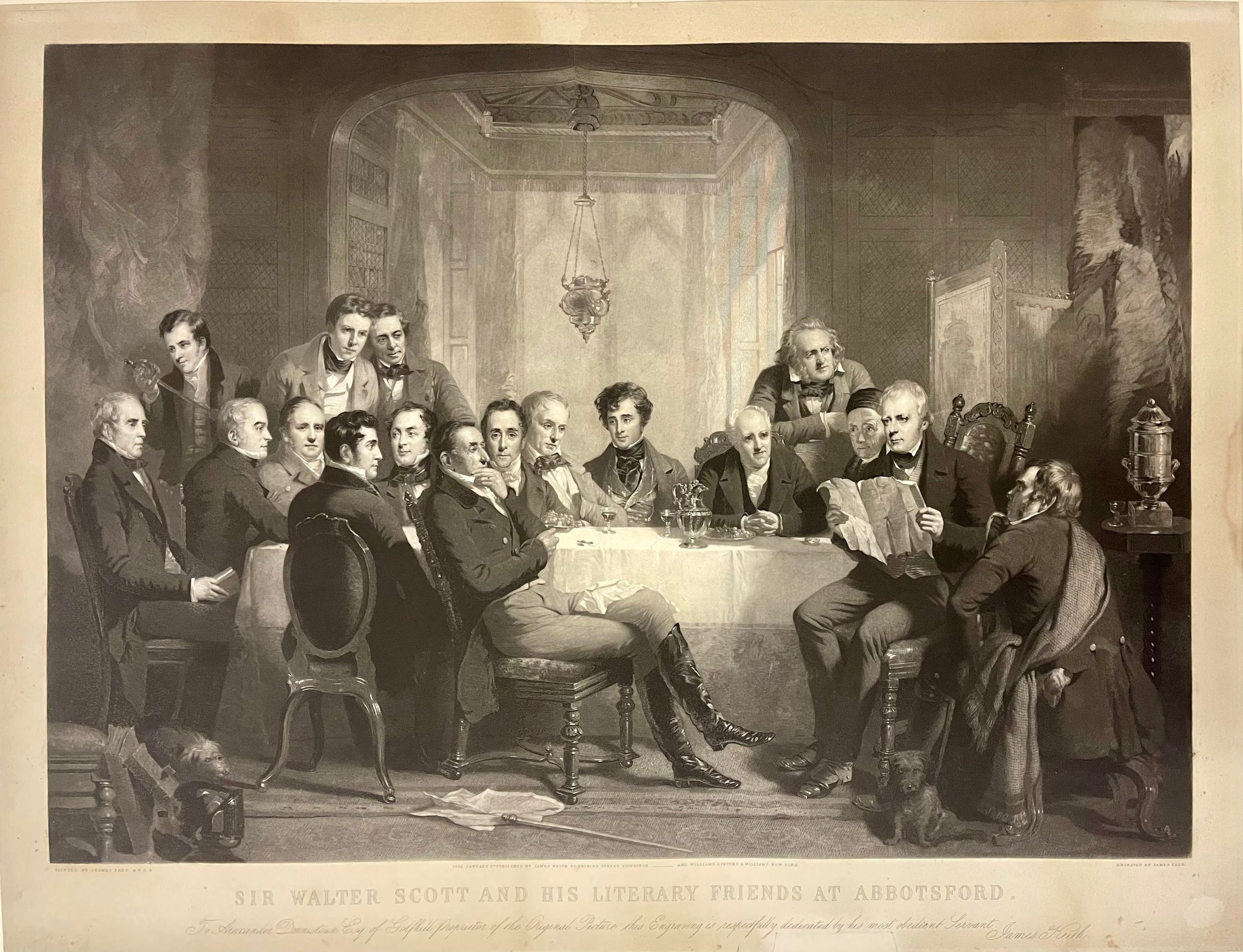
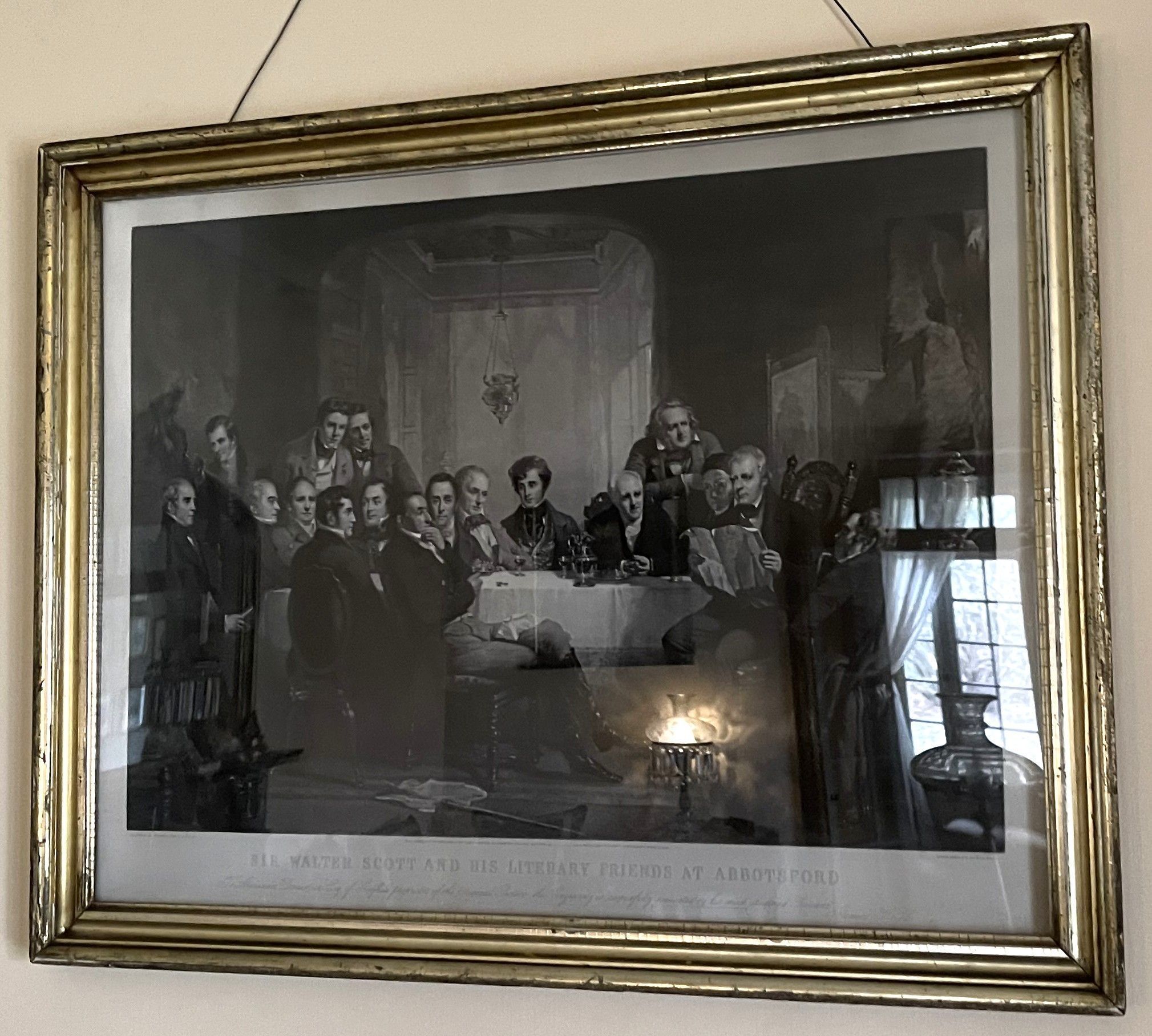
According to The Walter Scott Digital Archive at Edinburgh University Library, Faed completed the painting working from portraits in 1849 and the figures portrayed from left to right are:
Seated: Thomas Thomson (1773-1852), James Ballantyne (1772-1833), Archibald Constable (1774-1827), Thomas Campbell (1777-1844), Thomas Moore (1779-1852), Sir Adam Ferguson (1733-1813), Lord Francis Jeffrey (1773-1850), William Wordsworth (1770-1850), John Gibson Lockhart (1794-1854), George Crabbe (1754-1832), Henry Mackenzie (1745-1831), Scott, and [on footstool] James Hogg (1770-1835).
Standing: Sir Humphry Davy (1778-1829), Sir David Wilkie (1785-1841), Sir William Allan (1782-1850), Prof. John Wilson (1785-1854).
Most of the men were leading figures in the arts and sciences in Scotland, ca. 1800. Many were poets, essayists and/or publishers known to be friends of Scott. Thomson and Davy were noted scientists who also were involved in writing and publishing. Allen and Wilkie were well-known Scottish painters.Note Type
StorageNoteNote
Home Location: Historic Hudson Valley, Union Church, Storage, Shelf 24D
Home Location: Historic Hudson Valley, Sunnyside, Parlor