Surveyor's compass
Name/Title
Surveyor's compassEntry/Object ID
VC.83.4 a-eDescription
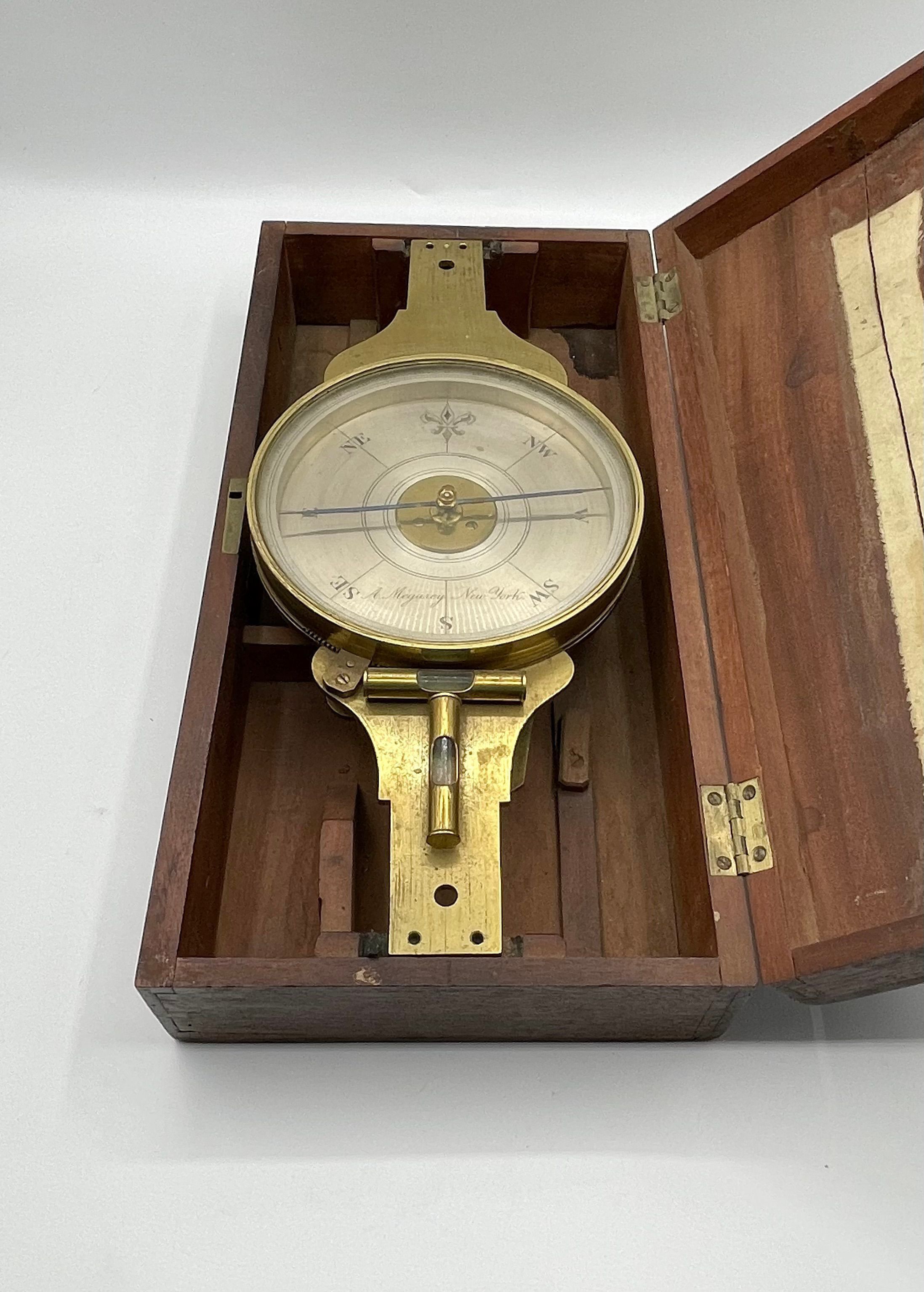
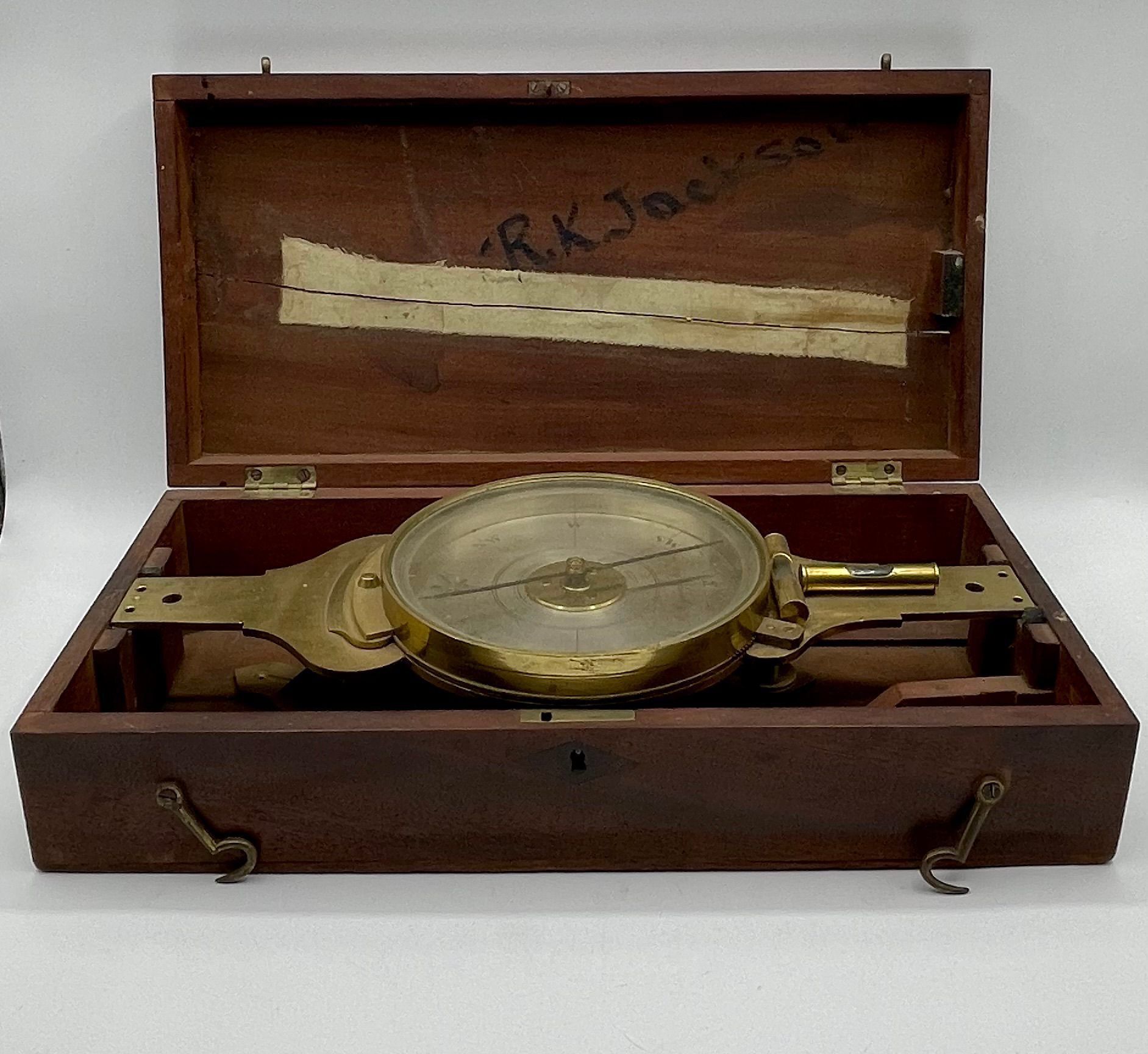
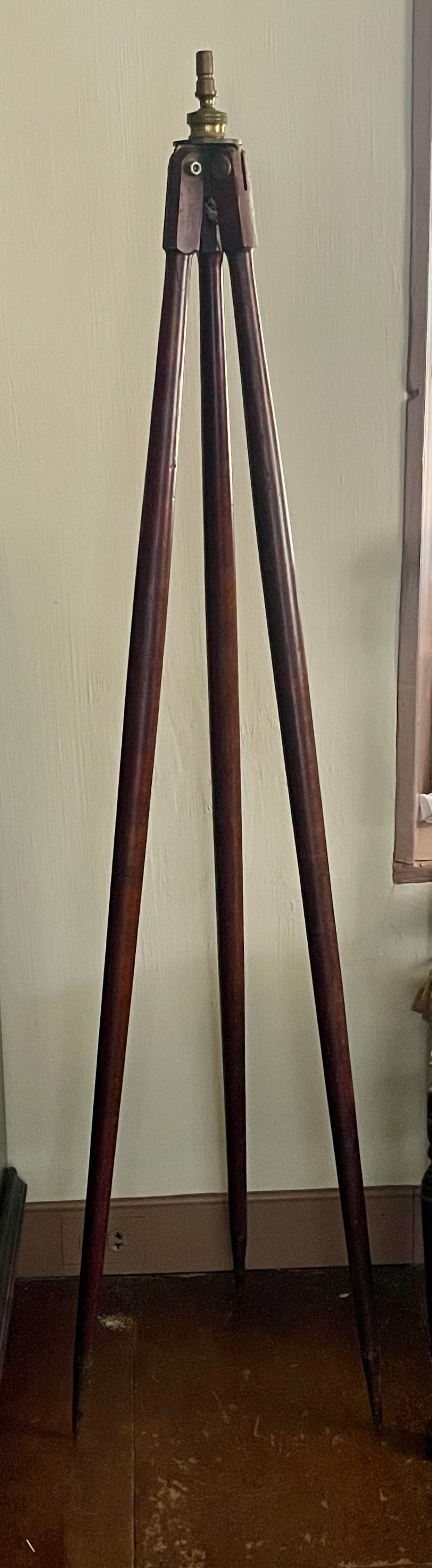
a. Compass tripod: wooden with brass hardware, three legged, legs taper to a point. Central triangular pendant suspended by cotton cord, ball in socket allows top to swivel. b-e. Rectangular wooden box holds compass with round face, face has compass points, fleur de lis motif at top of face, box has long crack on top and hole in bottom through which back of compass fits, box also holds two brackets for securing compass to top.Made/Created
Artist Information
Artist
Alexander MegareyAttribution
MakerDate made
circa 1800Other Names and Numbers
Other Numbers
VC.83.4 A-E
VC.83.4
VC.83.4 a-d