Name/Title
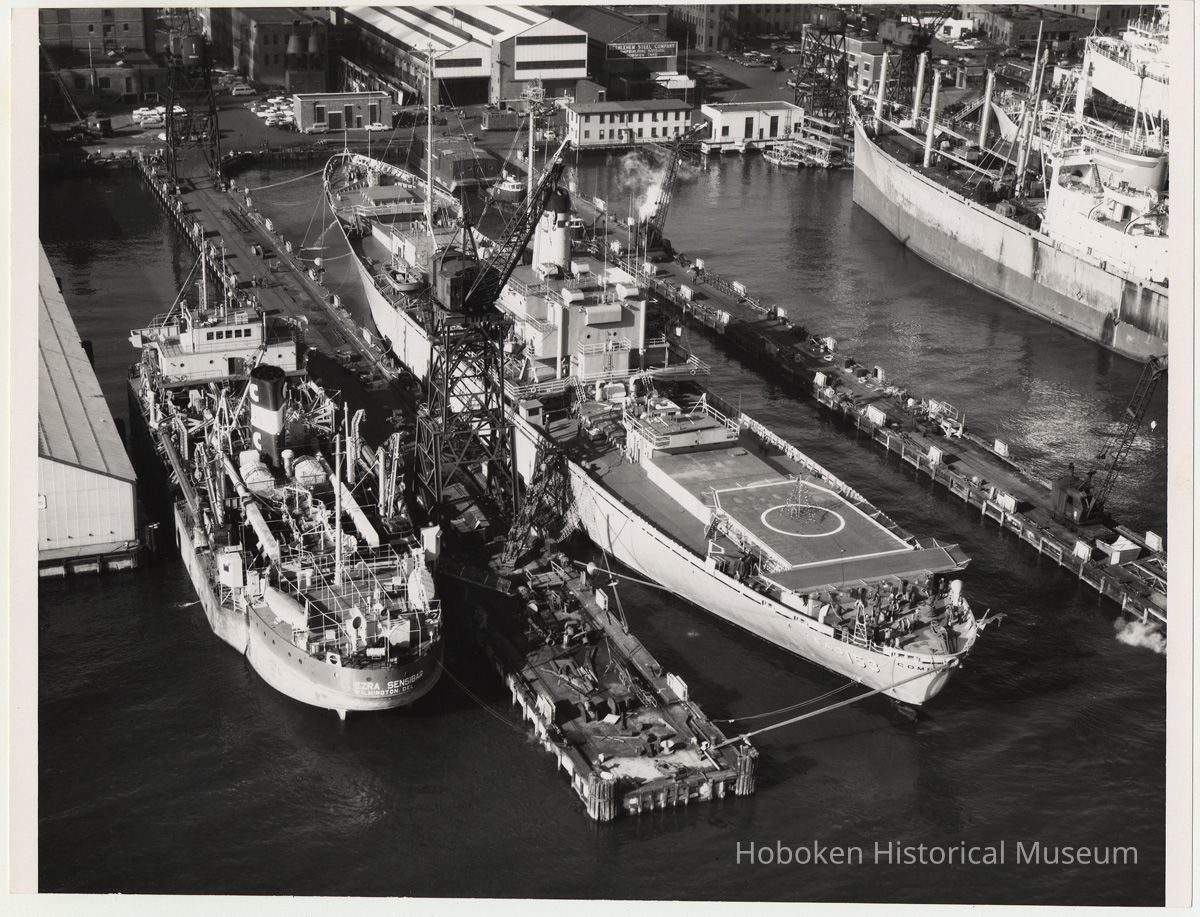
B+W aerial photo of S.S. Ezra Sensibar & U.S.S. Compass Island at Bethlehem Steel Hoboken Shipyard, n.d., ca. 1969.Entry/Object ID
2012.007.0062Description
Black-and-white aerial photo of S.S. Ezra Sensibar & U.S.S. Compass Island berthed at Bethlehem Steel Hoboken Shipyard, no date, circa 1969.
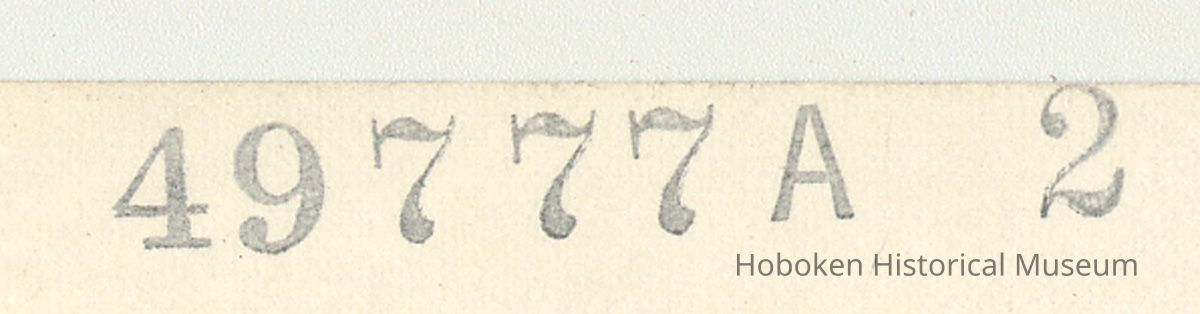
8" x 10" high print, irregularly trimmed. Issued by Bethlehem Steel Corp.; photographer not indicated. Reverse is blank except for image or job file number inkstamp: 49777A 2.
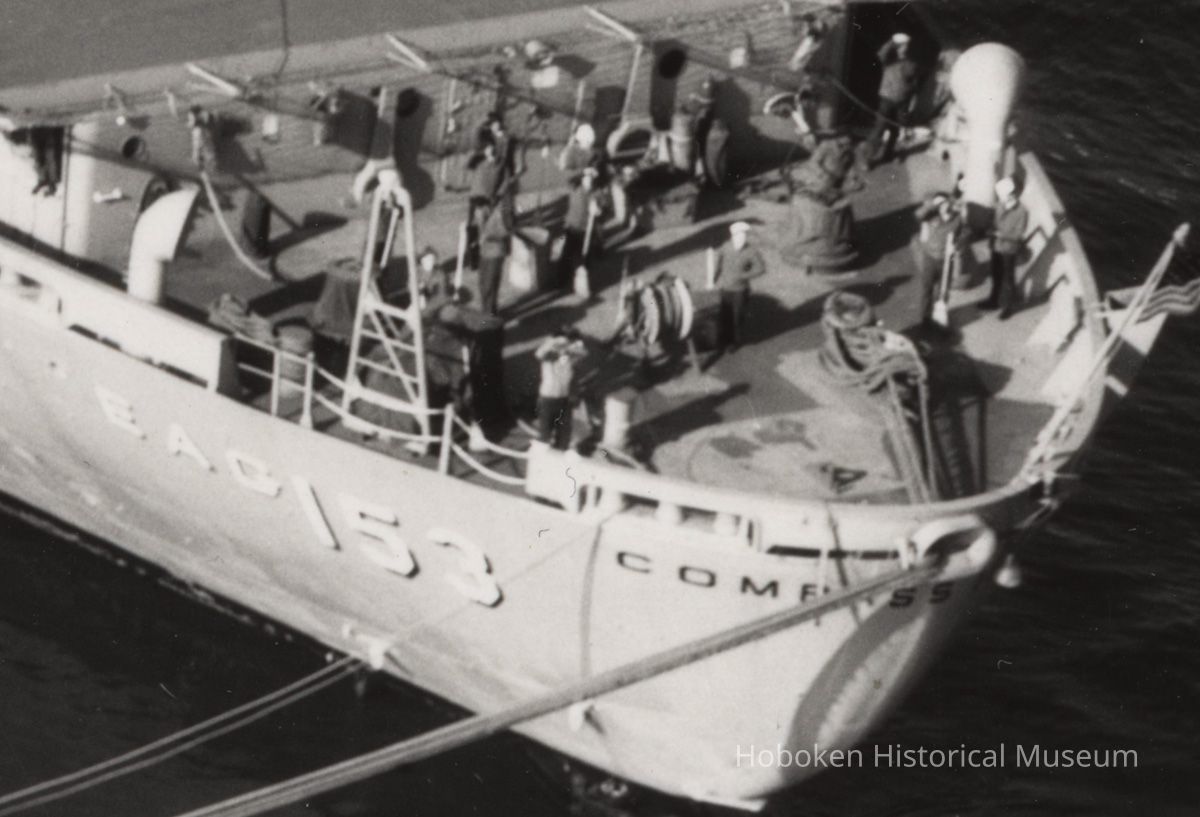
View is northwest from above the Hudson River of the two ships at docks between 12th and 13th Streets. The navy ship has men on the stern who are looking up at the helicopter that this photo was taken from.
The designation seen on the hull for the Compass Island as EAG-153 is non-standard according to naval records. AG-153 is the standard roll designation for it, AG = Auxilary, General. E = Experimental. (The U.S. Navy had an AGE for Auxilary, General, Experimental, but EAG has been found in non-official lists as Experimental, Miscellaneous Auxillary.)
The vessel's home port was New York in East River in 1967, 1970 to ca. 1973-1974 (not definitive, but these dates have been stated or seen.) A ca. 1973-1974 photo of it at the Brooklyn Navy Yard showed it with the hull with AG-153.
It was apparently in Hoboken for some specialized repair or refurbishment work. See notes for more about this ship.
The Ezra Sensibar, a dredger, first sailed with that name in 1961 (previously it was the Sand Captain and earlier - it was built in 1905 - for the U.S. Army Corps of Engineers, as the Hydro Atlantic.)
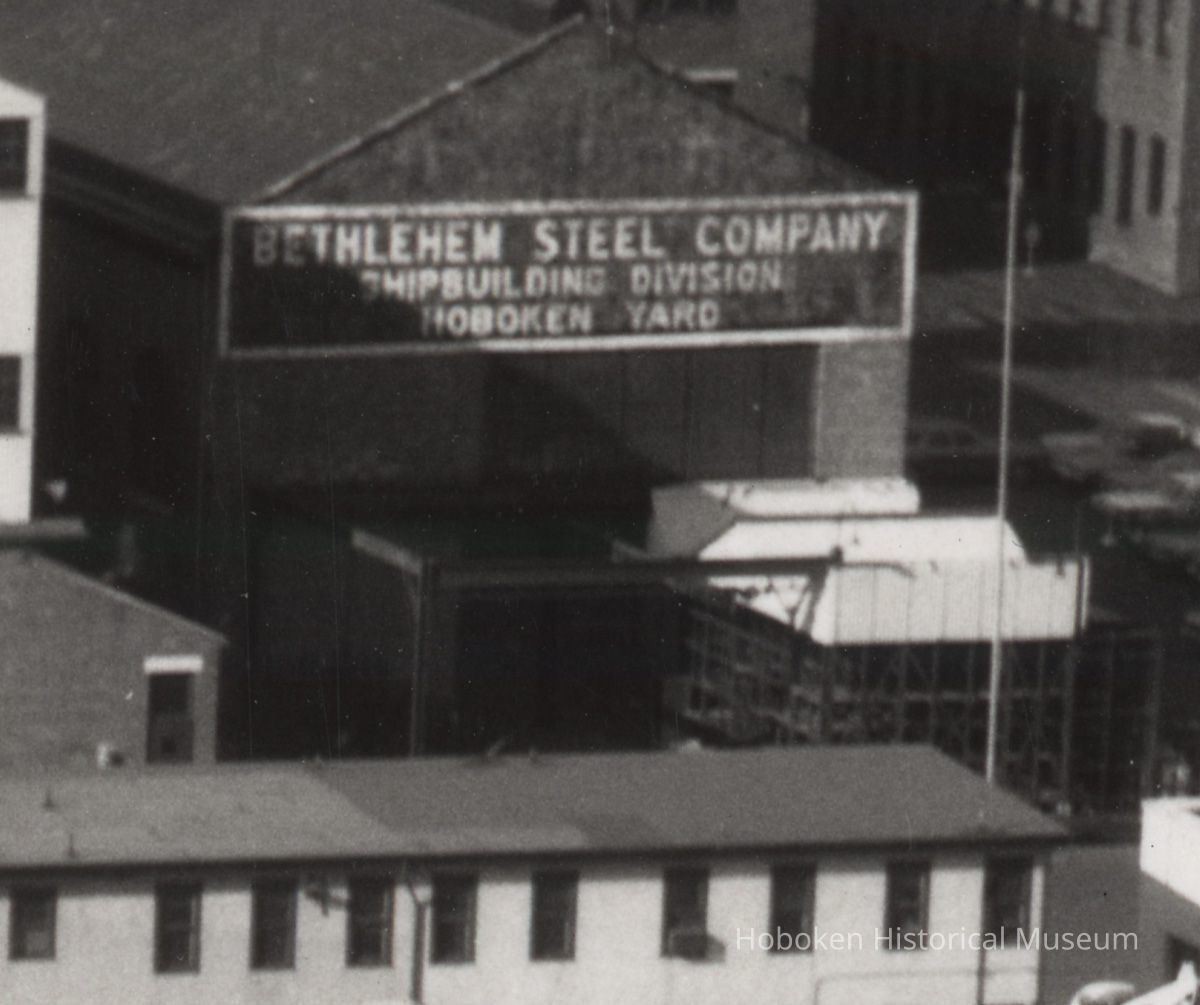
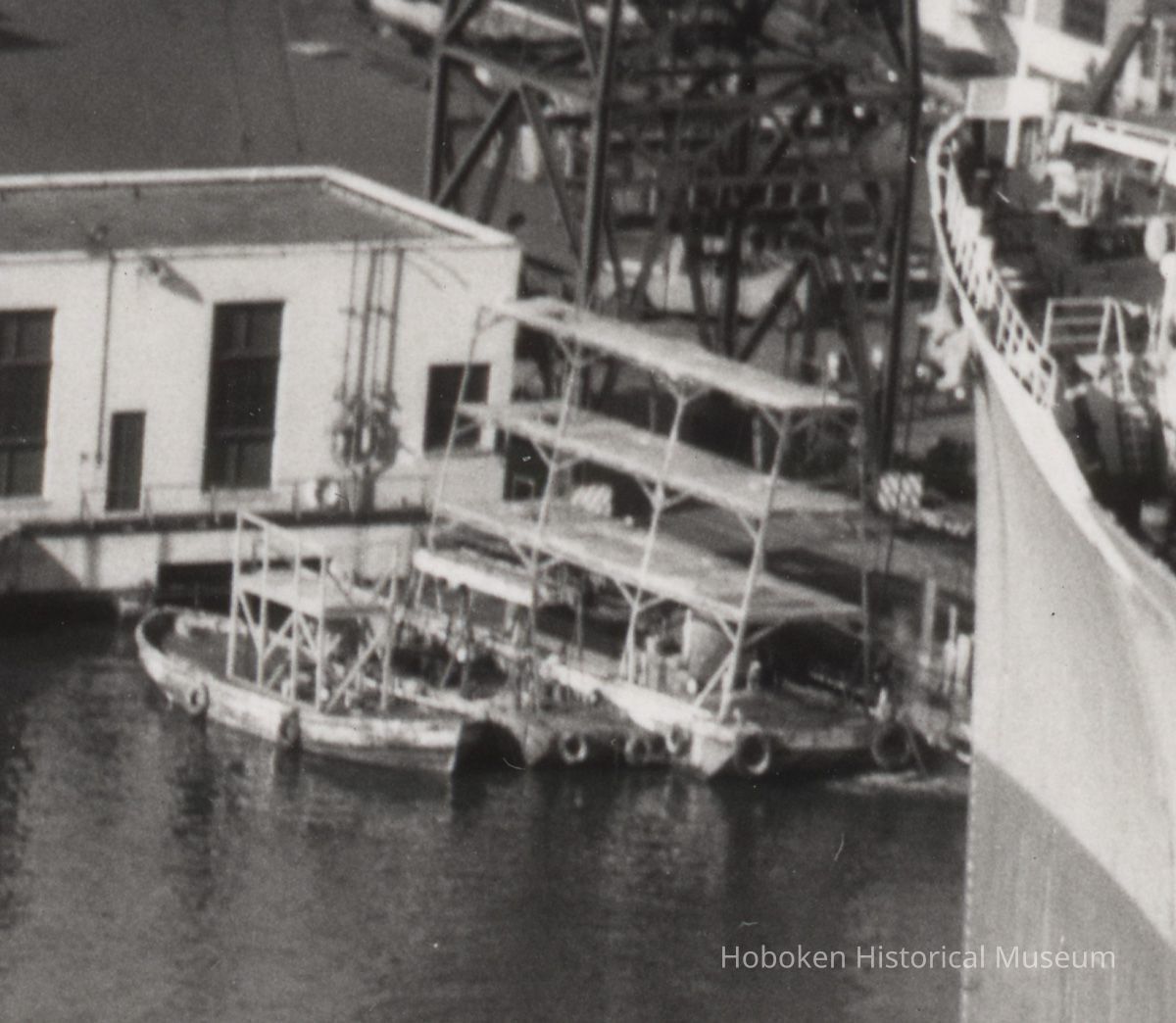
Three detail images include the stern of the ship with the EAG 153 designation, one of the Bethlehem Steel painted sign plus three work barges near the bow of the freighter at the right.Acquisition
Accession
2012.007Source or Donor
Lukacs, ClaireAcquisition Method
GiftCredit Line
Museum Collections. Gift of a Friend of the Museum.General Notes
Note
Notes: USS Compass Island (AG-153)
From Wikipedia, the free encyclopedia
Career (USA)
Name: USS Compass Island (AG-153)
Namesake: An island in Penobscot Bay off the coast of Maine
Builder: New York Shipbuilding Corporation
Launched: 24 October 1953 as Garden Mariner
Acquired: 29 March 1956
Commissioned: 3 December 1956
Decommissioned: 1 May 1980
Struck: 31 March 1986
Fate: Maritime Administration 9 April 1993
Status: National Defense Reserve Fleet
General characteristics
Class and type: Compass Island
Displacement: 18,000 tons (full)
Length: 563 ft (172 m)
Beam: 76 ft (23 m)
Draft: 26 ft (7.9 m)
Speed: 20 knots
Complement: 214
Compass Island (EAG-153) was launched 24 October 1953 as Garden Mariner by the New York Shipbuilding Corporation, Camden, New Jersey and sponsored by Mrs. H. A. Smith. Acquired by the Navy 29 March 1956 and commissioned 3 December 1956, Commander J. A. Dare in command.
The first mission of Compass Island was to assist in the development and evaluation of a navigation system independent of shore-based and celestial aids, a necessary adjunct of the ballistic missile program. She operated along the eastern seaboard testing equipment and training personnel until 13 March 1958 when she sailed from New York for experiments in the Mediterranean, returning to New York 17 April to resume her east coast operations. A dramatic example of her work was provided when Nautilus (SSN-571), using the Shipboard Inertial Navigation System (SINS) first tested by Compass Island in 1957, made a submerged cruise beneath the Arctic ice pack touching exactly at the North Pole 3 August 1958. The INS hardware was the N6A-1 built by North American Aviation, a naval modification of the N6A designed for the Navaho cruise missile, and had also been installed on the Skate along with the Nautilus following successful sea trials on the Compass Island[1] (The USS Skate reached the North Pole the week after Nautilus, and in the following year became the first vessel to surface at the North Pole.)
North Pole navigation succeeded after initial INS testing on the Compass Island.On 10 September 1958, Compass Island entered New York Naval Shipyard for overhaul and installation of additional navigational equipment to be tested. With this new equipment, she continued her east coast and Caribbean cruising through 1960.
In 2003, Compass Island and three other decommissioned US Navy ships, the Caloosahatchee, Canopus and Canisteo, were towed to the port city of Hartlepool in the United Kingdom to be scrapped, but UK environmentalists protested their arrival at Able UK, the salvage company.
Work to dismantle a controversial fleet of former US warships was slated to begin in the summer of 2008, five years after the company originally won the scrapping contract.
Original or Copy: Original
Status: OK
Status By: West, D.
Status Date: 2012-03-23