Note
Notes: Excerpts below from paper by Lisa M. Budreau, copyright 2002.
http://www.vanderbilt.edu/rpw_center/pdfs/BUDREAU.PDF
(Twelve page PDF)
====
MOURNING AND THE MAKING OF A NATION:
The Gold Star Mothers Pilgrimages, 1930-1933
page 1
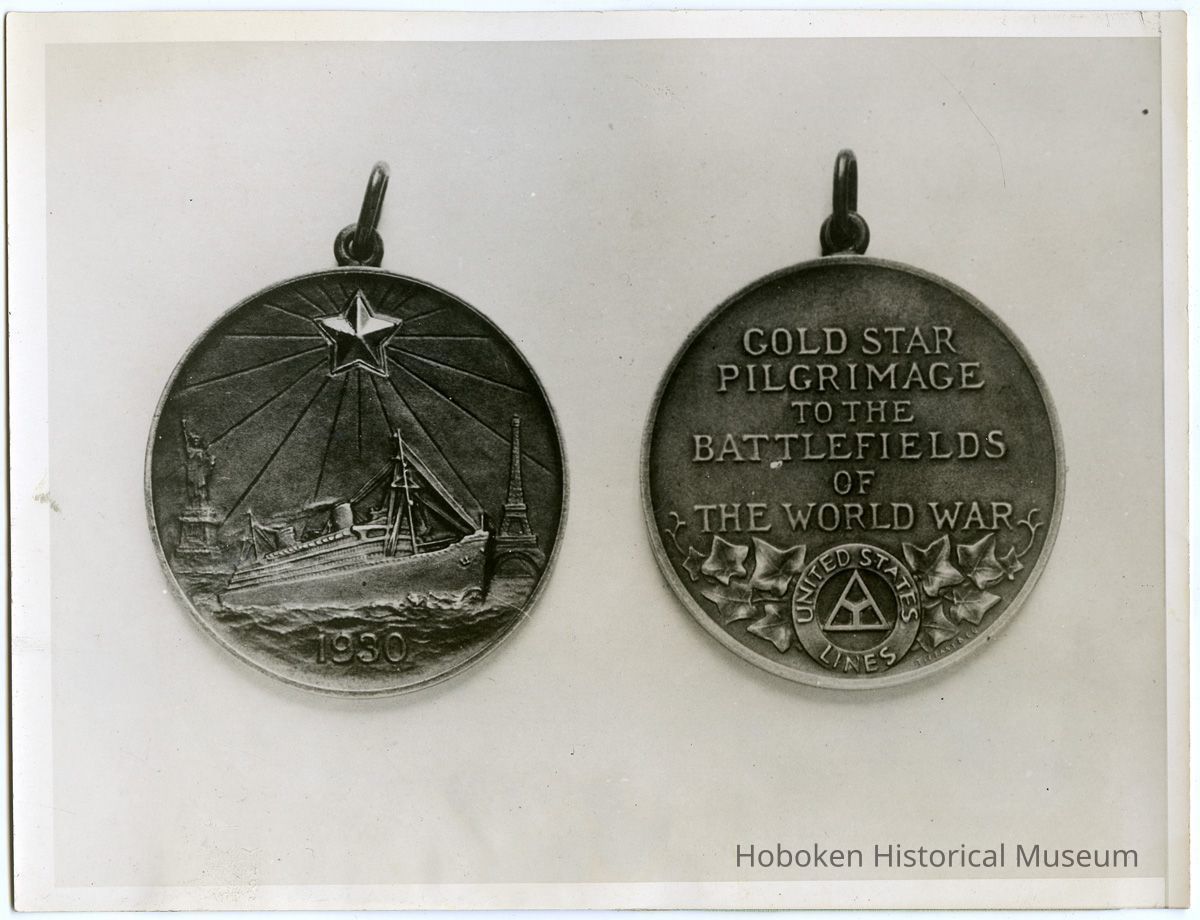
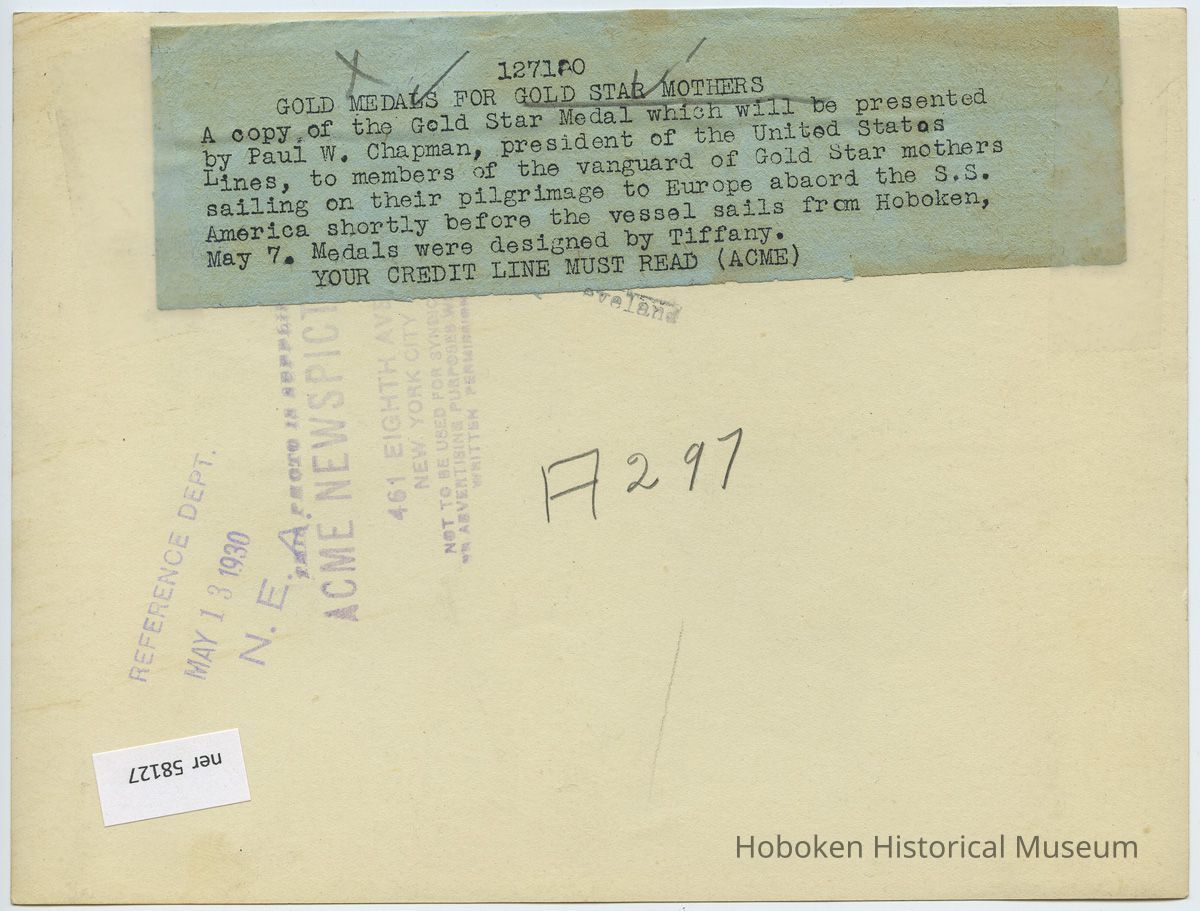
On May 6, 1930, the S.S. America steamed out of Pier 4 from Hoboken, New Jersey, with 231 women aboard, all guests of the U.S. Government. With flags flying, band and drum corps playing, and hundreds of friends and relatives lining the pier to wave them off, this inaugural party of Gold Star Pilgrims embarked on their long-awaited, maiden voyage to Europe. Theirs was the first of an eventual twenty vessels dispatched that summer to transport mothers and widows to American
cemeteries in France, Belgium and Great Britain....
page 2
.... On the eve of the Great Depression, President Calvin Coolidge signed the long-disputed Pilgrimage bill before the end of his term in March 1929, thus allocating five million dollars to cover all expenses for pilgrimages that would take place from 1930 to 1933. Widows who had not remarried also received invitations, but only as an afterthought.
Gold Star Mothers, as they were known, derived their name from the star they were urged to display on service flags in their homes during the war. Each gold star publicly represented a son killed in war service and brought praise to women for sacrificing their child to the nation. While precise innovation of the gold star idea still cannot be explained, one theory persists. In 1918, President Woodrow Wilson approached the Women’s Council on National Defense to request assistance with
the issue of public mourning. The President believed that mourning dress of the period would have a deleterious effect on public morale as casualties grew. He asked for suggestions from the Council for an alternative to the traditional black wear, and the armband was the recommendation. Gold Star Mothers received official endorsement in 1918 when Wilson encouraged the women to display their
gold star on an armband of black cloth, thus bringing further public recognition for their losses in the Great War. ---
[page 9]
Within the first party of 231 women to sail, fifty-six were of foreign birth, with the majority claiming Germany as their former homeland. (Some would even continue on to visit other sons buried in Germany.) Women from all walks of life and regions of the country travelled together; Catholics, Protestants, and Jews -- native born and foreign born, all sacrificed their sons to the nation and now shared the same feeling of loss. Just as war had been a bonding experience for their sons, the pilgrimages were an attempt to present a united nation sharing a common claim to sacrifice.
Many of the women making the voyage were so poor they were unable to buy even the suitcase they needed, but regardless of income or social level, all women were guests of the U.S. Government. From the moment they left their homes, all reasonable expenses were paid. They were greeted by civic officials in New York at a city hall reception, boarded luxury liners, travelled cabin class, stayed at first-class hotels, and had an army officer, physician and nurse accompany them abroad.
Pilgrims were escorted to the graves of their sons and husbands, then each party spent a week in either Paris or London where they were honoured by the French or British government.
One accompanying journalist in 1930, wrote “As the soldiers and Marines were transported to Europe without consideration of their individual stations in life, so were these mothers and widows to follow that glorious trail in ships which have no class distinction—in ships whereon all would share alike.”Yet, all women were not treated alike, despite the government’s best attempts to portray democratic platitudes to the contrary. African American women invited to participate in the pilgrimage did so on the same segregated basis as their sons and husbands who had fought and died. They travelled as a separate group on commercial steamers, were accommodated in separate hotels, and rode separate trains upon arrival in France.
----
Original or Copy: Original
Status: OK
Status By: dw
Status Date: 2014-12-09