Note
Notes: Text from Hoboken Historical Museum Newsletter, May-June 2007.
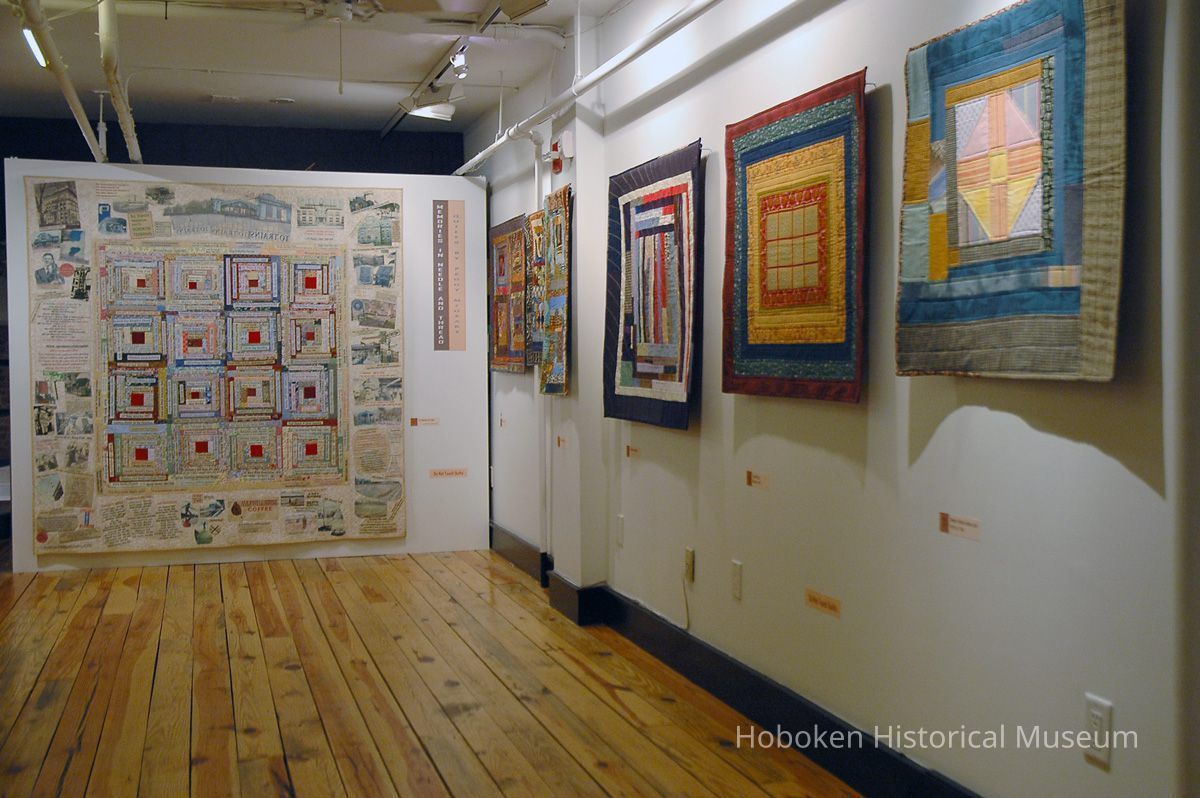
Memories in Needle and Thread:
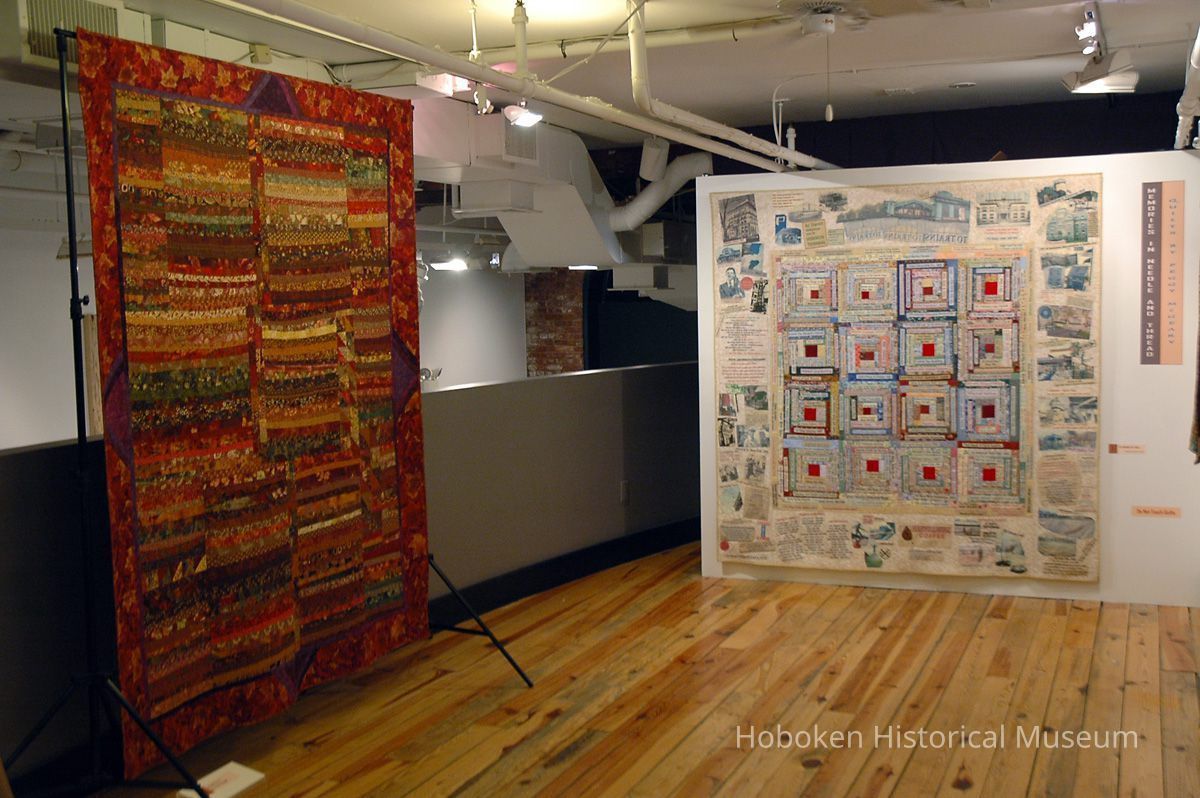
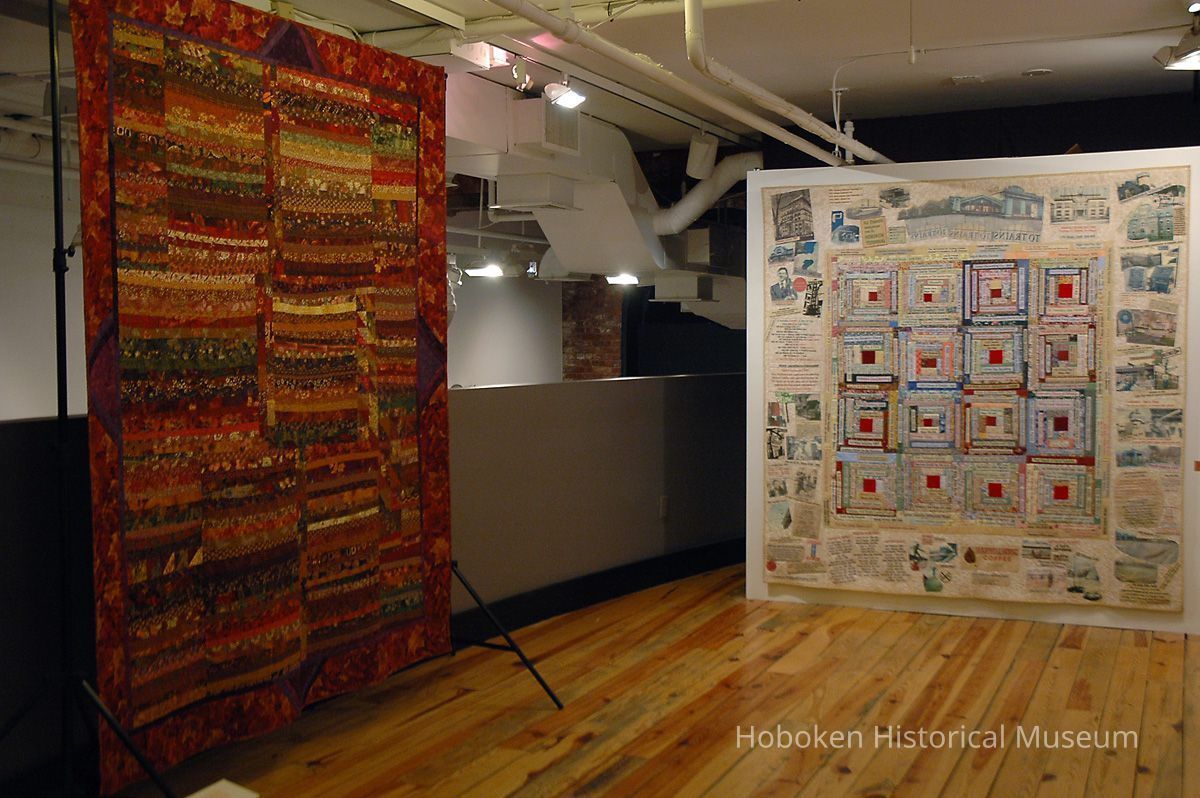
Quilts by Peggy McGeary
When the Hoboken cultural affairs office put out an
appeal to the arts community to develop works to commemorate
the city’s sesquicentennial in 2005, textiles artist Peggy
McGeary was inspired by the rich subject matter of the city’s
multifaceted history to try to capture the city’s story and spirit
in needle and thread. The result of her inspiration, the
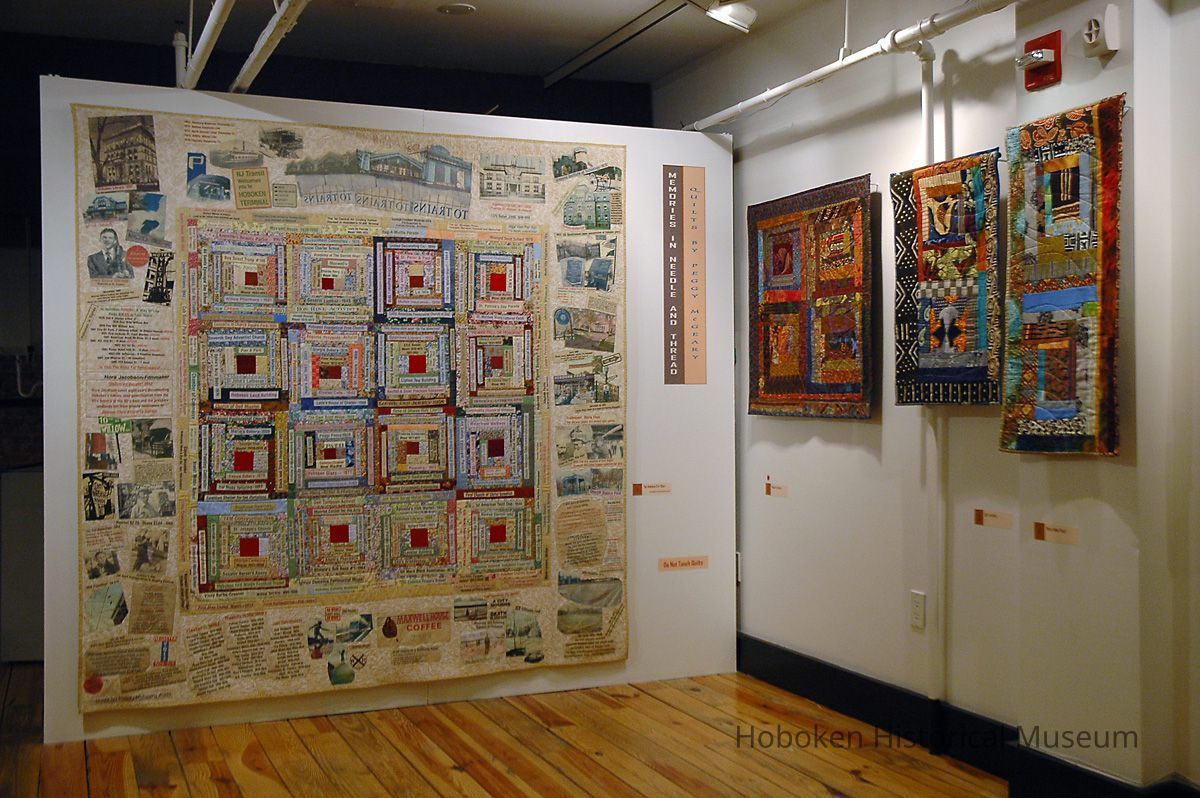
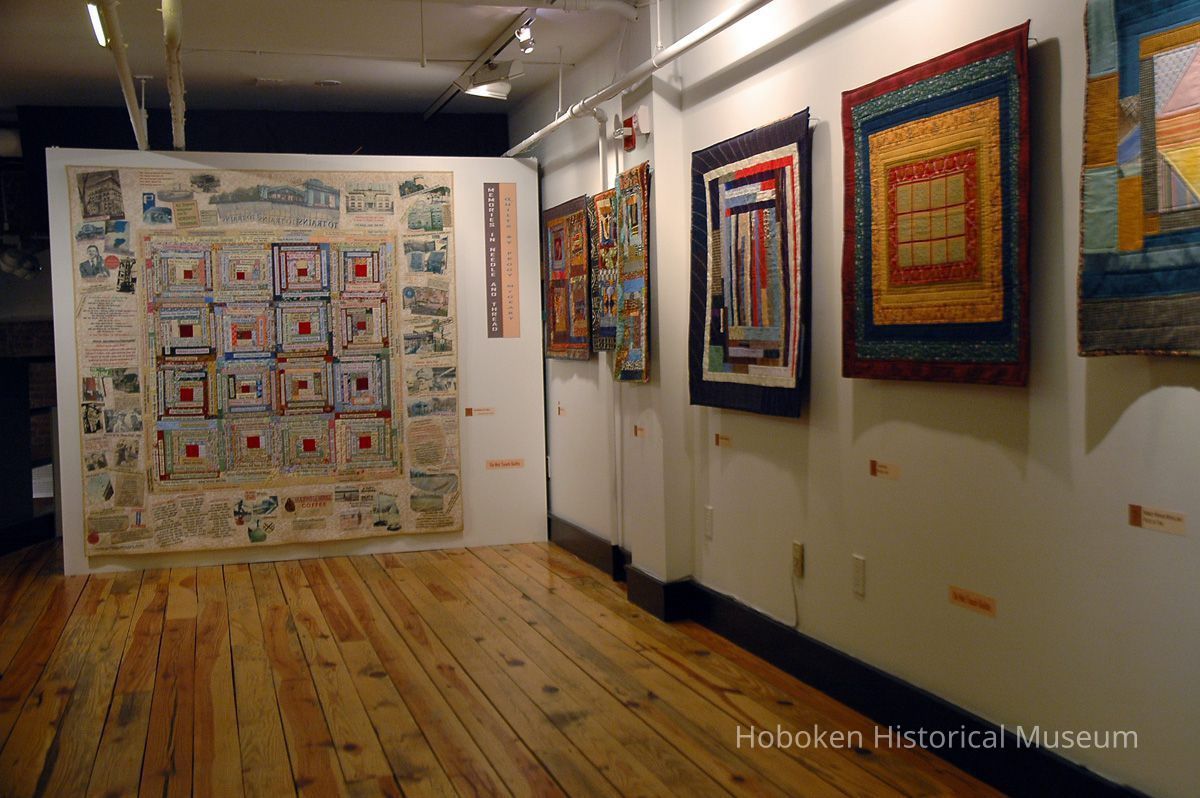
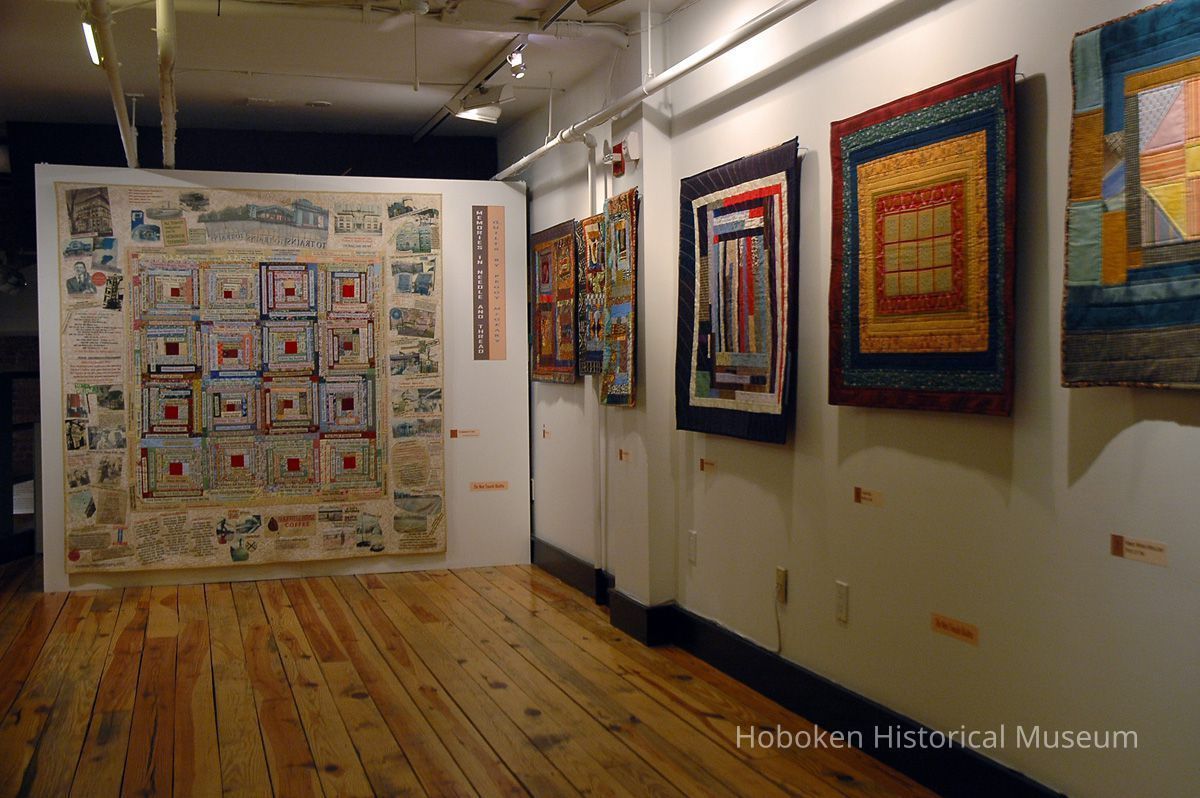
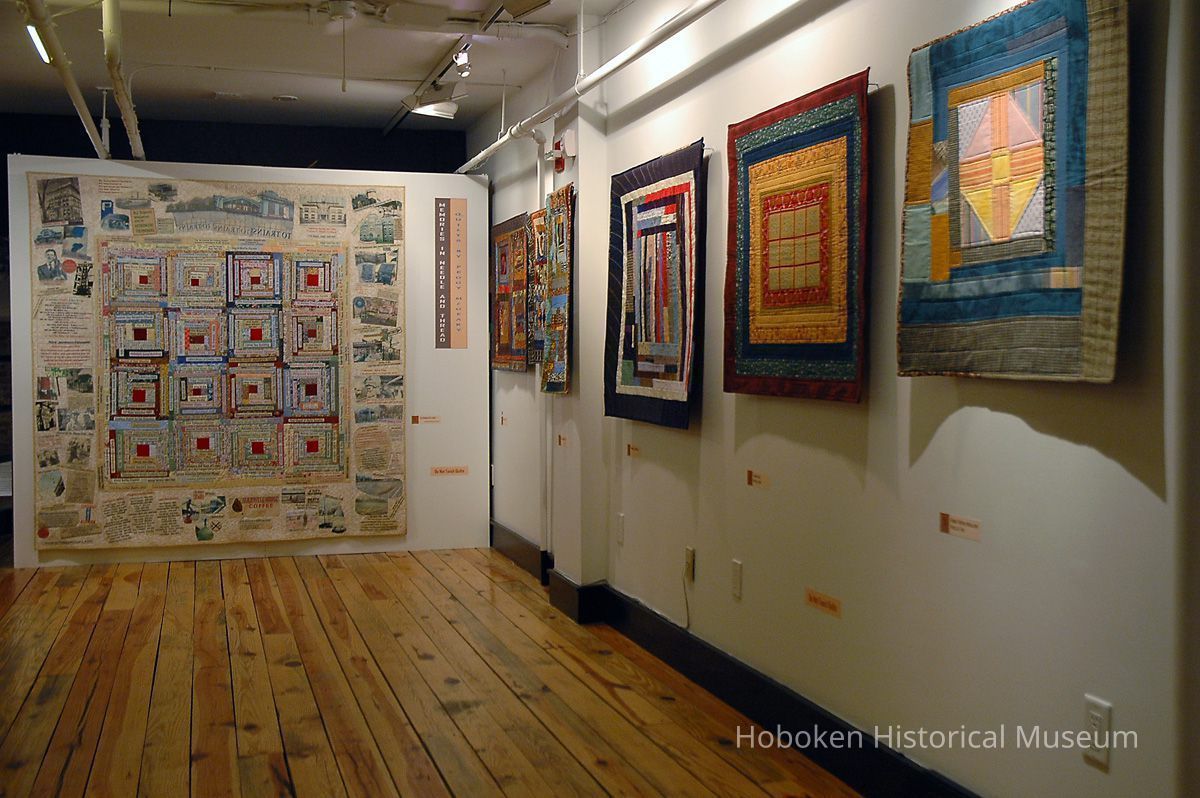
Hoboken 150th Anniversary Quilt, will be on display with
examples of her other work in the Upper Gallery of the
Hoboken Historical Museum starting May 13 through July 1.
Although McGeary has been an accomplished seamstress
since learning the art in a 4-H sewing club as a girl in rural
Pennsylvania, she’s relatively new to the art of quilt making.
Textiles have long been a creative outlet for her: “I enjoy the
tactile qualities and the unlimited color ranges of working with
fabric,” she says. For years, she has made clothing, tote bags,
and home décor items that are sold through local boutiques.
She caught the quilting bug in 1999, and taught herself
how to make them by reading everything she could on the
mechanics and traditions of quilting. Historically, quilters have
used their medium to capture family and community memories,
reusing pieces of fabric that have meaning to the quilter.
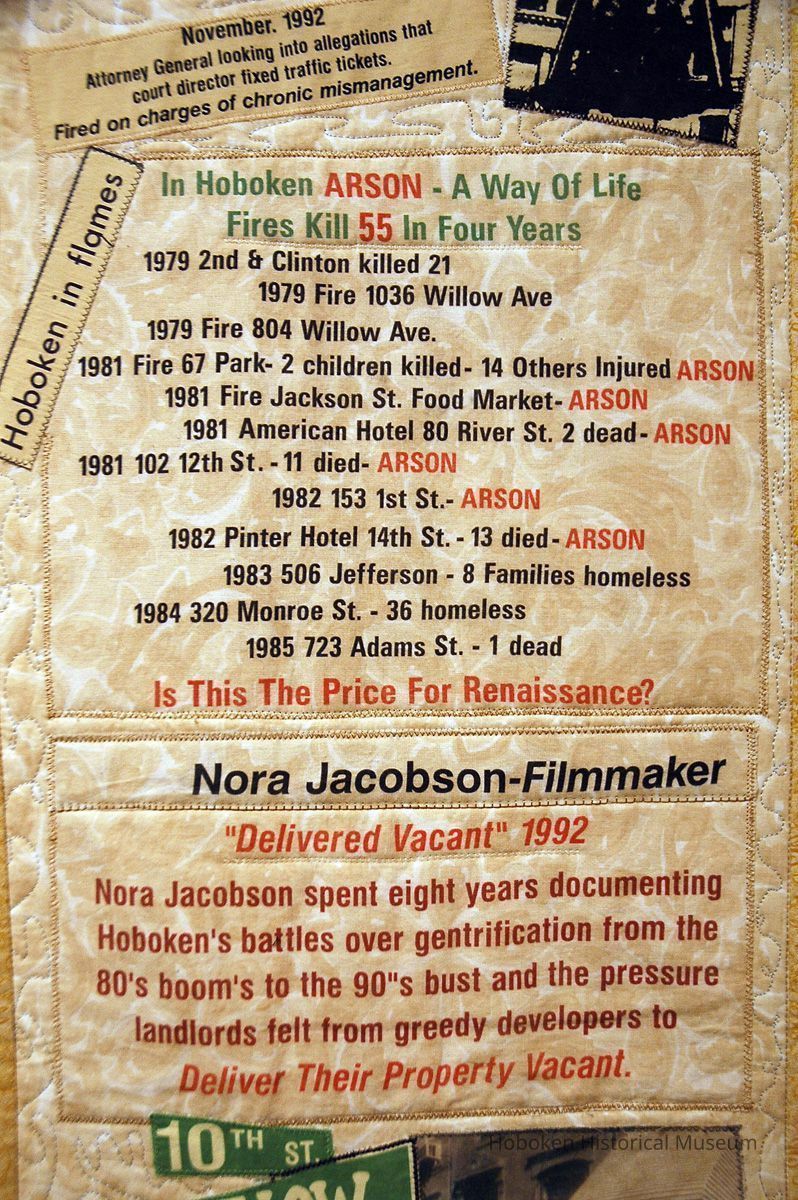
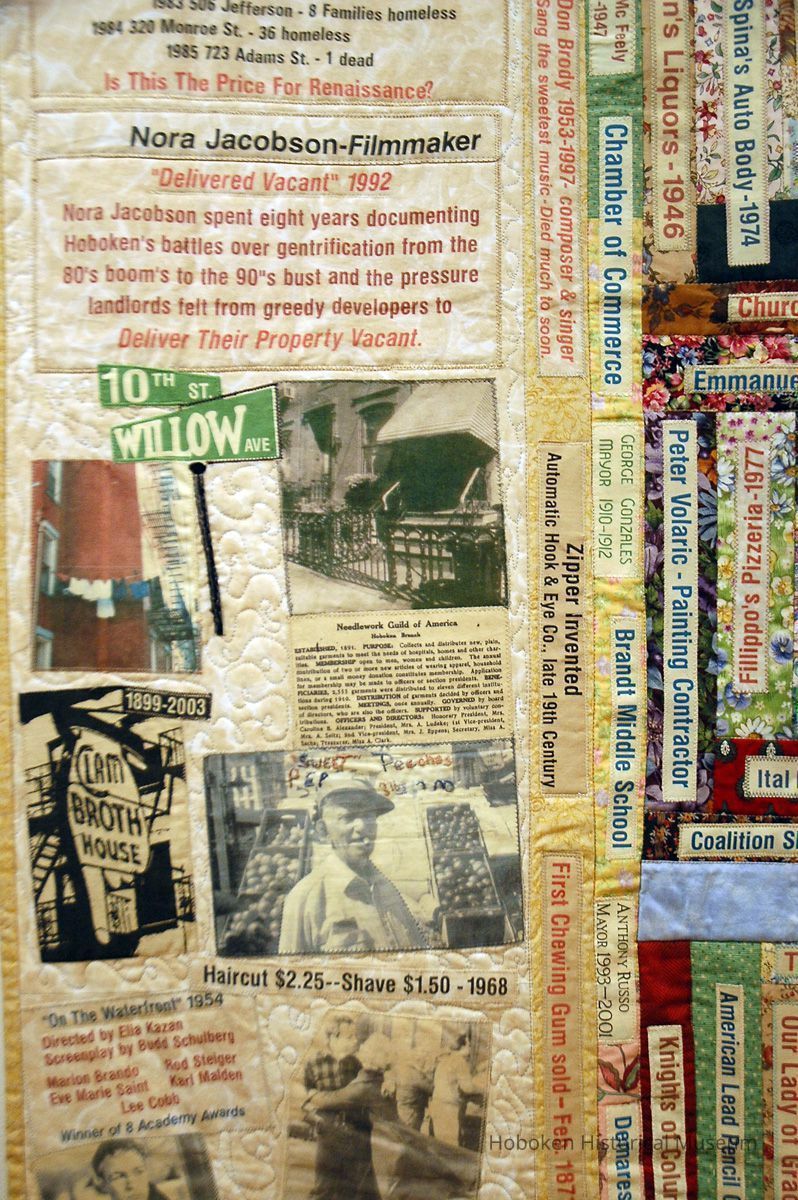
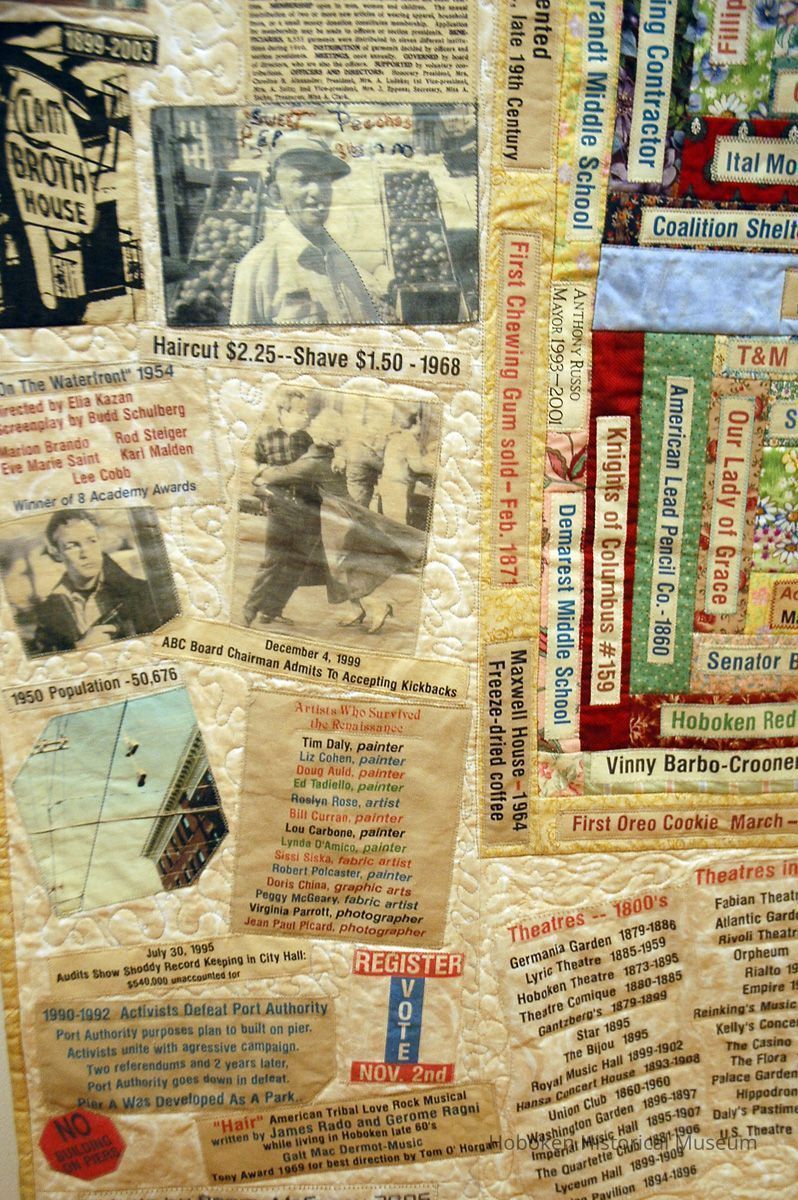
McGeary also used modern techniques, including ink-jet
transfer of photographs and computer-typeset words, to make
quilting the perfect medium for the sesquicentennial project.
She tackled the project by researching the city’s history
through the Museum’s resources and the Hoboken and Jersey
City libraries. She also leaned heavily on conversations with
people around town—especially historian Jim Hans—and
many of the people she’s met in her nearly 30 years as a
Hoboken resident. “It was hard to choose what to include—
this city has a lot of history!” McGeary says. The more she
talked to people, the more her ideas of what to include changed.
But that suits her style. Unlike some traditional quilters,
McGeary doesn’t like working in symmetry and matching corners;
she prefers improvising her designs, using color rather
than motif, and designing as she goes along.
“Quilting awakens my intuitive sense of color, texture and
light, and best expresses my artistic vision,” she says. She visualized
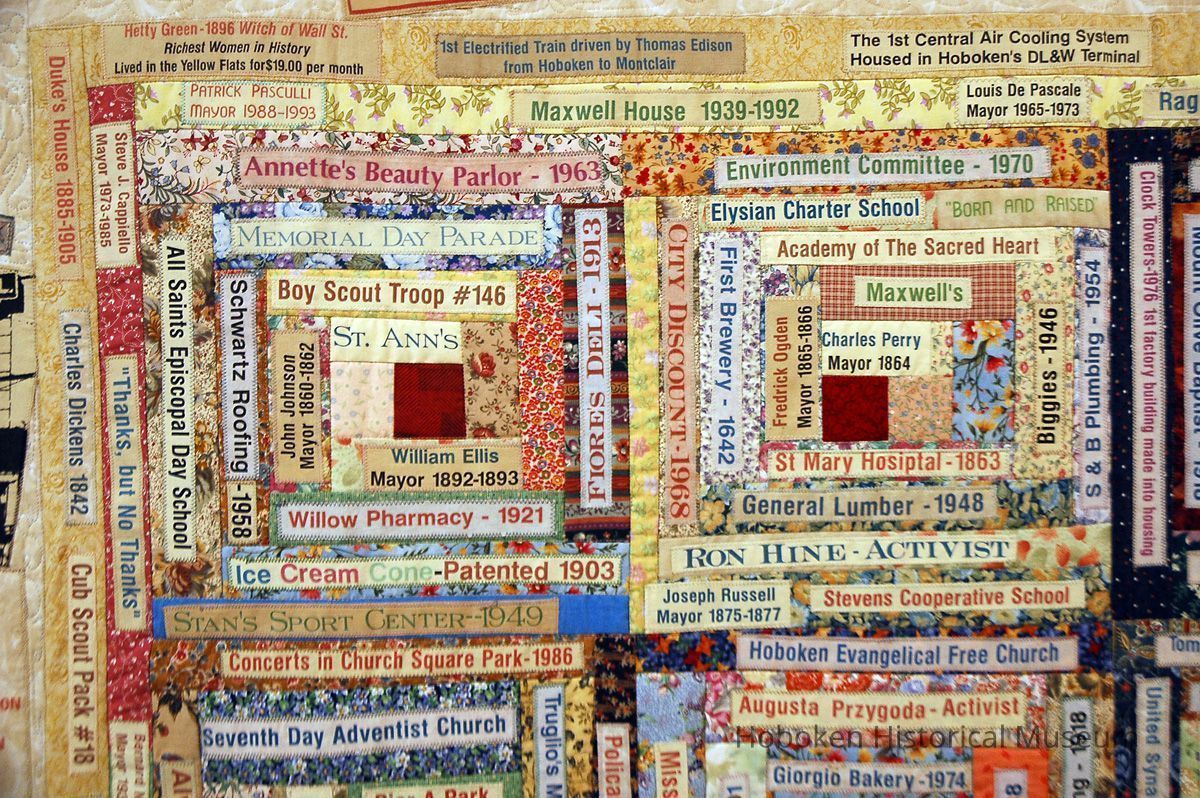
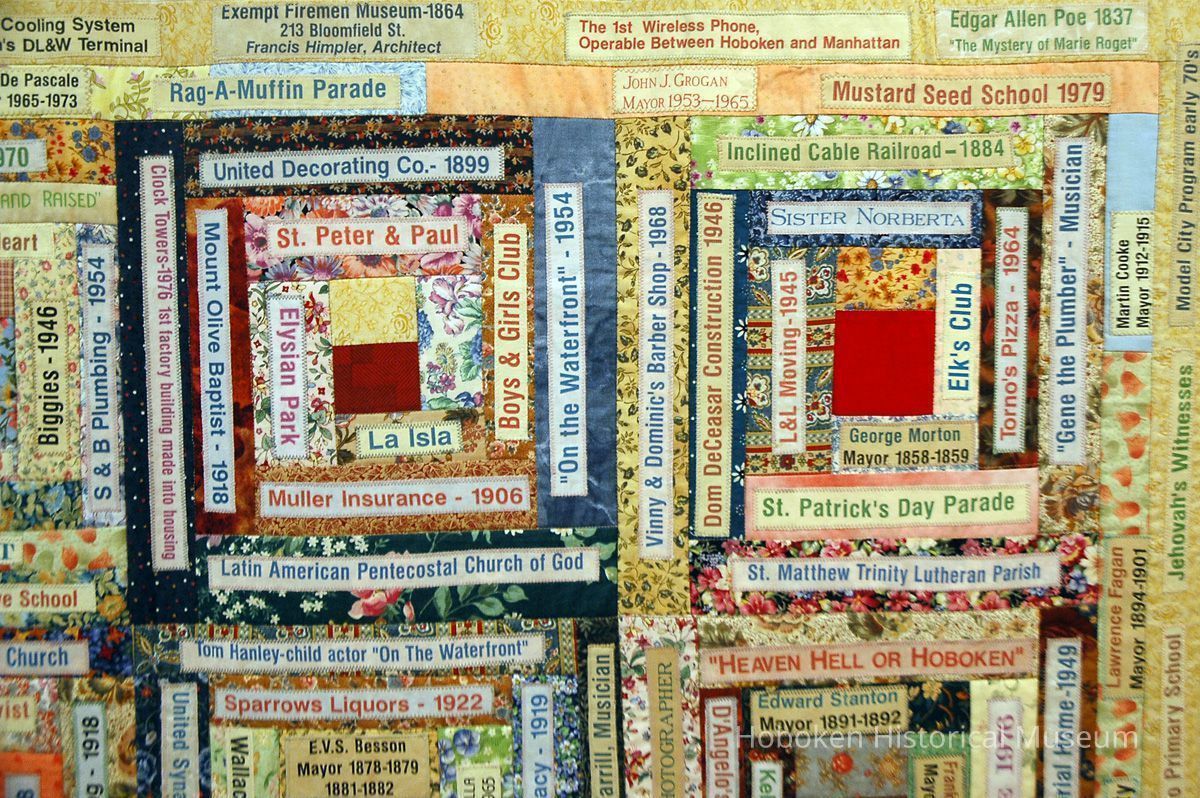
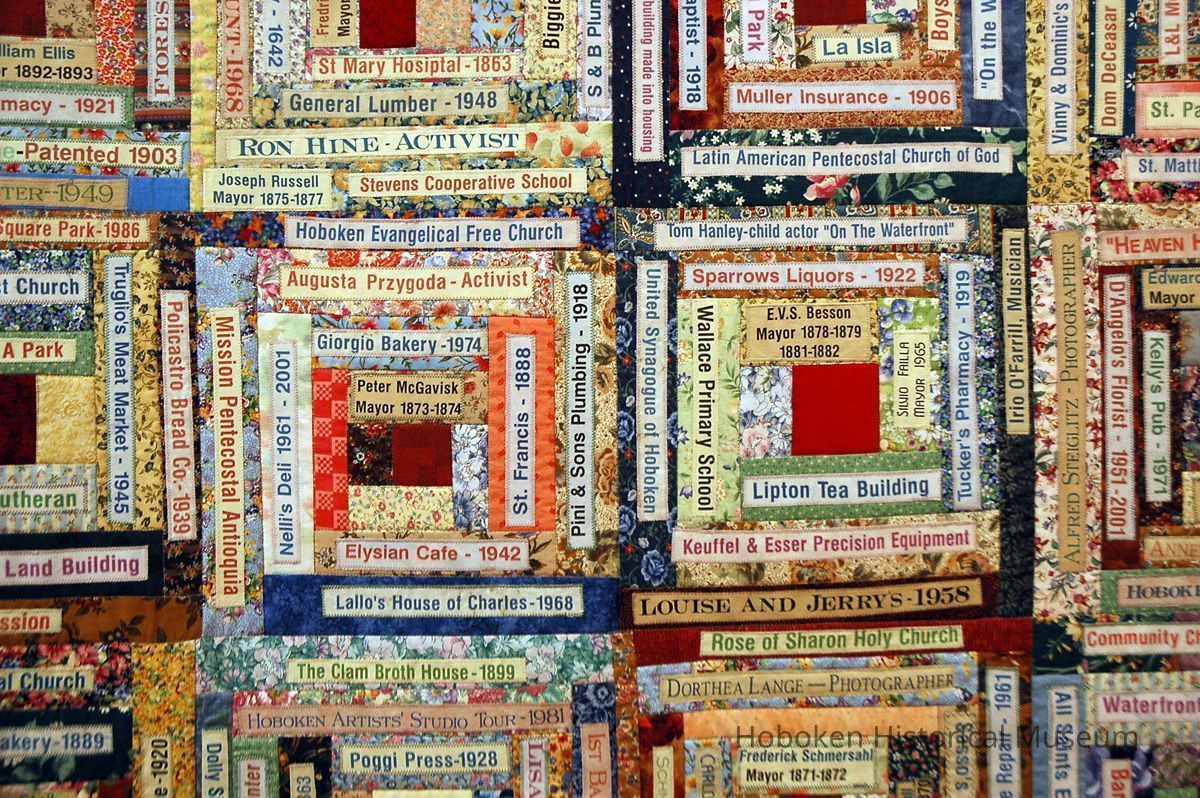
the project as a 76" square with a 48" inner square with
four rows of four squares composed of strips of cloth imprinted
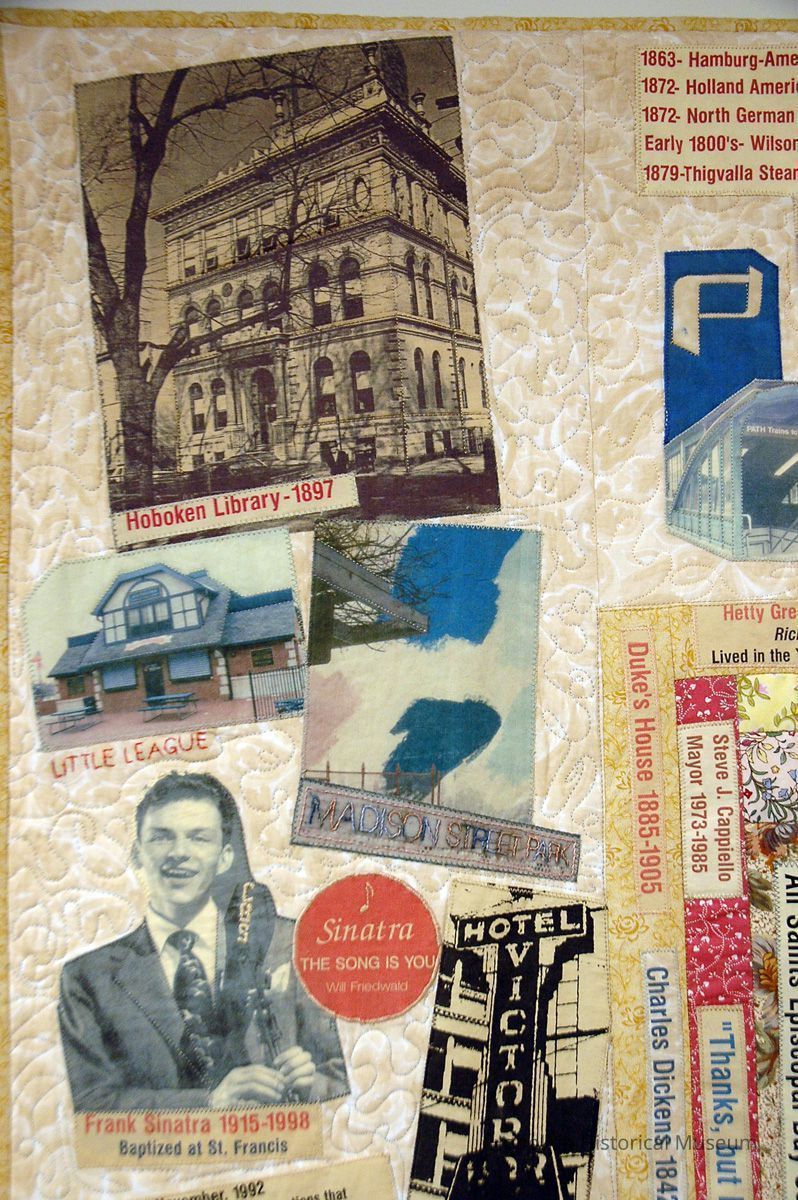
with words of historic Hoboken events, people and icons. The
outer border is a more fluid arrangement of photos and historic
Stitching 150 years of history into a 76" x 76" square of cloth
facts sewn onto a faintly patterned background piece of cloth.
She commemorates not only the historic public buildings, such
as the Erie Lackawanna train terminal, the Library, and City
Hall, and famous sons like Frank Sinatra, but also activists,
artists, and small businesses—many of which were still
operating—that make up the rich texture of Hoboken’s history.
The resulting quilt “reads like a book,” McGeary says, and
consequently, she was invited to display the quilt at the Hoboken
Public Library in its 2005 Sesquicentennial exhibit. Before that,
the quilt debuted at a group exhibit celebrating the city’s 150th
Anniversary at the 720 Monroe Street artists’ studio building.
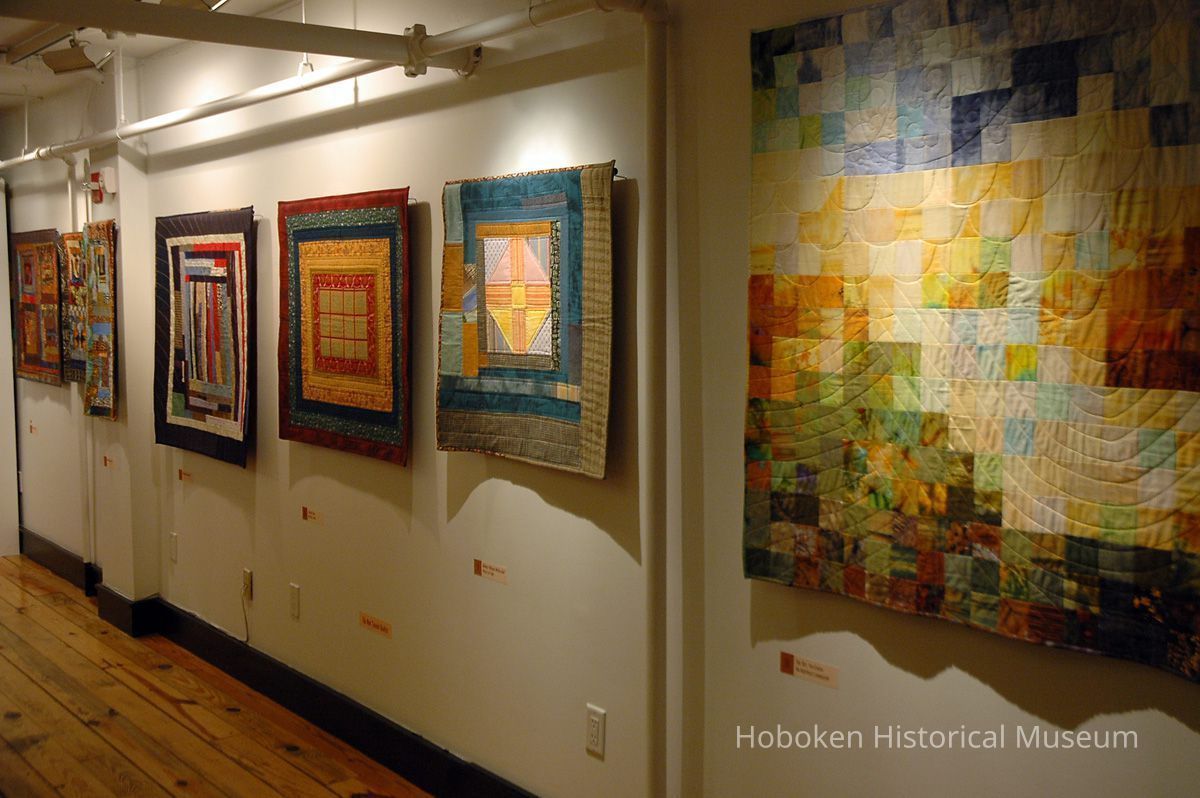
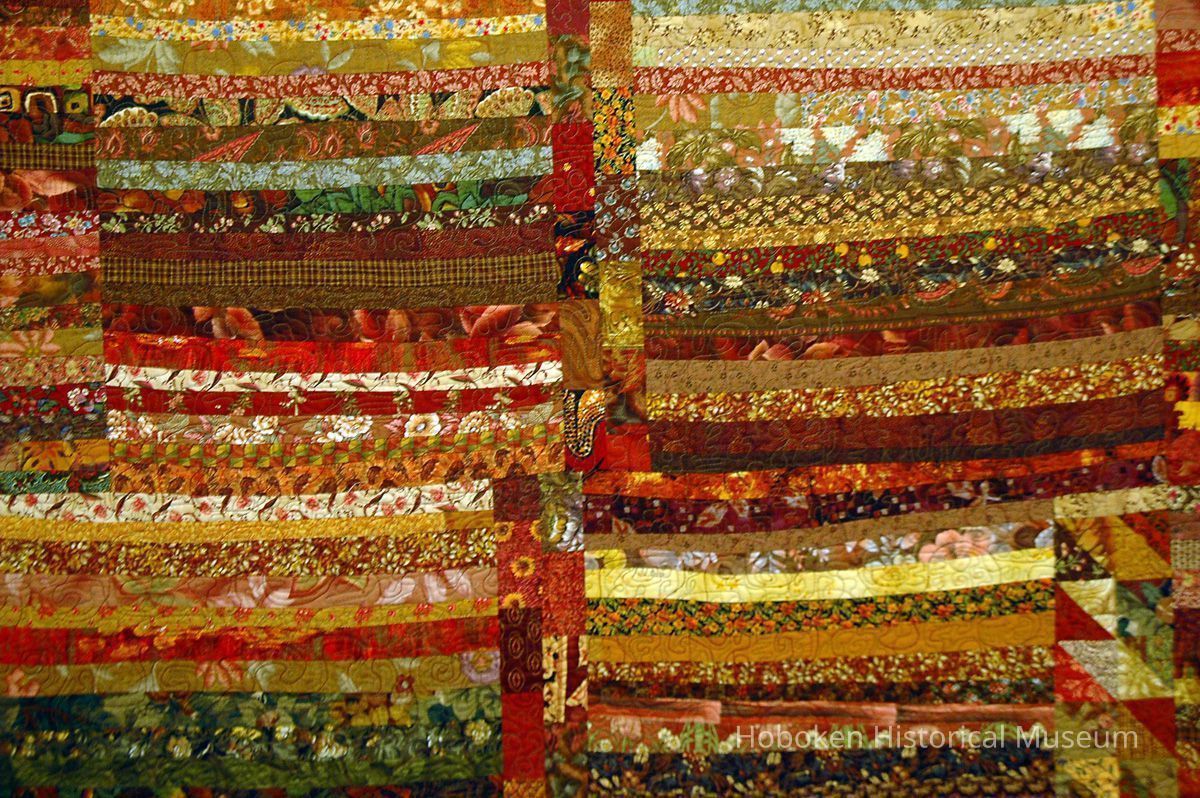
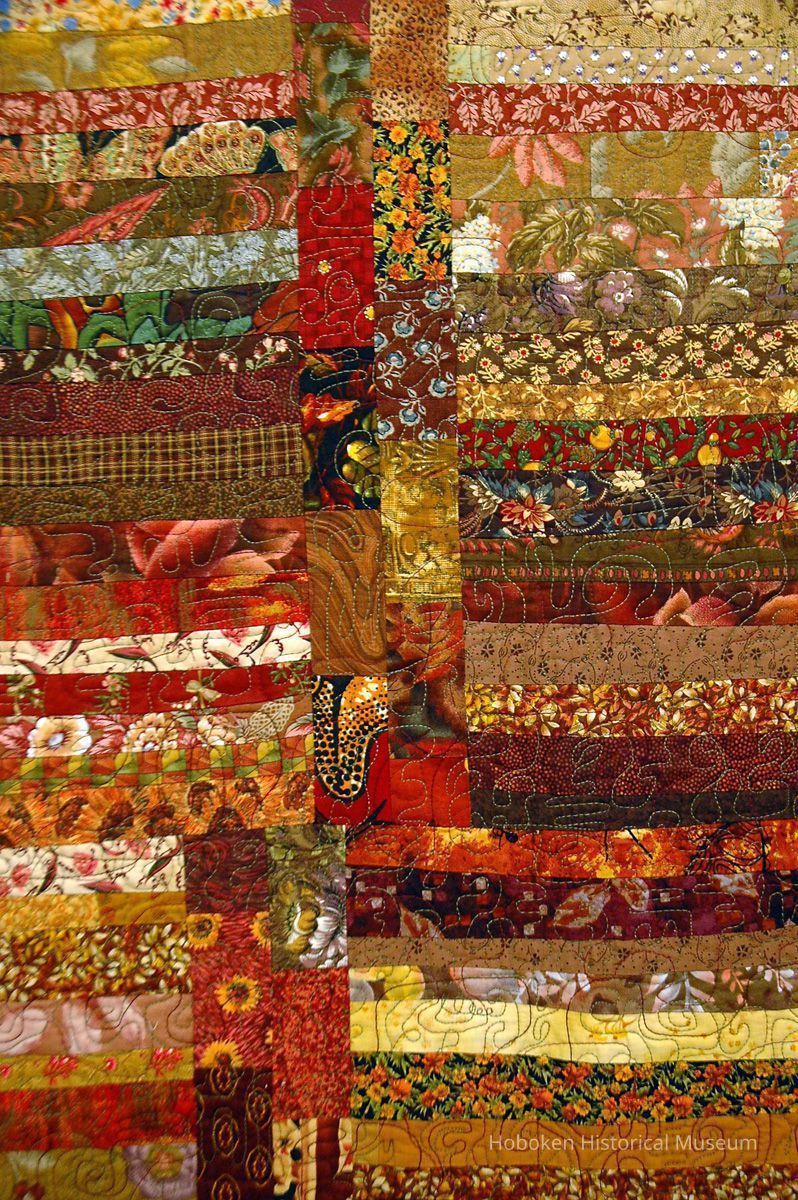
McGeary has done other work that captures Hoboken’s
spirit, including a beautiful quilt in rich hues called “Autumn on
the 11th Street Island,” which interprets the view from her
window at the apartment where she lived for 27 years until a
fire forced her to move last year. She remembers when the
beautifully landscaped island separating Hoboken’s widest
cross-street was threatened with conversion to parking
spaces—several of her neighbors banded together and pleaded
with the city to plant trees and allow them to place Belgianblock
borders and plant shrubs and flowers around them.
Winner of the Governor’s Award at the New Jersey Quilt
Convention in Edison in 2006, she has also displayed her work
in numerous solo and group shows since 2000. Much of her
work incorporates traditional ethnic fabric designs from Africa
and Indonesia and hand-painted fabrics. She has also recently
completed several quilted wall hangings as a tribute to the
Gee’s Bend quilters, a celebrated group of southern Alabama
women who carry on traditional quilting styles and patterns.
The Museum show will kick off with an opening reception
from 2–5 p.m. on Sunday, May 13. McGeary will also give a
slide-show talk about her work on June 17 at 4 p.m.
Original or Copy: Digital copy
Status: OK
Status By: dw
Status Date: 2007-09-14