Note
Notes: Archives 2013.043.0001
====
[cover]
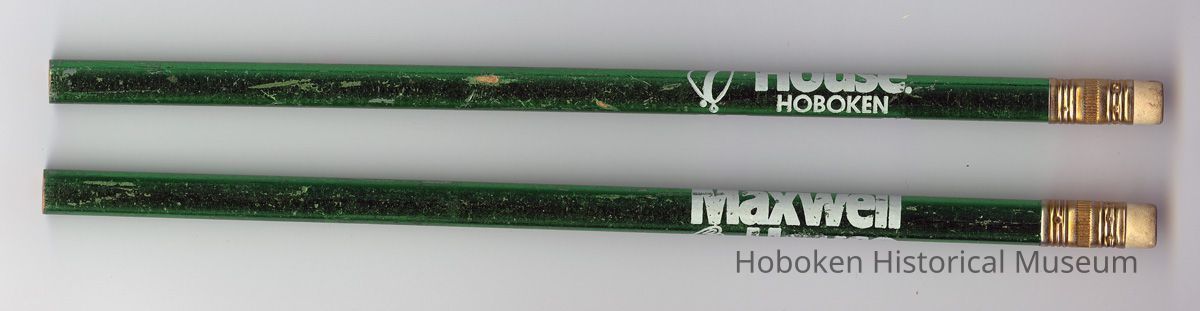
Maxwell House/Hoboken
Technical Research
Open House
November 1 & 2, 1989.
====
pg [2]
TECHNICAL RESEARCH A TRADITION OF INNOVATION
Since 1951, Maxwell House Technical Research, Hoboken, has been inventing new products and better ways to manufacture coffee,. Almost 400 patents have been issued based on research performed in Hoboken.
For Maxwell House, ongoing research is a vital ticket to the world of the future, a world in which trends and life-styles are sure to be different from today's. This year's hot product or manufacturing technique may well be next year's cold has-been. To survive, a company must always have some "new sizzle" waiting in the wings; and it takes aggressive research and development to make sure these innovations are ready to roll when they are needed.
Over 100 products and 50 new processes have been invented by Hoboken's Technical Research organization which now consists of 120 scientists, engineers, and technicians. A few of these include; Freeze drying, Agglomeration, and Decaffeination. There are two major areas of research being done in Hoboken. One concentrates on new processes and takes a long term prospective while the other concentrates on new products and has a shorter time fuse.
Hoboken also has the famous illuminated sign which was the biggest in the area back in 1939. The sign is 182 feet long, 75 feet high, and has letters that are 19 feet high. If filled, the 42 foot red rimmed cup would hold two million cups of coffee. Even the drops are a huge 9 feet high.
====
page [3]
Pilot Plant
In the evolution of almost every new product or process, the development moves from the bench top to the pilot plant and finally into the plant. Although each phase is important, the pilot plant stage where the process is scaled up from a beaker to a small tank is critical because it is here that a process can be tested under realistic conditions. Many of the products that MH now sells were developed in the pilot plants of Hoboken including; Natural decaffeination, new roasting technology, General Foods International Coffees, and jar aroma.
Analytical Labs :
Development of new and better coffee products requires a fundamental understanding of the basic chemistry of coffee. High tech analytical procedures allow us to measure the important attributes of coffee. Those of particular importance are aroma and caffeine. The analytical chemists work with the engineering groups to develop products of the highest quality.
Sensory Department:
Analyzing the flavors of various coffee types is somewhere between art and science. Because it is unique, coffee flavor is difficult to describe. Most consumers can easily indicate whether or not they like the flavor of a particular coffee but have difficulty being more specific because they lack the technical vocabulary.
Here in the MH panel area, trained "expert" tasters "slurp" over 125 cups per day evaluating each sample on a 15 point scale. They evaluate the difference between samples or describe the taste (profile it). This data can then be used to modify a process, compare our products to the competition, or aid in new product development.
====
====
Status: OK
Status By: dw
Status Date: 2013-07-22