Name/Title
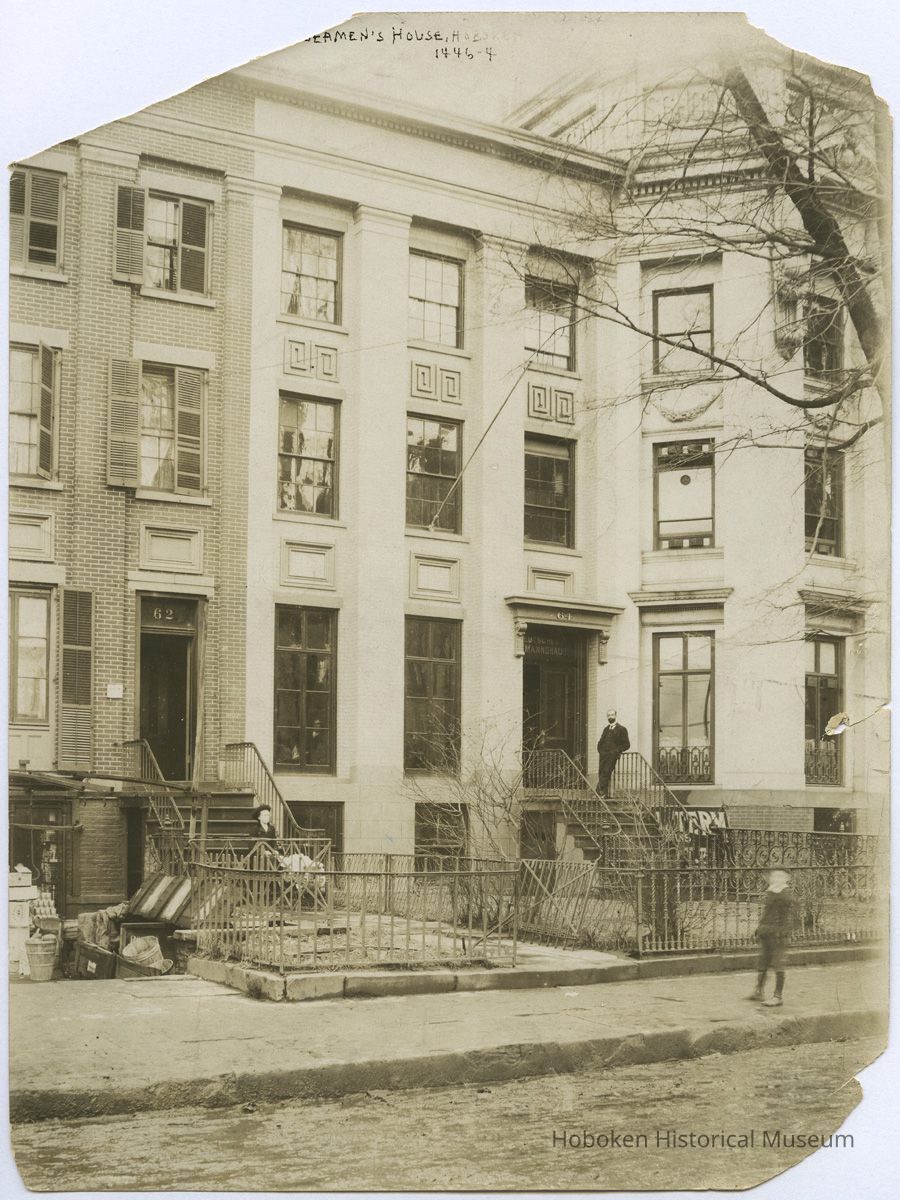
Sepia tone photo of Deutsches Seemannshaus (German Seamen's Institute), 64 Hudson St., Hoboken, n.d., ca. 1908; not later than 1911.Entry/Object ID
2013.005.0212Description
Sepia tone photograph of Deutsches Seemannshaus (German Seamen's House or Institute), 64 Hudson St. & including 62 Hudson St., Hoboken, no date, circa 1908 and not later than 1911. Photographer: George Grantham Bain, 225 4th Ave., New York. (Bain News Service?)
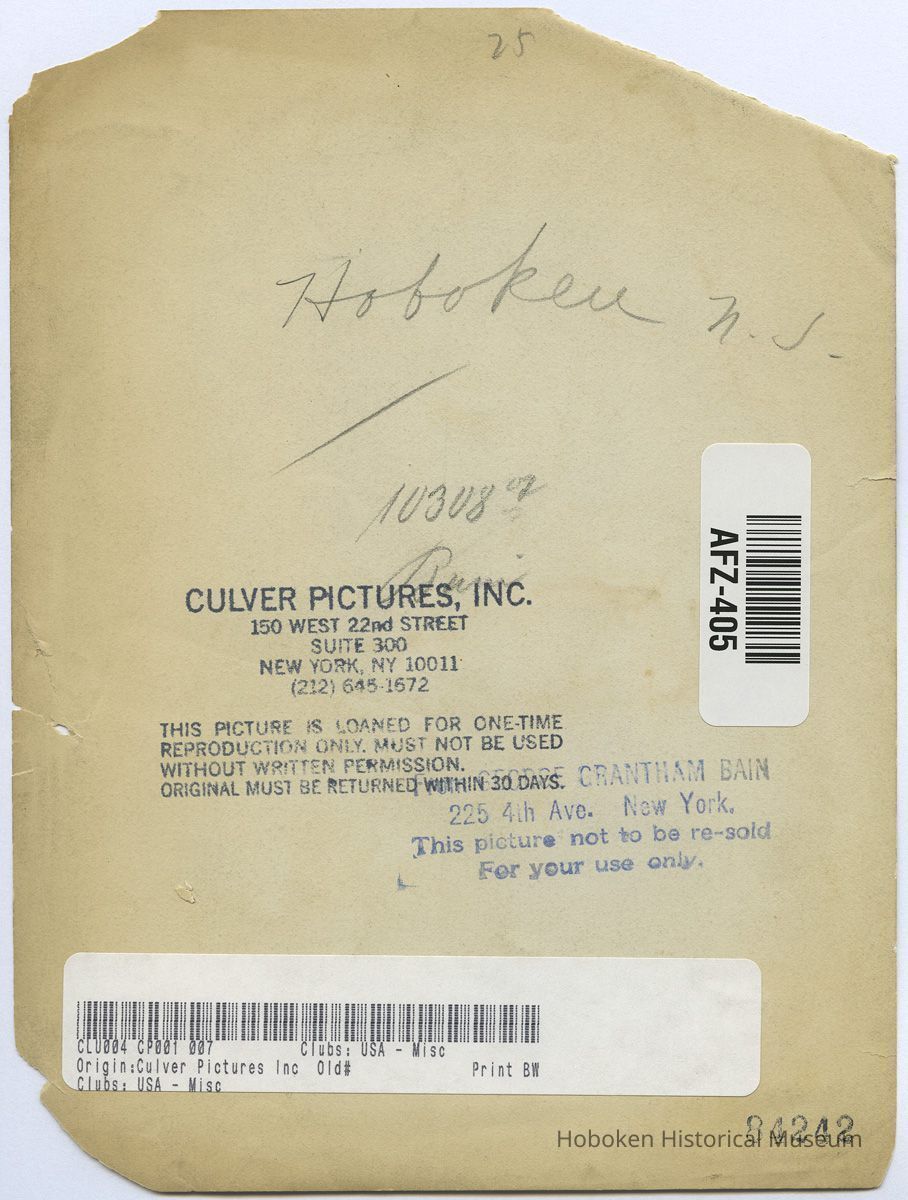
Single weight print, 6" wide x 8" high, reverse with multiple inkstamps, holographic notes and two modern adhesive labels. Integral (partial) title in image at top: Seamen's House, Hoboken, 1446-4. Photograph possibly from Oct. 3, 1908; see notes for details of reverse markings.
View is northwest of the west side of Hudson Street from a partial view of no. 60 (at the left), no. 62 and no. 64 and a partial view of no. 66, the Eagan School of Business which has not yet placed signage on the building.
The Deutsches Seemannshaus was founded at 64 Hudson in 1907 and in 1911 bought no. 62 and later expanded further by the purchase of 60 Hudson St.
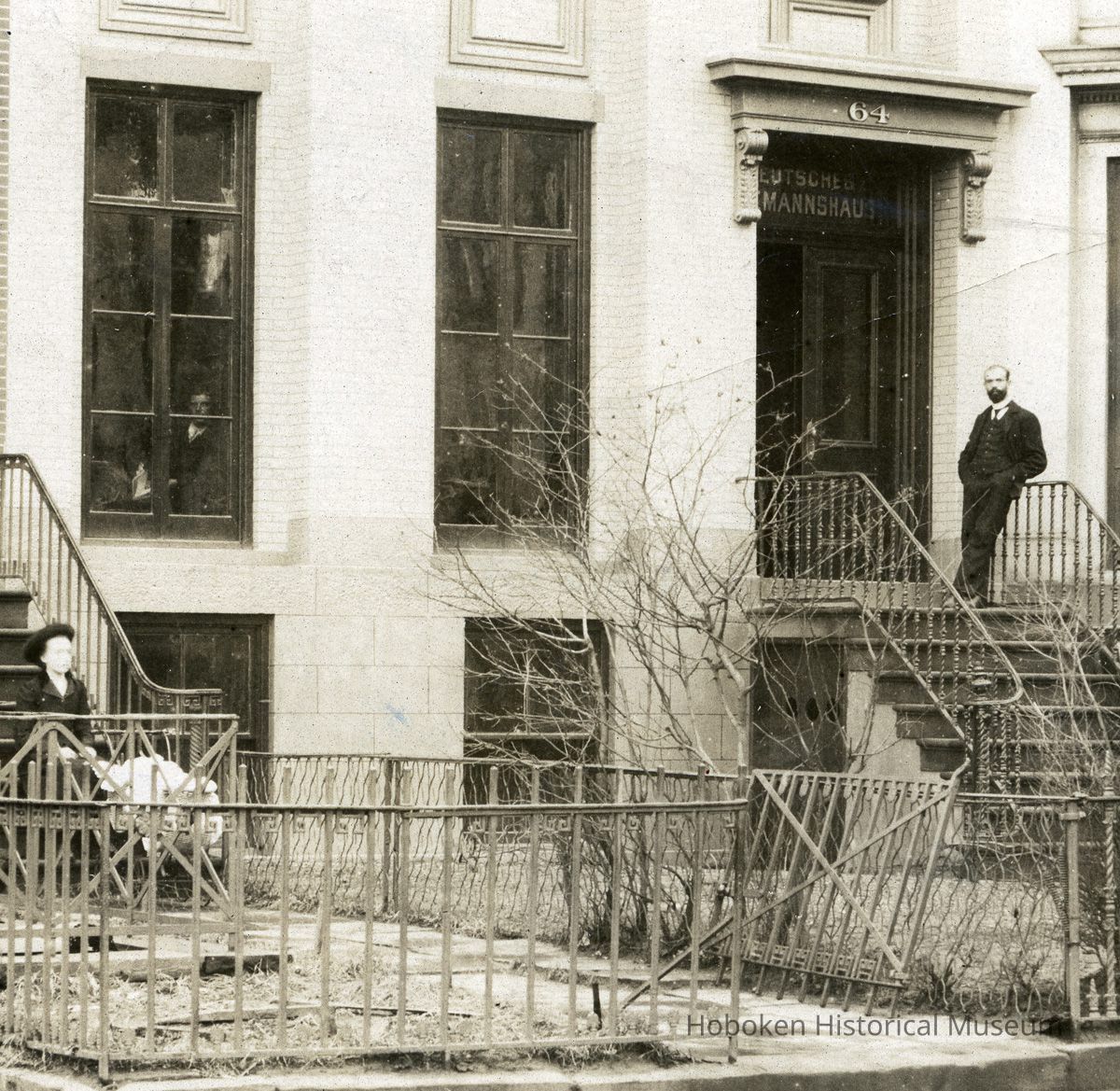
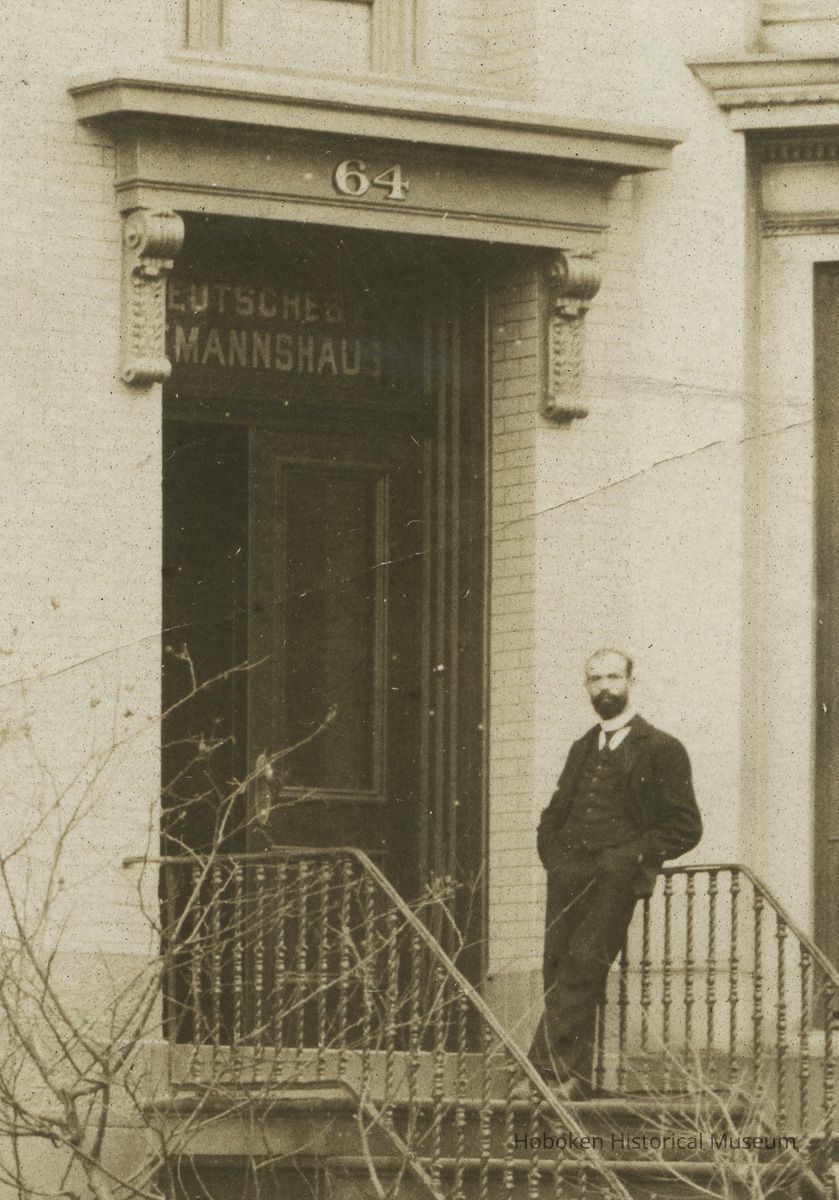
In detail images 1 and 2, the lettering of the Deutsches Seemannshaus is seen in the transom window over the entrance.
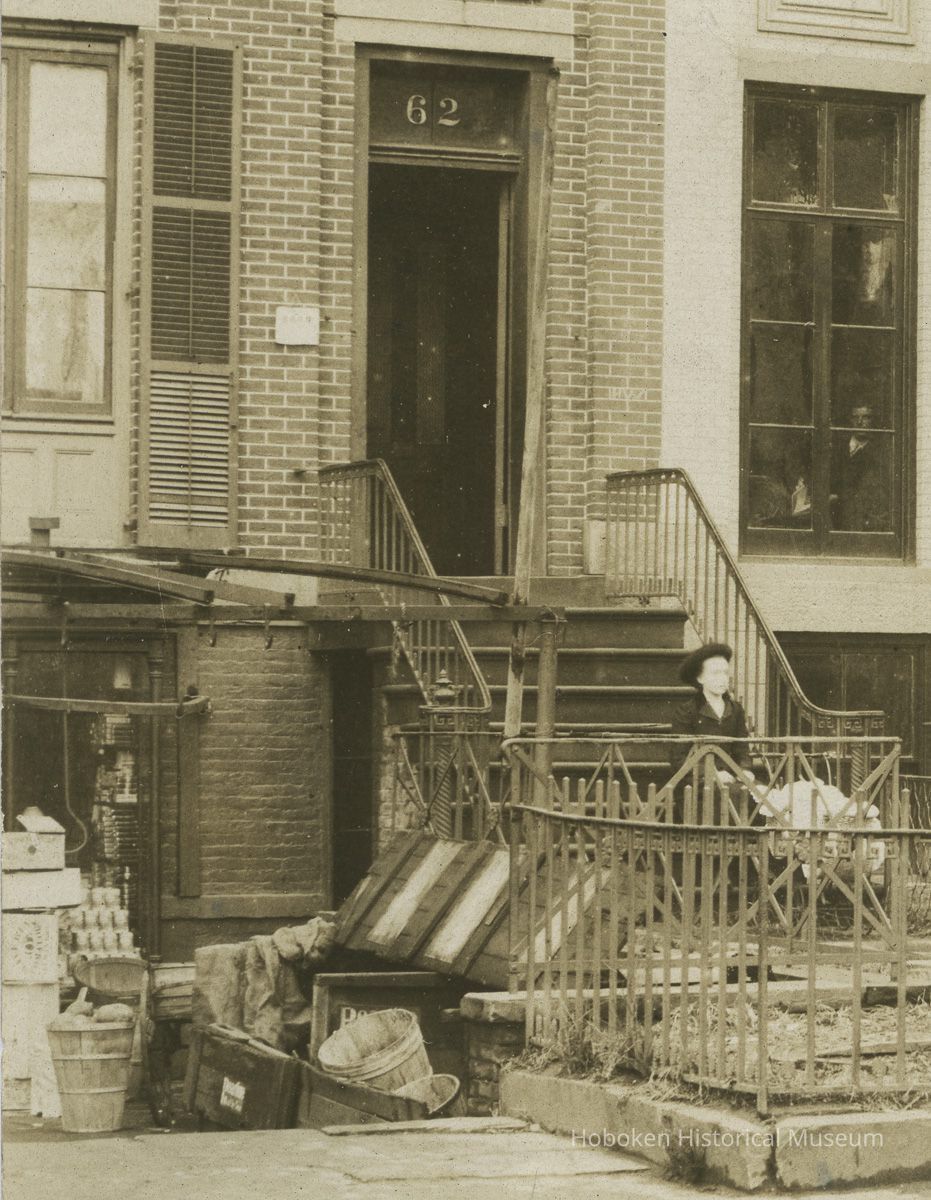
In detail 3, lower left, the woman with baby carriage is at the stoop of no. 62; to the left is the basement store, a grocer, produce or provisioner, at no. 60. Note the frame for an awning (not in use) whose from batten is a hanging bar with hooks for displaying products; there is a metal semi-circular one seen mounted at the window.
Other detail includes the multiple types of metal fences seen in use; the variety in the ironwork is interesting and worth noting that some appear similar to extant iron work in modern Hoboken.Acquisition
Accession
2013.005Source or Donor
Lukacs, ClaireAcquisition Method
GiftCredit Line
Museum Collections. Gift of a Friend of the Museum.Made/Created
Artist
Bain, George GranthamDate made
1908 - 1909Notes
Date: 1908-1909General Notes
Note
Notes: Inkstamped image or negative number on back: 84242.
Contemporary pencil notation:
25
Hoboken N.J.
10308 01
Bain
(suggesting a date of Oct. 3, 1908 and first image of that session)
Contemporary inkstamp:
From George Grantham Bain,
422 4th Ave. New York.
This picure not to be re-sold.
For your use only.
Later inkstamp of Culver Pictures, Inc., 150 West 22nd St., Suite 300, New York, NY 10011 (circa 1960s or later)
Two modern barcode labels either from Tribune Photo Archives, Masterpiece Marketing Group (MMG) or Jay Parrino (JP The Mint or Jay Parrino's The Mint).
====
George Grantham Bain, 1865-1944; known as "the father of foreign photographic news". Founded Bain News Service 1898.
----
D.J. Culver (Culver Pictures) purchased the Bain archives in 1948 and while selling a significant portion to Library of Congress, he retained some materials as noted below.
Text below excerpted from Library of Congress introductory text to: George Grantham Bain Collection, News photographs of New York City, early twentieth century.
In 1948 the Library of Congress purchased the photographic files of one of America's earliest news picture agencies, the Bain News Service. George Grantham Bain (1865-1944), formerly affiliated with the United Press, founded his New York photo agency in 1898. The news service specialized in New York City news and covered, to a lesser degree, events in the eastern United States. It distributed its own pictures and those purchased from other commercial agencies to about one hundred newspapers. The collection was purchased from D. J. Culver of New York, who retained some material at the time of purchase.
The Bain picture files richly document local sports events, theater, celebrities, crime, strikes, disasters, political activities including the woman suffrage campaign, conventions and public celebrations. The extensive news coverage provided by the Bain News Service is suggested by the approximately 40,000 glass plate negatives and 50,000 photographic prints in the collection. The bulk of the collection dates from the 1910s to the mid-1920's, but scattered images can be found as early as the 1890's and as late as the 1930's.
====
Original or Copy: Original
Status: OK
Status By: dw
Status Date: 2013-08-23