Label Type
Cultural/Historical ContextLabel
Frances Loring was a prominent Canadian sculptor who lived and worked out of her studio at 110 Glenrose Avenue, Toronto known as "The Church". Sculptor Florence Wyle also lived at worked at The Church and the two were known as "The Girls". Loring and Wyle created largely monumental work centered around the war effort. Loring and Wyle have been regarded as two of the most important Canadian sculptors in the 20th century. Notable works of Loring can be found on Parliament Hill in Ottawa and in the National Gallery of Canada.
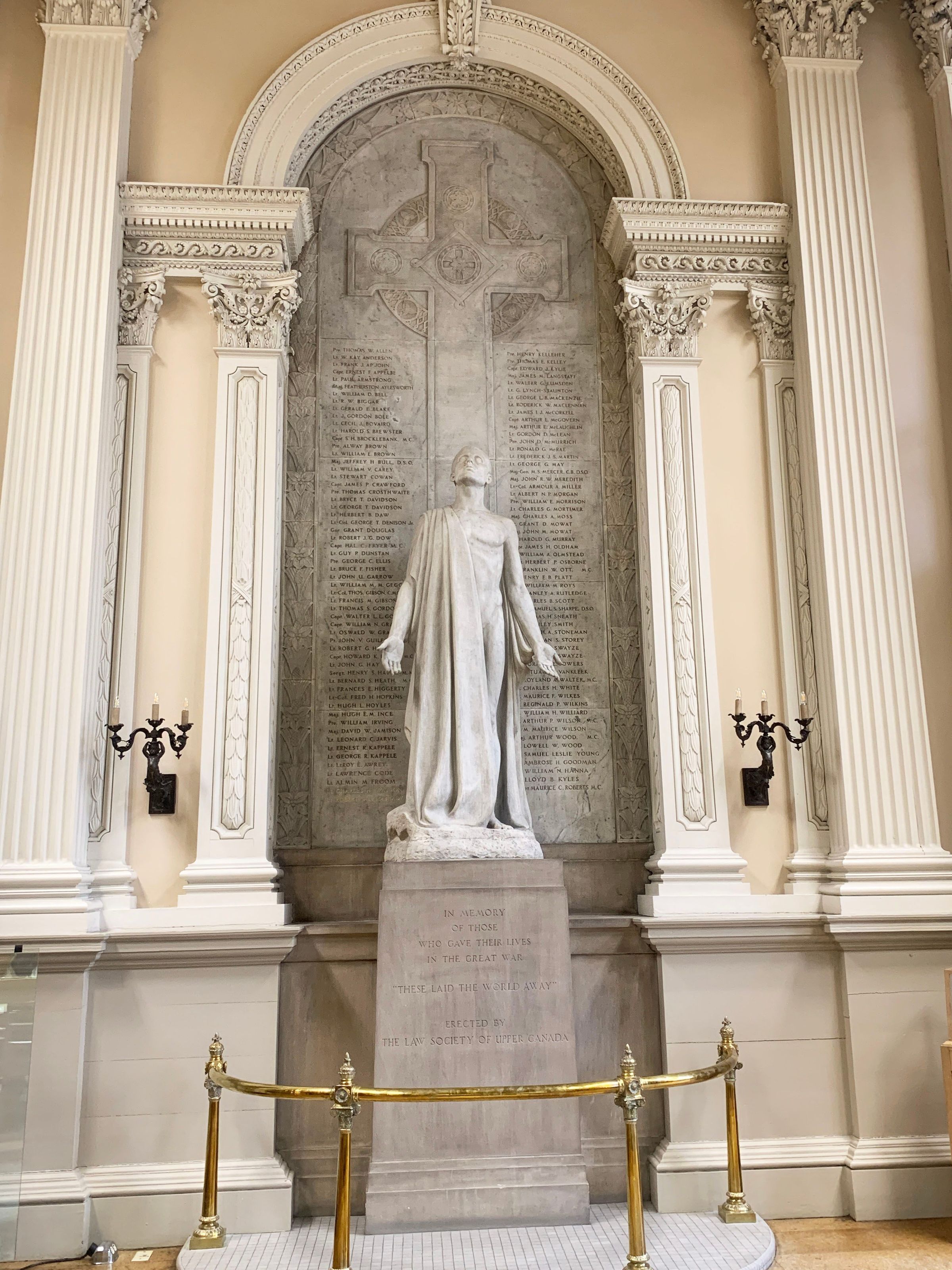
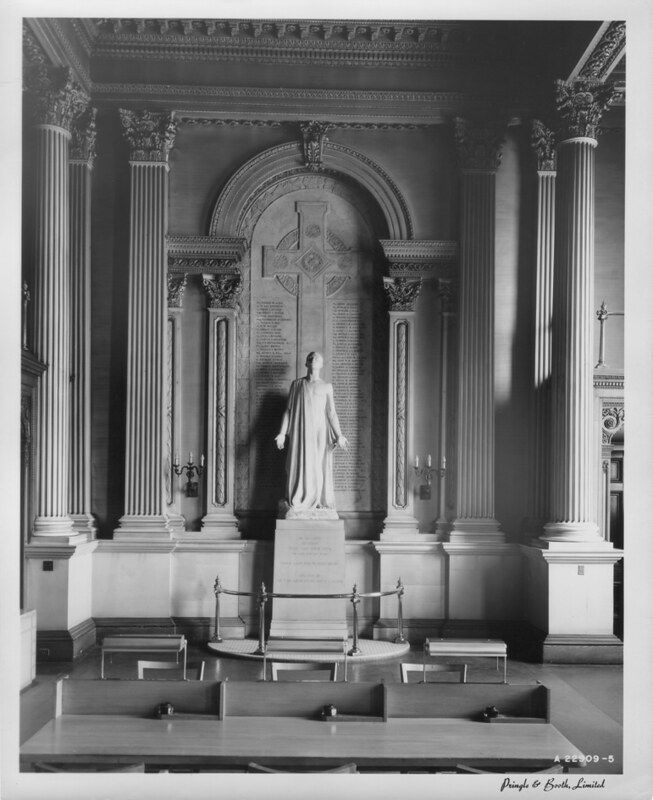
The model for this memorial was Thomas Lansitie, an 18 year old member of the YMCA swim team. Sittings took place in old church studio and clay model finished in Italy. The stories of how he came to be the model differ: One version is that his swim coach asked him to pose for Frances Loring. Another is that Lansitie was approached directly by Loring.Label Type
Cultural/Historical ContextLabel
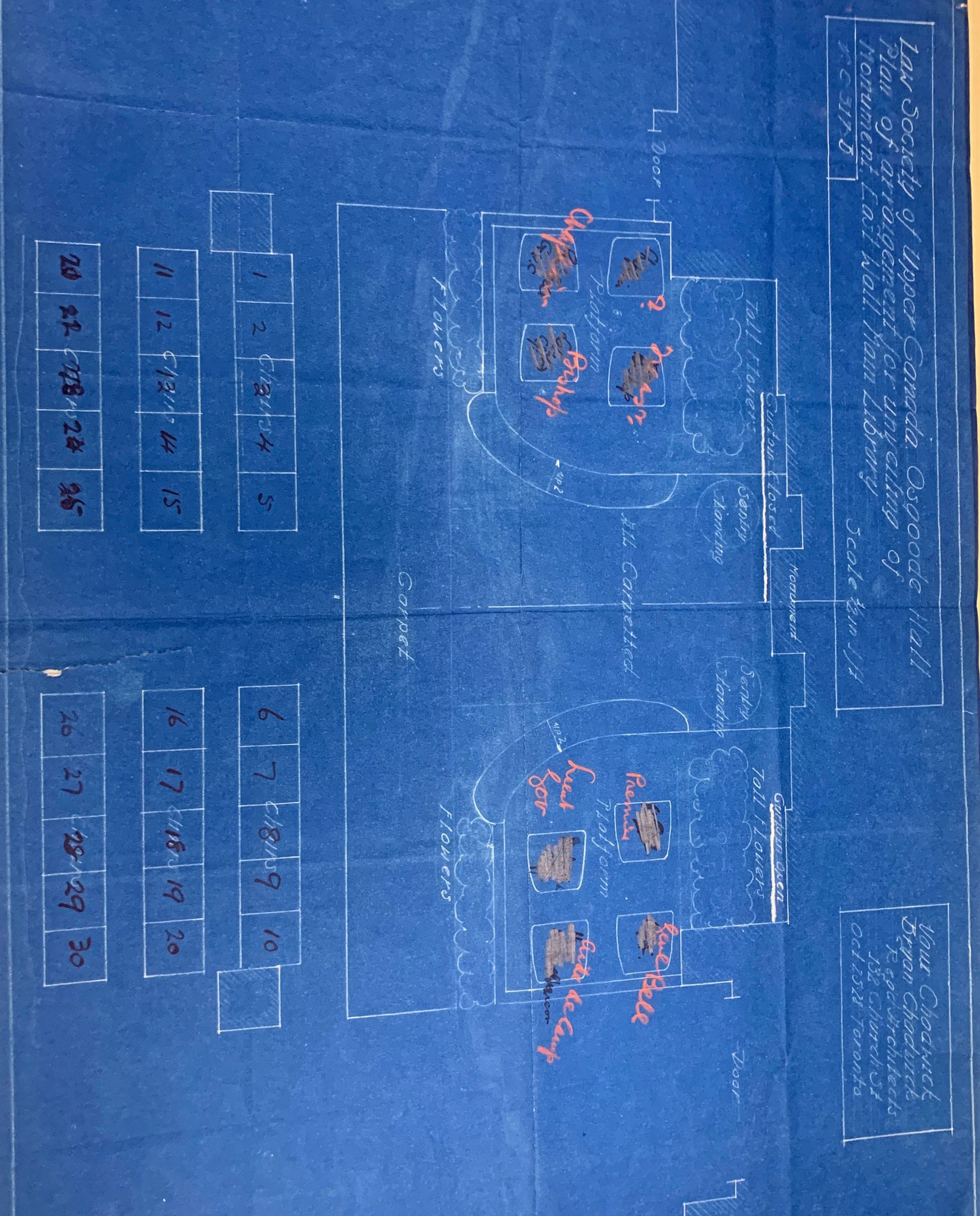
Following the unveiling of the memorial, new names came to the Law Society's attention, including that of Leroy E. Awrey. In late October 1929, the Law Society sent Frances Loring a list of eight additional names to be engraved at the bottom of the list already inscribed on the memorial. In November 1929, the Law Society wrote to Frances Loring to let her know that the name of Capt. Henry C. Draper was engraved on the Memorial (No. 27) as being among the deceased whereas he was very much alive. His name was replaced on the memorial with the name "Capt. Hal C. Fryer, M.C." Traces of that change can still be seen on the left side of the list of names on the memorial.Label Type
Cultural/Historical ContextLabel
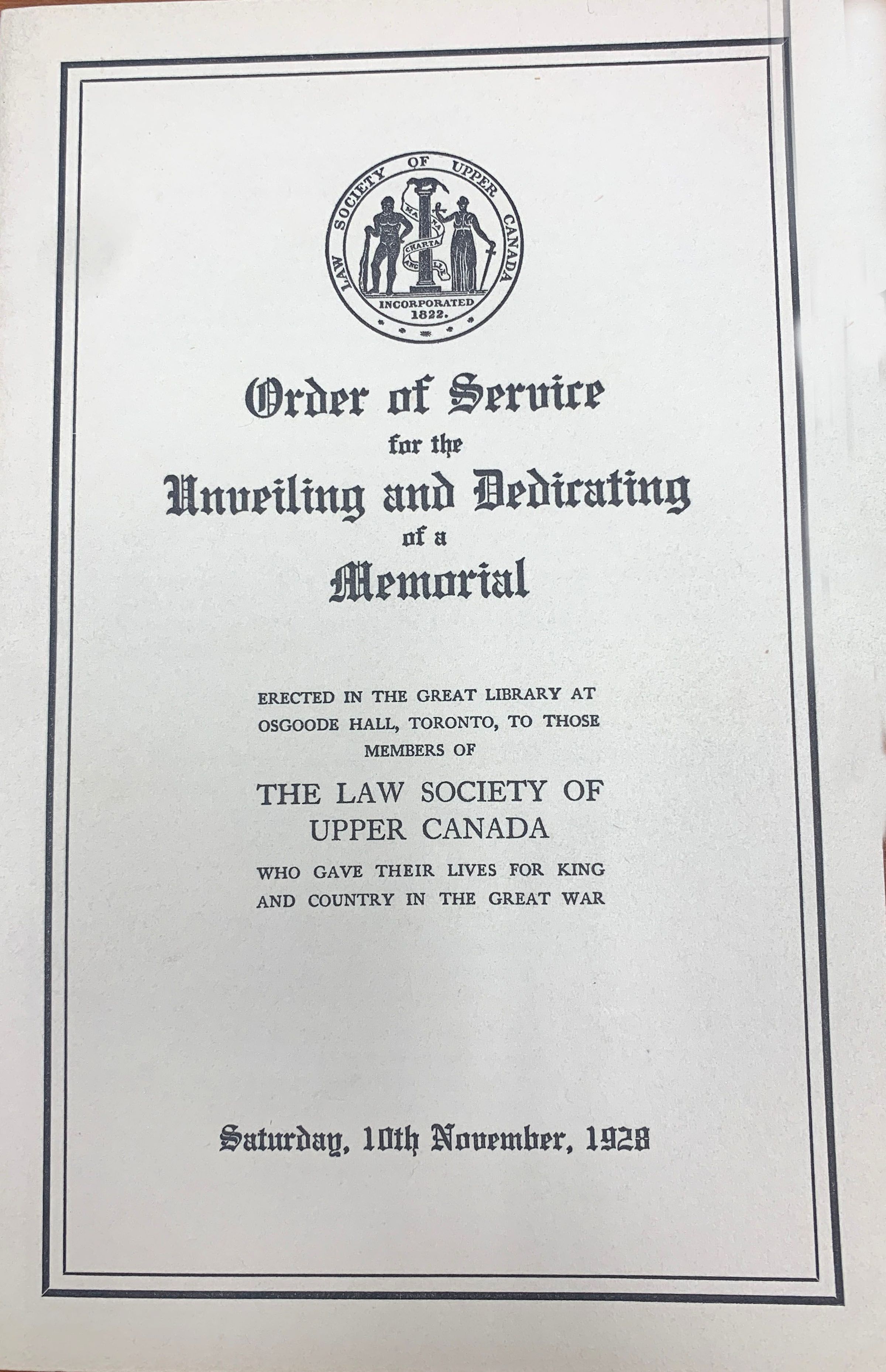
Up to 2014, the students who had put their law studies on hold to serve their country and died, were acknowledged at the annual Remembrance Day service by the mention of “never called” after their name. In 2014, the anniversary of the start of World War One, that changed when the students were awarded an honorary call to the bar.
This initiative was spearheaded by Toronto lawyer Patrick Shea, who took upon himself to research and create biographies for the 60 students. In some cases, he was able to reach out to the families of these soldiers. Some contributed to his research and many attended the ceremony. A similar ceremony was performed in 2017 to honour the 18 students lost in WW2.
Over 80 years after the last names were added to the memorial, two new individuals came to light for inclusion on the memorial. Lt. Charles H. Watson, a lawyer, appeared on the original list, but was missing from the one submitted to the Secretary of the Law Society. It seems that he was the victim of a transcription error. Lt. McBrady was on the list, but his name was left off from the memorial, most likely because of the circumstances of his death. He had enrolled, but his departure for overseas was delayed because of poor health. While at home, he was killed by his father during a family dispute. Since McBrady had not been discharged and the memorial includes the name of other soldiers who did not die during battle, the decision was made to include him.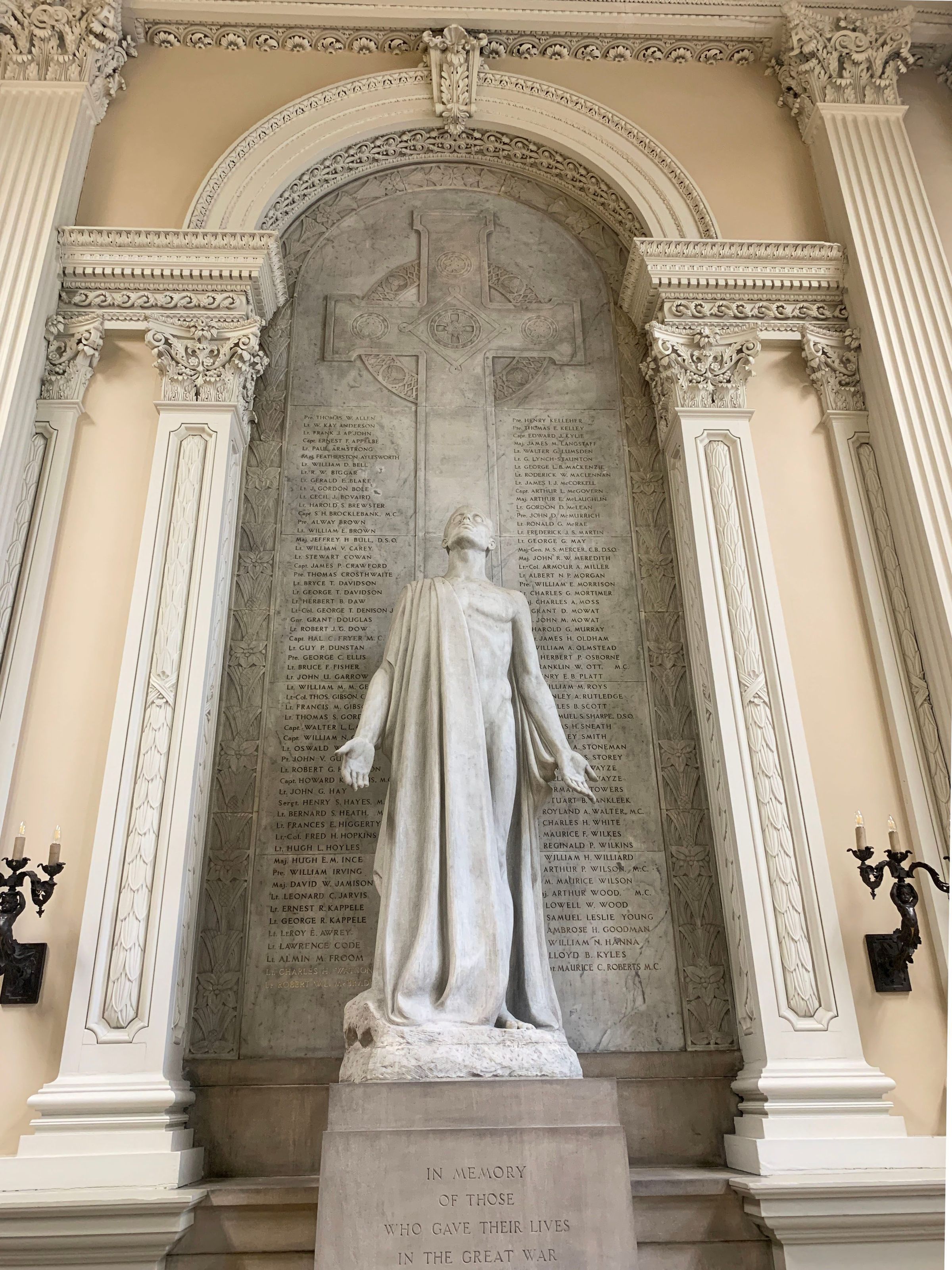
![F 1075-12-0-0-18/Loring, Frances, A.R.C.A., [photograph], 1931, F 1075-12-0-0-18, M.O. Hammond fonds, Archives of Ontario, I0007785. /Copyright Public Domain: Used with permission [obtained on March 12, 2024]](https://d8e7jbdw4fu0e.cloudfront.net/8694/b8ed5010-e0a5-11ee-89e1-311769ba2367-wxcEnPx.lg-nt@2x.jpg)