Name/Title
Angkhola Supreme KhukuriEntry/Object ID
195; Full Code: 195.66.109-DG-NBTags
Forward edge, Dagger, KhukuriDescription
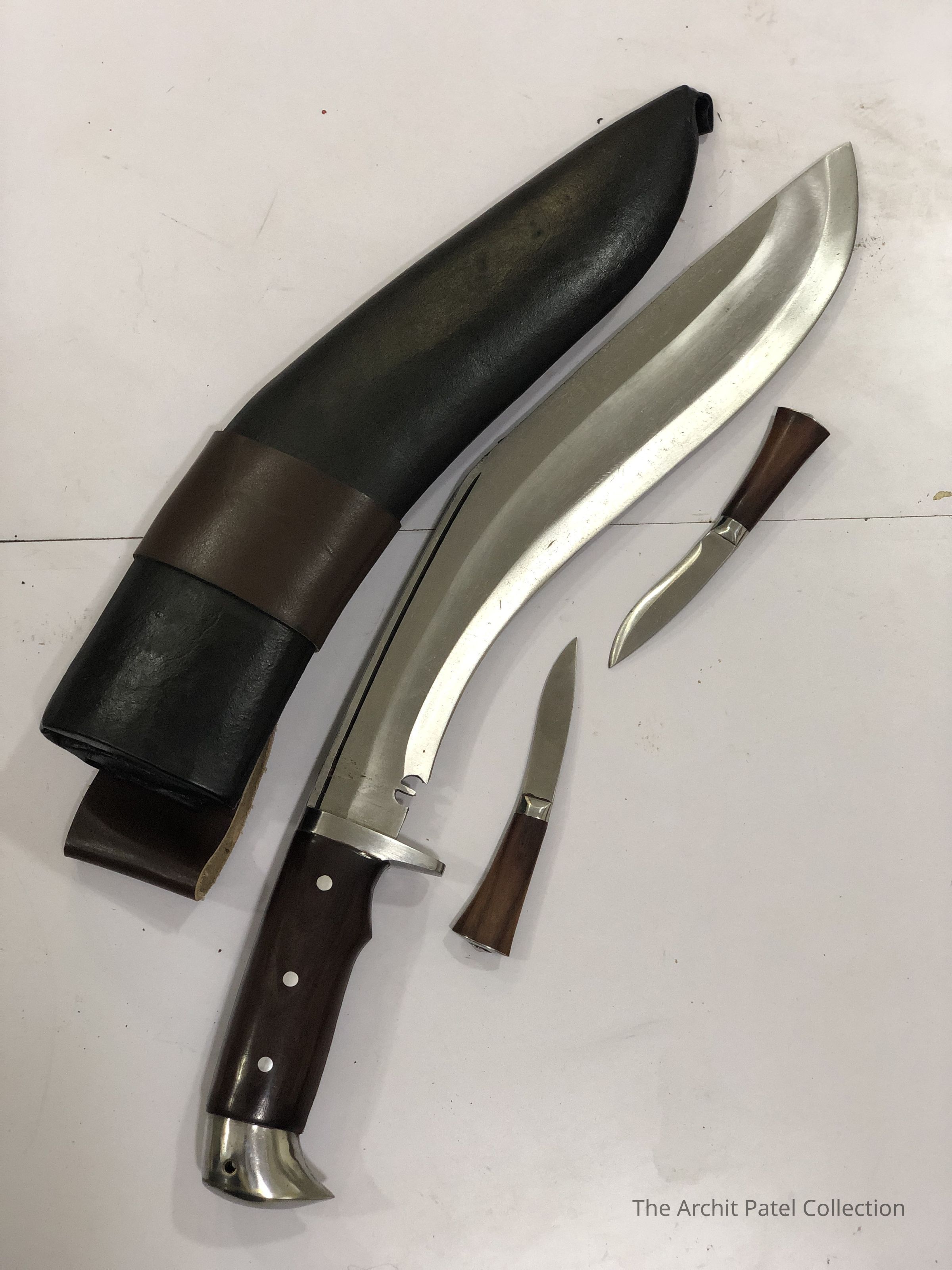
Angkhola (The Back-Hole) Khukuri, an artifact that documents a peak in Metallurgical Lightening and High-Torque Symmetery. Sourced from the master forges of Khukuri House in Kathmandu, this unit represents a peak in Differential Heat-Treatment; it is a tool that records the ability to maintain massive Kinetic Energy Distribution while reducing overall distal weight through radical fullering. I value this specimen as a primary technical record, specifically indexing my focus on Anatomical Vector Alignment and Full-Tang Resilience.
My Design & Engineering Observations
My Choice of Blade Architecture (The Angkhola Fuller):
I am looking at a 195th administrative unit featuring a heavy, high-carbon steel blade with a radical Deep Fuller (Groove) along the spine.
My Technical Logic: The "Angkhola" pattern (meaning "back-hole") involves removing mass from the center of the blade while maintaining the thickness of the spine and the edge. This provides me with a state of high Slicing-to-Weight Ratio, effectively concentrating my manual force while allowing for faster recovery cycles during heavy material processing.
The Cho (Kaudi): I have a traditionally notched ricasso, acting as a Mechanical Stress-Relief Valve to prevent fracture-travel during high-velocity administrative impacts.
My Hilt & Material Synthesis (The Rosewood Panawal):
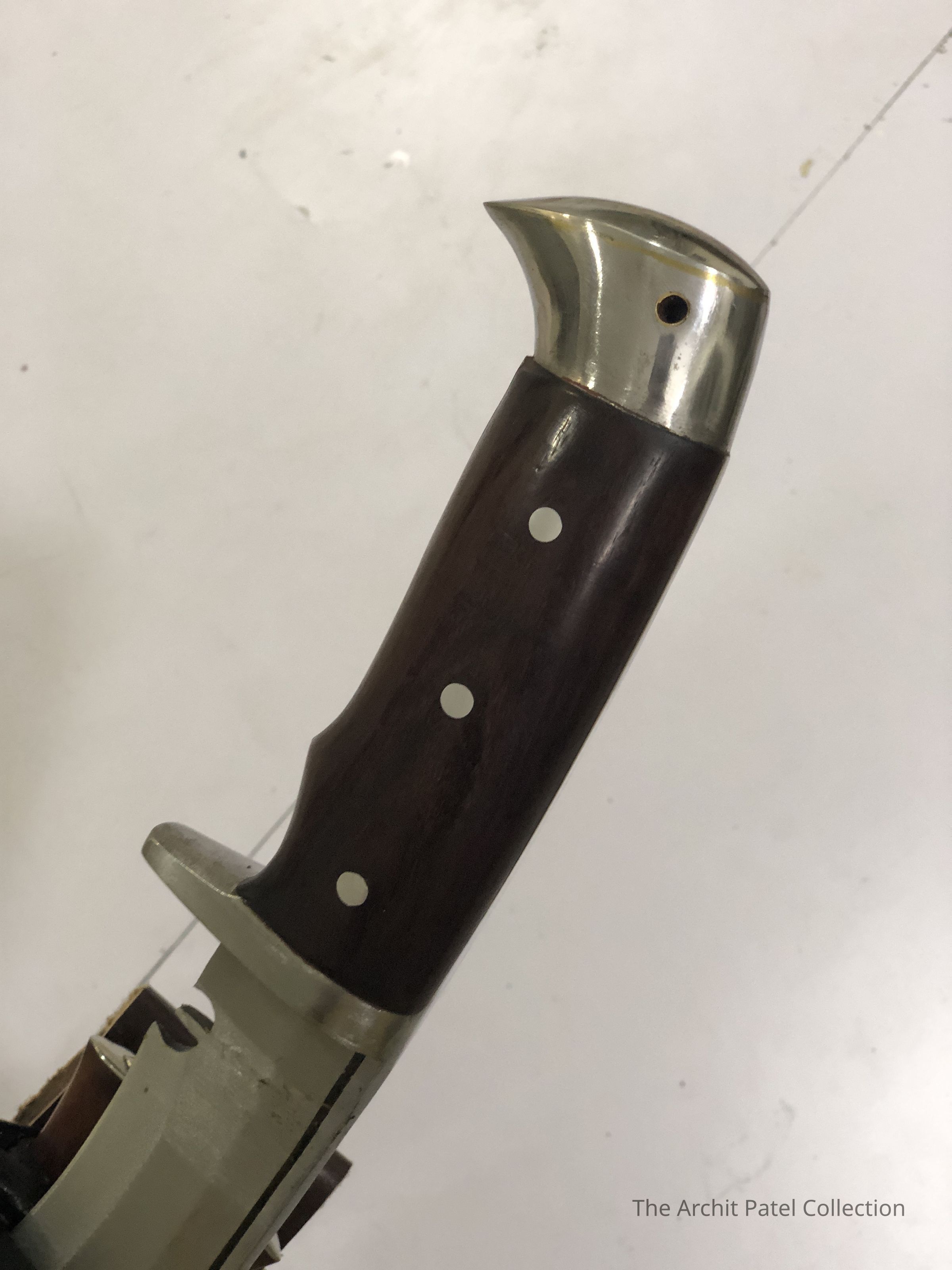
The hilt is constructed from polished rosewood scales secured in a Full-Tang (Panawal) configuration with three robust rivets.
My Mechanical Logic: A full tang provides the highest state of Structural Fail-Safe Integrity. By extending the forged steel through the entire length of the grip and finishing it with a polished steel pommel cap, I have achieved absolute Leverage Certainty.
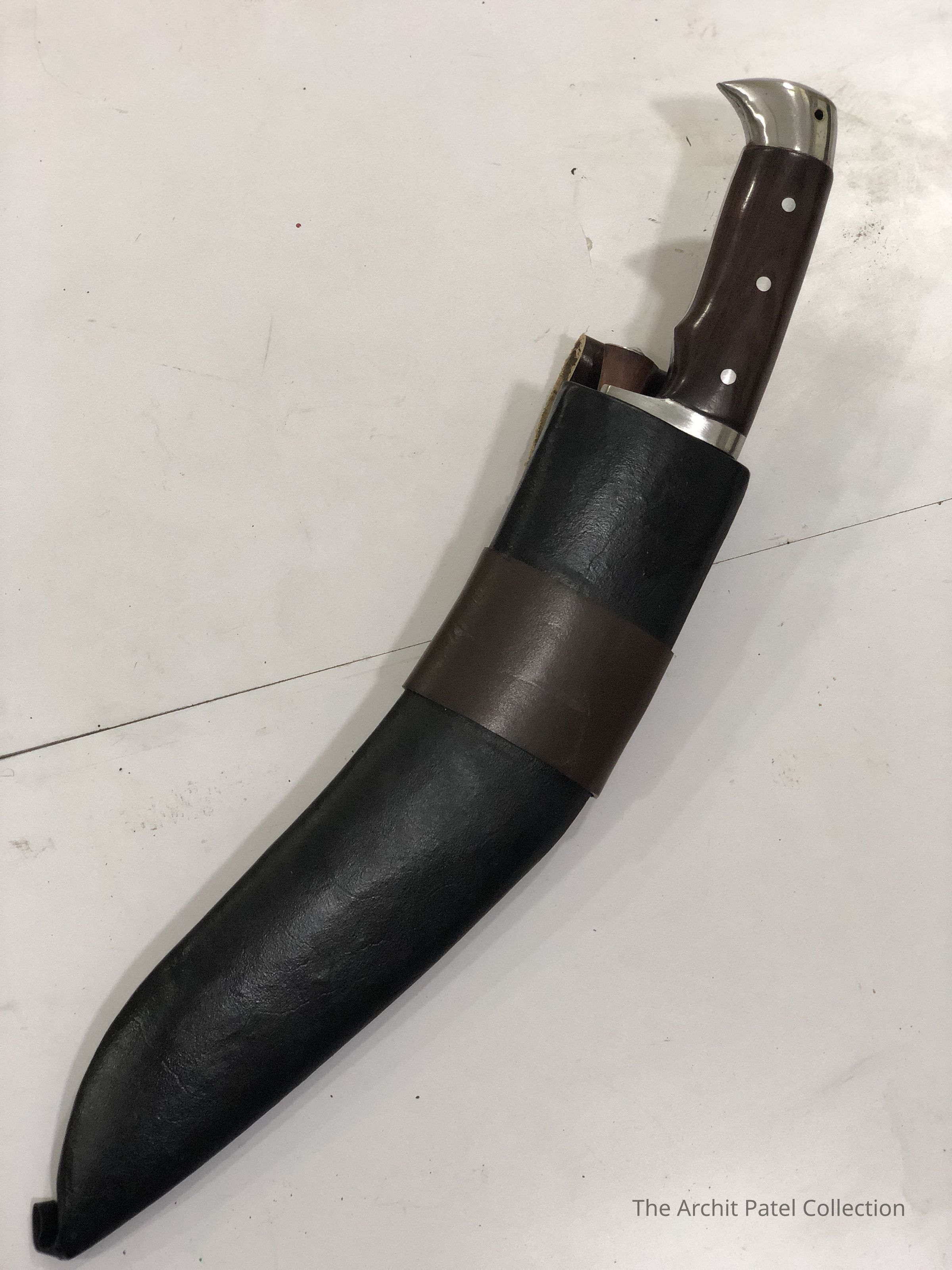
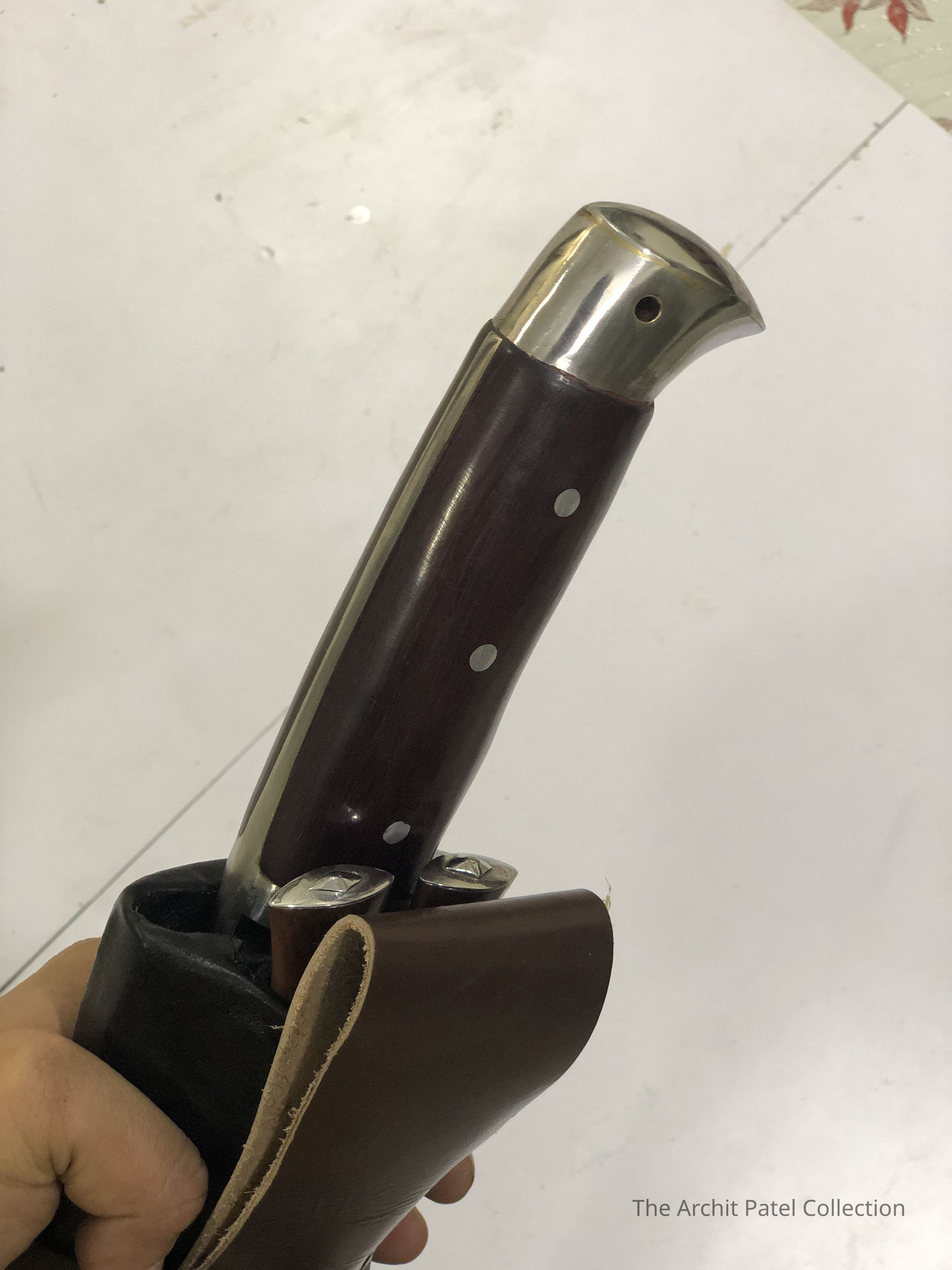
The Integrated Accessories: I maintain the state of Operational Readiness for my Karda (utility blade) and Chakmak (honing steel), housed within the specialized administrative compartments of my buffalo-hide scabbard.
My Administrative Indexing:
I have categorized this as Unit 195, marking my continued progression into the third century of my collection sequence. This piece records my move toward High-Efficiency Agrarian Tools specifically designed for my farm clearing activities.
Angkhola Kukri gets a new make over and now its Supreme because of this wonderful features invested. It is heavier, effective, deadly and dependable.
This new kukri by Khukuriblades.com (Khukuri House Thamel) is one of the best ever kukri produced or handcrafed by man. The reason being so is because of these features invested into this wonderful kukri. The size of this new Kukri is 13” making it heavier, more effective and fierce looking. Handling bigger power needs better dependable characteristic so why the Rosewood handle is given a finger grip manner that gives one the perfect grip when one holds the Kukri and not to loose it or slip when in action.
The blade is an Angkhola shaped Kukri which is the nicest shape for a Kukri to have to be more deadly when in use. The shape gives the blade a thicker spine, wider shape and excellent weight. And to top it all, a flat tang blade that runs till the end of the handle can be seen which a must is for Kukri this big for better strength and durability. A metal ring too at the back of the handle has been made for a cord to go in for strapping. Bloster is also made for hand guarding.
This new Kukri is just perfect for everything. Although slightly larger and heavier than the standard army kukris; this Kukri will be more efficient because of its size, weight and the improvised handle.Made/Created
Manufacturer
Khukuri House NepalDate made
2019Dimensions
Dimension Description
18"Length
13 in