Name/Title
Bayonet DaggerEntry/Object ID
398; Full Code:398.89.59-DG-IATags
DaggerDescription
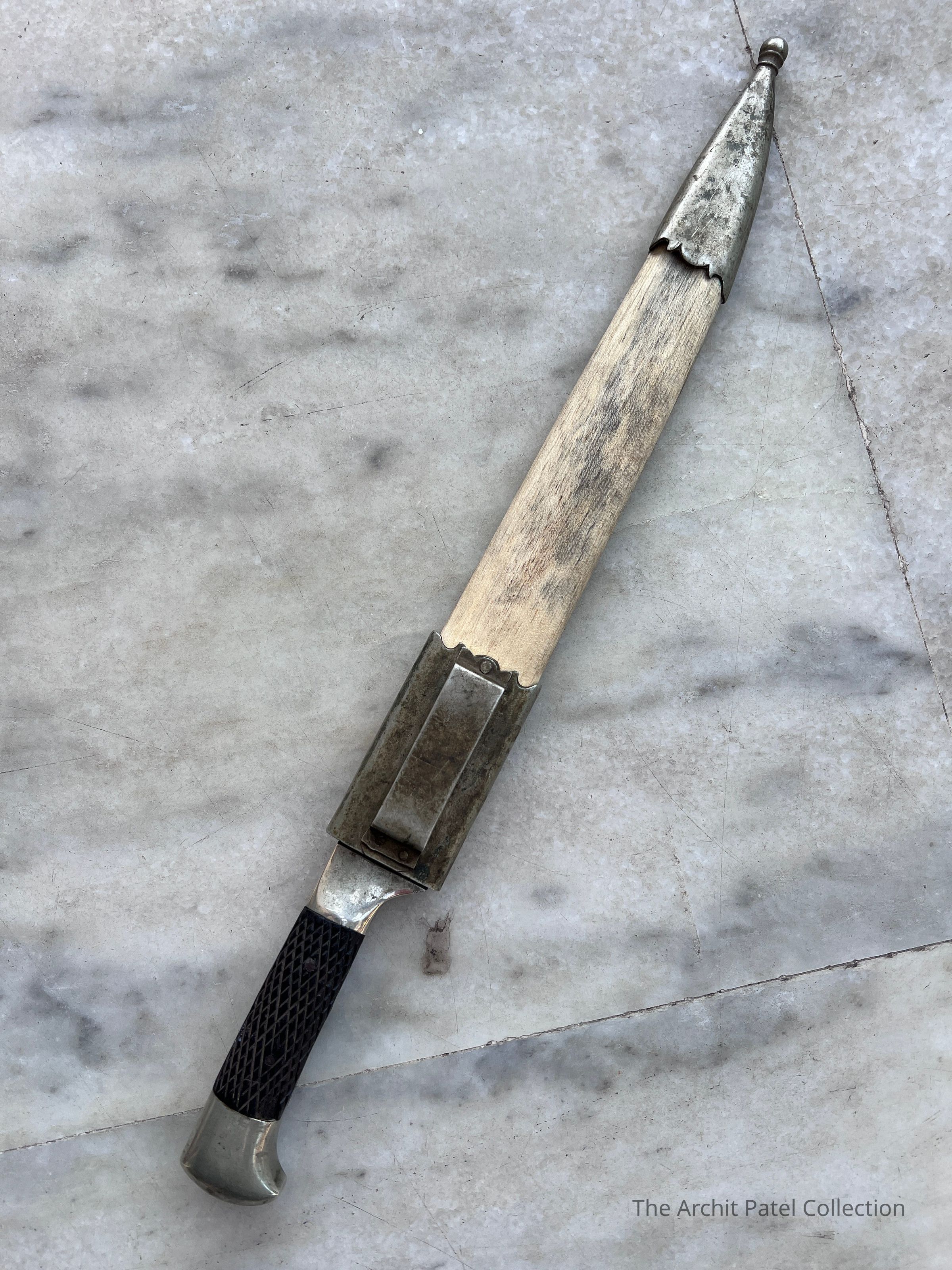
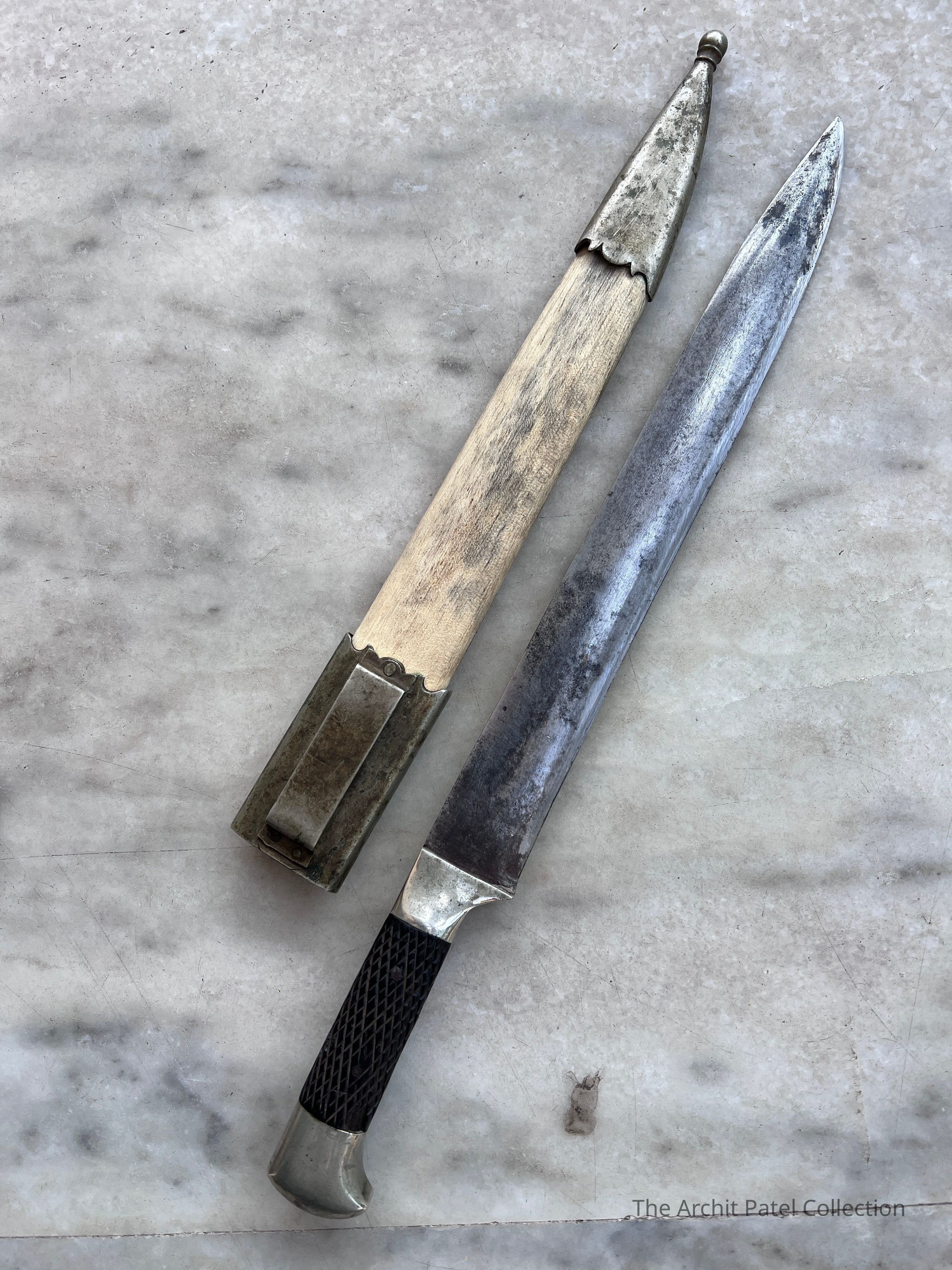
The following analysis details the structural and historical record of Asset 398. Moving beyond generic ethnic classifications, the mechanical evidence points to an industrialized 20th-century European sidearm, specifically the KS98 (Kurzes Seitengewehr) archetype. Originally designed as a "Walking Out" or dress bayonet for German non-commissioned officers and specialists, this specimen records a transition from military ceremony to functional utility.
I. Metallurgical & Blade Architecture
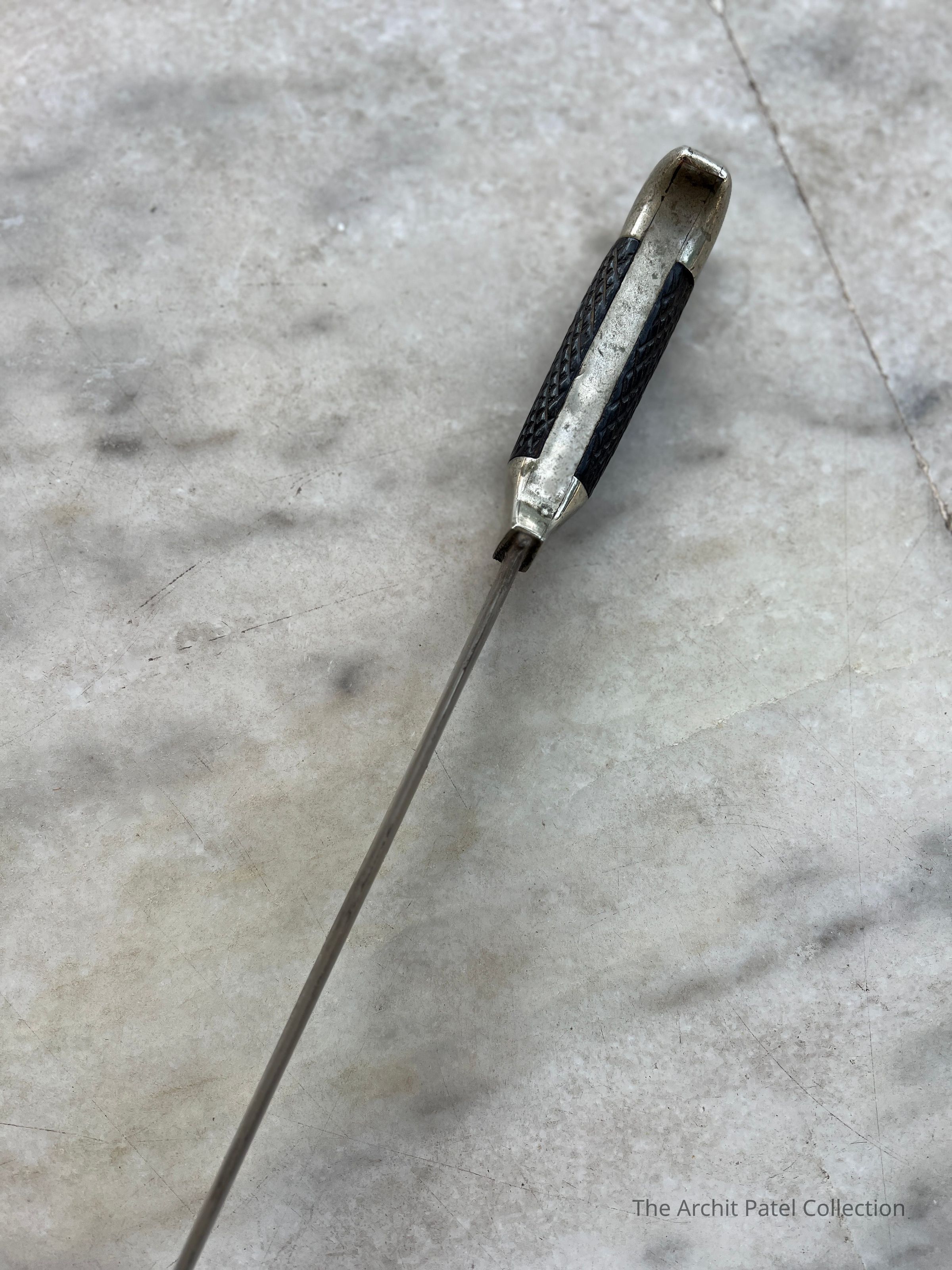
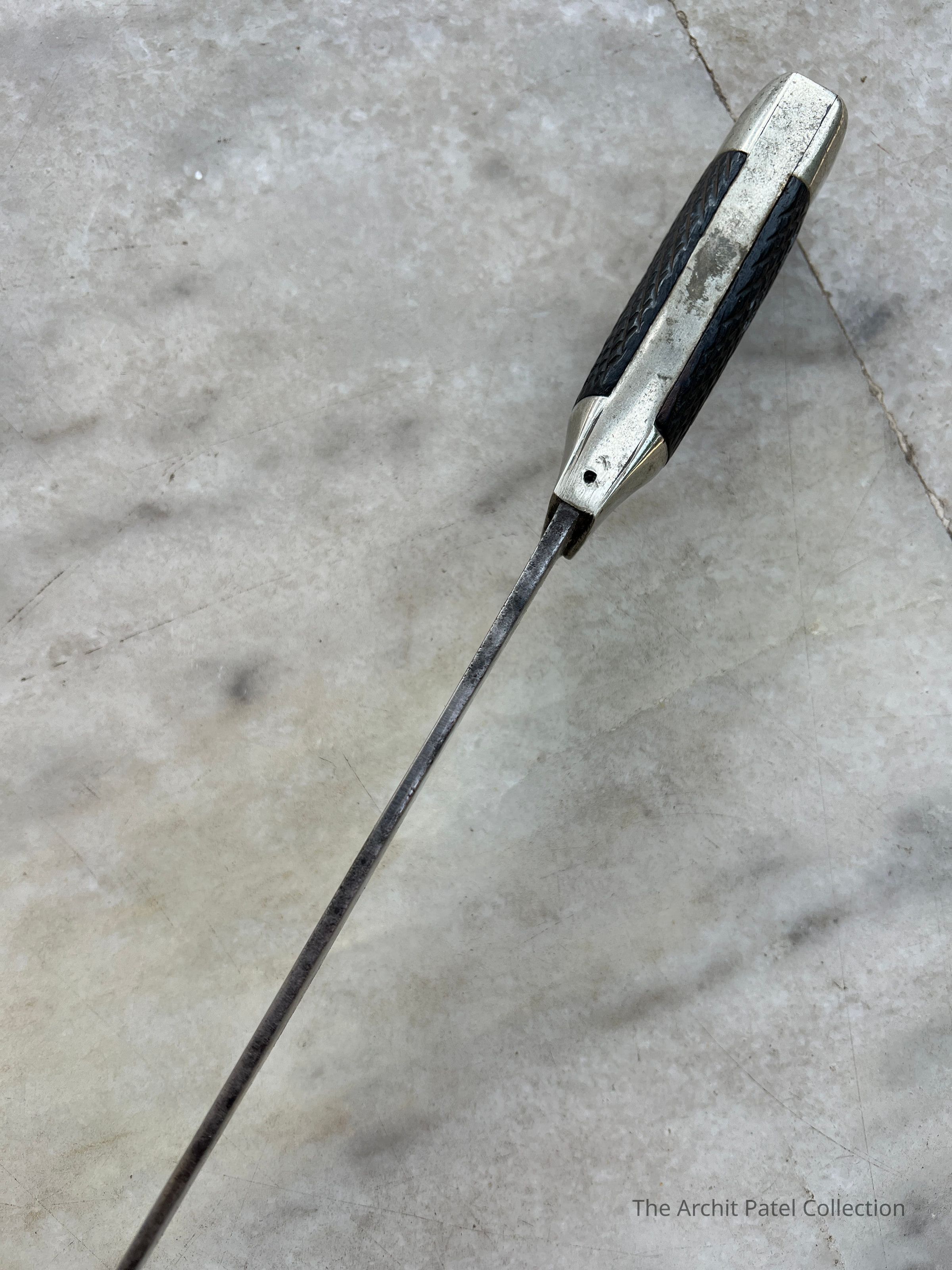
Geometry: The blade features a Full-Tang Spear-Point profile with a flat-ground primary bevel. Unlike combat-issued bayonets which typically utilize a deep fuller (blood groove) to reduce weight without sacrificing lateral strength, this blade records a solid cross-section.
Vector Alignment: The point is aligned precisely with the longitudinal axis of the hilt. This provides maximum Kinetic Efficiency for thrusting maneuvers, as the force travels in a straight line from the shoulder to the apex.
Surface Record: The blade exhibits a deep, honest patina consistent with high-carbon steel. This records a metallurgical history prioritized for Edge Retention and toughness over the stainless properties of purely decorative dress blades.
II. Hilt & Ergonomic Engineering
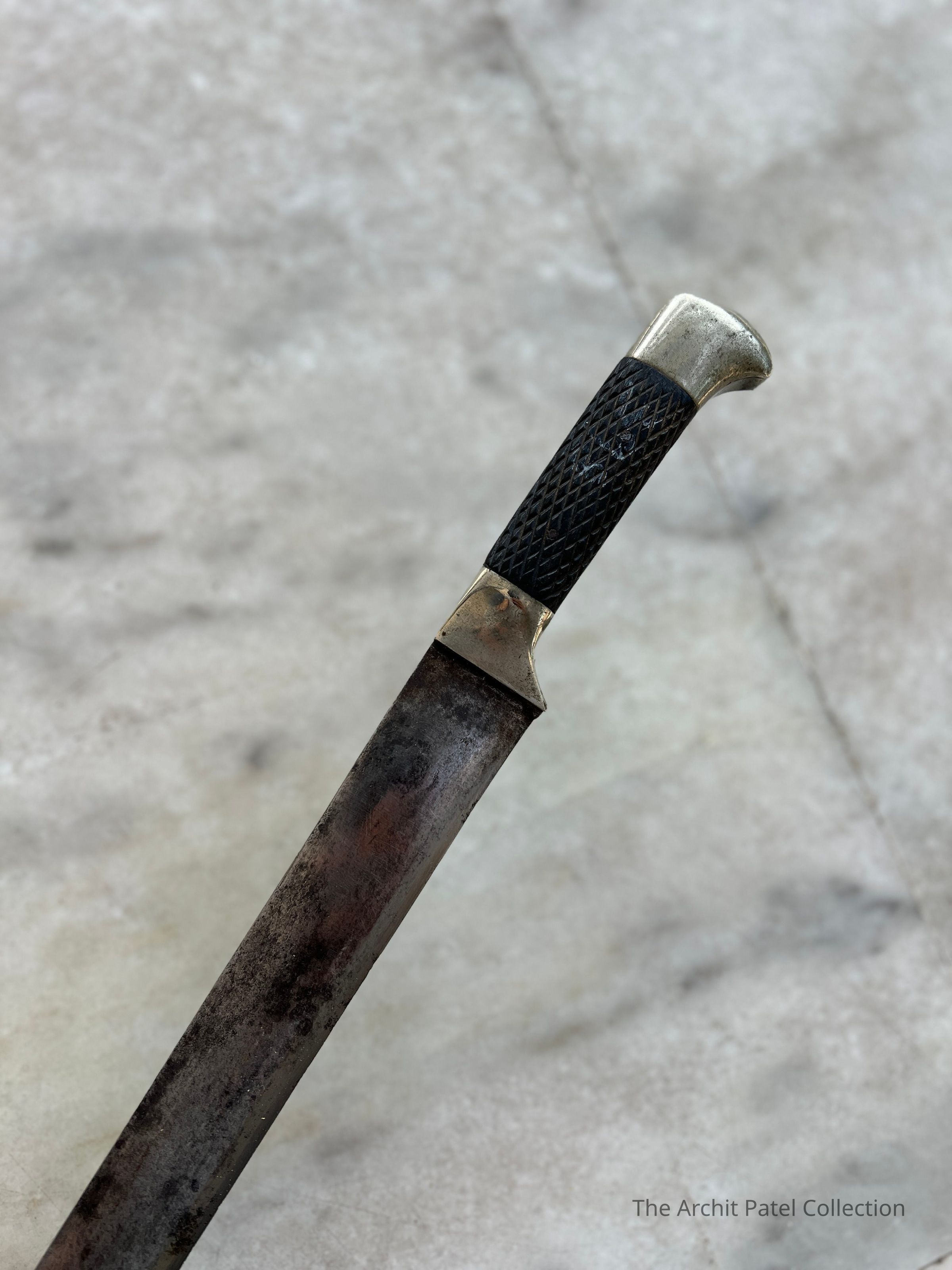
Handle Scales: The hilt is comprised of two diamond-checkered scales, likely manufactured from Bakelite or early celluloid.
Frictional Certainty: The deep cross-hatching provides high-friction Tactical Indexing. This engineering choice ensures the wielder maintains a secure grip in wet or high-stress environments, a design hallmark of 20th-century service tools.
The Pommel: The hilt terminates in a plated alloy pommel featuring a radical "Bird’s Head" flare.
Anatomical Stop: This flare functions as a mechanical stop for the heel of the palm. It ensures absolute Retention Certainty, preventing the tool from being stripped forward during use or rearward during retrieval from the scabbard.
III. Systemic Integration & Scabbard Design
Scabbard Construction: The unit is housed in an industrially produced steel scabbard with a black enamel or oxidized finish.
The Locket and Frog Stud: Near the throat of the scabbard is a round Frog Stud. This records the original military intent: the stud was designed to lock into a leather "frog" attached to a belt.
Structural Fail-Safe: The distal end of the scabbard terminates in a ball-tip (chape), which acts as a Shock Absorber to prevent the tip of the blade from piercing the scabbard—or the user—during impact.Made/Created
Date made
circa 1900 - circa 1945Time Period
20th CenturyEthnography
Cultural Region
* Untyped Cultural Region
IndianDimensions
Dimension Description
16"Length
10 inAcquisition
Acquisition Method
Purchase