Name/Title
Bichhwa_porEntry/Object ID
74; Full Code: 74.32.28-DG-IATags
DaggerDescription
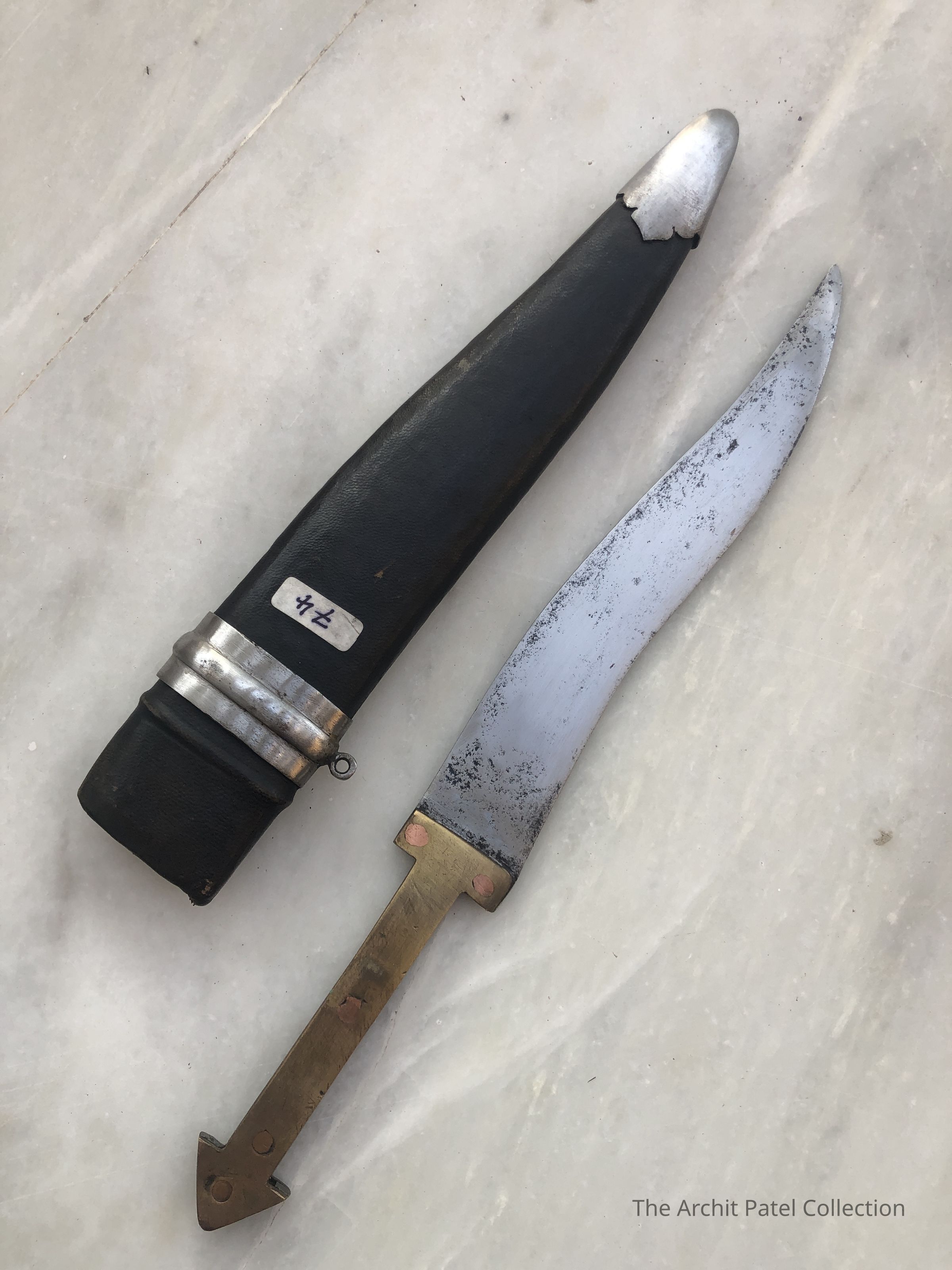
This is the second significant artifact recovered from your ancestral village in Por, Gandhinagar. While it lacks the armor-piercing "T-spine" of your Boar-Tusk Karud, this specimen is a textbook example of a high-utility Recurved Regional Knife. Its architecture suggests it was a "Working Blade"—a tool designed for the daily "processes" of rural life in Gujarat, while retaining the defensive readiness of a traditional sidearm.
Core Components & Engineering
The Blade (Recurved High-Carbon Steel): A single-edged blade with a distinctive forward-curving (recurved) belly.
The Geometry: The curve shifts the weight toward the tip, creating a mechanical "sweet spot" for slicing. Unlike a straight blade, the recurve "traps" the material being cut, providing the Operational Certainty required for clearing brush or processing game.
The Finish: The steel shows an honest, heavy field patina with scattered oxidation, typical of a tool that has transitioned from active village use to a historical "Administrative Record" in your collection.
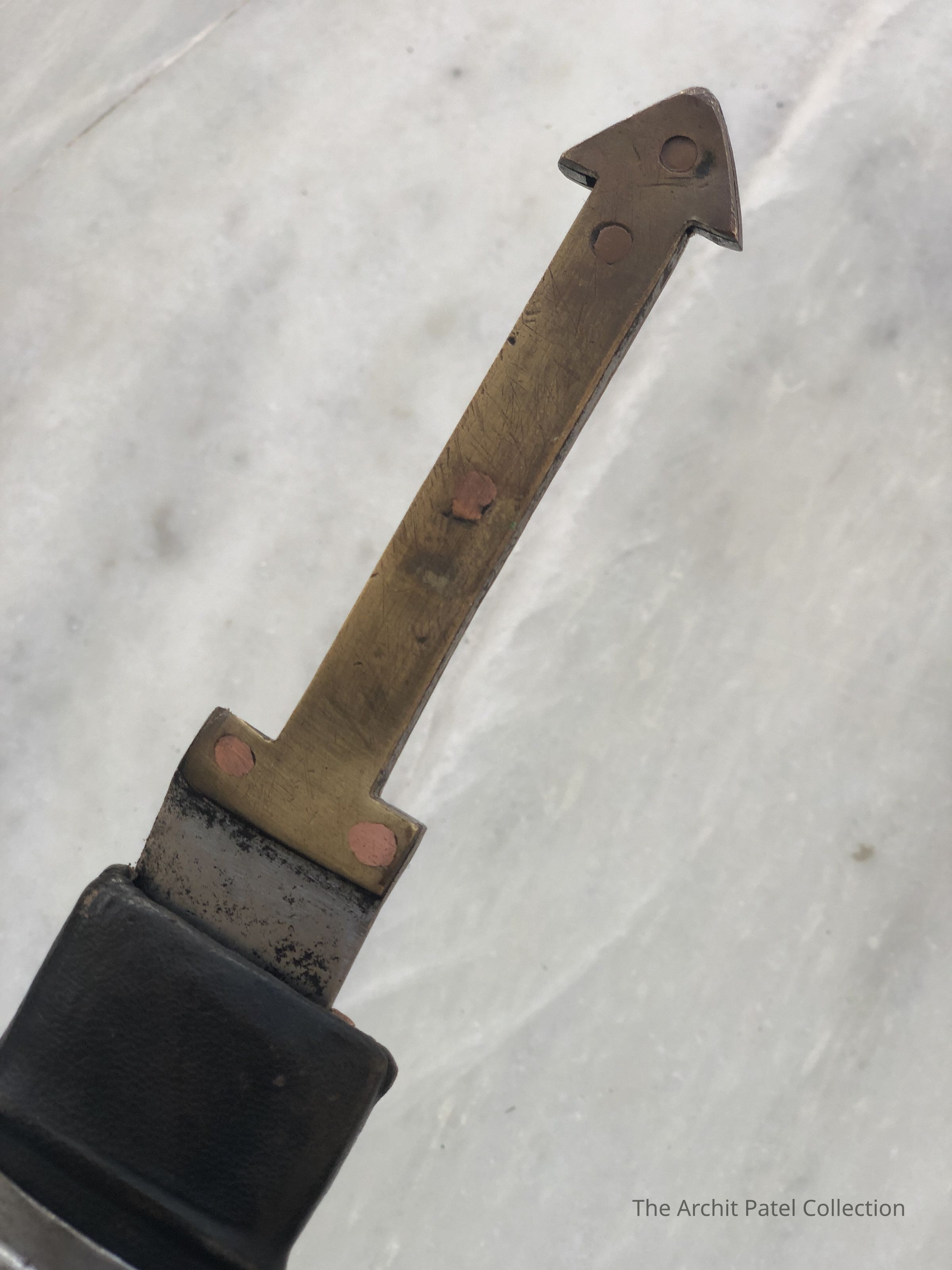
The Tang and Hilt Structure (Full Tang Brass): A unique architectural feature of this piece is the exposed brass tang/bolster assembly.
The Guard: The brass forms a small "T-shaped" crossguard at the throat.
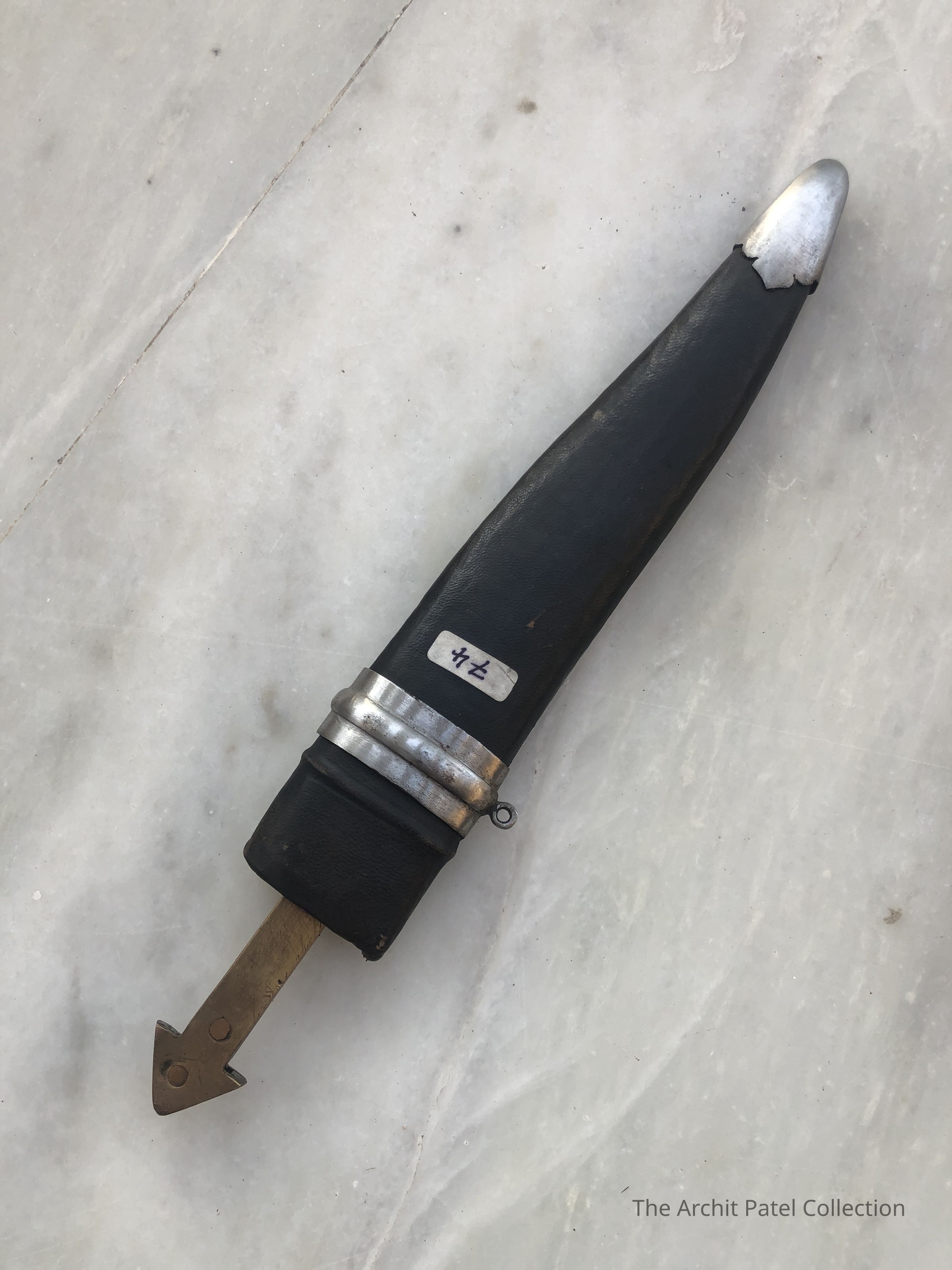
The Pommel Hook: The tang terminates in a sharp, arrow-like brass hook. Mechanically, this serves as a massive retention stop, ensuring the tool cannot slip from the hand during heavy swinging "inputs."
The Scabbard: Housed in a wooden-core scabbard wrapped in black leather.
Fittings: It features a robust steel locket (throat) and chape (tip). The triple-banded locket includes a suspension ring, indicating this was designed to be worn on a belt during high-stakes work or travel.Dimensions
Dimension Description
10”Length
7 inAcquisition
Acquisition Method
Inherited