Name/Title
Black Leather DhalEntry/Object ID
378; Full Code: 378.37.57-TL-NBTags
ToolsDescription
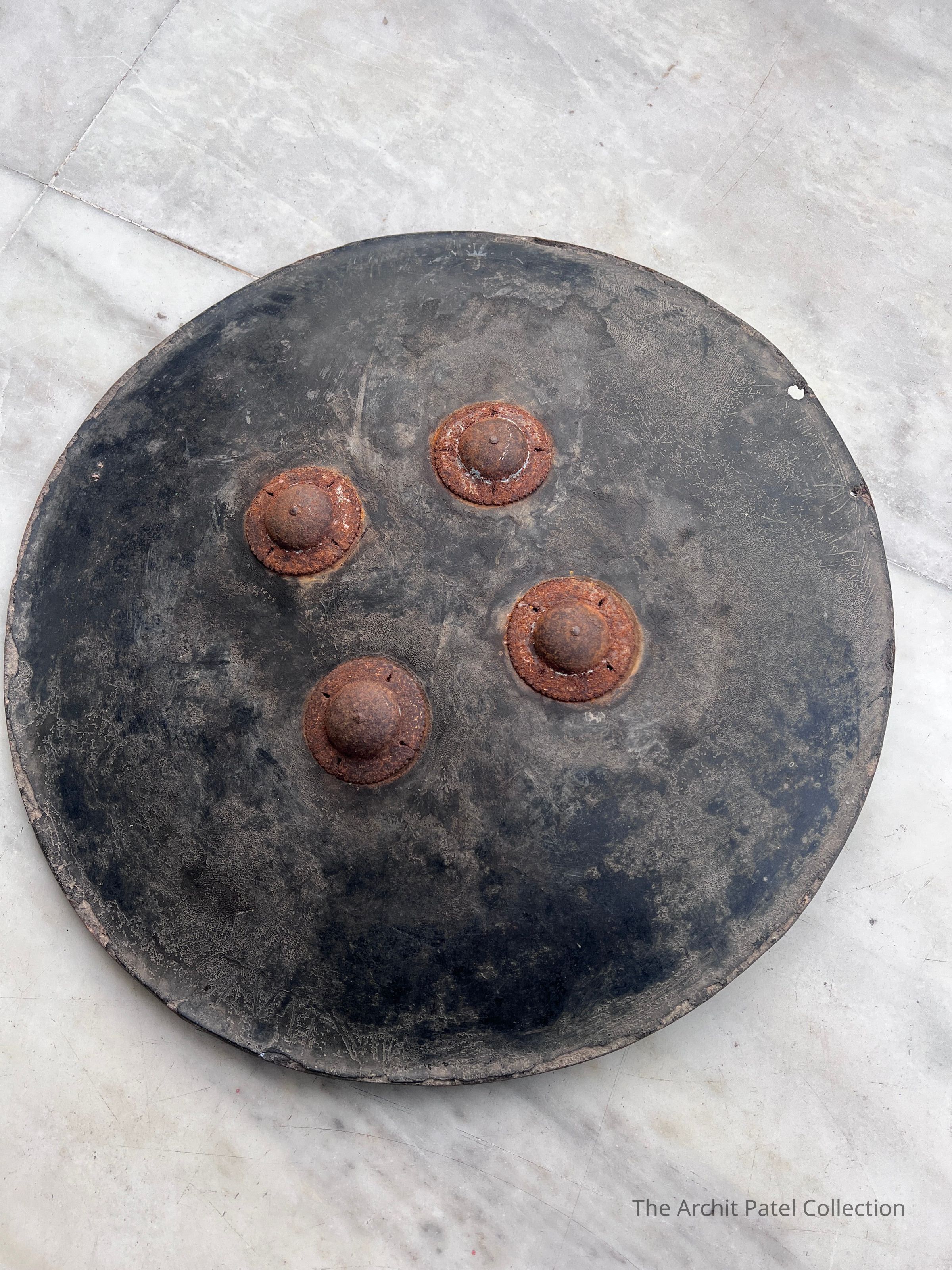
This is an authentic Antique Dhaal, the traditional buckler of the Indian subcontinent, dating to the 19th century. Measuring approximately 19 inches in diameter, this specimen is a textbook example of high-utility defensive engineering. Unlike the ornate steel shields found in courtly settings, this "Field Grade" Dhaal is constructed from cured organic hide, optimized for the mechanical "process" of deflecting high-velocity sword strikes.
Core Components & Engineering
The Medium (Organic Hide): Historically, these shields were crafted from the hide of a Rhinoceros, Water Buffalo, or Elephant.
The Process: The hide was translucent when raw, then boiled in oil and lacquered to achieve a near-metallic hardness. This results in a material that is significantly lighter than steel but possesses superior impact-absorption properties.
Condition: The surface shows a deep, honest patina with some historical "crazing" (fine surface cracks), proving its age and period-correct seasoning.
The Bossettes (Steel Umbos): The face features four domed steel bossettes, arranged in a square.
In your professional framework of "Operational Certainty," these are the primary mechanical anchors. They are not merely decorative; they house the internal rings for the handle straps and protect the wielder’s knuckles from the vibration of a heavy blow.
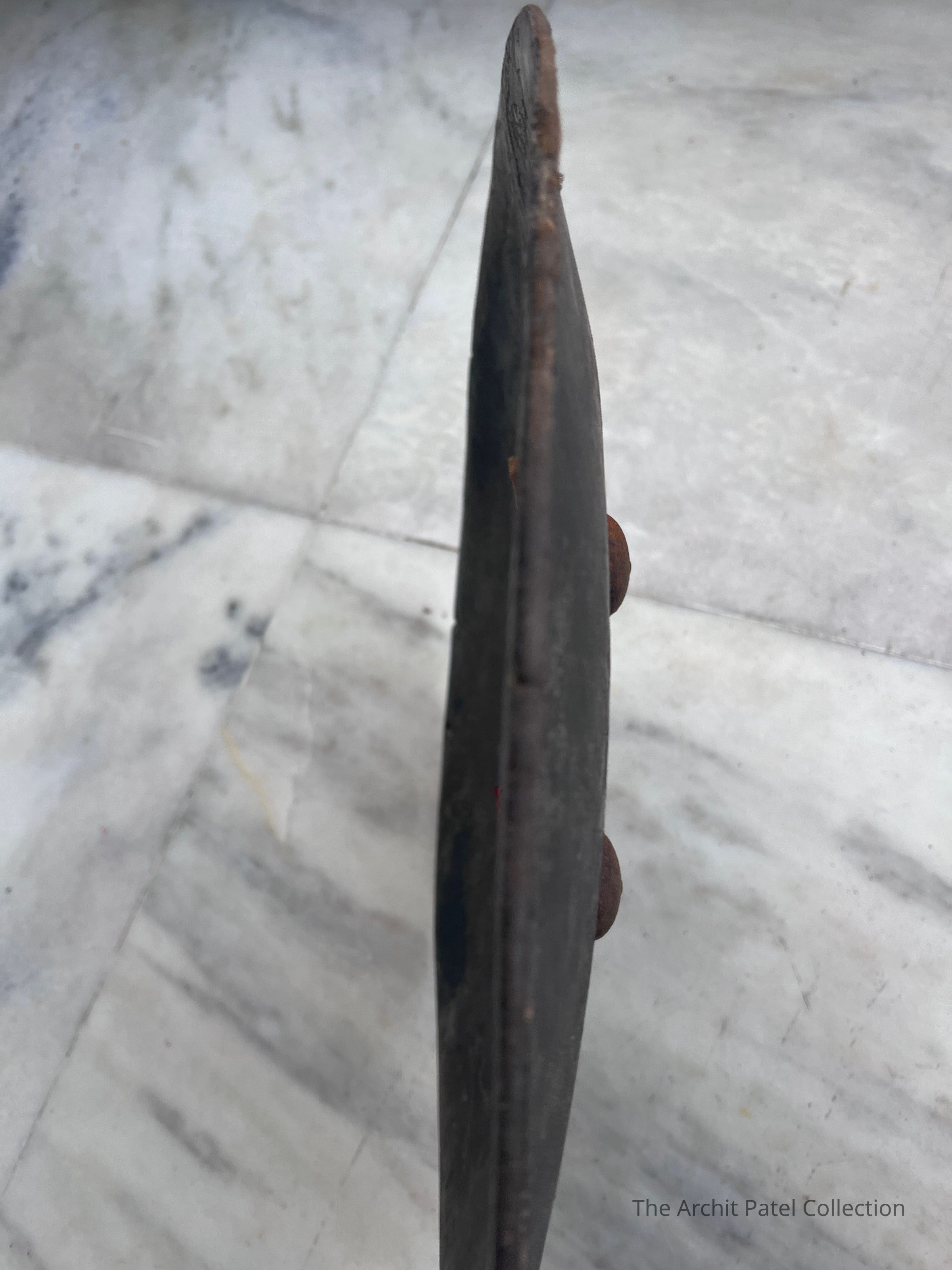
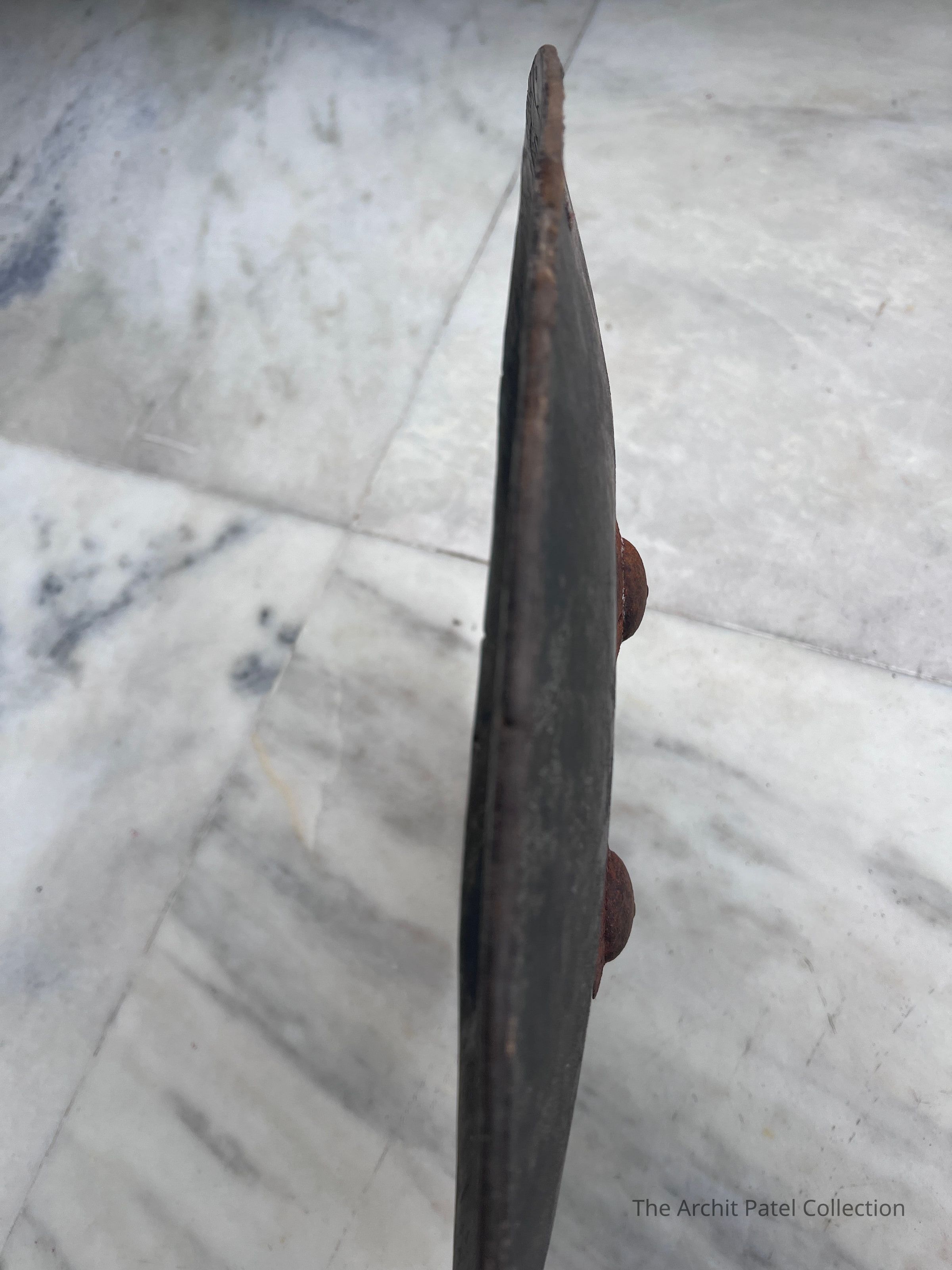
The Geometry (Convex Profile): The Dhaal features a shallow, consistent curve.
* Deflection Physics: This convex shape ensures that a direct strike rarely lands at a 90-degree angle. Instead, the force is "shed" or glided off to the side, protecting the wielder’s arm from the full kinetic "input" of the attack.
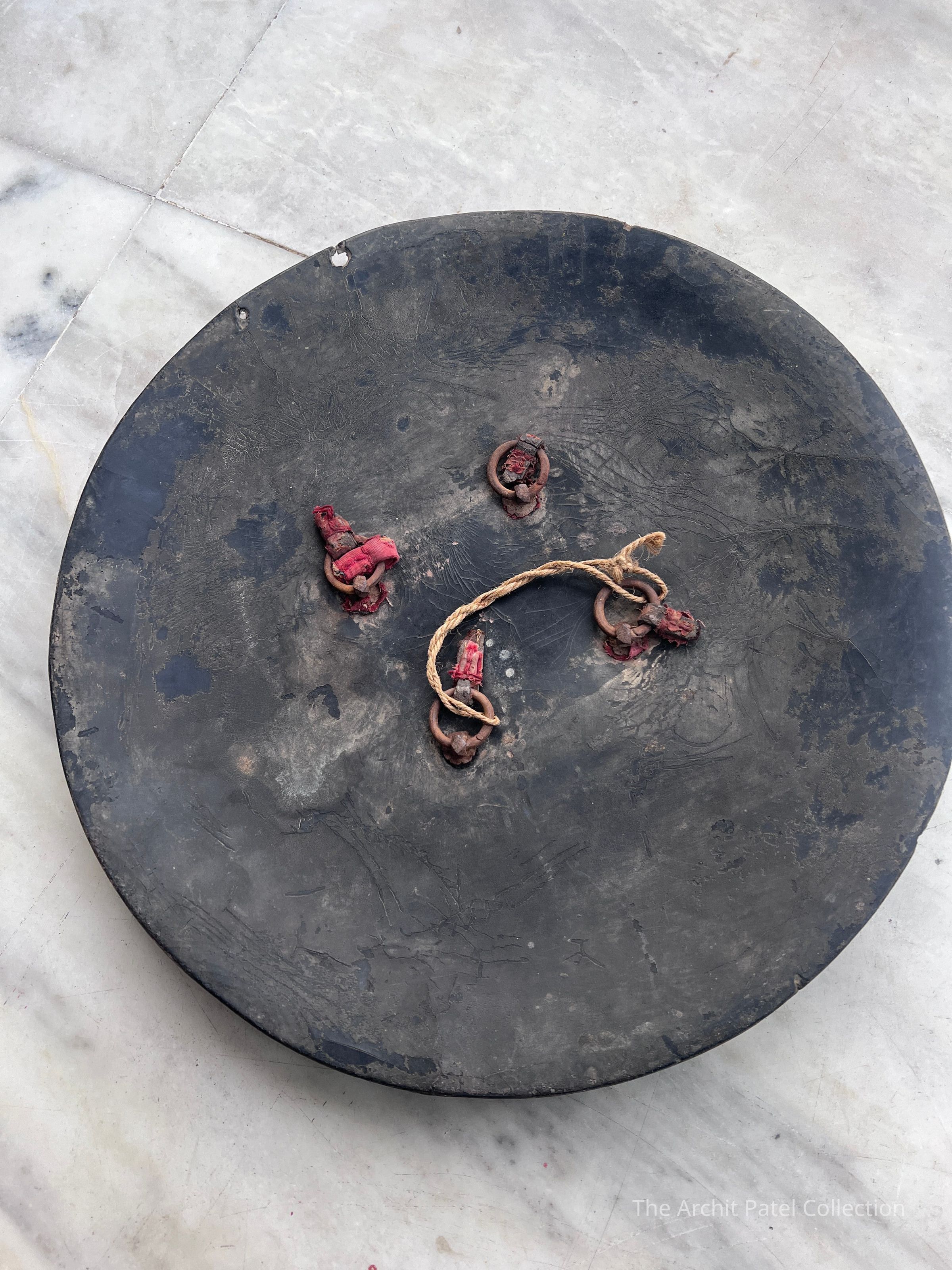
Internal Suspension: The reverse side retains the four iron rings and remnants of the original leather or fabric padding. The square arrangement allows for a cross-grip, ensuring the shield remains stabilized during high-torque defensive maneuvers.Made/Created
Manufacturer
Unknown ArtisanDate made
circa 1750 - circa 1800Time Period
18th CenturyAcquisition
Acquisition Method
Purchase