Name/Title
Dah_HeavyEntry/Object ID
91; Full Code: 91.13.37-SW-NBTags
Blood, SwordDescription
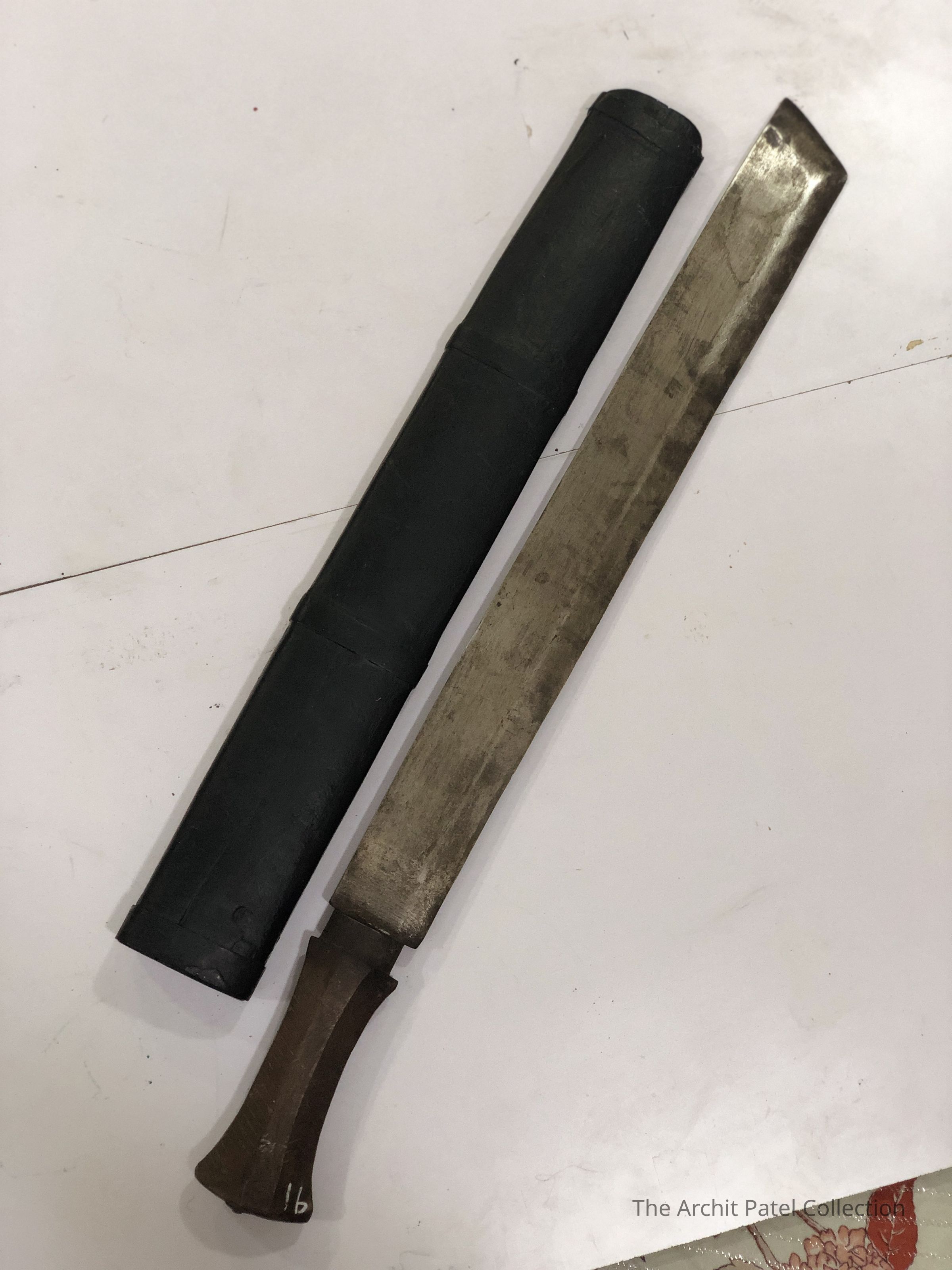
This artifact is a Dah (also spelled Dha), a traditional short sword prevalent throughout Southeast Asia and Eastern India, specifically in regions like Nagaland, Mizoram, and across the border in Myanmar. It represents a versatile "Dual-Use" tool, engineered to function both as a primary jungle utility machete and a formidable close-quarters combat weapon. The piece documents a focus on Forward Weight Bias and Mechanical Simplicity.
Core Components & Engineering
The Blade (Chisel-Tip / Single-Edge): A robust, single-edged steel blade that widens toward the tip.
Geometry: The blade features a "square" or "chisel" tip, a common characteristic of Dah specimens from the Eastern Himalayan foothills. This geometry places the maximum amount of steel mass at the distal end.
Mechanical Logic: This distal weight bias maximizes the Kinetic Output of a downward swing. The blade relies on momentum and mass rather than a sharp piercing point to achieve its results.
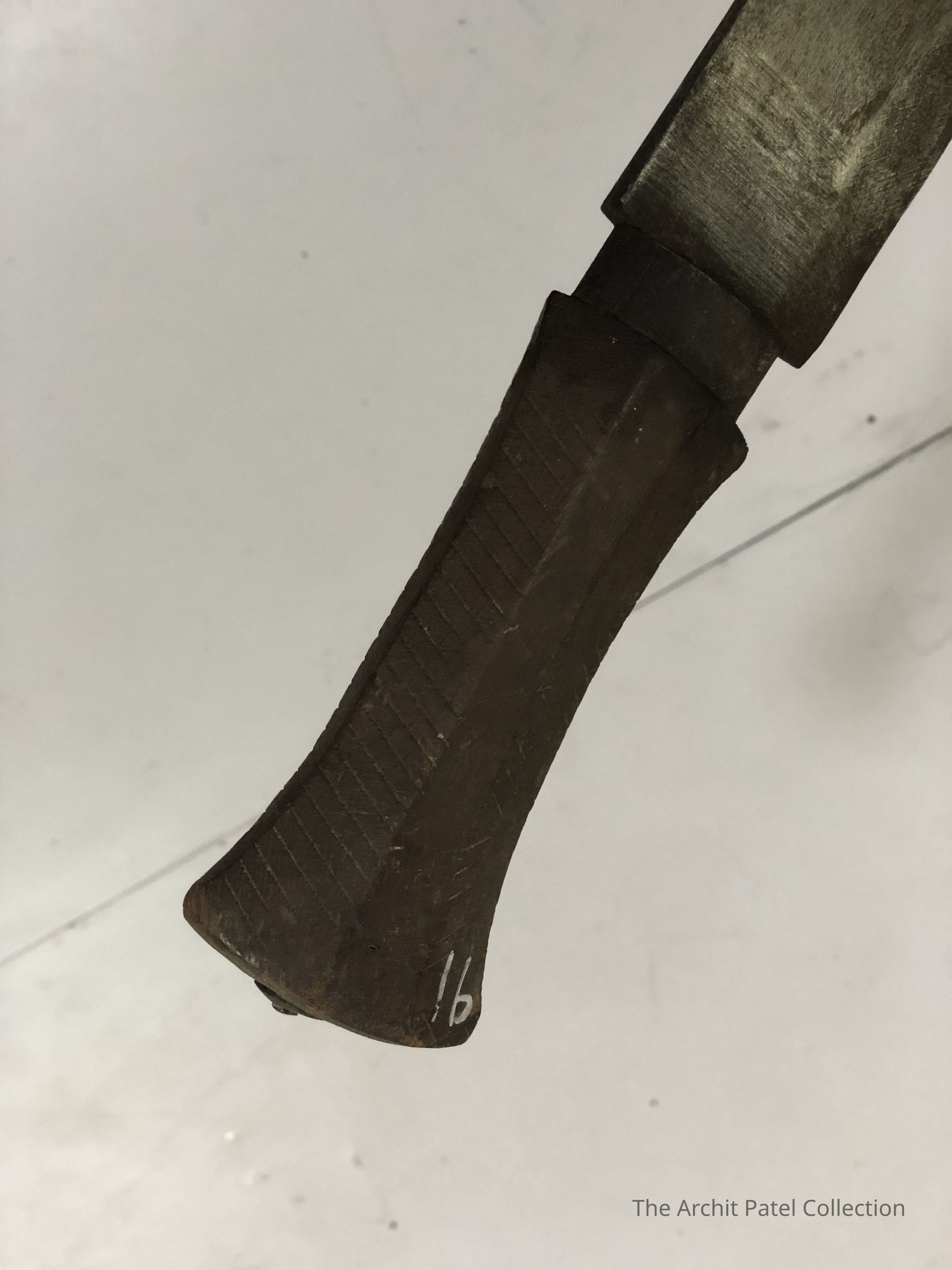
The Hilt (Solid Hardwood): A long, ergonomic handle carved from a single piece of dense hardwood.
Architecture: The hilt lacks a traditional crossguard. This allows the user to "choke up" or shift their grip along the handle to adjust the lever arm depending on the task.
Tactical Indexing: The handle features a flared pommel and rhythmic horizontal carvings. These provide a high-friction mechanical interface, ensuring the tool remains anchored in the hand despite the high centrifugal forces generated during a chop.
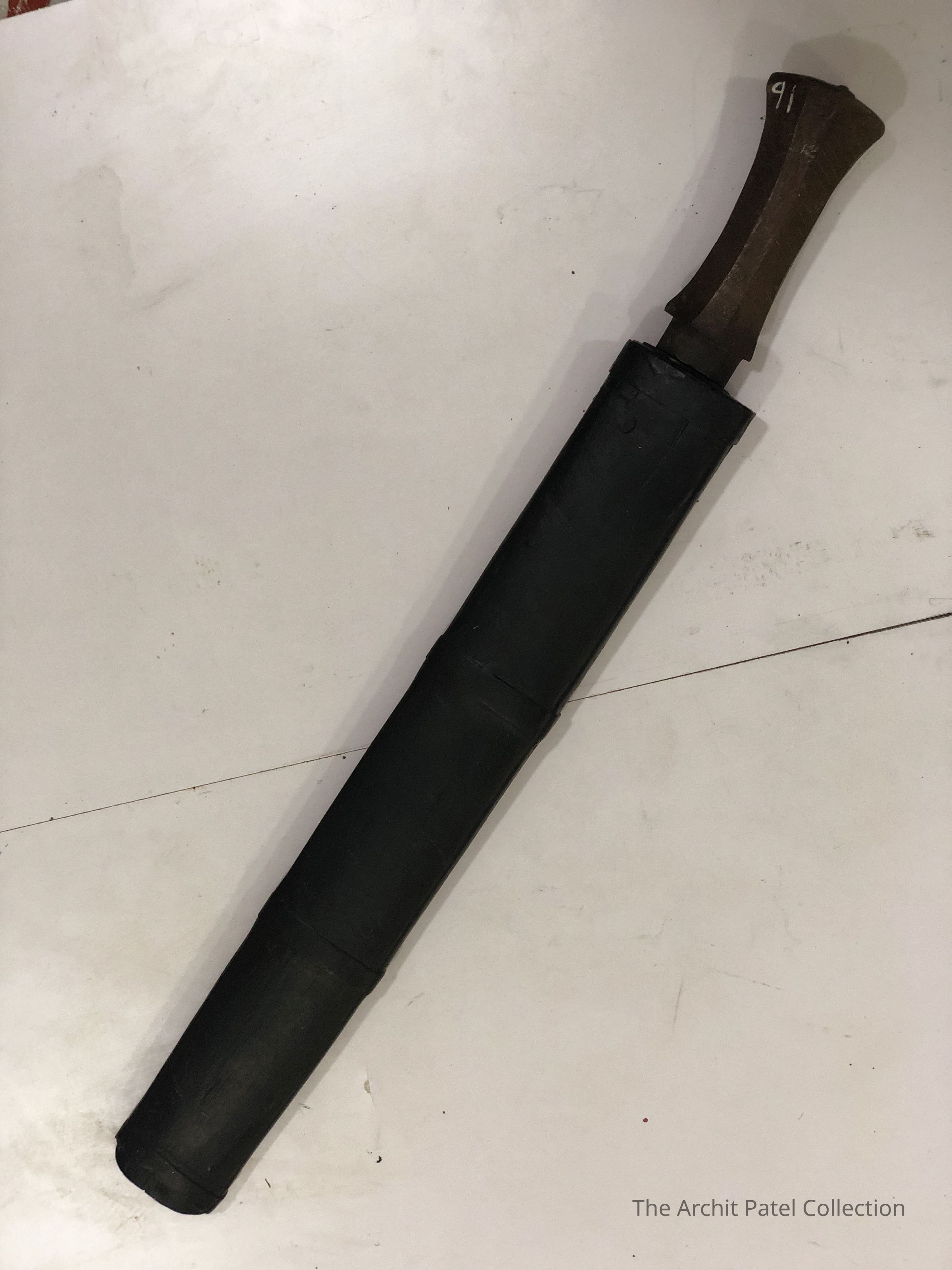
The Scabbard: A simple, functional sheath constructed from two pieces of hollowed wood bound together (likely by rattan or leather, currently covered in a dark protective layer).Made/Created
Manufacturer
Robin Biswakarma of MajhitarDate made
circa 2010Place
City
MajhitarState/Province
SikkimRegion
NE IndiaEthnography
Cultural Region
Region
NE IndiaCountry
NepalDimensions
Dimension Description
22"Length
17 inAcquisition
Acquisition Method
Custom Made