Name/Title
Dah_LightEntry/Object ID
88; Full Code: 88.12.34-SW-NBTags
SwordDescription
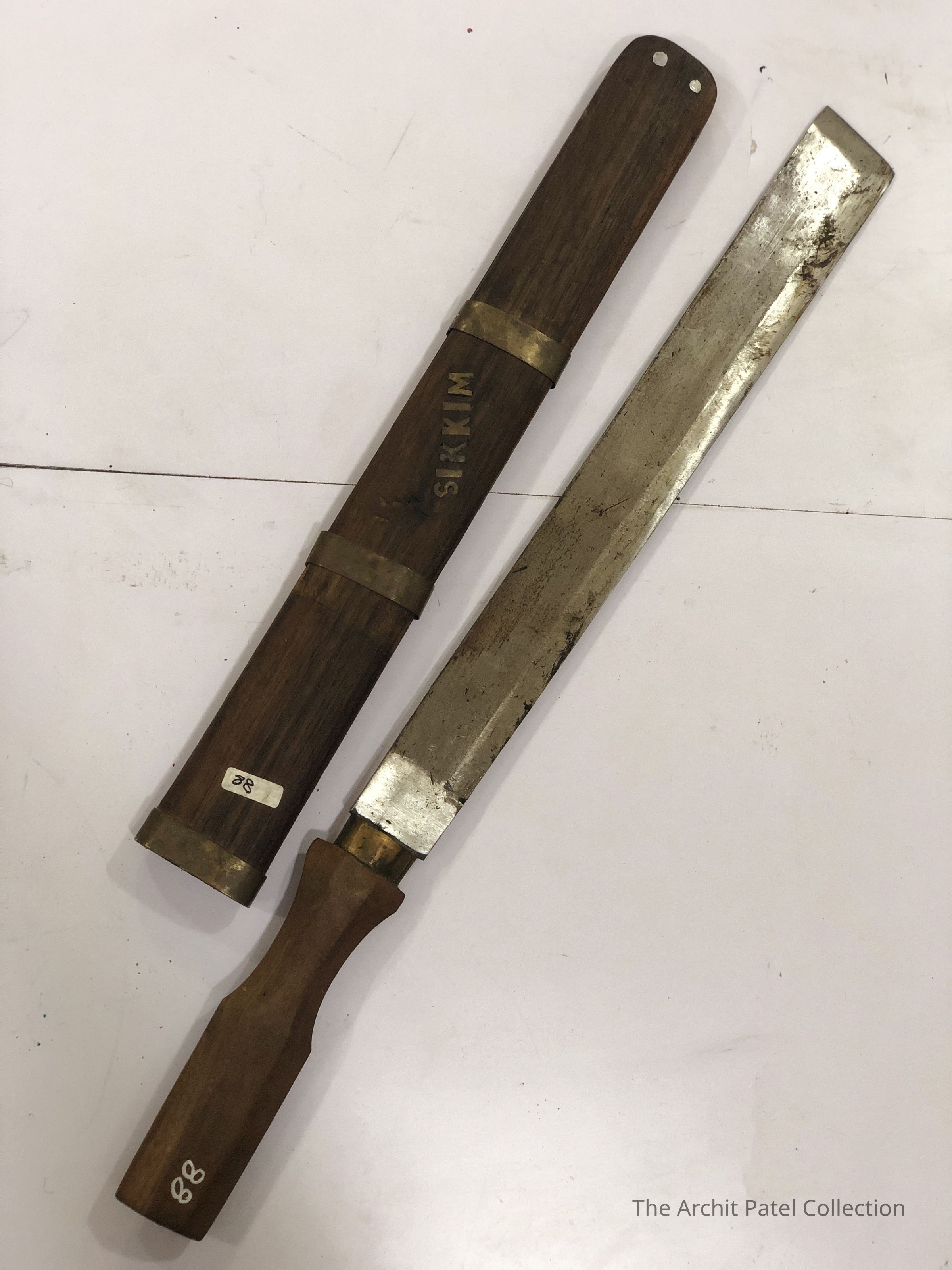
This artifact is a Sikkimese Dah, often locally referred to as a Ban or Lepcha Knife. While sharing a common ancestry with the broader Southeast Asian Dah family, this specimen exhibits the specific stylistic and mechanical traits of the Sikkim-Bhutan-Tibet border regions. It represents a rugged "Utility-Combat" hybrid, engineered for clearing dense Himalayan undergrowth while retaining a geometry optimized for defensive "outputs."
Core Components & Engineering
The Blade (Angled Chisel-Tip): A single-edged steel blade with a characteristic straight spine and an angled, chisel-like tip.
Geometry: The blade maintains a consistent width until it reaches the distal end, where it terminates in an aggressive oblique angle.
Mechanical Logic: This geometry places the Center of Percussion (the "sweet spot" for striking) further toward the tip. By concentrating the steel's mass distally, the blade generates massive kinetic energy during a chop, functioning with the mechanical efficiency of a hand-axe.
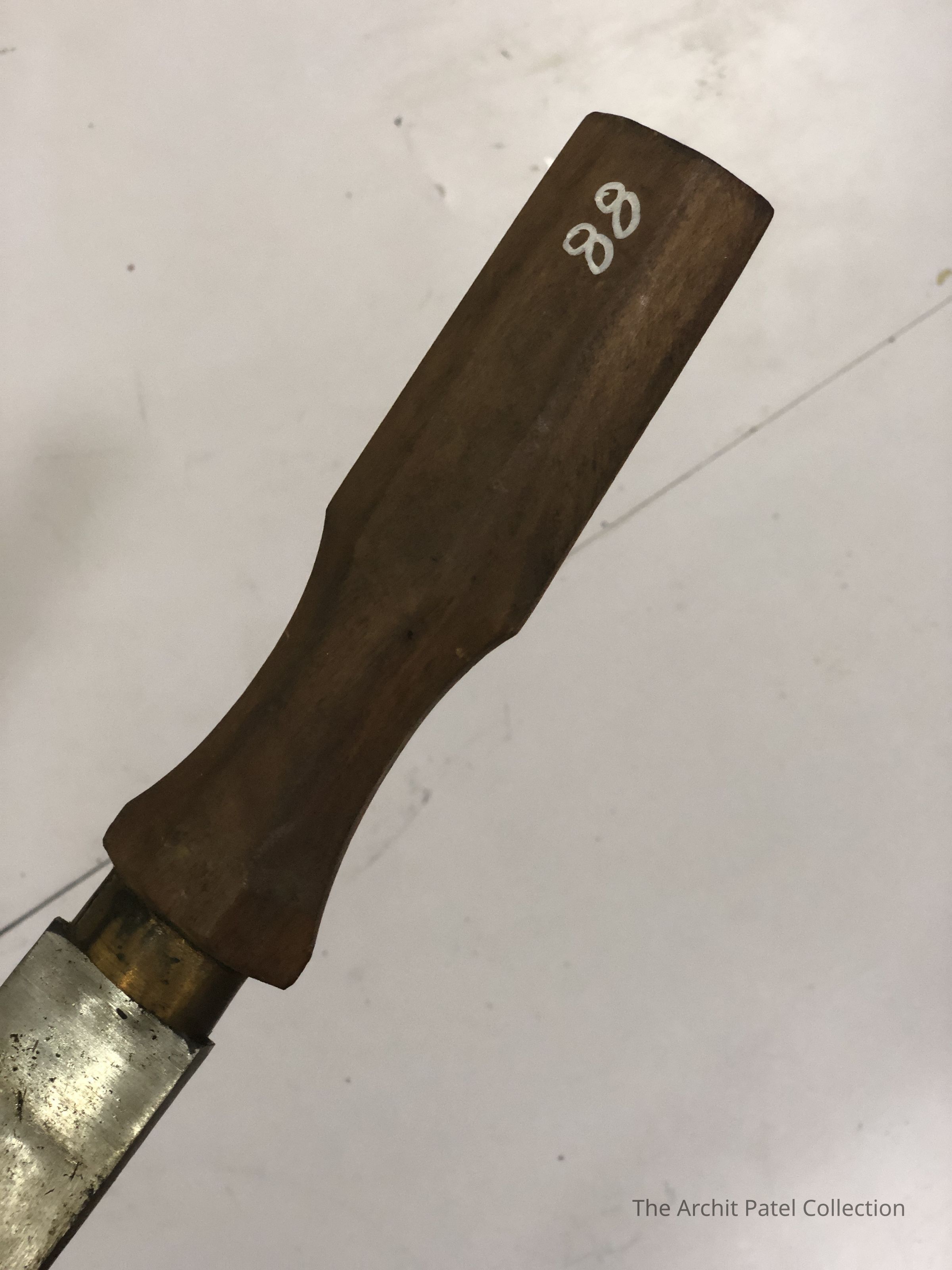
The Hilt (Straight Hardwood): A simple, unadorned handle carved from seasoned hardwood.
Architecture: The hilt is cylindrical with a slight ergonomic swell toward the center. It lacks a crossguard, prioritizing a "Smooth Extraction" profile that won't snag on clothing or jungle foliage.
Ferrule: A brass or copper ferrule reinforces the transition from blade to hilt. This acts as a structural gusset, preventing the wooden handle from splitting under the high longitudinal stresses of a strike.
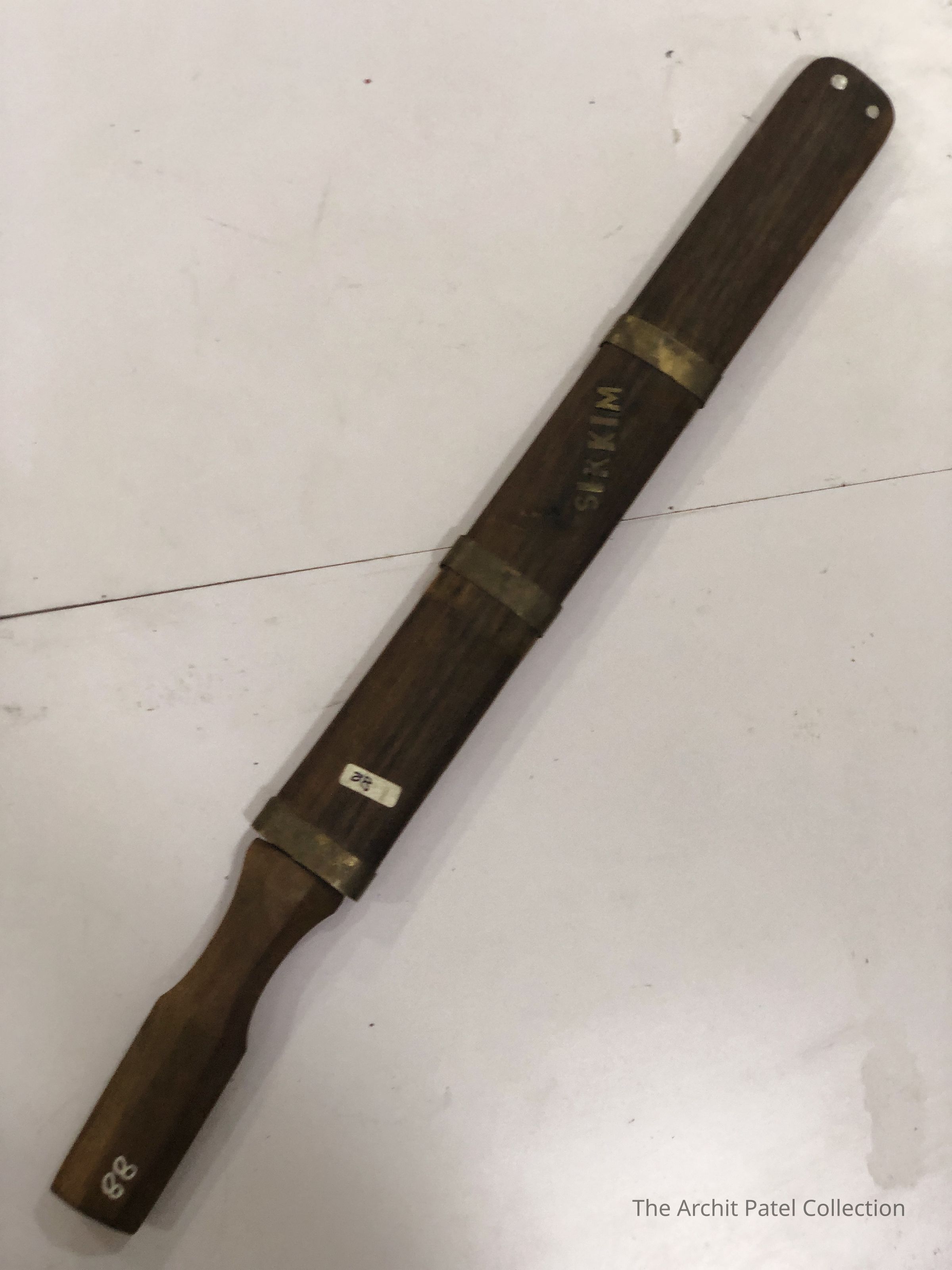
The Scabbard (Wood with Brass Fittings): A two-piece wooden sheath held together by brass bands.
Administrative Record: The word "SIKKIM" is embossed or etched into the wood, documenting the regional origin. The number "88" is painted on the pommel, likely serving as a collection index.Made/Created
Manufacturer
Robin Biswakarma of MajhitarDate made
circa 2011Place
City
MajhitarState/Province
SikkimRegion
NE IndiaEthnography
Cultural Region
Region
NE IndiaCountry
NepalDimensions
Dimension Description
18"Length
14 inAcquisition
Acquisition Method
Purchase