Name/Title
Folding KnifeEntry/Object ID
55; Full Code: 55.12.2-KN-TRTags
KnifeDescription
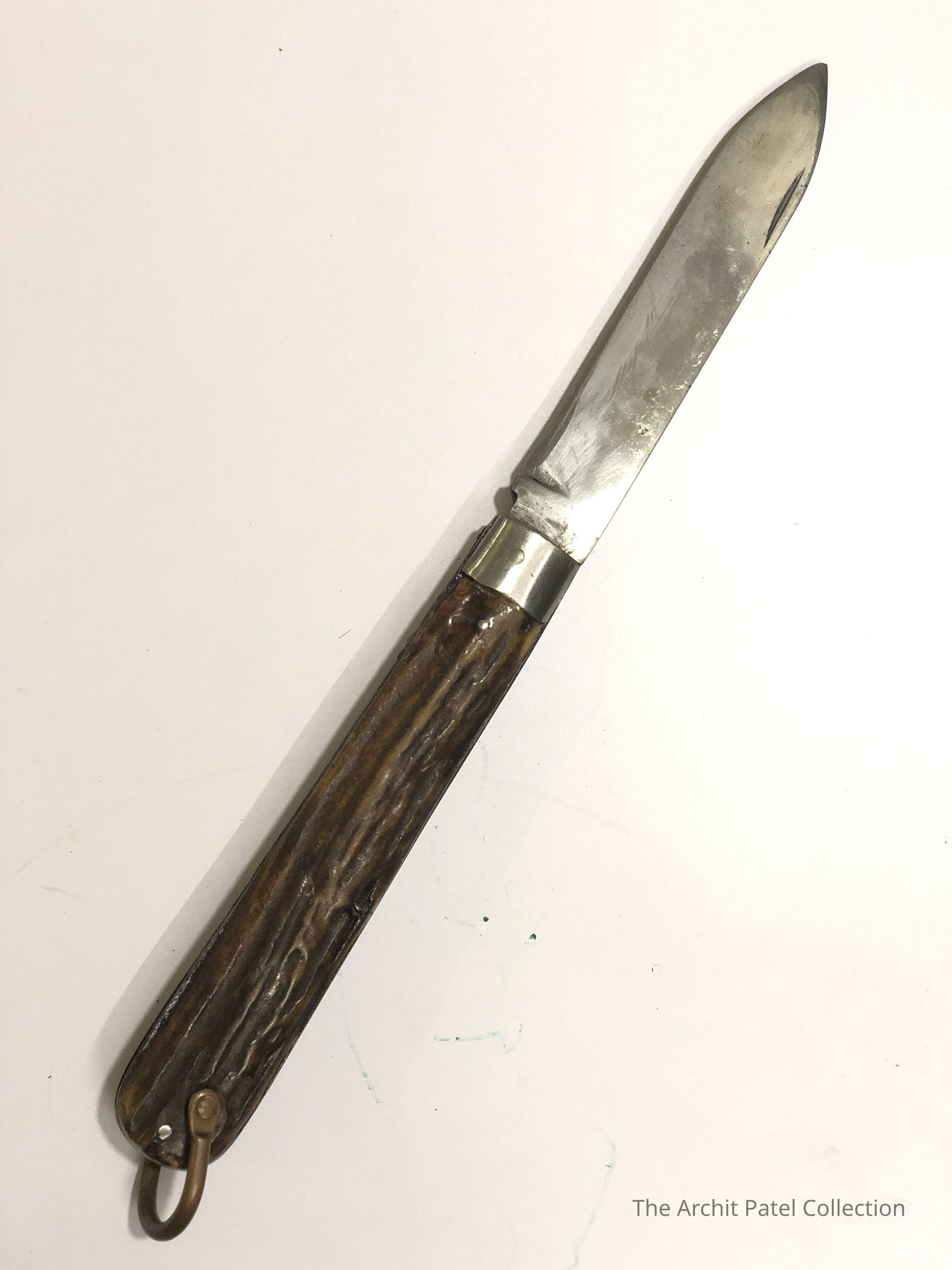
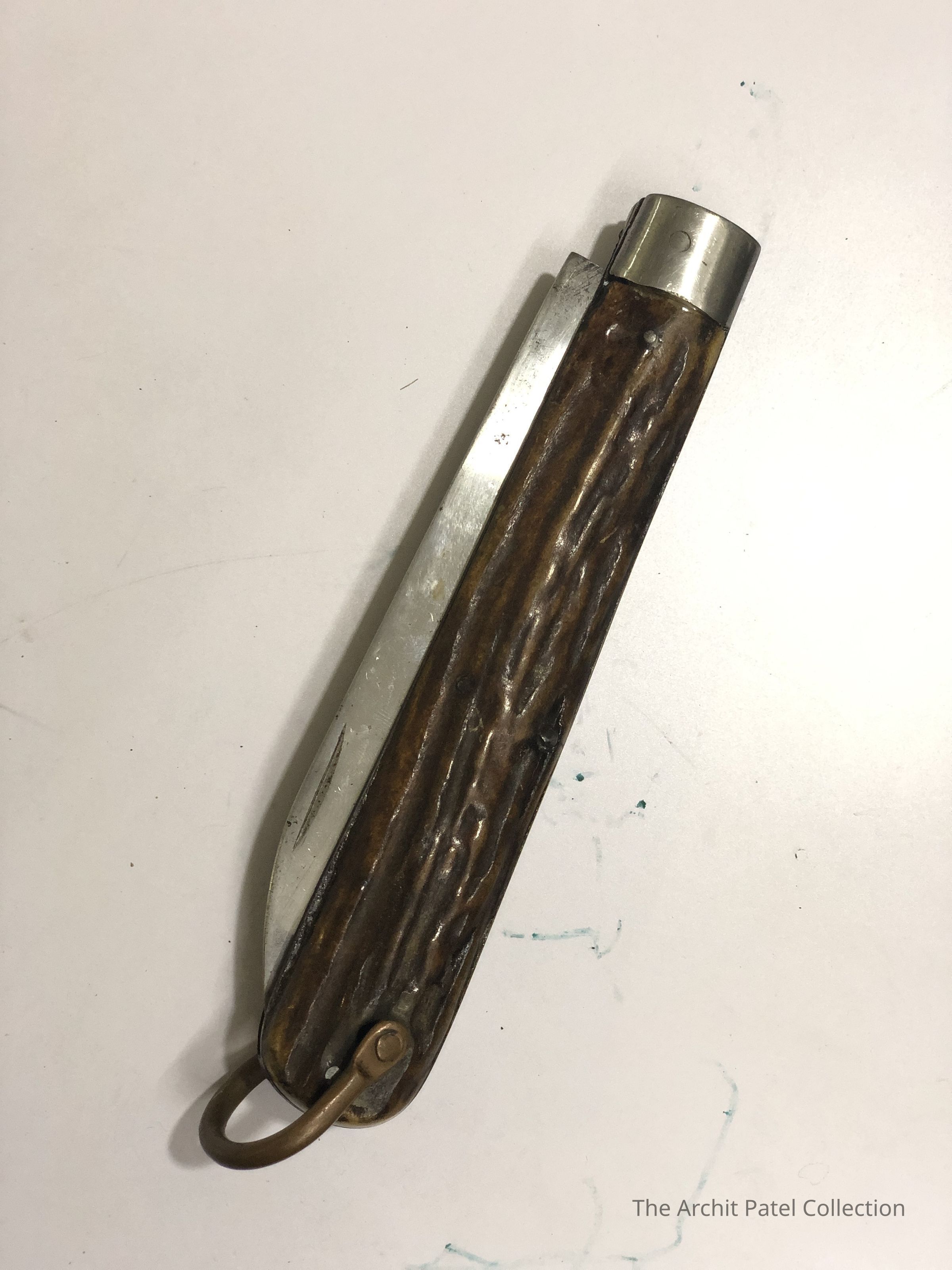
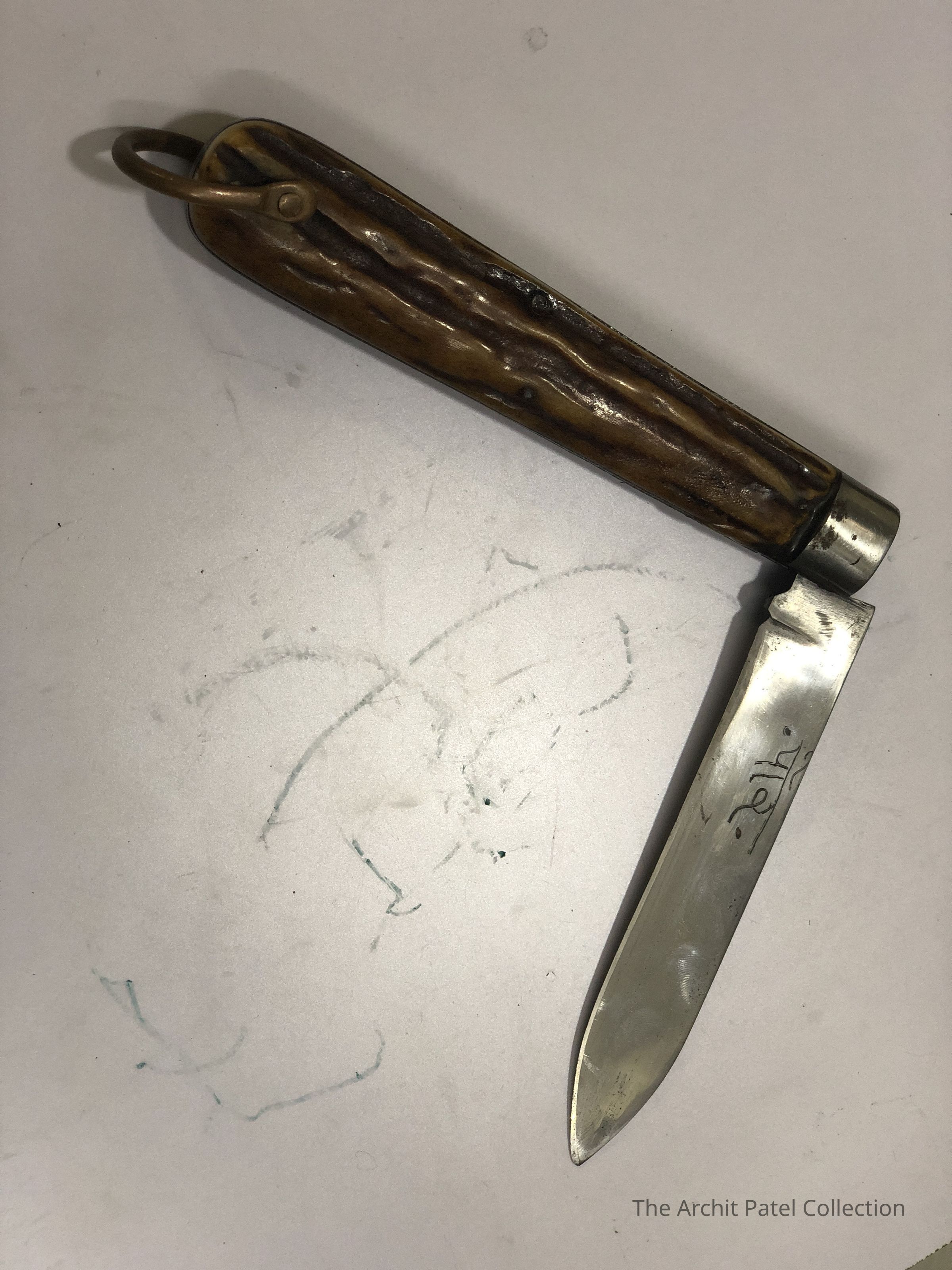
This artifact is a Traditional Friction Folder, documented as part of an ancestral village cache. It represents a fundamental branch of tool engineering that prioritizes Mechanical Simplicity and Environmental Resilience. This specimen serves as a robust record of the "Utility First" philosophy of rural Indian blacksmithing traditions. Notably, it documents your own "Process of Administrative Marking," with the village name etched directly onto the blade.
Core Components & Engineering
The Blade (Forged High-Carbon Steel): A single-edged blade with a straight spine and a symmetrical spear-point profile.
Geometry: The Spear Point design ensures that the point is aligned with the blade’s centerline.
Mechanical Logic: This symmetry provides high Longitudinal Strength, making the tool ideal for piercing and fine "administrative" tasks without the risk of the tip deviating under pressure.
Surface Condition: The blade exhibits a grey "Working Patina." This non-reflective oxide layer documents a history of functional use and acts as a barrier against active corrosion.
The Hilt (Jigged Bone or Treated Hardwood):
Architecture: The handle scales feature a deep, rhythmic texture—likely "Jigged" bone or a heavily textured hardwood designed to mimic stag horn.
Mechanical Logic: These deep grooves provide a High-Friction Interface, ensuring the tool remains anchored in the hand despite environmental contaminants like water or oils.
Hardware: Features a polished steel bolster at the pivot for structural reinforcement and a copper-alloy (brass/bronze) bail at the pommel.
The Mechanism (Friction Pivot):
The Physics: Operates on the principle of Simplified Retention.
Operational Logic: The blade is held open by the user's grip and the friction of the pivot. This eliminates "Mechanical Fail-Points" such as springs or lock-bars, ensuring the tool remains operationally ready in primitive or field conditions.Made/Created
Manufacturer
Unknown ArtisanDate made
circa 1900 - circa 1950Time Period
20th CenturyDimensions
Dimension Description
5.5"Length
3-1/2 inCondition
Overall Condition
Very GoodAcquisition
Acquisition Method
Inherited