Haldi Katar Pruthvivallabh
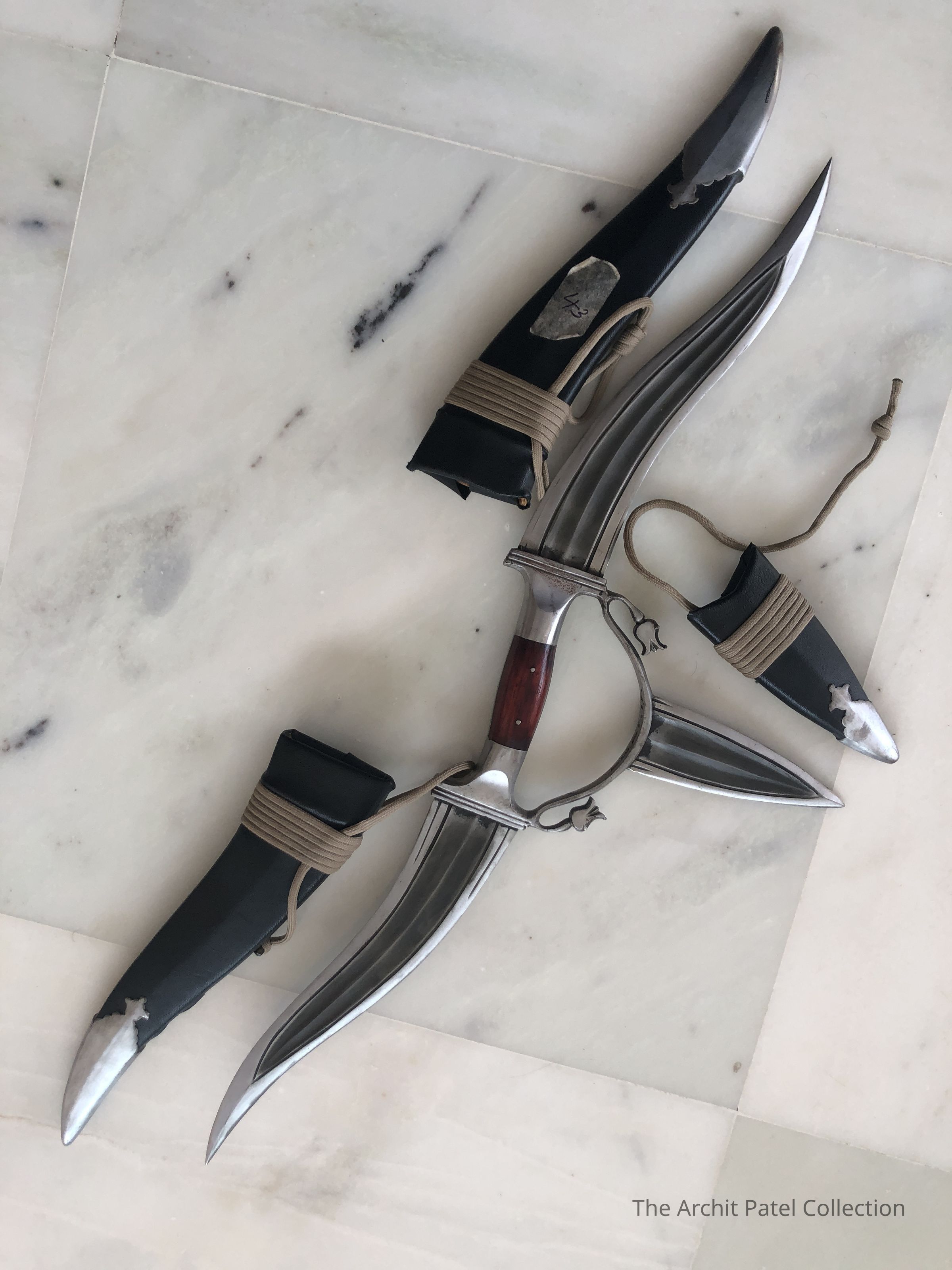
The image displays a collection of three ornate knives with unique and intricate designs, laid out on a marble floor. Two knives have curved blades and elaborately detailed handles, possibly signifying a ceremonial or decorative use, while the third knife is sheathed in a black cover with a simpler design, suggesting more practical usage. The craftsmanship indicates skilled metalwork and suggests cultural or historical significance. Each knife is complemented by distinctive features like embellished guards and handle details, enhancing their visual intrigue.
Name/Title
Haldi Katar "Pruthvivallabh"Entry/Object ID
43; Full Code: 43.26.13-DG-IMTags
DaggerDescription
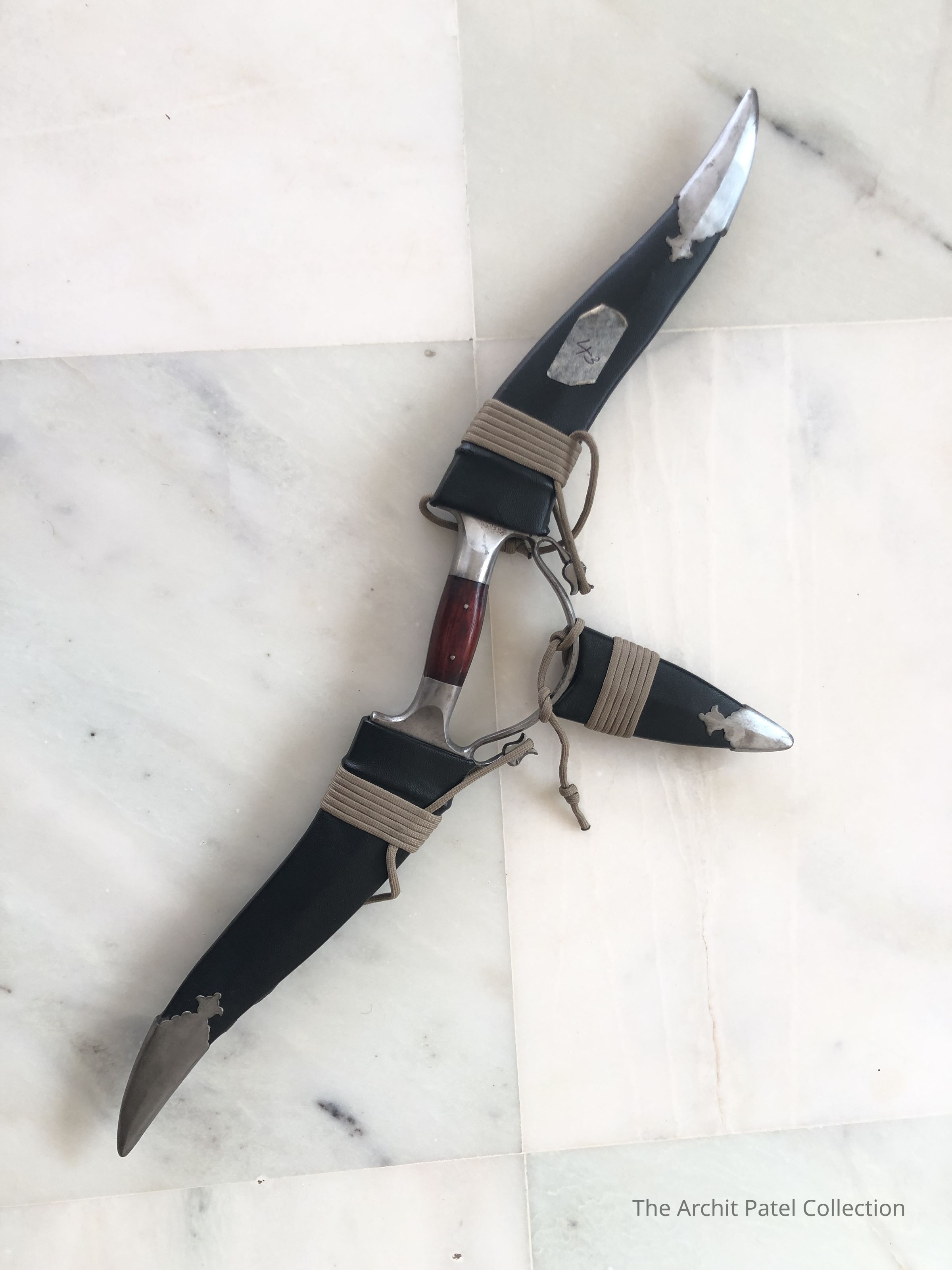
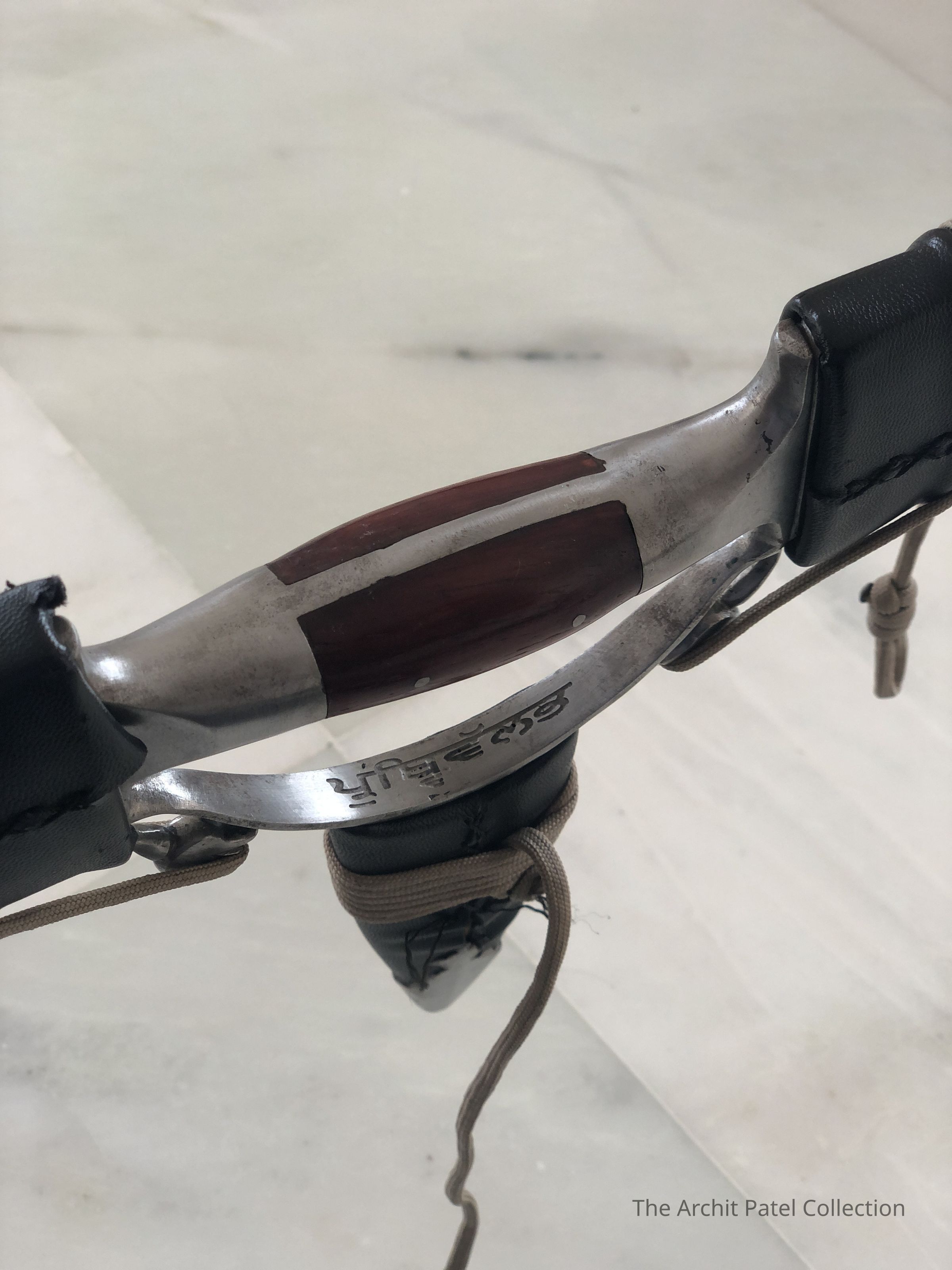
Pruthvivallabh Object Type: Triple-dagger, custom contemporary work Cultural Reference: Indian arms tradition Date: Modern Materials: Steel, wood, leather-covered scabbard elements Construction: Two principal opposed blades with one auxiliary blade; integral metal hilt with inset grip panels Status: Contemporary bespoke collector’s piece Pruthvivallabh is a modern custom-made triple-dagger conceived in dialogue with the historical vocabulary of Indian edged weapons, particularly the haladie and, in broader conceptual terms, the katar/jamdhar tradition. The weapon consists of two opposed primary blades arranged on a single hilt, together with a smaller auxiliary blade incorporated into the upper portion of the hilt structure, producing a triadic configuration of unusual form and strong visual symmetry. The hilt is executed in metal, with inset wooden grip panels and a prominent protective arch spanning the hand. This construction gives the piece both structural coherence and a distinct sculptural character. The opposed blades are of comparable prominence, while the third blade introduces an additional directional axis, transforming the object from a simple double-dagger into a more complex defensive-offensive armature. Although inspired by historical Indian forms, this example is not a period weapon and should not be catalogued as antique material. Rather, it belongs to the category of contemporary interpretive arms, in which historical typologies are re-imagined through modern craftsmanship for purposes of collection, display, and symbolic appreciation. Its significance therefore lies less in historical provenance than in typological reference and conceptual fidelity to the Indian martial imagination. From a functional standpoint, the arrangement of the blades suggests a weapon intended for close-quarters secondary use, with emphasis on compact versatility. The opposed blades imply readiness of attack or response from more than one orientation, while the auxiliary blade and the enclosing guard suggest an additional role in checking, deflecting, or controlling an opponent’s strike. In this respect, the piece evokes the long-standing martial principle of combining offense and defense within a single hand weapon. The title Pruthvivallabh contributes an important interpretive dimension. The name carries distinctly Sanskritic and regal associations, lending the object an elevated identity beyond that of a mere fighting implement. It positions the dagger within a symbolic framework of sovereignty, nobility, and heroic presence, consistent with the historical tendency of South Asian arms to function not only as instruments of combat but also as expressions of rank, prestige, and personal ethos.Made/Created
Manufacturer
Sahib SinghDate made
circa 2015Ethnography
Cultural Region
State/Province
RajasthanCulture/Tribe
Rajput, Sikh