Name/Title
Hooded KatarEntry/Object ID
367; Full Code: 367.83.56-DG-NBTags
Engraving, Dagger, KatarDescription
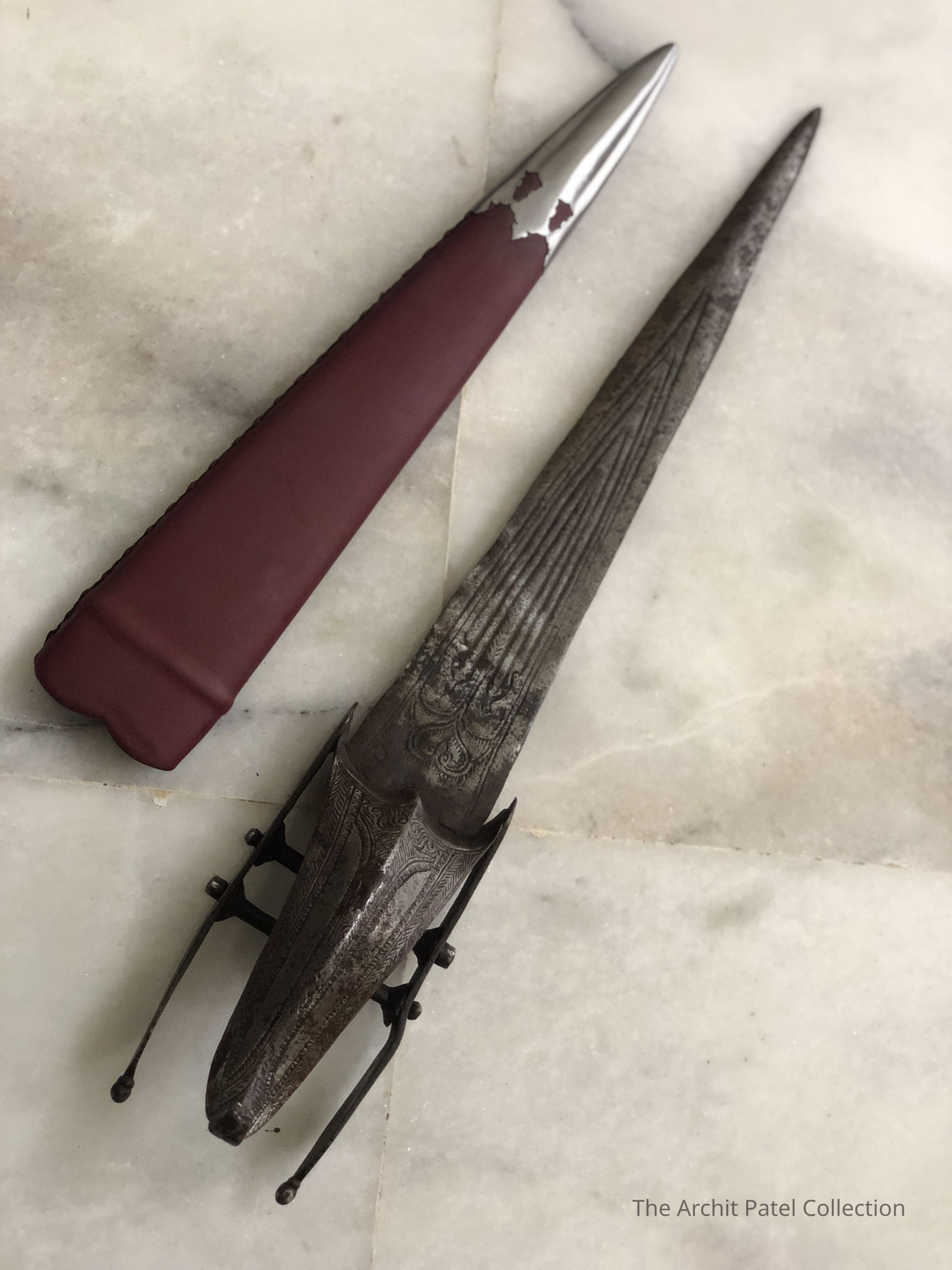
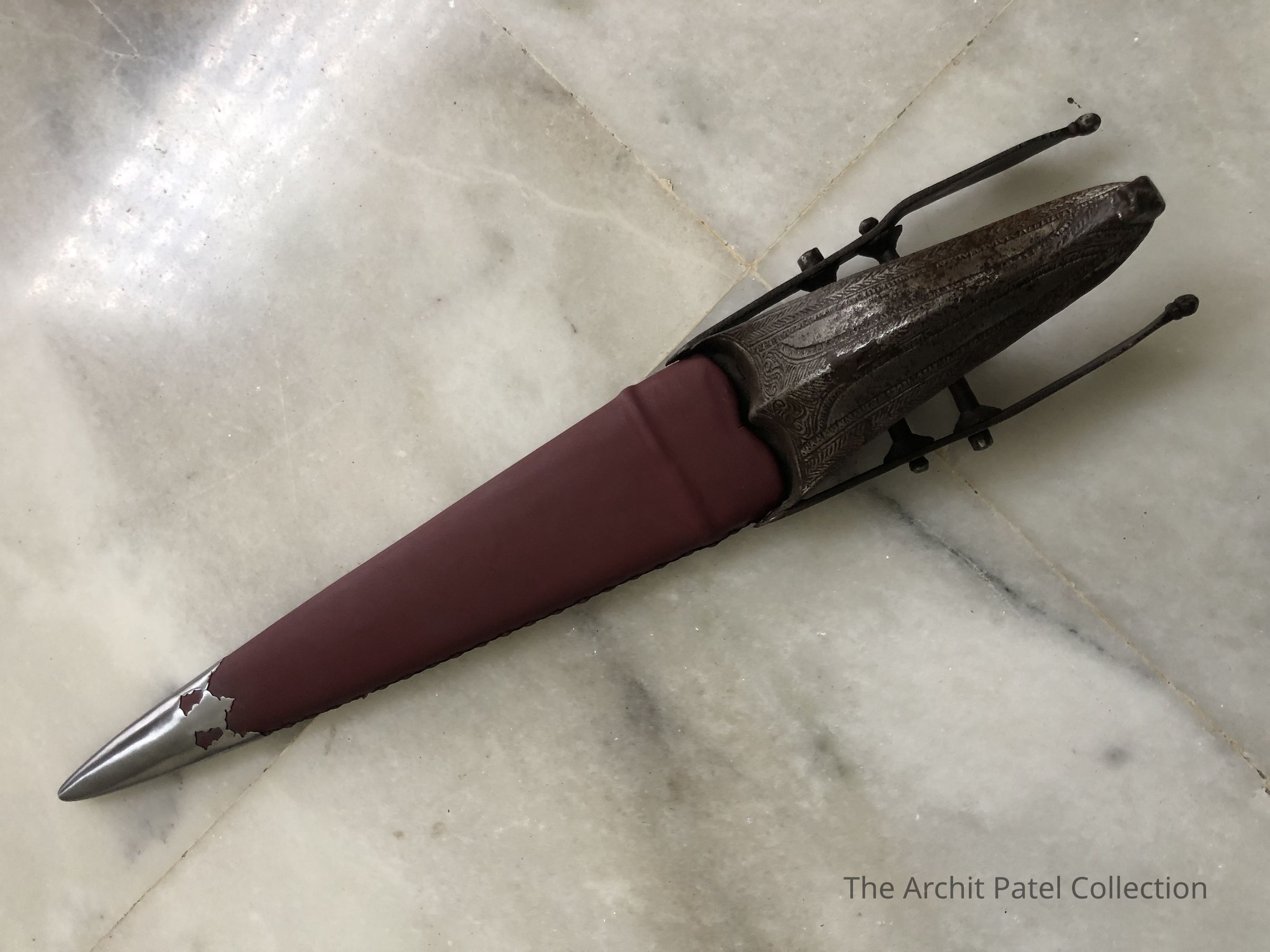
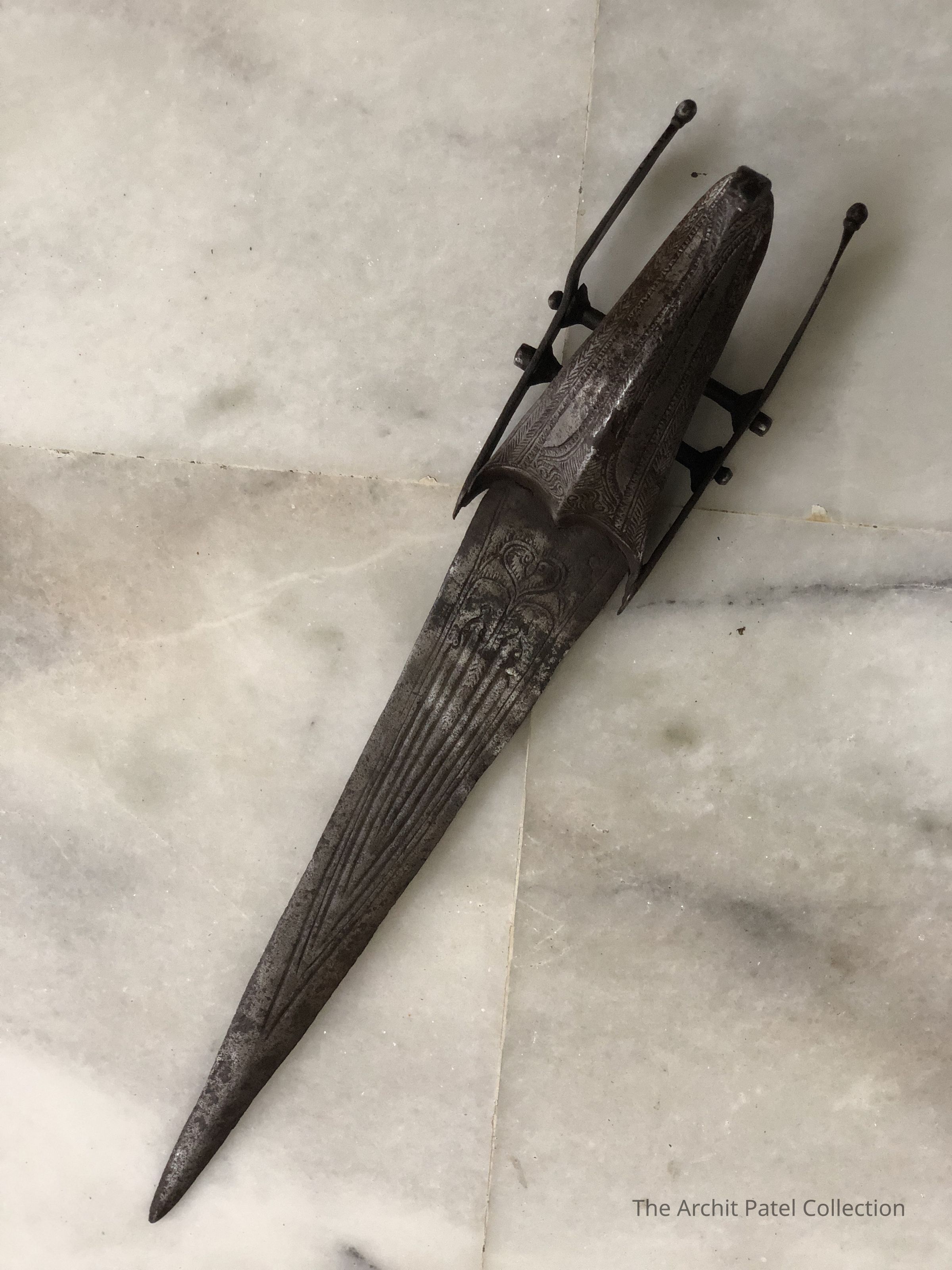
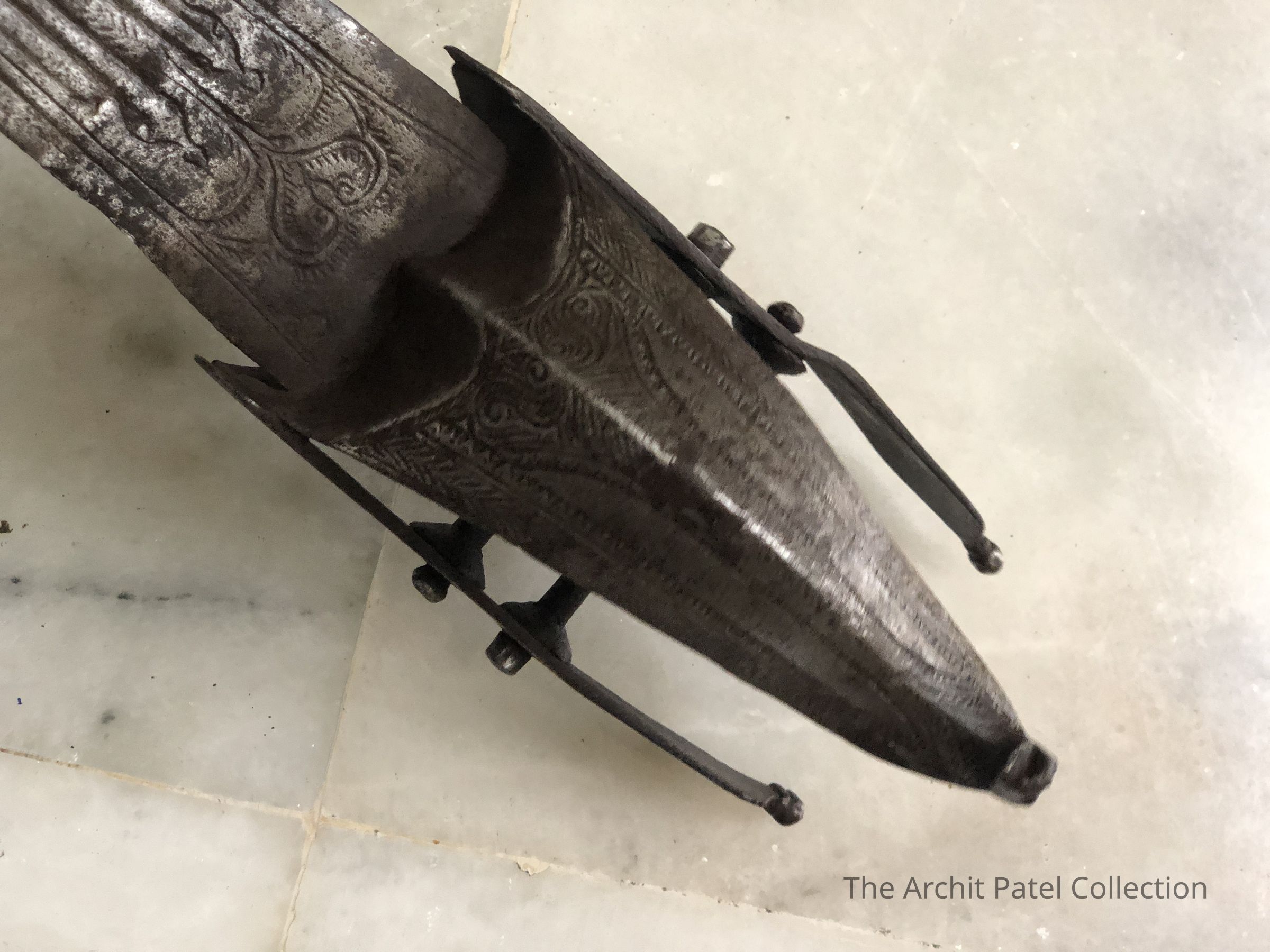
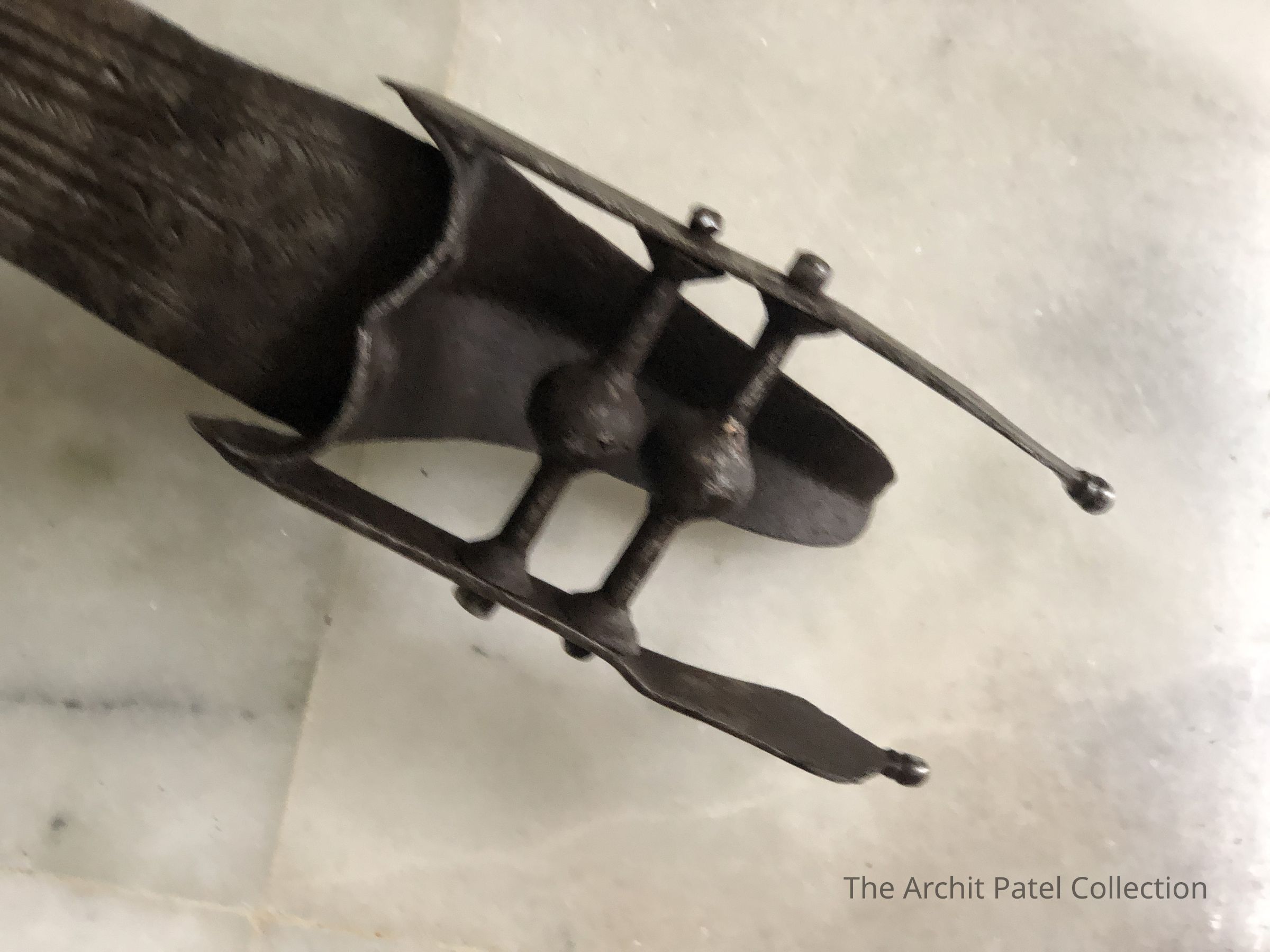
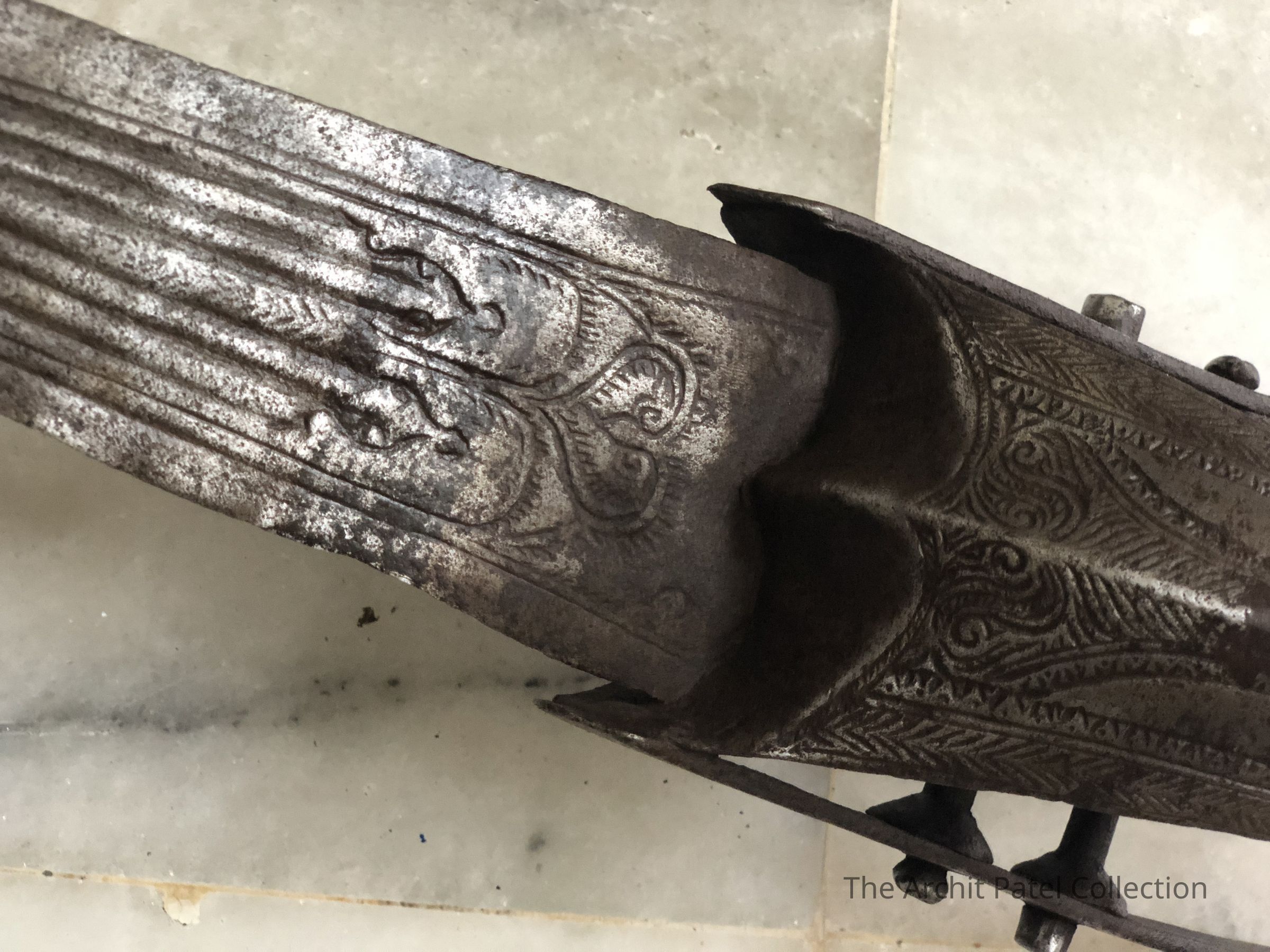
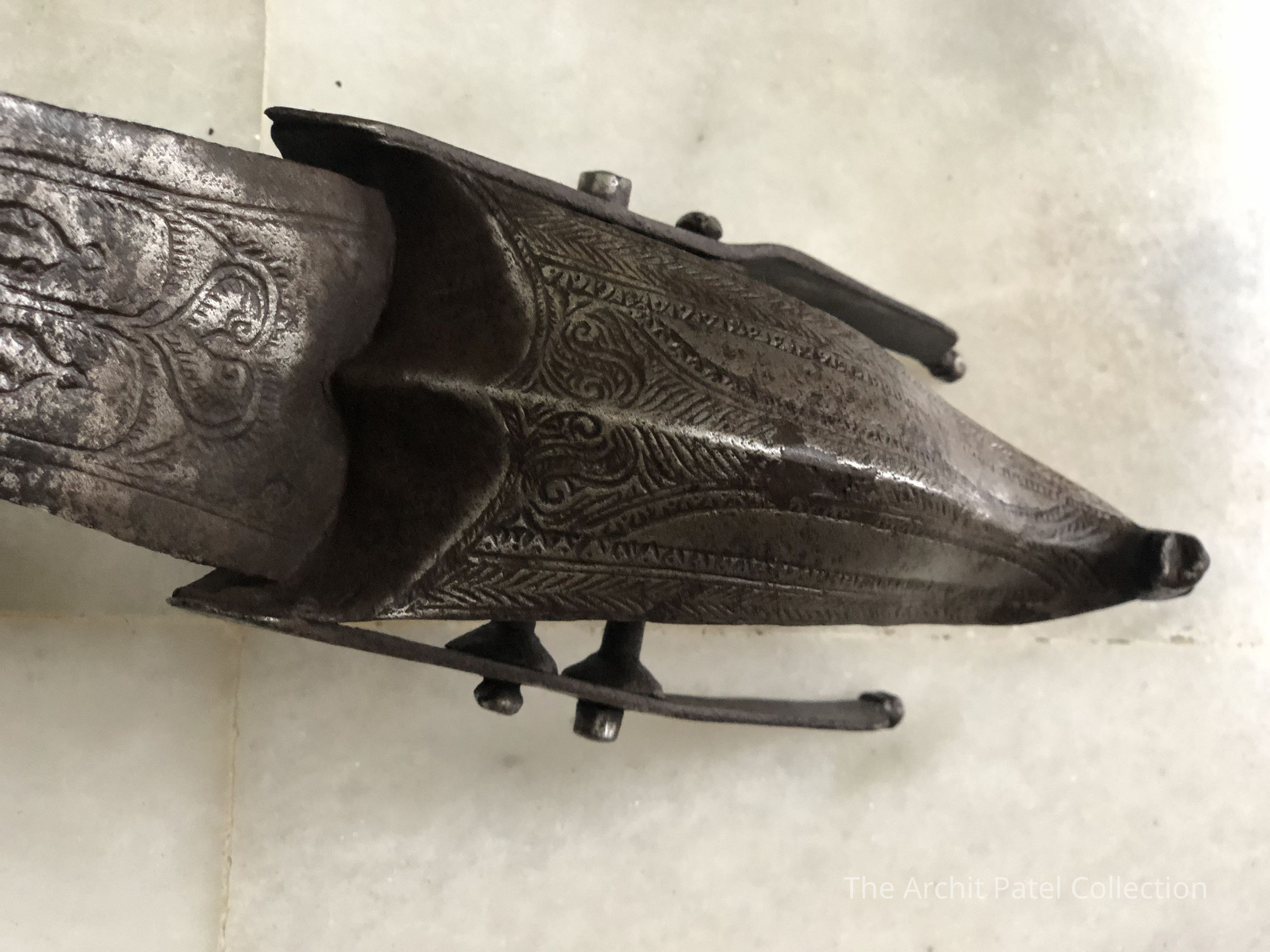
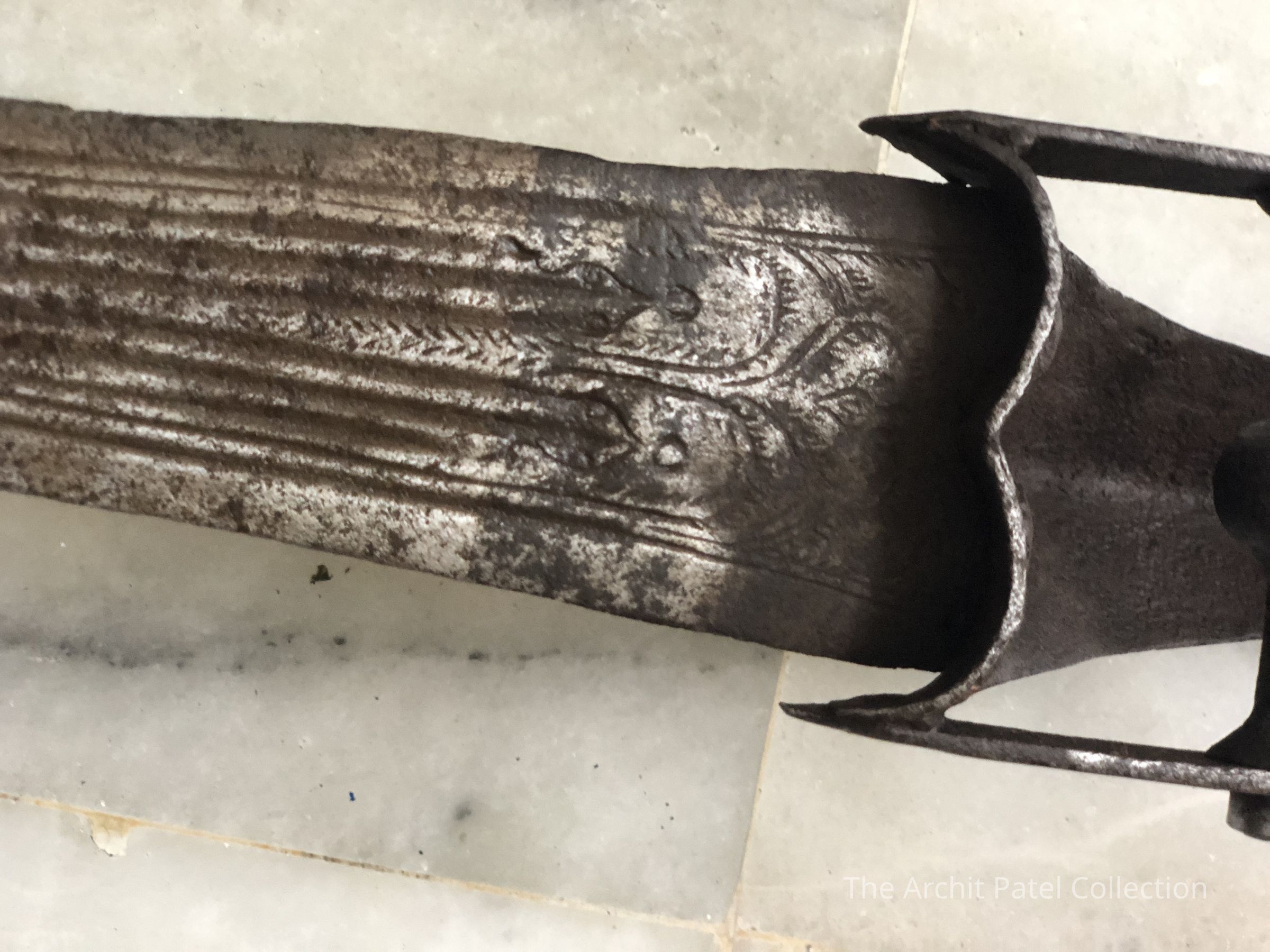
This Katar, is the origin of the straight bladed Indian weapons. From the Chola Temples, to the Central Indian Caves, this specimen is seen everywhere. Often clearly shown being used in a depiction of a battle, carvings as old as 8th or 9th CE show this type. This katar, has steel construction with blade showing triangular designs and art work at the bottom, hood too has been shaped in to the Head of a "Naag" or King Cobra; with beautiful engravings. The Hood gives esthetic as well as protective value to this dagger, the cross bars in the handle, are through riveted, making them stronger than usual forged welding or cast. The Tip is not that prominently chiseled but the application of this Katar is not only for stabbing but also as parrying weapon and secondary cutting blade as well. The Blade and engraving pattern indicates, Mid to late 15th CE construction, most definitely Tanjore.
This This is a sophisticated Hooded Katar, and based on its stylistic features, it can be identified as a Maratha variant, likely from the 17th or 18th century. While Tanjore and Maratha katars share the hooded guard, this piece exhibits specific Maratha characteristics in its "V-shaped" langets and the density of its floral chasing.
Item Description: Maratha Hooded Katar
This specimen is a high-ranking warrior's sidearm, designed to provide the utility of a dagger with the defensive shell of a gauntlet. It represents a refined version of the earlier, more utilitarian "Dand Patta" forms.
The Guard (Hood): The steel hood is forged in a "cobra-head" or shell shape, providing total protection to the back of the hand and wrist. The surface is densely decorated with deep-relief chasing (Munabbatkari), featuring scrolling floral vines and traditional Indian "creeping leaf" motifs.
The Grip: Inside the hood, the dagger features the classic H-shaped grip with dual transverse bars. These bars are often shaped with a central "swelling" to ensure the hand remains locked in place during high-impact thrusts.
The Blade: A straight, double-edged blade that is exceptionally robust. It features multiple deep converging fullers (grooves) that meet toward the tip. This design mimics the veins of a leaf but serves the critical mechanical function of stiffening the blade for armor penetration while keeping the weight manageable.
Langets: The long steel strips (langets) extending from the hilt onto the blade are shaped into decorative, "fleur-de-lis" influenced foliate patterns, which reinforce the blade-to-hilt connection.
Scabbard: The dagger is housed in a wooden scabbard covered in deep maroon/crimson leather, terminating in a simple steel chape.
Maratha vs. Tanjore Identification
While both regions used hooded katars, this piece leans strongly Maratha for the following reasons:
Chasing Style: The "all-over" floral chasing on the hood is highly characteristic of Maratha armories in Central and Western India. Tanjore (Southern) pieces often feature more zoomorphic (animal) figures like Yalis or elephants integrated into the steel.
Hood Shape: The hood here is slightly more rounded and "closed" compared to the elongated, often flat-topped hoods found in 17th-century Tanjore examples.
Blade Geometry: The specific arrangement of multiple fullers converging at the tip is a classic Maratha blacksmithing signature, intended to withstand the force of punching through chainmail common in the Deccan wars.Made/Created
Date made
circa 1500 - circa 1550Time Period
16th CenturyDimensions
Dimension Description
18"Length
11 inAcquisition
Acquisition Method
PurchasePlace
City
Amritsar, PunjabState/Province
Punjab