Name/Title
JambiyaEntry/Object ID
71; Full Code: 71.30.28-DG-NBTags
Dagger, Silver workDescription
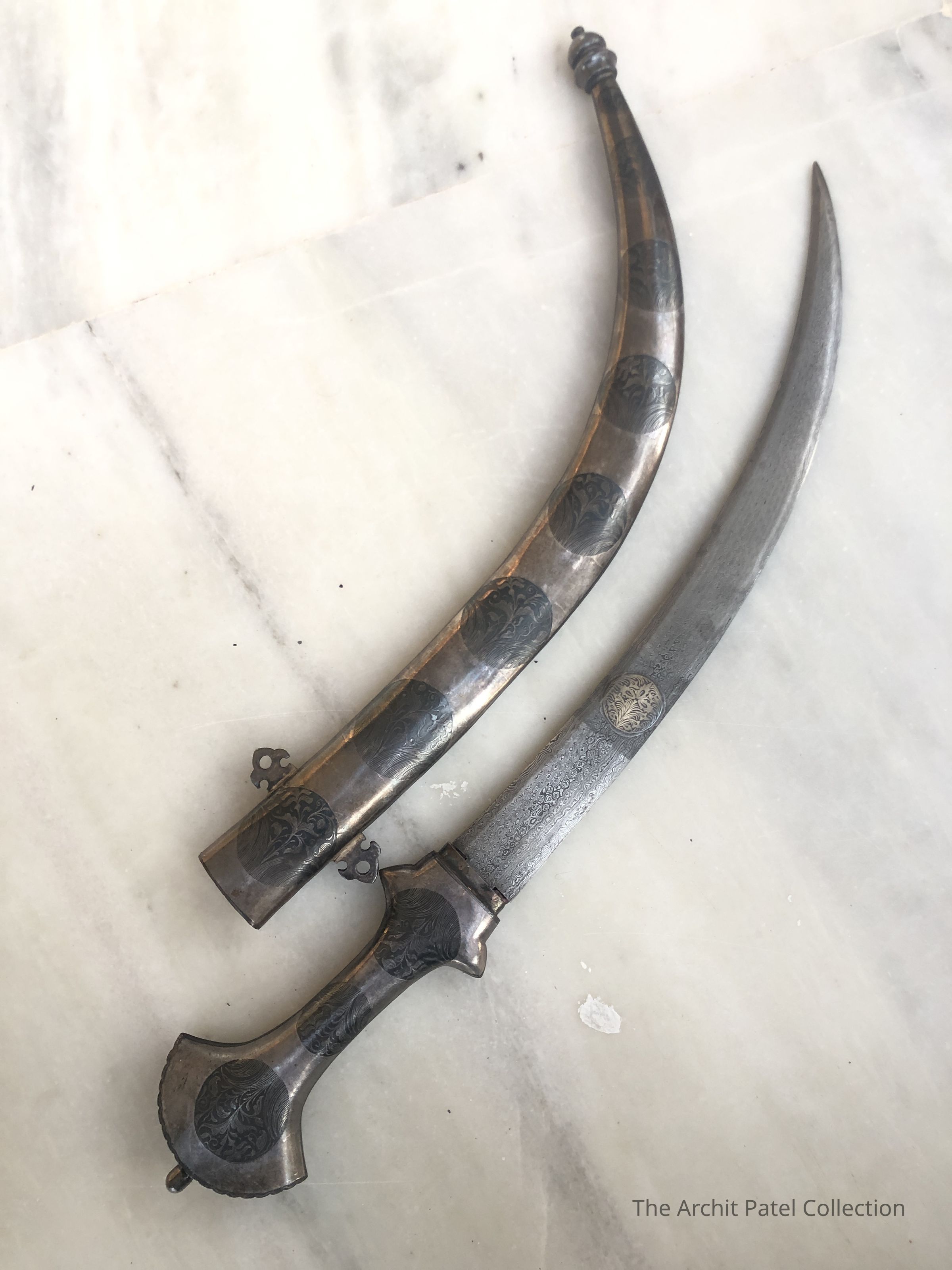
This artifact is a Modern Forged Jambiya, produced in 2010. It represents an elite tier of contemporary Indo-Arabian weaponry, distinguished by its comprehensive silver work and pattern-welded steel blade. The piece documents a high-status "process" of ornamentation, where the entire steel surface of the hilt and scabbard serves as a canvas for intricate silver damascening.
Core Components & Engineering
The Blade (Pattern-Welded with Silver Inlay): A broad, double-edged blade featuring a prominent central structural rib.
Surface Pattern: The steel exhibits a dense "watered" pattern from repetitive folding, ensuring a balance between edge hardness and core ductility.
Ricasso Detail: The base of the blade is decorated with a silver floral medallion, ensuring a seamless aesthetic transition from the steel blade to the silvered hilt.
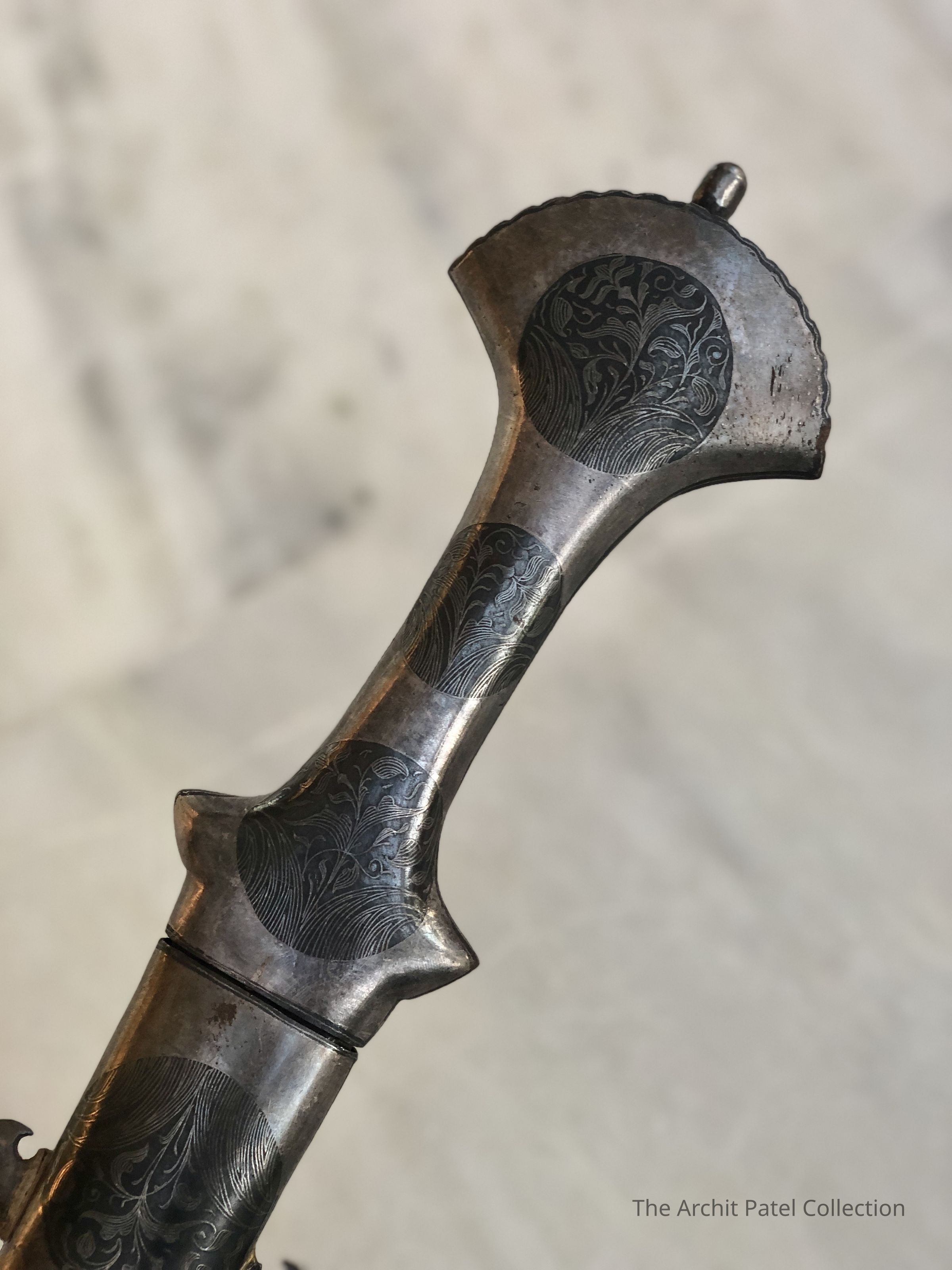
The Hilt (Full Silver-Inlaid Steel): An all-steel hilt utilizing the classic "I-frame" geometry, entirely covered in silver work.
Silver Koftgari: The silver is applied using a traditional damascening process, where the steel surface is cross-hatched and silver wire or foil is burnished into the metal. The motifs consist of rhythmic circular medallions and dense floral arabesques.
Ergonomic Stops: The flared pommel and guard are finished with silvered scalloping, providing a high-friction mechanical stop that ensures the hand remains locked in a fixed orientation during use.
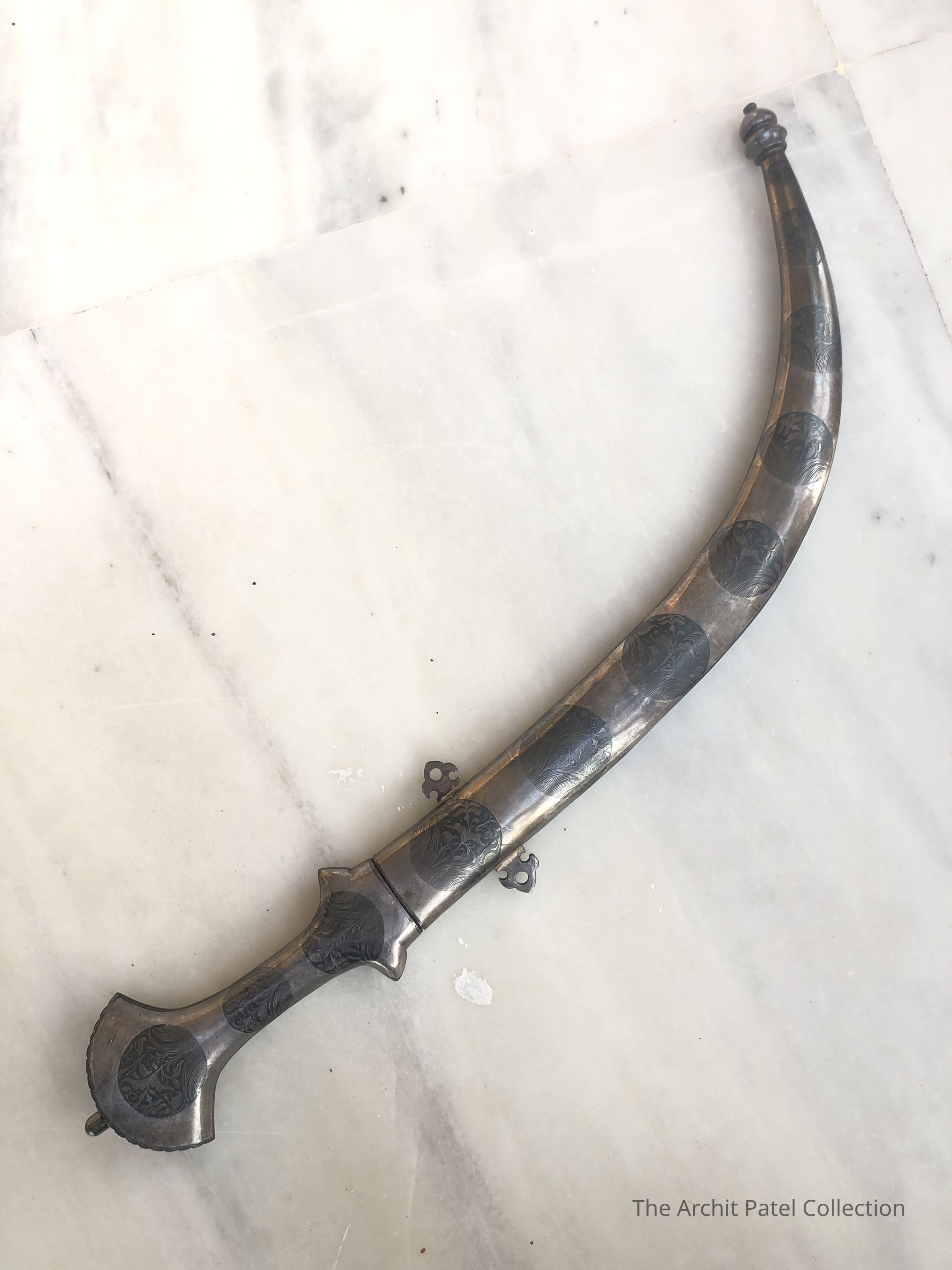
The Scabbard (Silver-Inlaid Steel Architecture): A wooden-core scabbard entirely encased in steel and finished with matching silver work.
Visual Continuity: The scabbard repeats the circular medallion motif found on the hilt. The use of silver across the entire "peace" (hilt and scabbard) signifies a high administrative status and personal investment in the artifact's curation.Made/Created
Manufacturer
Silver Stone of UdaipurDate made
circa 2010Dimensions
Dimension Description
24”Length
18 inAcquisition
Acquisition Method
Purchase