Karad (or Choora)
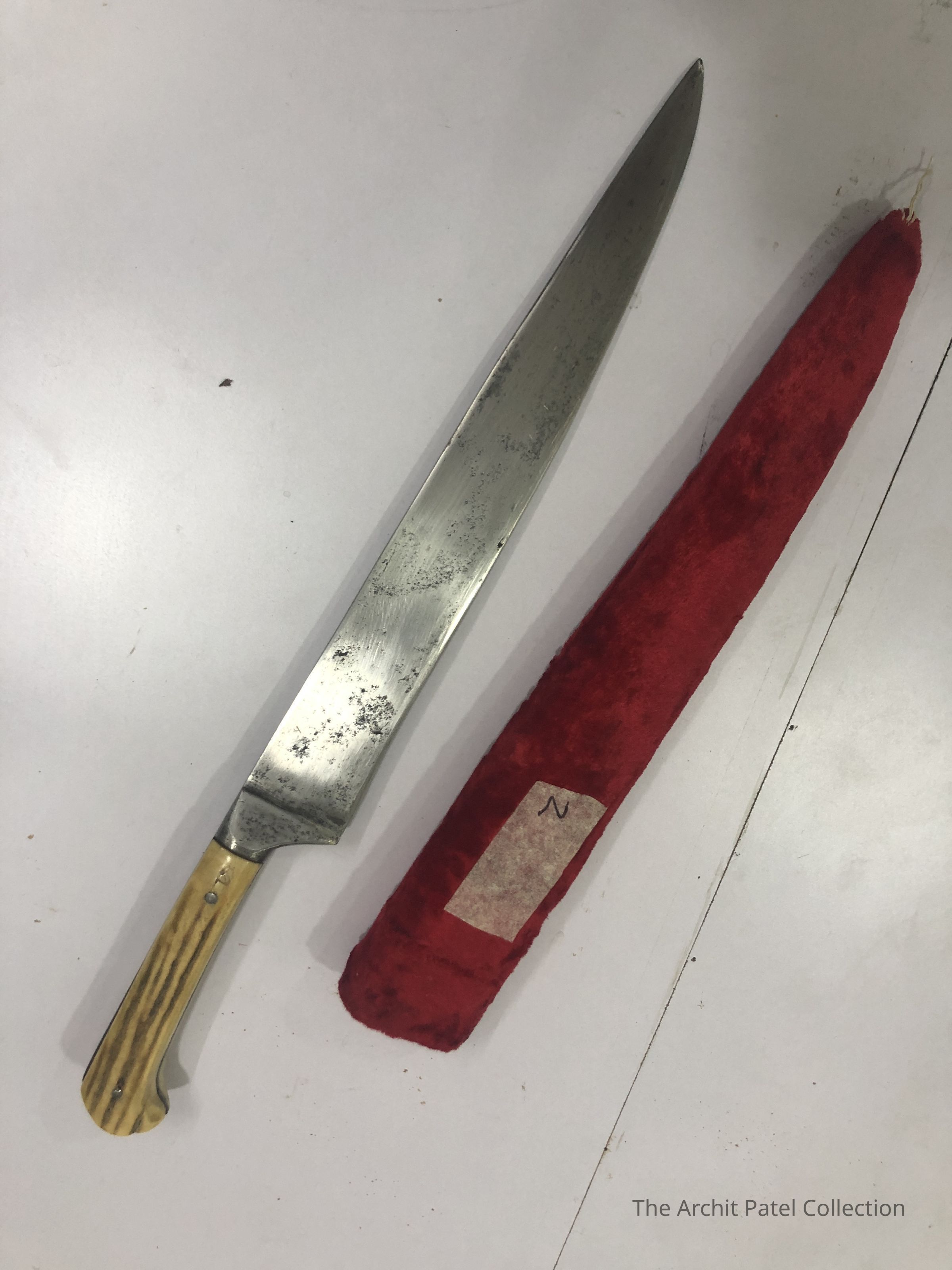
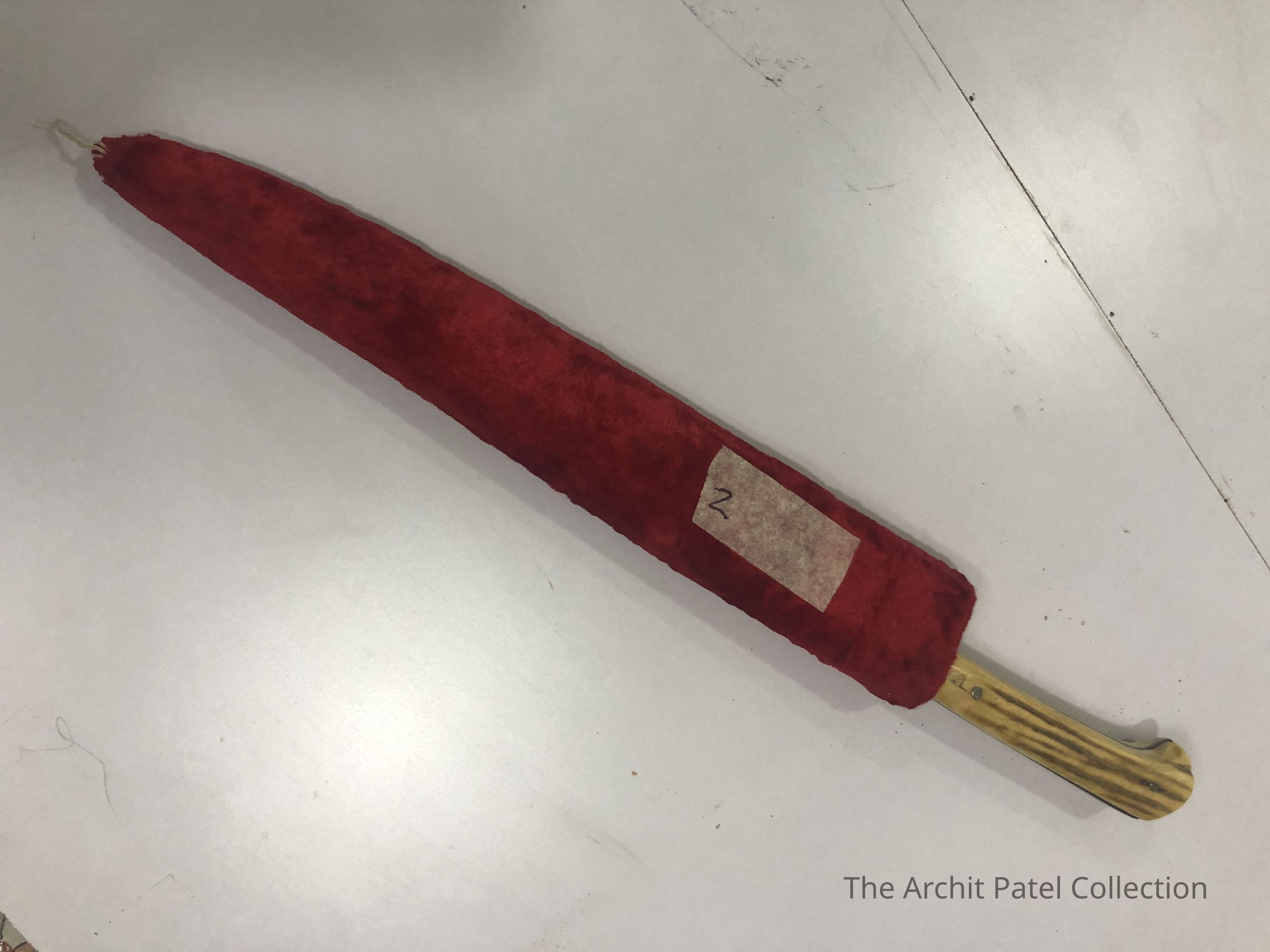
Sheath with sr. No sticker
Unsheathed blade
Name/Title
Karad (or Choora)Entry/Object ID
2; Full Code: 2.2.2-KN-IATags
Knife, Ivory, Gold WorkDescription
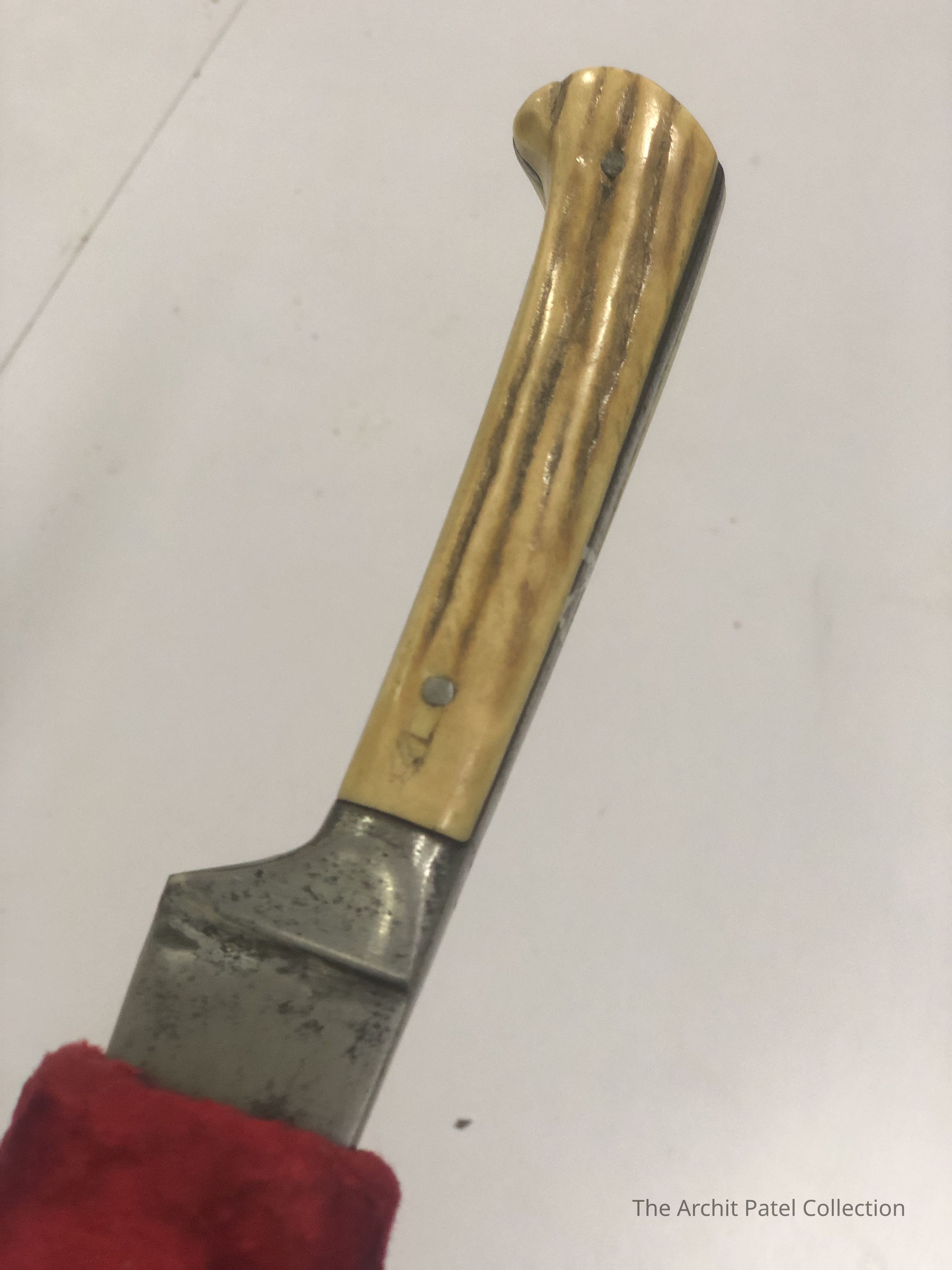
This is an authentic Antique Choora (also classified as a Kardar or a variant of the Khyber knife), likely originating from the North-West Frontier or Afghanistan region in the 19th century. While it shares the "T-spine" engineering of your Ancestral Por Karud, this specimen is distinguished by its larger, more aggressive blade profile and its traditional antler hilt. It represents a high-utility combat tool designed for maximum structural "certainty" in harsh environments. Core Components & Engineering The Blade (Reinforced "T-Section" Steel): A robust, single-edged blade forged from high-carbon steel. The Geometry: The blade is straight with a dramatic taper toward the point. Its most critical feature is the thickened T-shaped spine which runs from the hilt to the tip. The Process: In your professional framework, this spine is a mechanical force-multiplier. By concentrating mass along the back, the smith ensures the blade cannot flex or buckle. This allows the user to deliver high-velocity thrusts with absolute predictability, even against heavy organic materials or quilted armor. The Hilt (Sambar/Deer Antler): The grip is constructed from two slabs of textured antler, secured to the full tang with steel pins. Ergonomic Traction: Antler was the historical "G10" of the frontier. Its natural ridges and porous surface provide an unbeatable grip in wet or bloody conditions, a vital requirement for a high-stakes survival tool. The Pommel Hook: The hilt terminates in a downward-turning hook. Mechanically, this prevents the hand from sliding off the back during a rapid draw or a powerful swinging "process." The Scabbard: Housed in a wooden-core scabbard wrapped in crimson velvet. The lack of iron or silver fittings suggests this was a "Field Grade" weapon, optimized for carry weight rather than courtly display.Made/Created
Manufacturer
Unknown ArtisanDate made
circa 1800 - circa 1850Time Period
19th CenturyEthnography
Cultural Region
State/Province
RajasthanCulture/Tribe
Rajput, Mughal