Kartika - Tibetan ritual knife
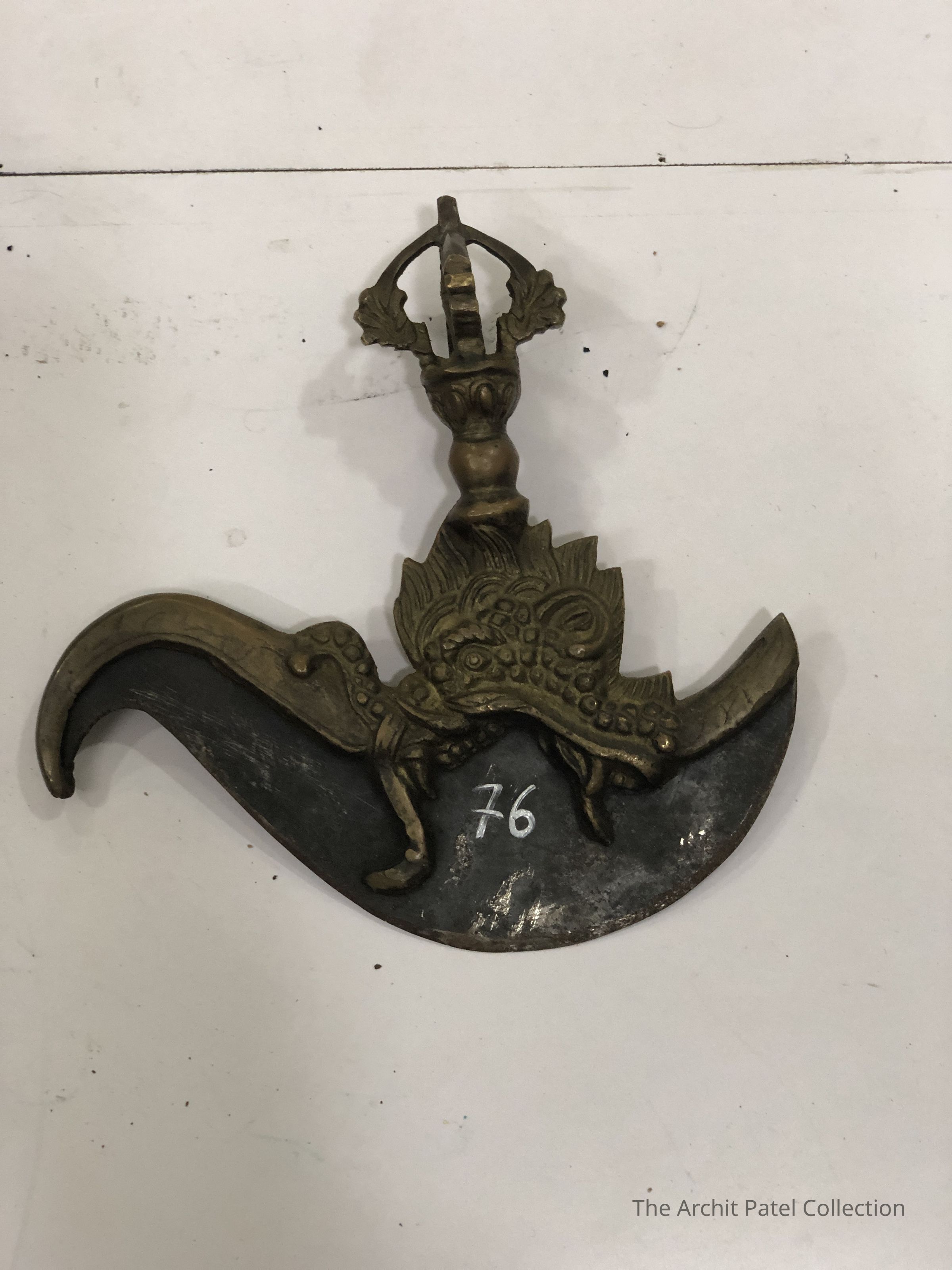
The image displays an ornate metal artifact that combines elements of both decorative and symbolic significance. At the bottom, a crescent-shaped base supports an elaborate figure, which is crafted with intricate details including a lion-like creature with its front paws raised. Above this, a vertical element topped with an arch holds additional detailed embellishments. The artifact appears to be made from brass or bronze, given the golden-brown coloration, and shows signs of age such as patina and slight corrosion. The number "76" is visibly marked near the bottom of the crescent, possibly indicating an inventory or identification number. This piece might be part of a larger collection or serve a ceremonial purpose based on its elaborate craftsmanship and motifs.
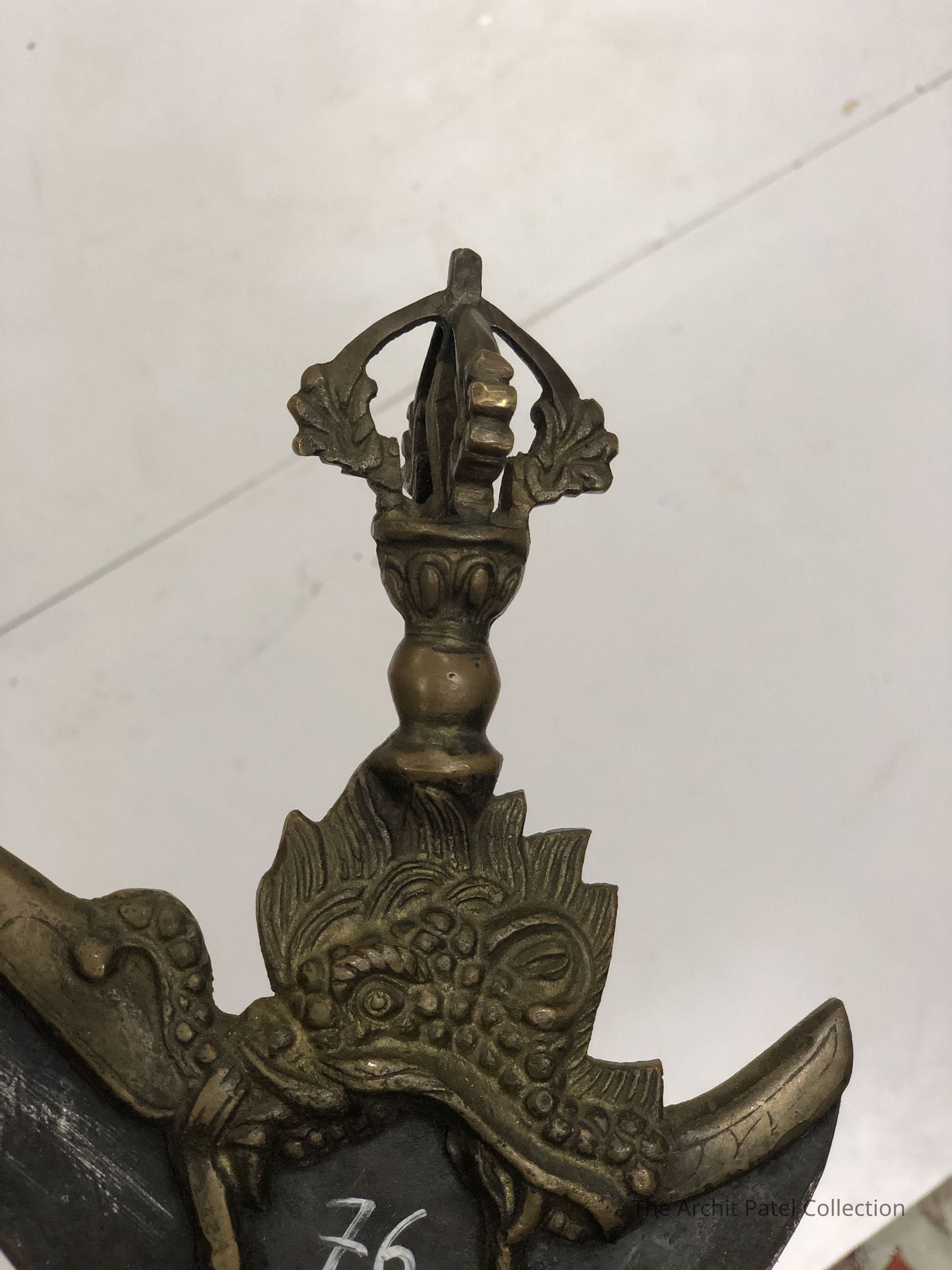
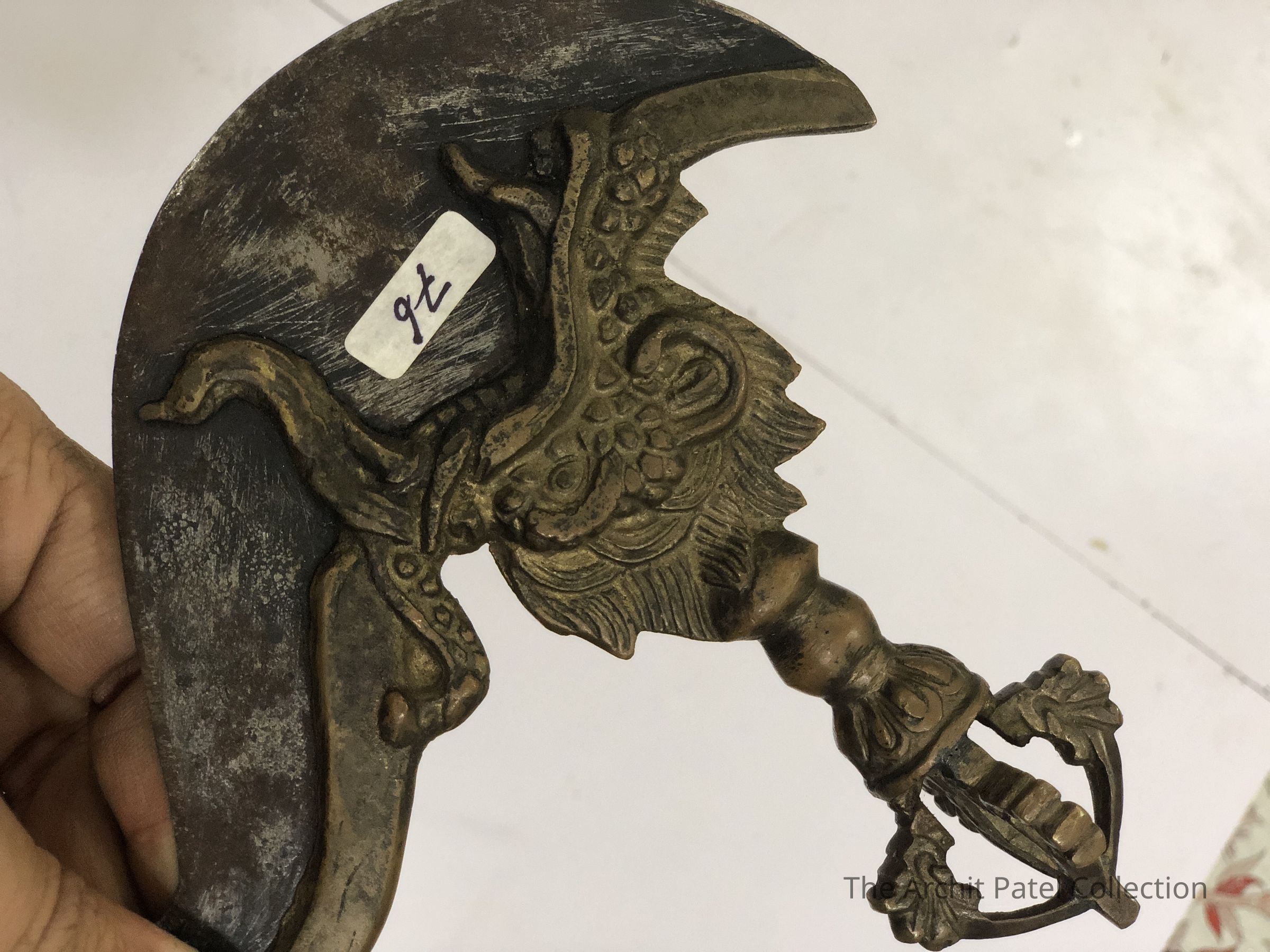
The image displays an ornate metal artifact that combines elements of both decorative and symbolic significance. At the bottom, a crescent-shaped base supports an elaborate figure, which is crafted with intricate details including a lion-like creature with its front paws raised. Above this, a vertical element topped with an arch holds additional detailed embellishments. The artifact appears to be made from brass or bronze, given the golden-brown coloration, and shows signs of age such as patina and slight corrosion. The number "76" is visibly marked near the bottom of the crescent, possibly indicating an inventory or identification number. This piece might be part of a larger collection or serve a ceremonial purpose based on its elaborate craftsmanship and motifs.

Name/Title

Kartika - Tibetan ritual knife

Entry/Object ID

76; Full Code: 76.21.30-KN-NB

Tags

Knife

Description

This is a Kartika (or Digug), a highly symbolic ritual flaying knife used in Vajrayana (Tibetan) Buddhism. While it is shaped like a functional tool, every element of this item is designed to represent philosophical concepts rather than physical utility. The Blade: The crescent-shaped steel blade terminates in a sharp hook. The flat surface of the blade is often decorated with engravings of lotus blossoms or protective deities. In this specimen, the blade features a dark patina, highlighting its "as-forged" ritual character. The Handle (Vajra): The hilt is shaped as a half-vajra (or Dorje), a symbolic thunderbolt or diamond sceptre. The vajra handle is typically cast in brass or bronze and represents the "indestructible" nature of reality and the method of the path to enlightenment. The Makara: The point where the blade meets the handle is often emerges from the mouth of a Makara (a mythical sea creature), symbolizing the union of opposites and the strength required to wield the wisdom of the knife. Scabbard: The knife is paired with a wooden scabbard wrapped in deep maroon leather, matching the traditional colors of monastic robes.

Made/Created

Manufacturer

Unknown Artisan

Date made

circa 2000

Ethnography

Cultural Region

State/Province

Himachal Pradesh

Region

Tibet

Dimensions

Dimension Description

8”

Length

8 in

Material

Steel

Acquisition

Acquisition Method

Purchase