Name/Title
KatarEntry/Object ID
32; Full Code: 32.24.20-DG-IATags
Engraving, Dagger, KatarDescription
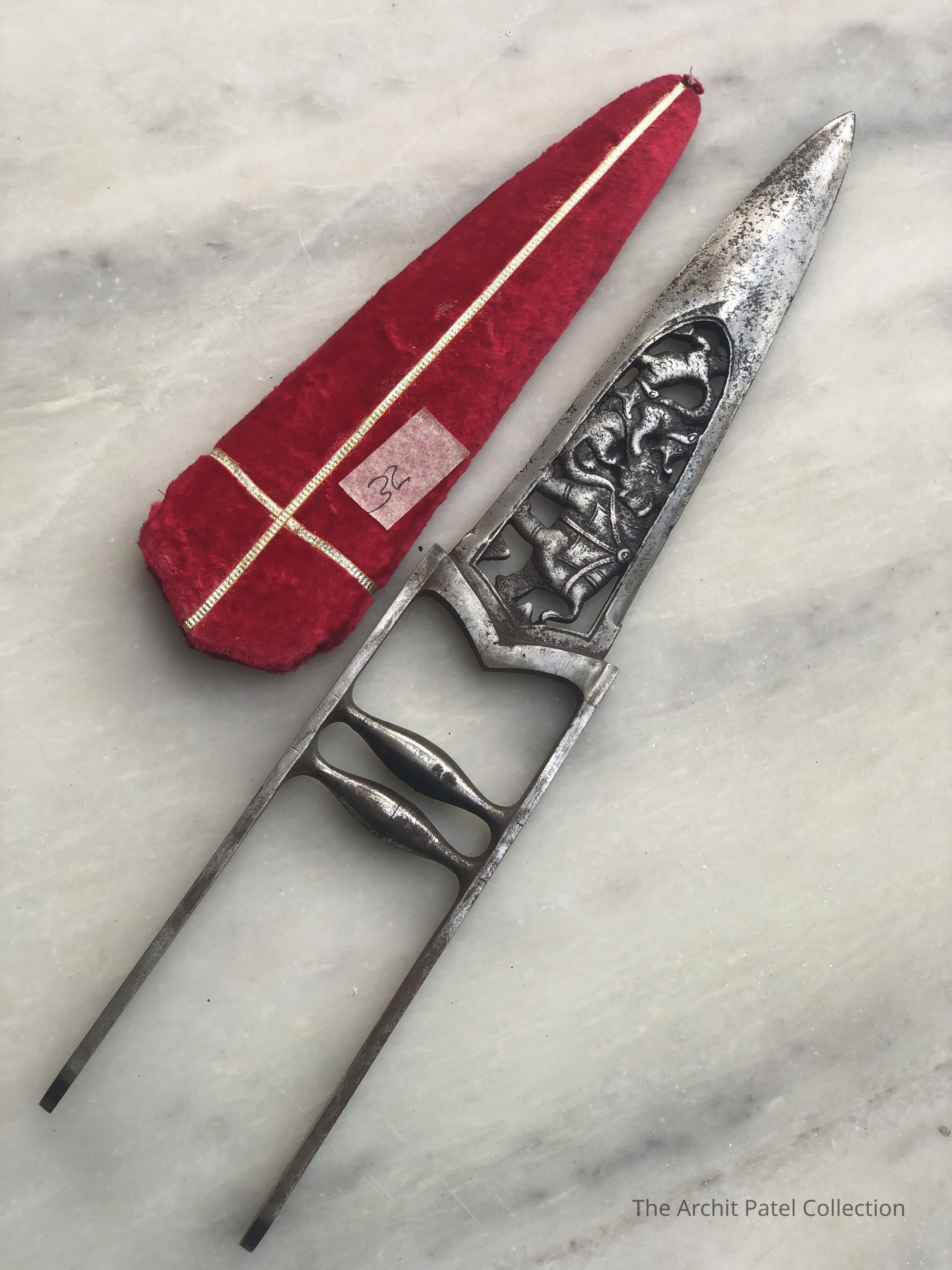
One of the two Katars from a presentation set made as a gift to person of status. Both are heavy blades, with traditional chiseled tips but without prominent diamond cross section but rather oval/almond like cross section. The Blade has through engraving depicting a hunting scene, involving, elephants with Ohda and Mahut, and tigers or leopards being hunted. This type of presentation daggers became popular after the Britishers started coming for hunting inn the forests of Princely state, from mid 19th to early 20th Centuries.
This is a rare and visually striking matched pair of Katars (Indian punch daggers), approximately 200 years old (dating to the early 19th century). They are distinguished by their masterful pierced openwork (Munabbatkari) blades, which feature complex zoomorphic imagery.
The Blades: Each double-edged, triangular blade is meticulously hand-cut to depict a hunting scene. The central openwork features a royal elephant carrying a howdah, surrounded by predatory animals (likely lions or tigers) and scrolling foliage. This type of "soul-less" or pierced blade required immense skill to ensure the remaining steel frame remained structurally sound for combat.
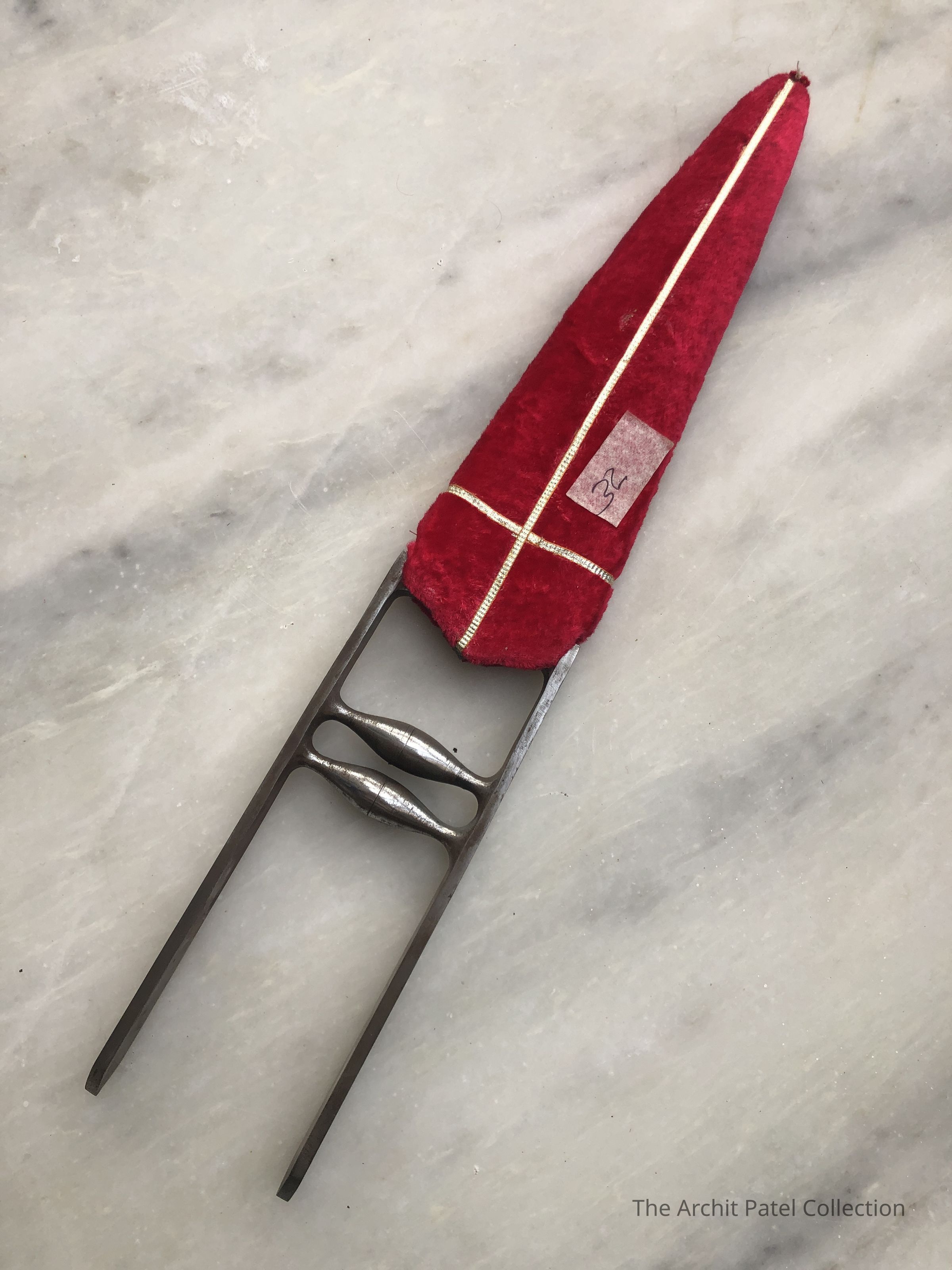
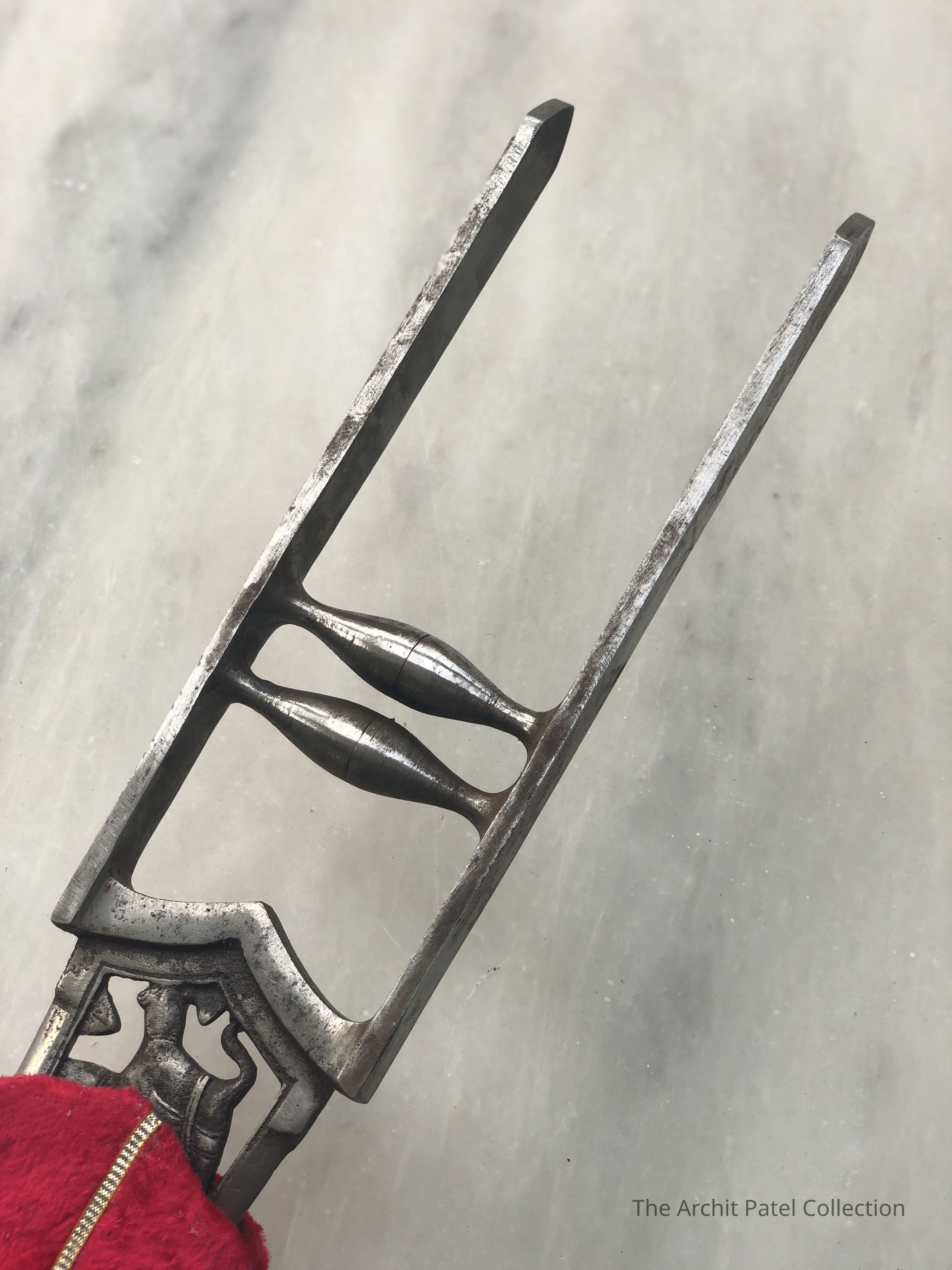
The Handles: Each hilt features the classic H-frame with dual transverse grip bars. The grip bars are shaped into a "swelled" or spindle profile to provide a secure and ergonomic hold when clenched in a fist.
Aesthetics: One katar shows a more aged, dark patina consistent with 200 years of history, while the other appears more polished, potentially indicating a varied history of preservation. The reinforced tips are left solid to maintain the dagger's primary function as an armor-piercing weapon.
Scabbards: The pair is accompanied by royal red velvet scabbards, accented with gold-thread trim, reflecting the high status of the original owner.Made/Created
Manufacturer
Unknown ArtisanDate made
circa 1700 - circa 1750Time Period
18th CenturyDimensions
Dimension Description
22"Length
12 inAcquisition
Acquisition Method
Purchase