Katar_Engraved_Handle
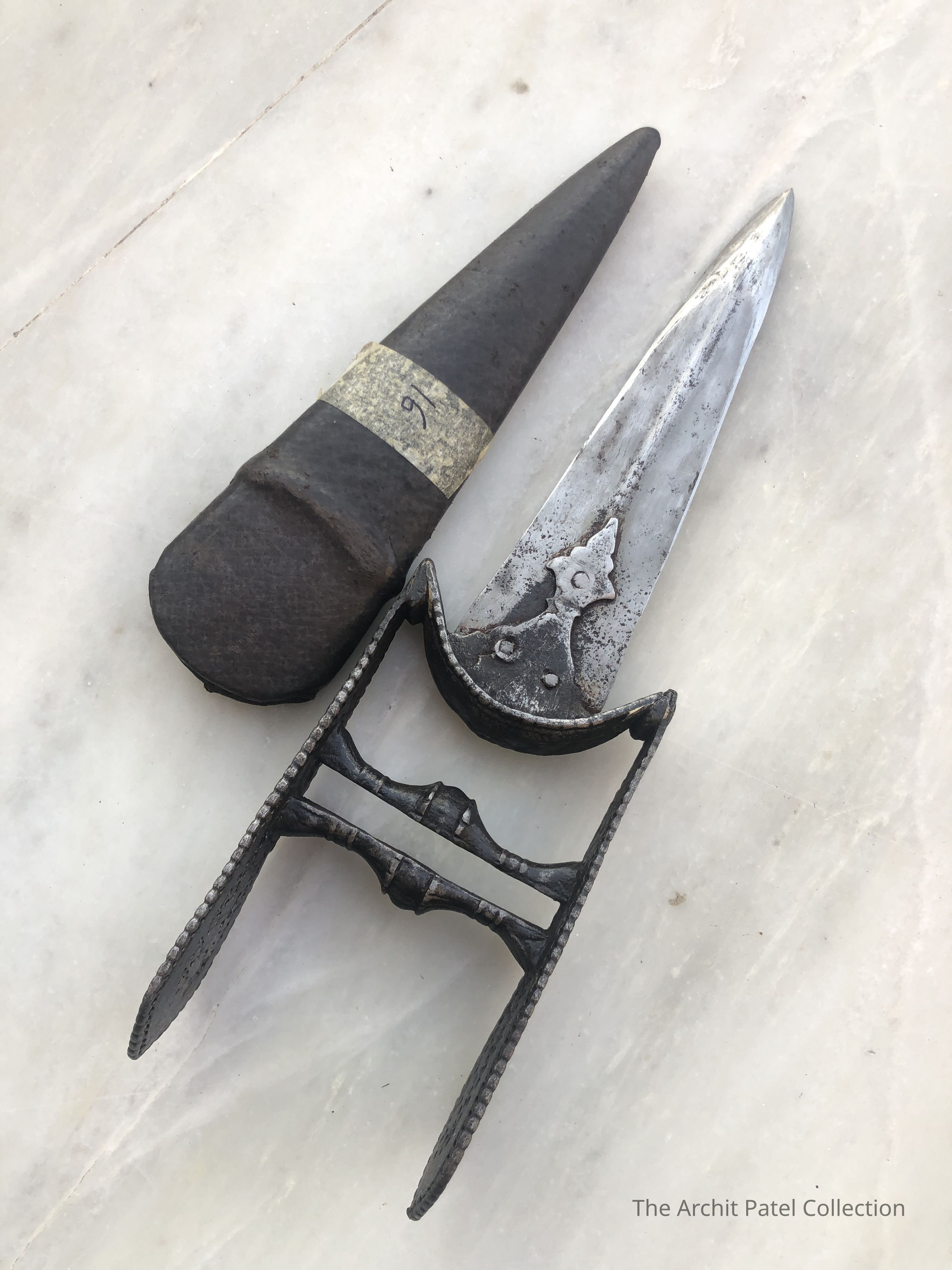
The image displays two antique-looking knives, each with distinct characteristics, laid on a light-colored marble surface. The sheath on the left features a simple, robust handle with a worn-out label marked with the number "69", attaching to a dark, unadorned blade. In contrast, the knife on the right flaunts a more intricate design, including an ornate handle with a detailed cross-guard and a blade adorned with a subtle floral pattern, demonstrating craftsmanship from perhaps a historical or ceremonial use.
Name/Title
Katar_Engraved_HandleEntry/Object ID
16; Full Code: 16.13.11-DG-IATags
Engraving, Dagger, KatarDescription
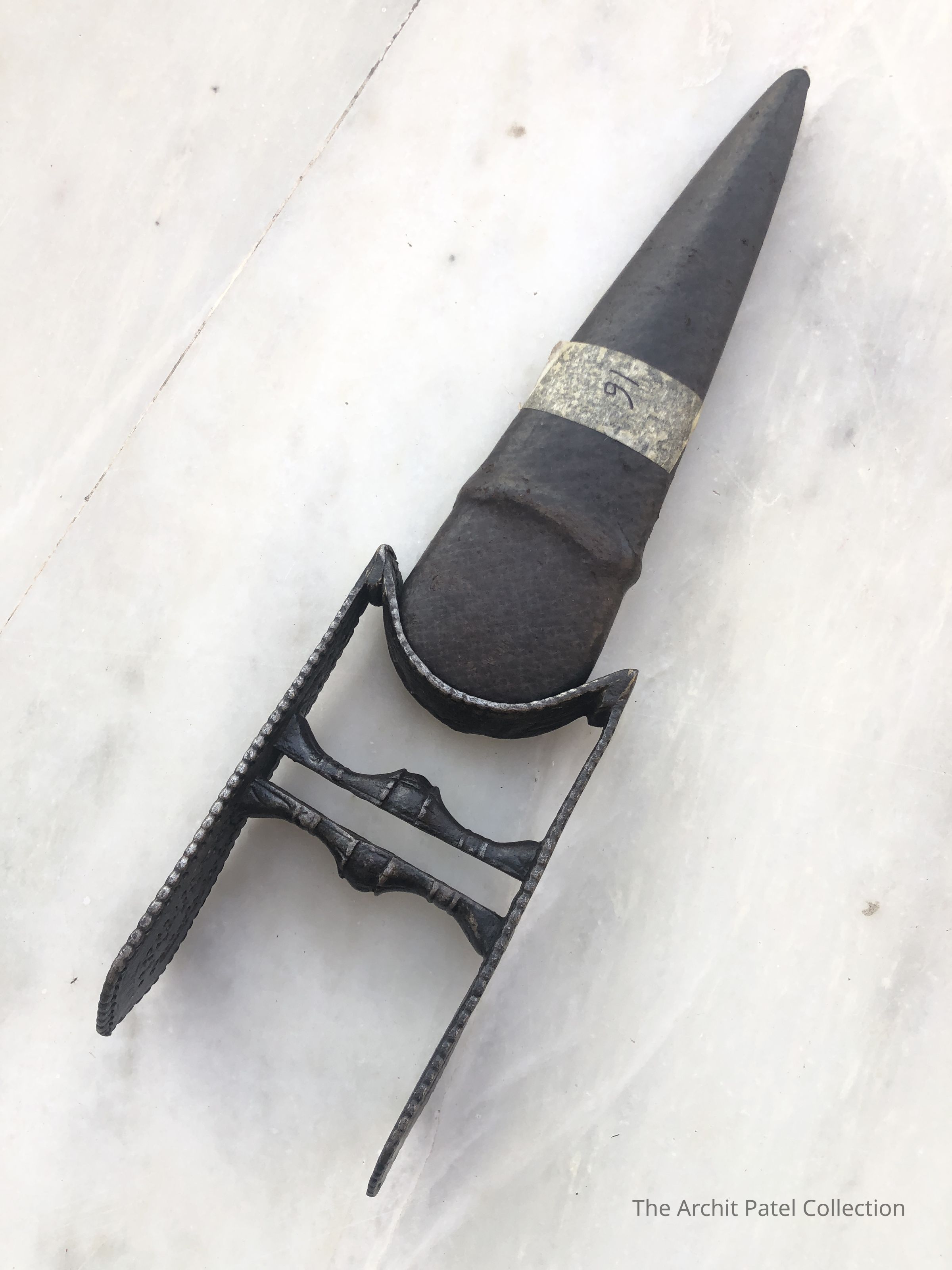
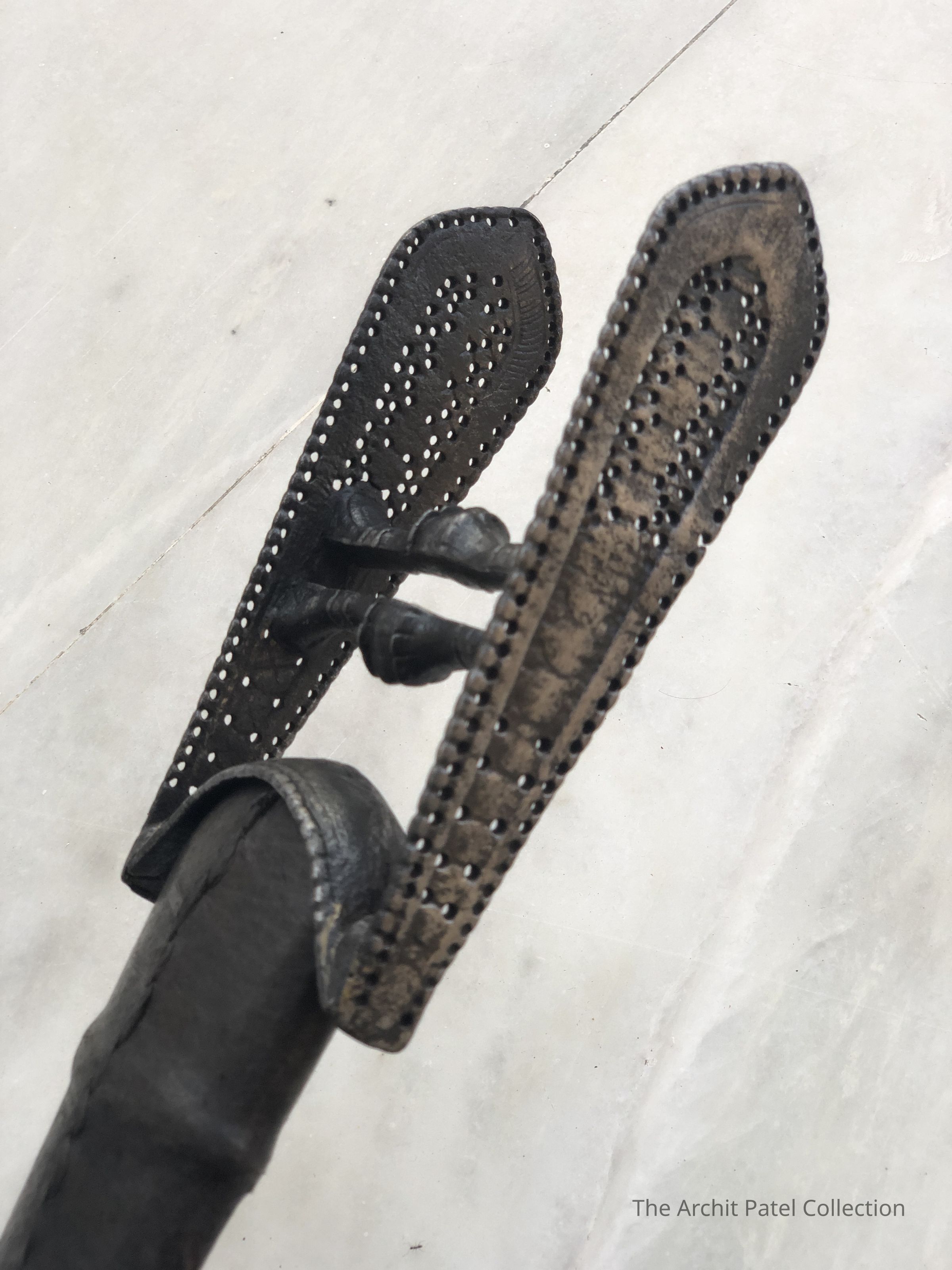
Item Description: Antique Wootz Steel Katar This is a classic Katar (Indian punch dagger) of high quality, likely dating to the late 18th or early 19th century. This specimen is a prime example of the Rajput or Maratha sidearm, distinguished by a blade forged from Wootz steel (crucible steel) and a hilt featuring subtle decorative remnants. The Blade: The triangular, double-edged blade is forged from Wootz, visible in the high-contrast, flowing "watered" pattern (Jauhar) on the surface. It features a prominent central rib and deep dual fullers that run parallel toward the tip. This geometry ensures the blade remains rigid during high-impact thrusts while reducing overall weight. The tip is slightly thickened, a classic "armor-piercing" feature designed to split the links of chainmail. The Hilt: A traditional all-steel H-frame with dual transverse grip bars. The grip bars are shaped with a central swell for a firm ergonomic hold. The side bars (langets) extend significantly down the blade to reinforce the join, featuring a scalloped or "fleur-de-lis" shaped transition. Decoration: The hilt shows traces of traditional foliate carvings or potentially faded gold Koftgari work at the joints, indicating this was likely the weapon of a professional warrior or minor nobleman. Scabbard: The dagger is paired with a wooden scabbard covered in royal red velvet, which has aged with a beautiful patina.Made/Created
Manufacturer
Unknown ArtisanDate made
circa 1650 - circa 1700Time Period
17th CenturyEthnography
Cultural Region
City
Tanjore, TN, IndiaCulture/Tribe
Marattha, Thevar