Name/Title
Kati knife_PorEntry/Object ID
73; Full Code: 73.20.27-KN-IATags
KnifeDescription
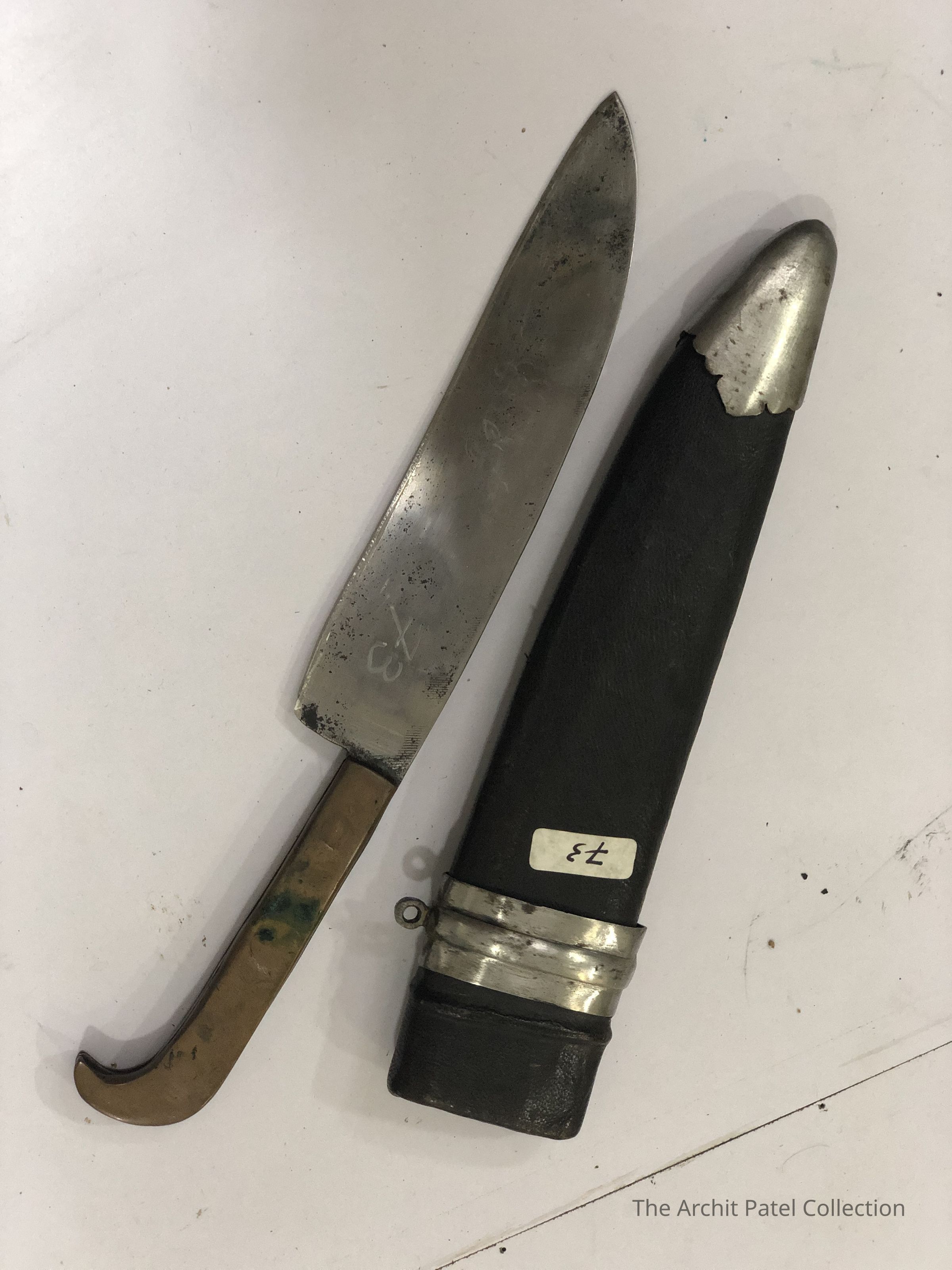
This is the third specimen from your family’s ancestral village lot in Por, Gandhinagar. Unlike the recurved geometry of the previous piece, this blade features a classic symmetrical leaf-shaped profile. It represents a high-utility "Village Sidearm"—a tool optimized for the clean, decisive "processes" of cutting and slicing while maintaining the robust retention features characteristic of the Por region.
Core Components & Engineering
The Blade (Leaf-Shaped High-Carbon Steel): A single-edged blade with a broad belly and a graceful taper toward the tip.
The Geometry: The wide blade provides a significant cutting surface area. Historically, this shape was favored for tasks requiring precision and a clean separation of materials (processing hide or textiles), offering the Operational Certainty of a reliable everyday tool.
Condition: The blade face shows an honest historical patina with scattered oxidation and a faint etched number ("73"), likely an old administrative or collection inventory mark from the village era.
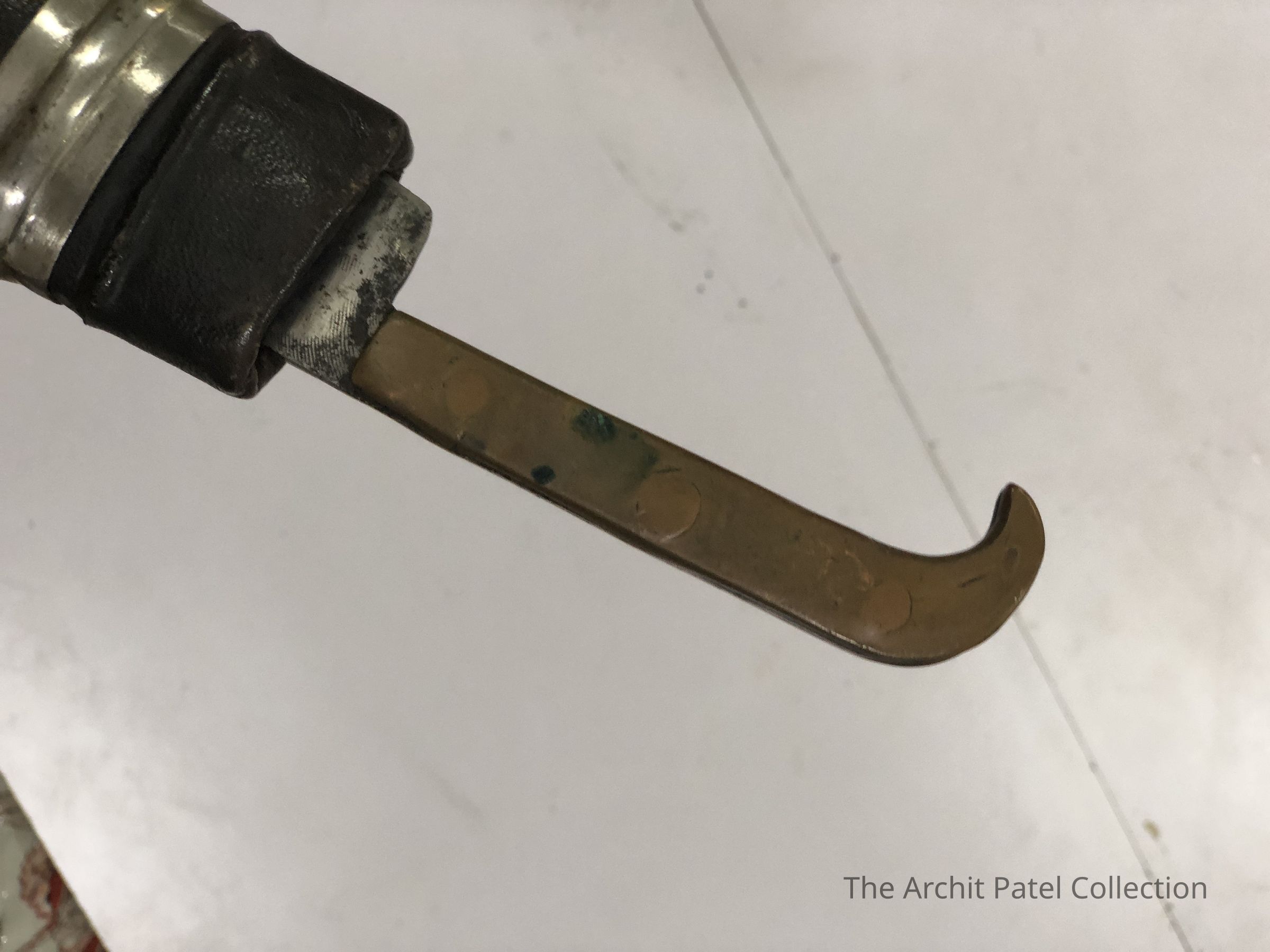
The Hilt Structure (Full Tang Brass with Bird’s-Beak Pommel): Similar to your other Por specimens, this knife utilizes an exposed brass tang.
Retention Pommel: The tang terminates in a distinctive hooked bird's-beak pommel.
Mechanically, this is a "Natural Stop." In your professional framework, this is a redundant safety system. It prevents the hand from sliding backward during a pull-cut, ensuring that even under the fatigue of a long day's work, the wielder maintains 100% control over the tool's "input."
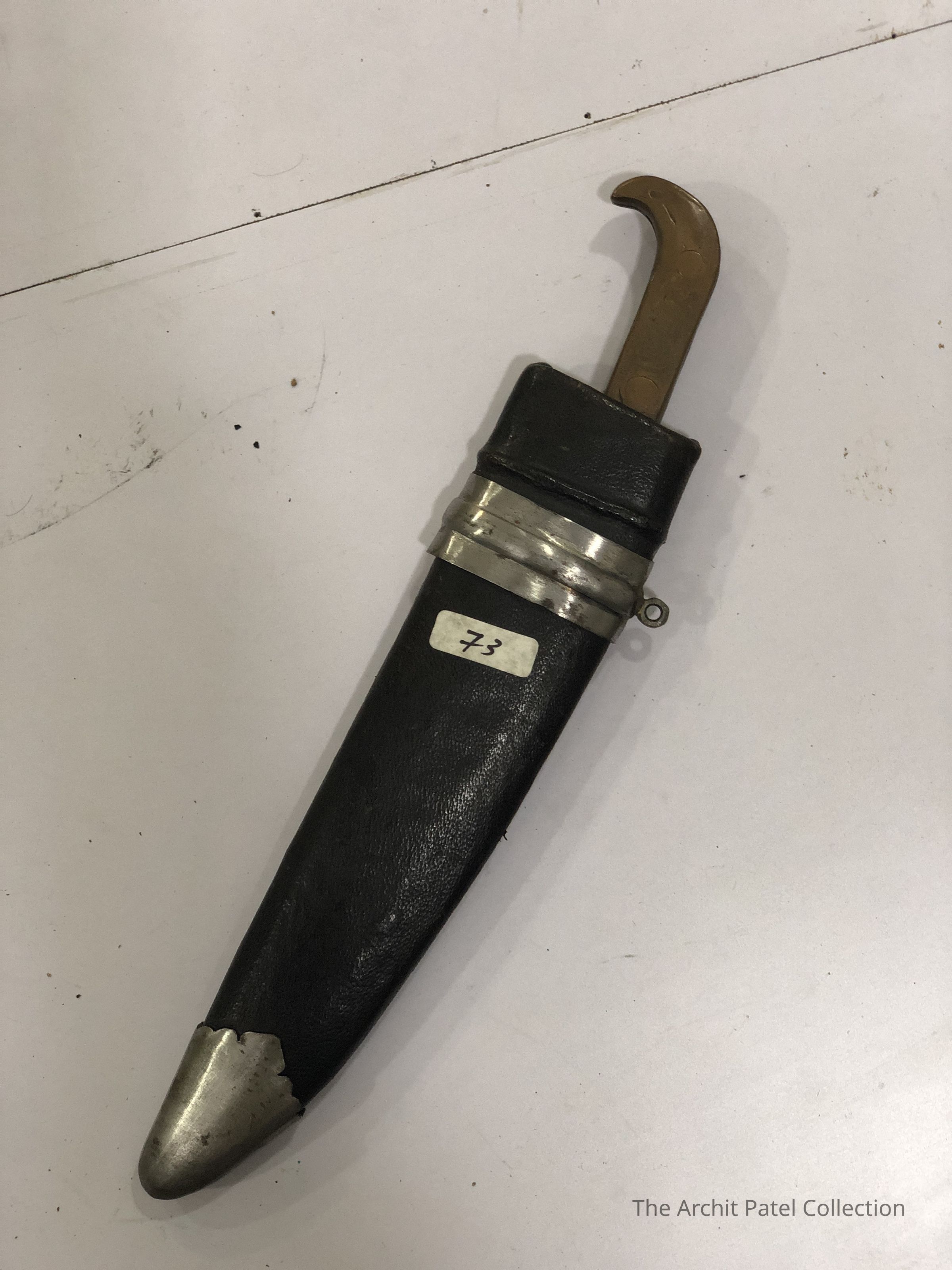
The Scabbard: Housed in a wooden-core scabbard wrapped in smooth black leather.
Fittings: It features a polished steel/iron locket (throat) and a matching chape (tip) with decorative scalloping. The locket includes a suspension ring, indicating it was a constant companion on the belt.Dimensions
Dimension Description
8”Length
4 inAcquisition
Acquisition Method
Inherited