Khanjar
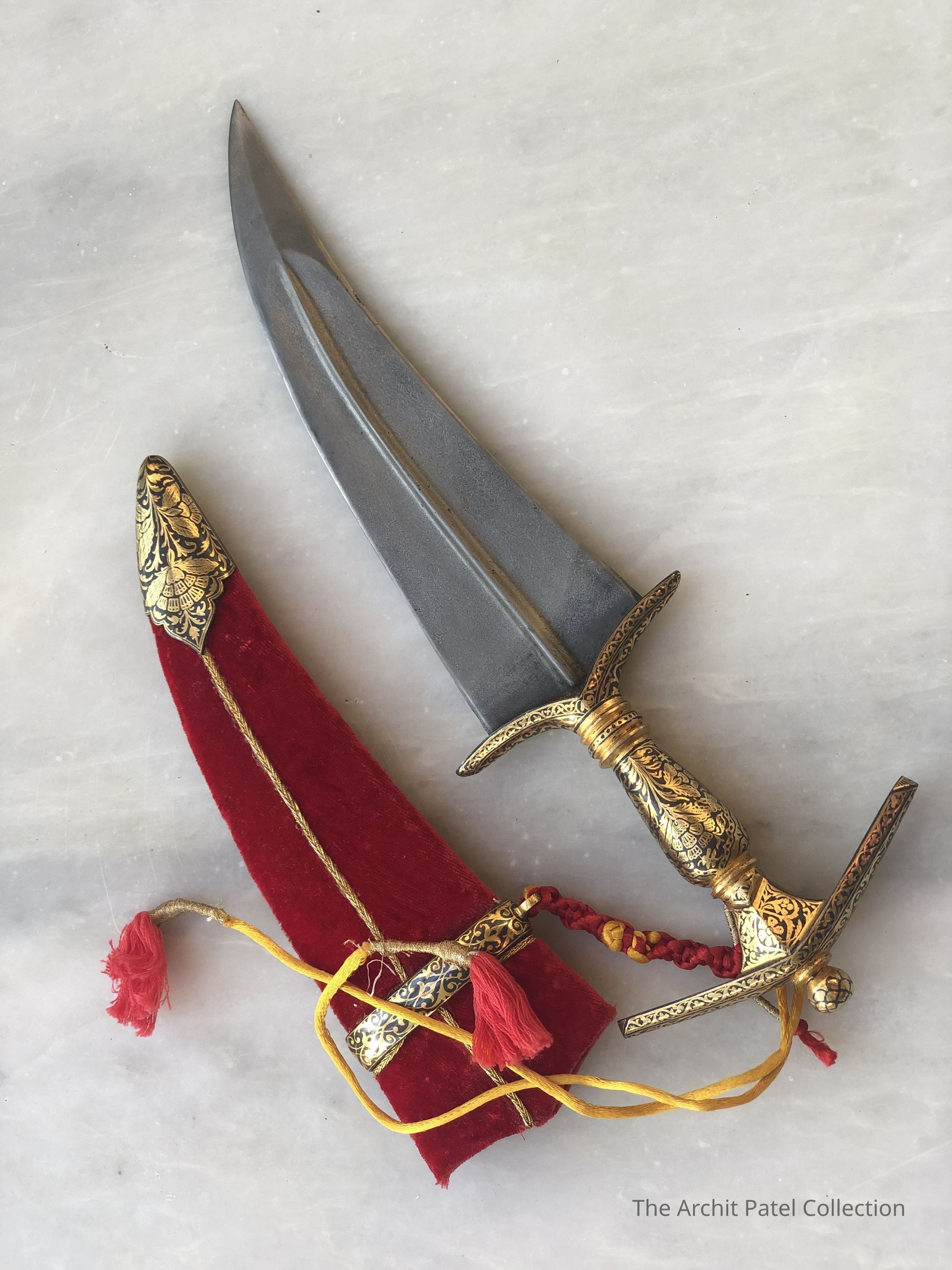
The image displays an ornate ceremonial dagger, known as a khanjar, with a curved, unsharpened blade, resting on a red velvet sheath adorned with gold embroidery and tassels. The dagger features a highly decorative handle and hilt, both intricately crafted with gold patterns and textures, highlighting skilled craftsmanship possibly of Middle Eastern or South Asian origin. It lies on a smooth, light grey surface that contrasts with the rich colors and detailed metalwork of the dagger.
Name/Title
KhanjarEntry/Object ID
8; Full Code: 8.5.6-DG-IATags
Dagger, Gold WorkDescription
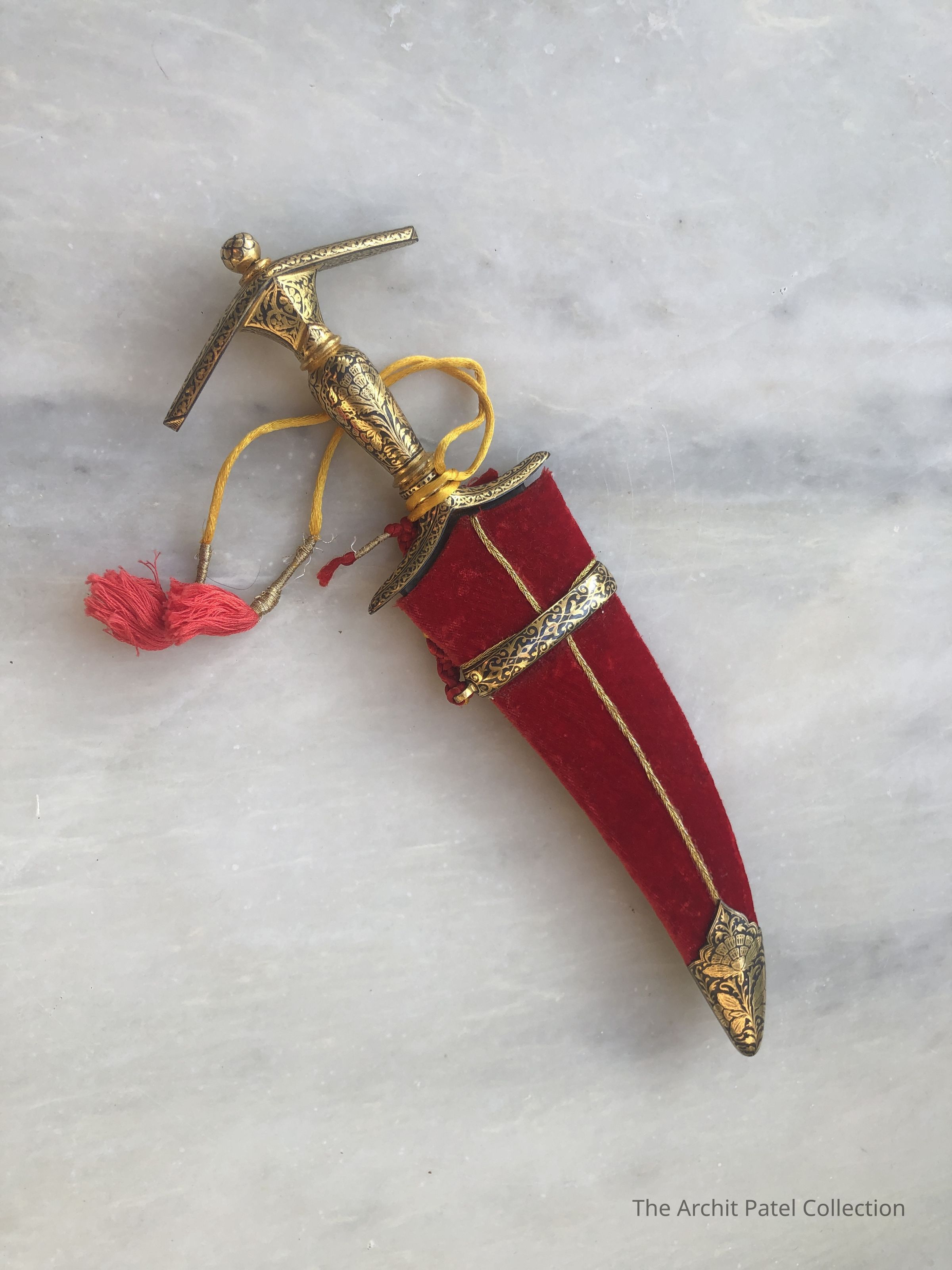
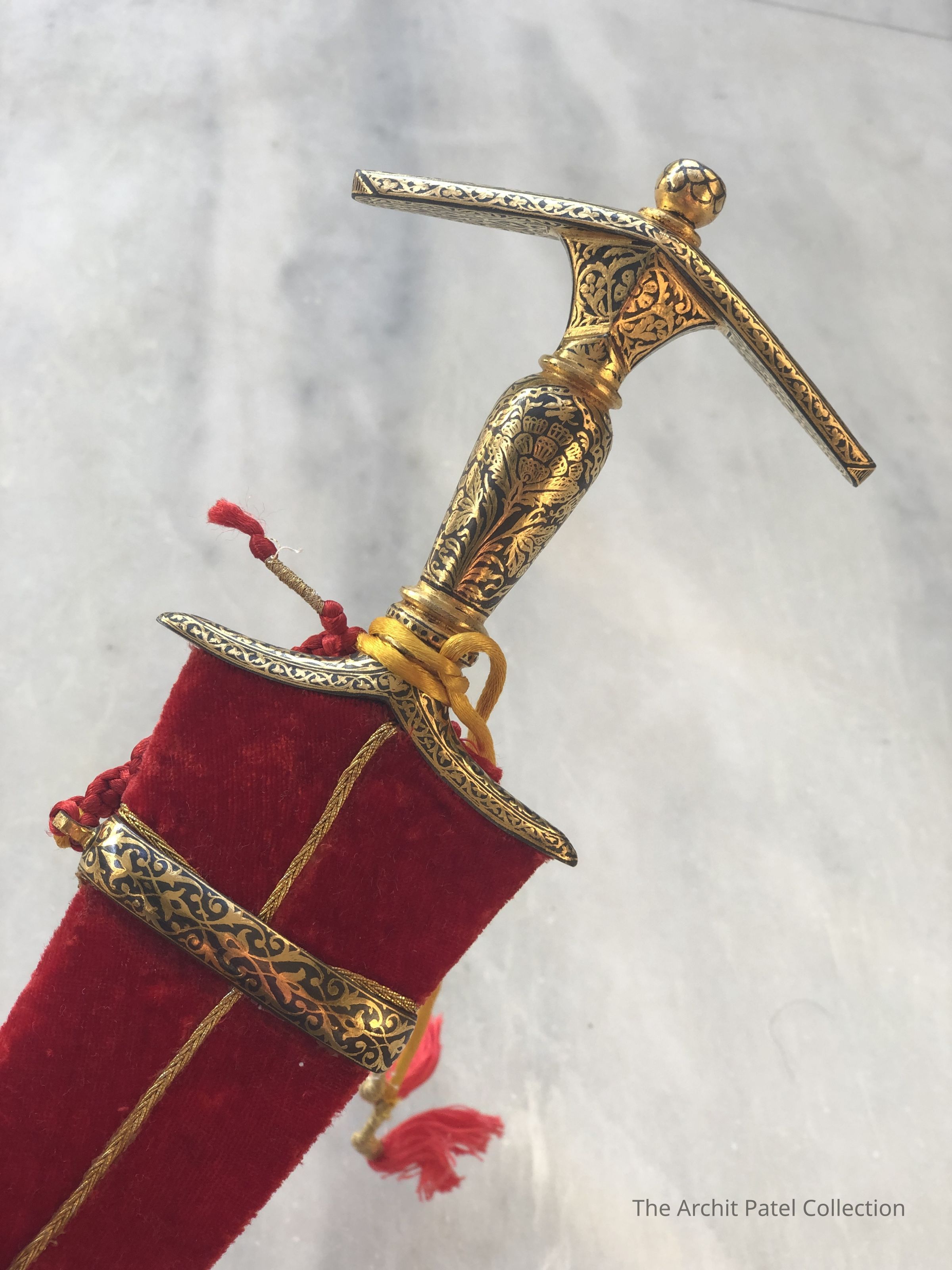
This is a magnificent Khanjar (traditional Indo-Persian dagger), representing the pinnacle of 19th-century luxury weaponry. This piece is distinguished by its antique Wootz steel blade and extensive true gold Koftgari (inlay) work. Blade: The double-edged blade is forged from Wootz (crucible steel), showing a fine, high-contrast "water" pattern (Jauhar). It features a pronounced central rib for structural rigidity and a graceful, slight recurve toward the tip. The reinforced tip and geometry indicate a historical design intended for armor penetration. Hilt: The all-steel hilt is of the classic "I-shape" or pistol-grip influence, featuring a broad, flat pommel with a small bud-like finial. Every surface of the hilt—including the grip, crossguard, and pommel—is decorated with true gold Koftgari. Goldwork (Koftgari): The decoration consists of intricate floral and foliate motifs (Teh-nishan style), where gold wire or foil is hammered into a cross-hatched steel surface. The richness and coverage of the gold indicate this was a high-status presentation piece. Scabbard: The dagger is housed in a wooden scabbard covered in royal red velvet. It features matching steel fittings—a locket (at the throat) and a chape (at the tip)—both heavily decorated with gold Koftgari to match the hilt.Made/Created
Manufacturer
Unknown ArtisanDate made
circa 1700 - circa 1750Time Period
18th CenturyEthnography
Cultural Region
Region
North IndiaCulture/Tribe
Rajput, Mughal