Khanjar
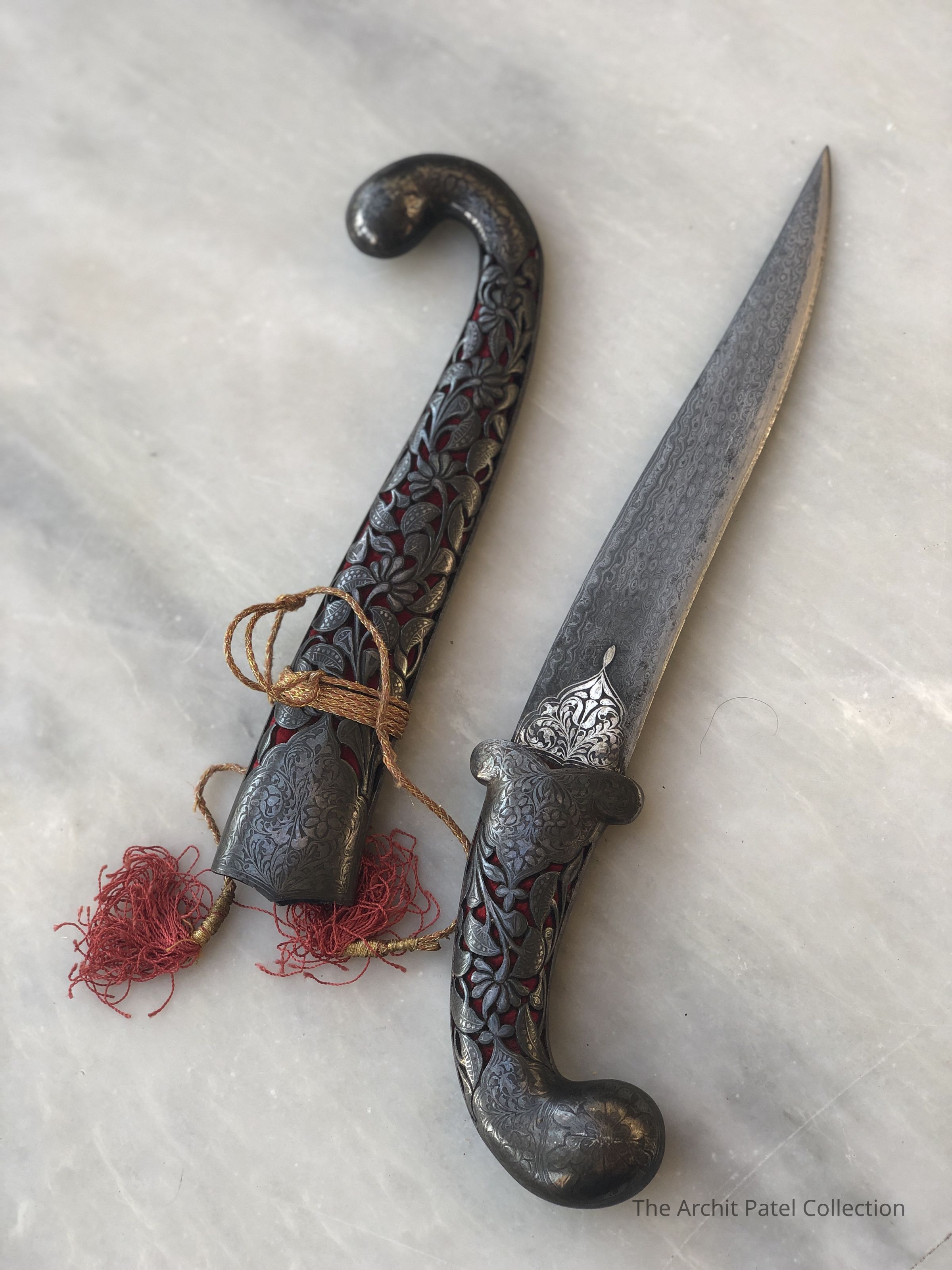
The image displays a khanjar, a traditional dagger, alongside its decorative sheath. The khanjar blade has a distinct, curved shape with a tapered tip, featuring intricate damascene patterning that highlights its craftsmanship. The handle and the sheath exhibit elaborate metalwork adorned with floral and leaf patterns, inlaid with red and black material that enhances its aesthetic appeal. A red tassel is attached to the sheath's end, adding a touch of color and elegance. The overall presentation showcases the khanjar as not only a weapon but also a piece of art, reflecting rich cultural heritage and skilled artisanship.
Name/Title
KhanjarEntry/Object ID
13; Full Code: 13.10.2-DG-NBTags
Dagger, Silver work, EngravingDescription
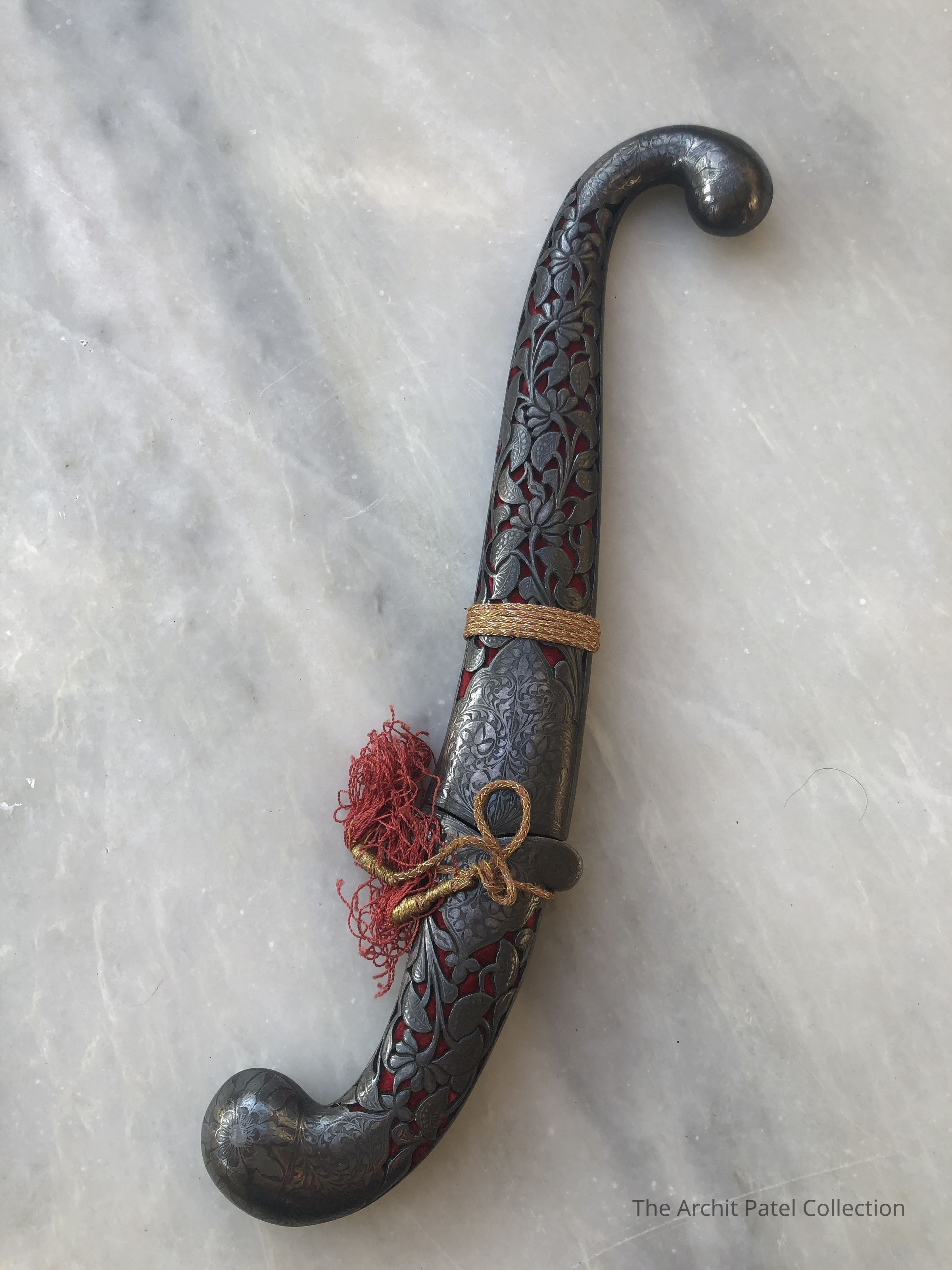
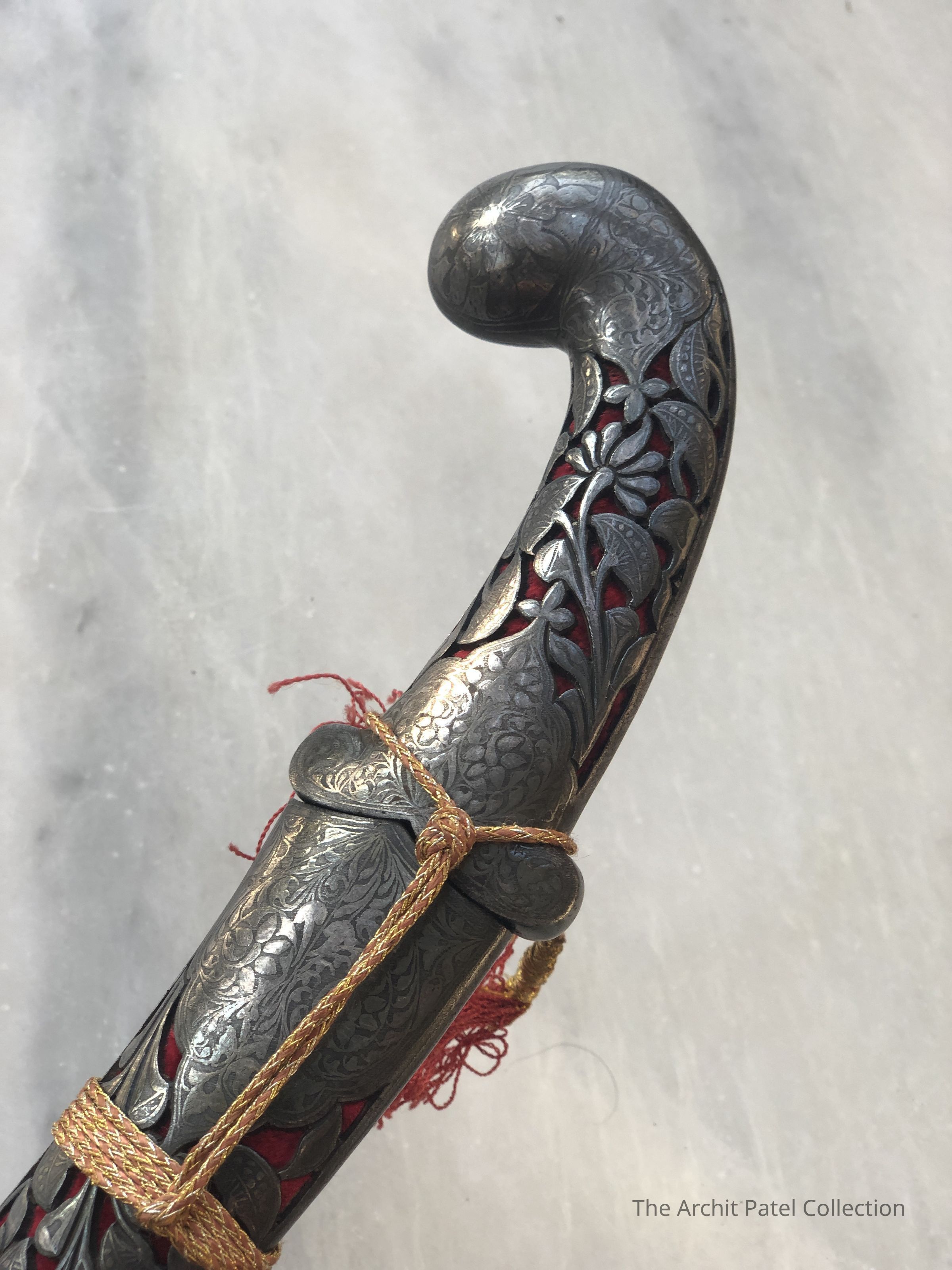
This artifact is a Modern Forged Khanjar, produced in 2004. It represents a high-status interpretation of the traditional Indo-Persian recurved dagger, specifically optimized for ceremonial use. The piece features a high-performance pattern-welded steel blade and an intricate chased steel hilt and scabbard, documenting the continued relevance of classical martial aesthetics in contemporary cultural "processes." Core Components & Engineering The Blade (Pattern-Welded/Damascus-Style Steel): A single-edged blade with a gradual recurve and a reinforced tip. Surface Pattern: The steel exhibits a rhythmic, flowing pattern resulting from the folding and forging of different carbon-content steels. This "process" ensures a balance between a hard cutting edge and a flexible core. Inlay Work: The base of the blade (ricasso) features a high-contrast silver or steel floral inlay (koftgari), mirroring the decorative motifs of the hilt. The Hilt (Chased Steel with Openwork): An all-steel hilt characterized by a deep "pistol-grip" cant and a large globular pommel. Pierced Openwork: The hilt is decorated with intricate floral patterns that have been partially pierced through the steel, revealing a crimson textile lining underneath. Mechanical Logic: The globular pommel acts as a counterweight to the blade, pulling the center of gravity toward the hand to increase the "Certainty" of a fast, controlled draw. The Scabbard (Matching Chased Steel): A wooden-core scabbard entirely encased in chased steel. Retention Fittings: Features a matching globular tip and a integrated locket. The scabbard is tied with traditional gold-tone cordage and red silk tassels, ensuring it remains fixed and stable during the formal inputs of a ceremony.Made/Created
Manufacturer
Silver Stone of UdaipurDate made
circa 2004Ethnography
Cultural Region
State/Province
RajasthanCulture/Tribe
Mughal, Marattha