Name/Title
Khukuri - Farmer'sEntry/Object ID
101; Full Code: 101.50.46-DG-NBTags
Forward edge, Blood, Dagger, KhukuriDescription
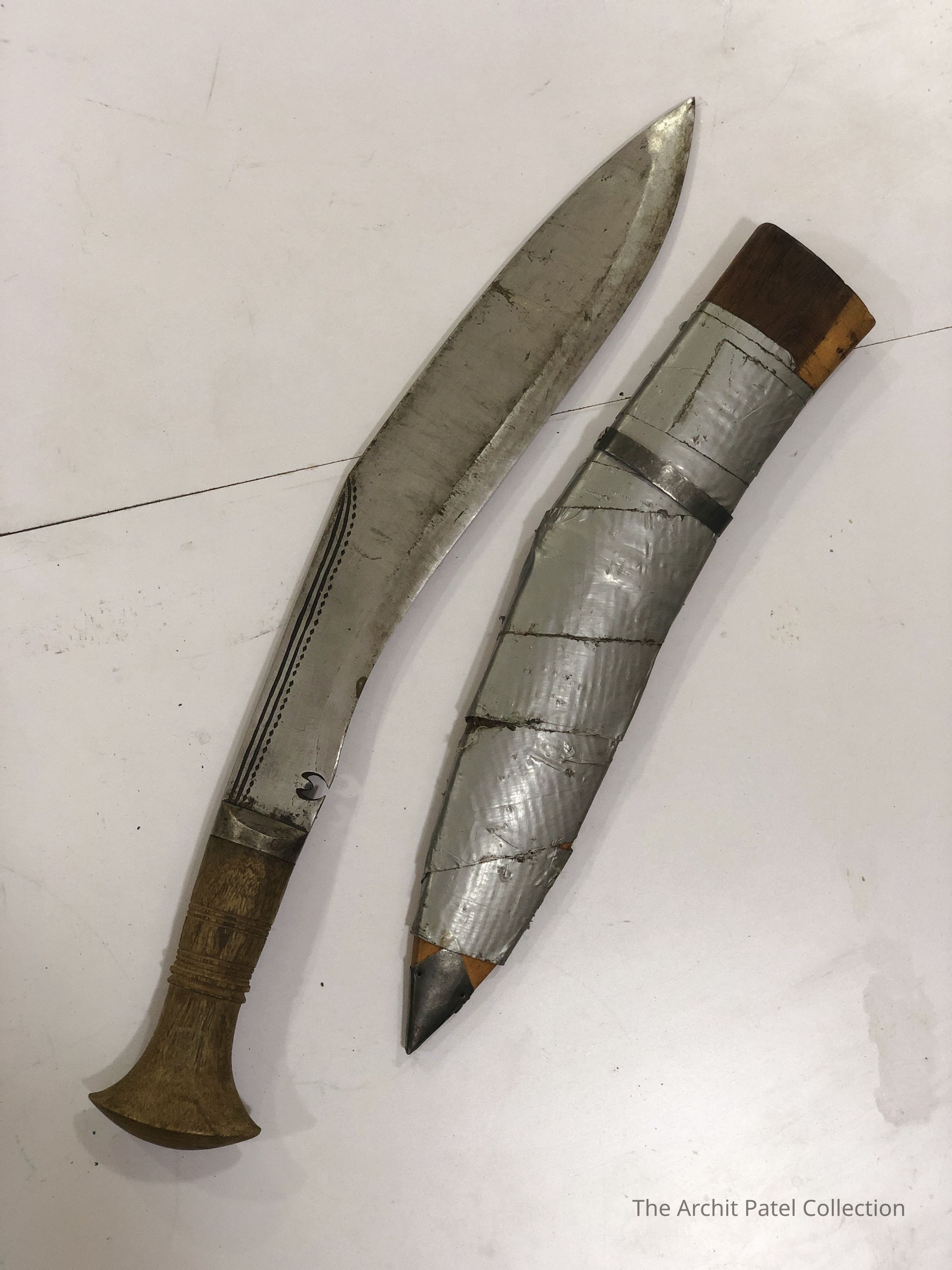
This is my Field-Class Kukri, an artifact I acquired in 2008 from the weekly rural market in Majhitar, Sikkim. To me, this piece is a primary record of Himalayan "Workhorse" engineering; it represents a tool prioritized for raw Operational Utility rather than administrative polish. I value this specimen for its honest Carbon-Steel Construction and the rugged, field-maintained state of its scabbard.
My Design & Engineering Observations
My Choice of Blade Architecture (The Traditional Recurve):
What I have here is a classic Forward-Leaning Geometry, which shifts the center of mass away from my hand.
My Technical Logic: This design uses Angular Momentum to my advantage. By concentrating the weight at the "belly" of the blade, I can deliver massive kinetic energy during a swing, effectively turning the tool into a mechanical wedge.
The Cho (Kaudi): I have the traditional notch at the base of my blade. While it has symbolic roots, I recognize its engineering function as a Drip-Shield, ensuring that any organic fluids on the blade are redirected before they reach my hilt and compromise the mechanical lock of my grip.
My Hilt & Ergonomic Interface:
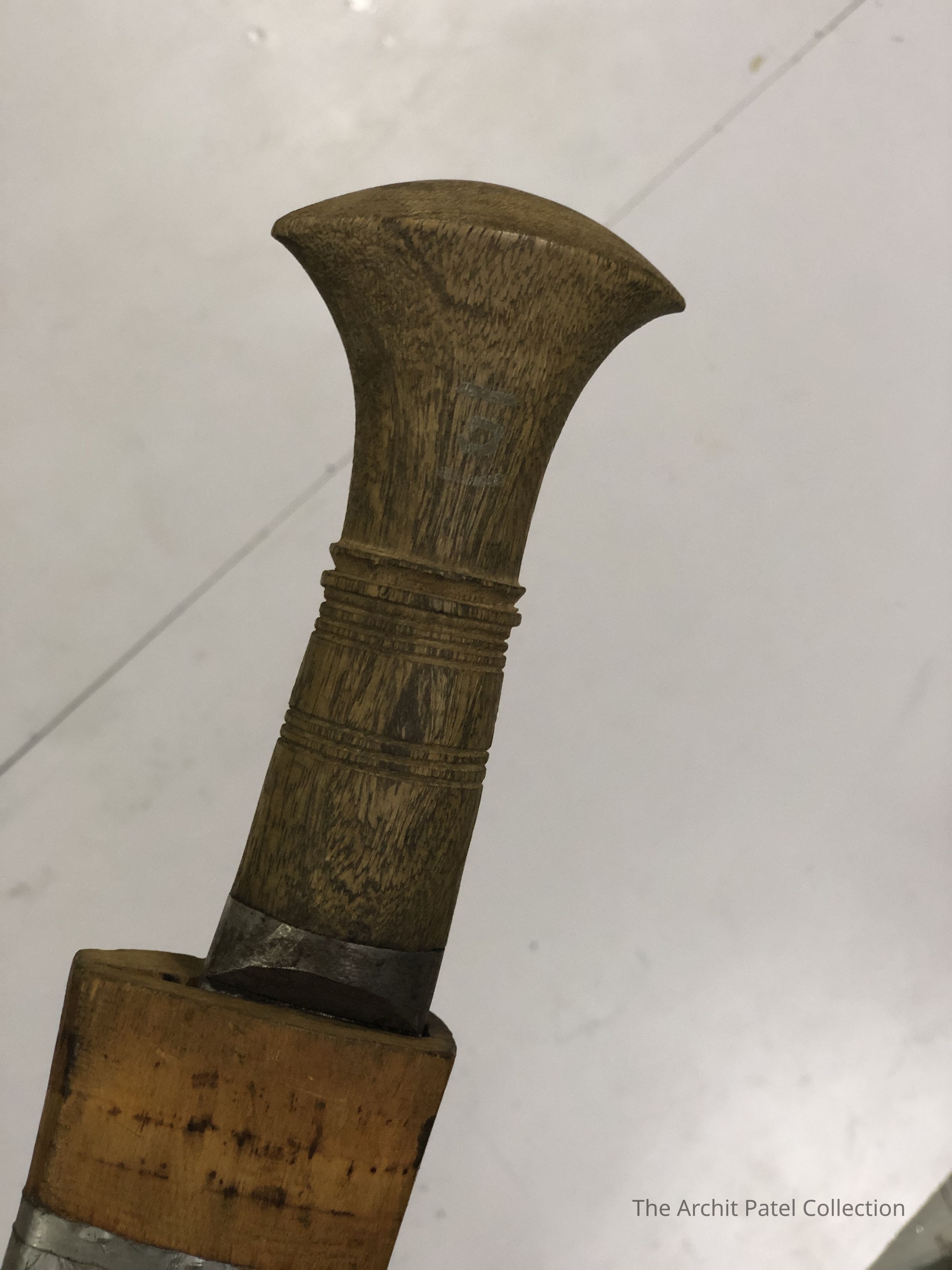
I'm looking at a traditional flared-pommel handle made of local hardwood, showing a beautiful grain and the honest wear of my 18-year curation.
My Mechanical Logic: The central raised rings serve as Tactical Indexing points for my fingers. The radical "flare" at the base of the handle acts as my Centrifugal Fail-Safe—providing me with absolute "Certainty" that the tool won't slip from my palm during high-velocity chopping.
My Field-Grade Scabbard (The Majhitar Record):
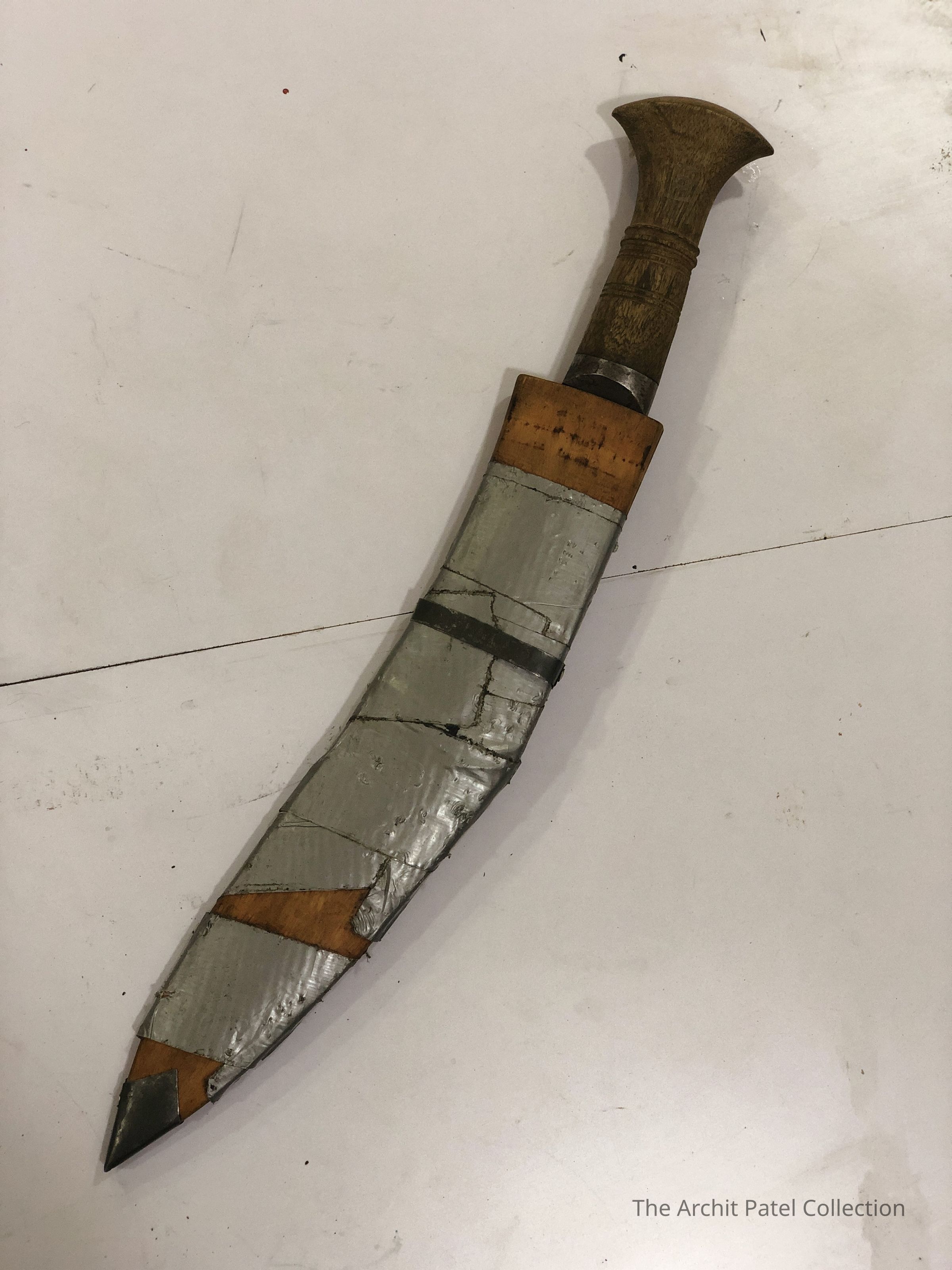
The scabbard is a wood-core design, but I have reinforced it with grey high-tensile adhesive wraps and a metal chape at the tip.
My Curation Record: I’ve marked the pommel with "101." This numbering records my transition into the second century of my collection. The rugged state of the sheath records its history as a functional field asset in the Sikkim region.Made/Created
Manufacturer
Robin Biswakarma of MajhitarDate made
circa 2008Dimensions
Dimension Description
12"Length
11 inAcquisition
Acquisition Method
Purchase