Khukuri - Khasimar
Name/Title
Khukuri - KhasimarEntry/Object ID
89; Full Code: 89.40.35-DG-NBTags
Forward edge, Dagger, KhukuriDescription
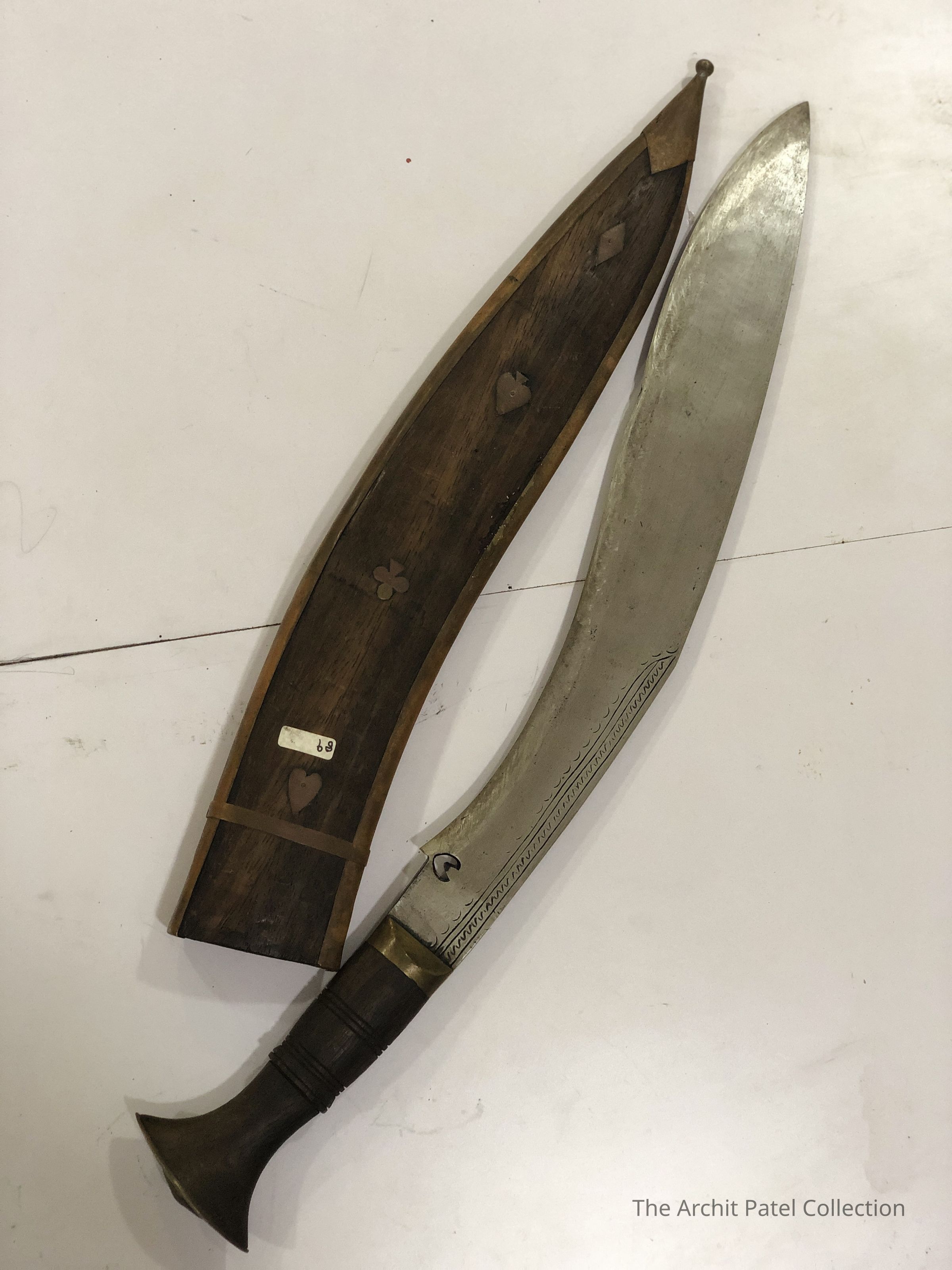
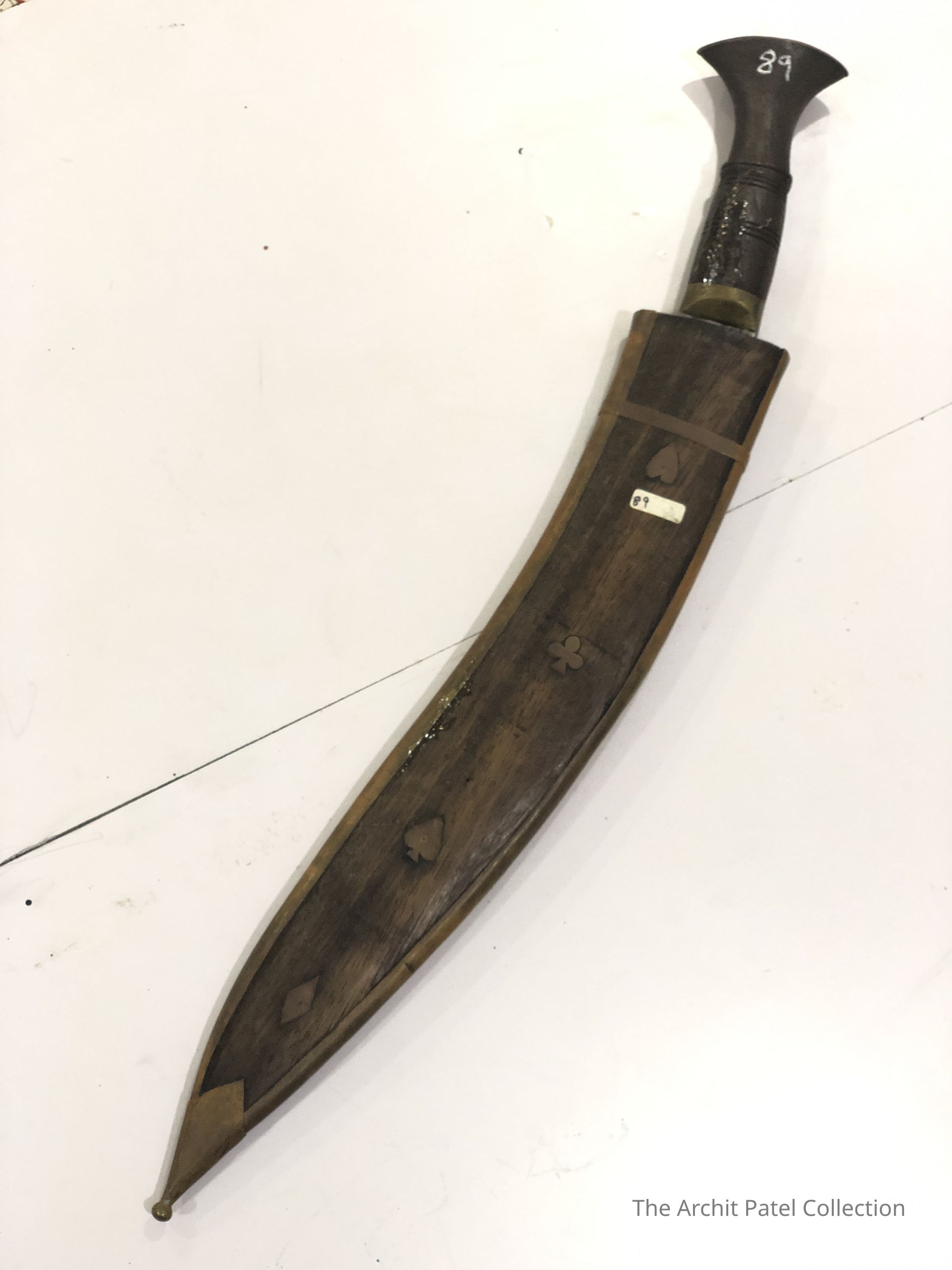
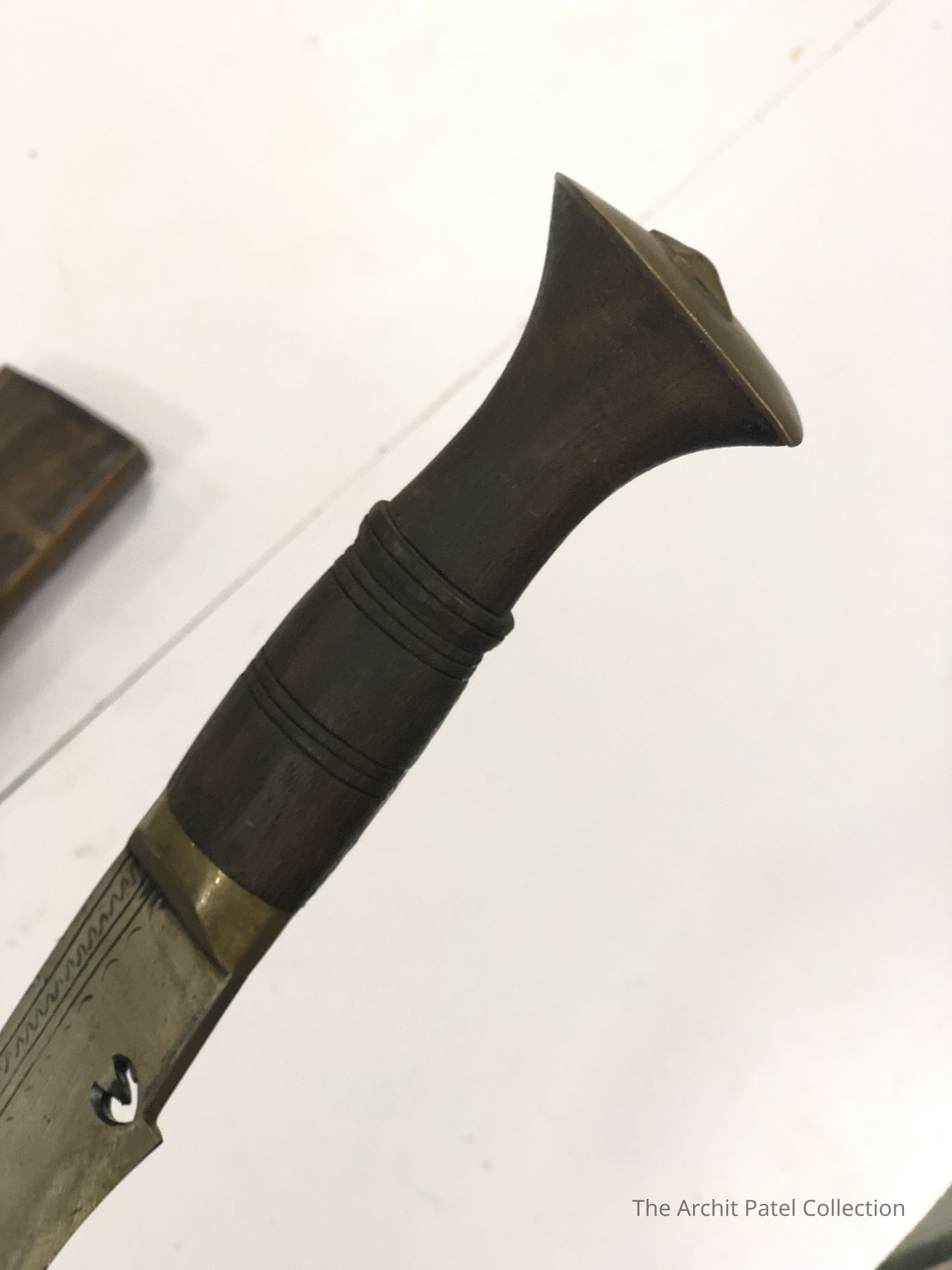
This artifact is a Khukuri Khasimar, a specialized variant of the iconic Himalayan blade, documented as the work of a local blacksmith in Majhitar, Sikkim. While it follows the fundamental "Recurve" logic of the broader Khukuri family, this specimen represents a distinct regional "Process of Creation," prioritizing a slender, high-velocity profile and specific symbolic adornments. Core Components & Engineering The Blade (Recurve Stiletto Steel): A single-edged steel blade with the characteristic "forward-leaning" geometry. Geometry: Unlike the broader "Bhojpure" variants, the Khasimar profile is noticeably more slender and elongated. This lowers the overall mass while maintaining the forward weight bias. The "Cho" (Kaudi): Features a crescent-shaped notch at the base of the blade. Mechanically, this serves as a Stress Relief Notch, preventing the blade from cracking at the hilt during high-impact chops, and administratively functions as a symbolic representation of a cow's hoof or the trident of Shiva. Surface Adornment: The spine features rhythmic "wave" or "scallop" engravings. These document the blacksmith's "Process of Decoration," adding aesthetic status without compromising structural integrity. The Hilt (Seasoned Hardwood with Brass Bolster): Architecture: The handle is carved from a single block of dense hardwood with a flared, circular pommel. Rhythmic horizontal grooves provide Tactical Indexing, ensuring a secure mechanical lock for the palm. Transition: A brass bolster (ferrule) reinforces the junction between hilt and blade, acting as a structural gusset to prevent the wood from splitting under longitudinal stress. The Scabbard (Daphote): A two-piece wooden sheath wrapped in leather or treated wood. Symbolism: The face of the scabbard features unique brass inlays representing the suits of playing cards (Spades, Clubs, Hearts, Diamonds). This is a rare administrative "correction" to traditional design, likely representing a personal story or a specific cultural intersection in Majhitar.Made/Created
Manufacturer
Robin Biswakarma of MajhitarDate made
circa 2010Ethnography
Cultural Region
Country
NepalCulture/Tribe
Gurkha